07-11-2026
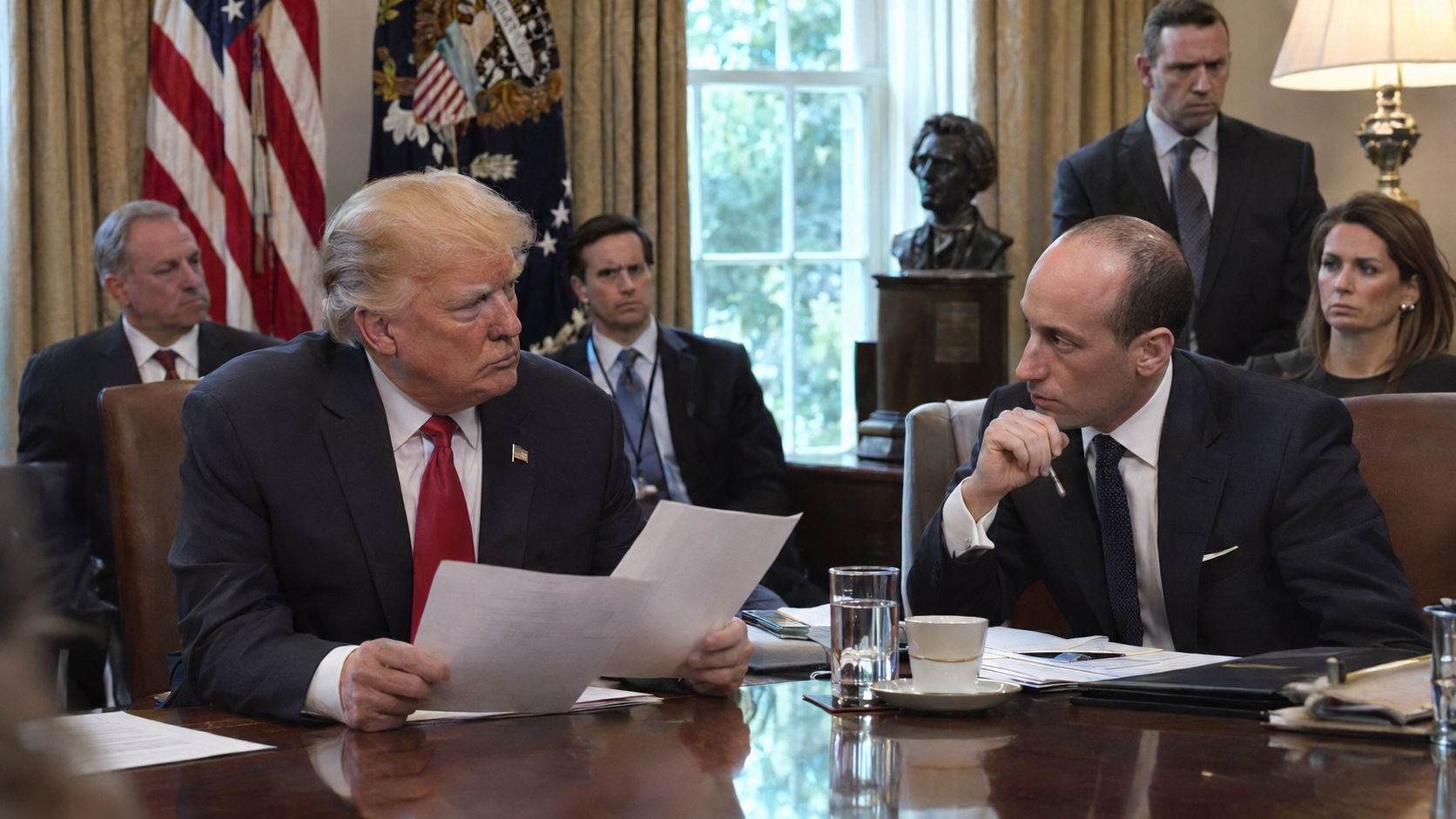
After the Republican Party’s sweeping defeat in the midterm elections, President Donald Trump had said he was willing to work with the newly strengthened Democrats in Congress. His decision to replace Susie Wiles with Stephen Miller as White House chief of staff, however, suggests he may instead be preparing for a political fight. Miller, a longtime Trump adviser and hardline immigration advocate, described his new role as a mission to support the president and defend the country. The chief of staff controls access to the president, helps set the White House agenda, and negotiates with Congress and other political interests.
Miller has been a central figure in the administration’s aggressive immigration enforcement policies. He drew condemnation after labeling Alex Pretti, who was killed by federal immigration officials during a deportation operation in Minneapolis, a “domestic terrorist” and “assassin”; he later qualified his remarks. He has also reportedly played a leading role in US military operations in Venezuela and against suspected drug-trafficking operations, which critics have called extrajudicial killings. A loyal Trump ally since the 2016 campaign, Miller served throughout Trump’s first term and returned as deputy chief of staff for policy in the second.
Wiles had been viewed as a professional manager who avoided the turmoil of Trump’s first term, but Trump reportedly grew dissatisfied with her as his political standing weakened. Miller’s appointment could make cooperation with Congress more difficult. Democratic leader Hakeem Jeffries condemned him, and Miller has also clashed publicly with James Talarico, a newly elected Texas senator. The results also included signs of voter disapproval of the administration’s immigration enforcement: polls found 58% thought it had gone too far, and Hispanic voters shifted decisively away from Republicans. Vice-President JD Vance had suggested changing enforcement priorities, but that possibility may be less likely under Miller. Some Republicans have criticized Miller, while others praise him as a conservative fighter. With Democrats promising investigations and oversight, Trump appears to have chosen a combative chief of staff for a confrontational period.
Entities: Donald Trump, Stephen Miller, Susie Wiles, Hakeem Jeffries, James Talarico • Tone: analytical • Sentiment: neutral • Intent: analyze
07-11-2026
France 24 reports that President Donald Trump has replaced White House Chief of Staff Susie Wiles with her deputy, Stephen Miller, following historic Republican losses in the midterm elections. Miller is described as the architect of the administration’s immigration crackdown. Wiles, by contrast, had been viewed by some as a stabilising presence in the White House. The report links the staffing change to the new political situation: Democrats now control both chambers of Congress, and Trump is reportedly looking for a more aggressive way to advance his agenda. Caroline Baum reports on the appointment and its context. The article presents the change as a consequential shift in White House leadership amid a setback for Republicans and a change in congressional control. It does not provide further details about the timing or process of Wiles’s departure, Miller’s specific responsibilities, or the policy steps Trump may pursue. Nor does the supplied text include direct comments from Trump, Wiles, Miller, or other officials. The item is presented as a short video report, issued on November 7, 2026, with the headline “Stephen Miller named White House Chief of Staff.” Its central focus is the replacement of Wiles by Miller and the reported connection between that decision and the administration’s response to the midterm results.
Entities: Stephen Miller, Donald Trump, Susie Wiles, Caroline Baum, White House • Tone: analytical • Sentiment: neutral • Intent: inform
07-11-2026
The article describes competing accounts of why Susie Wiles was reportedly replaced by Stephen Miller as White House chief of staff within days of the Republican Party’s November 3 midterm defeat. It says some accounts portray President Donald Trump as yelling at Wiles until she left a room, while others reject the idea that he would treat her that way. Other explanations include Wiles not wanting to continue in a demanding role after recovering from breast cancer, and an alleged effort to protect her position through a meeting at Camp David.
According to a Daily Mail report cited in the article, Wiles had arranged an offsite meeting at the presidential retreat for November 7, inviting officials and aides loyal to her. The meeting was reportedly meant to help her remain in her job as Trump prepared to replace her, but it was delayed and then cancelled after he made his decision.
The article also reports allegations that Wiles and her allies tried to place responsibility for the Republicans’ election losses on Defence Secretary Pete Hegseth, especially his role in the Iran war. The conflict was said to have contributed to rising living costs, including petrol prices. A senior Pentagon official alleged that Wiles wanted to push Hegseth out to deflect blame, while a source close to Trump claimed advisers told the president that Wiles’ team was leaking stories about Hegseth to protect her own position. A former Trump official also accused Wiles of leaking information. The article presents these claims as competing, attributed accounts rather than as established facts.
Entities: Susie Wiles, Donald Trump, Stephen Miller, Pete Hegseth, Camp David • Tone: analytical • Sentiment: neutral • Intent: inform