05-08-2026
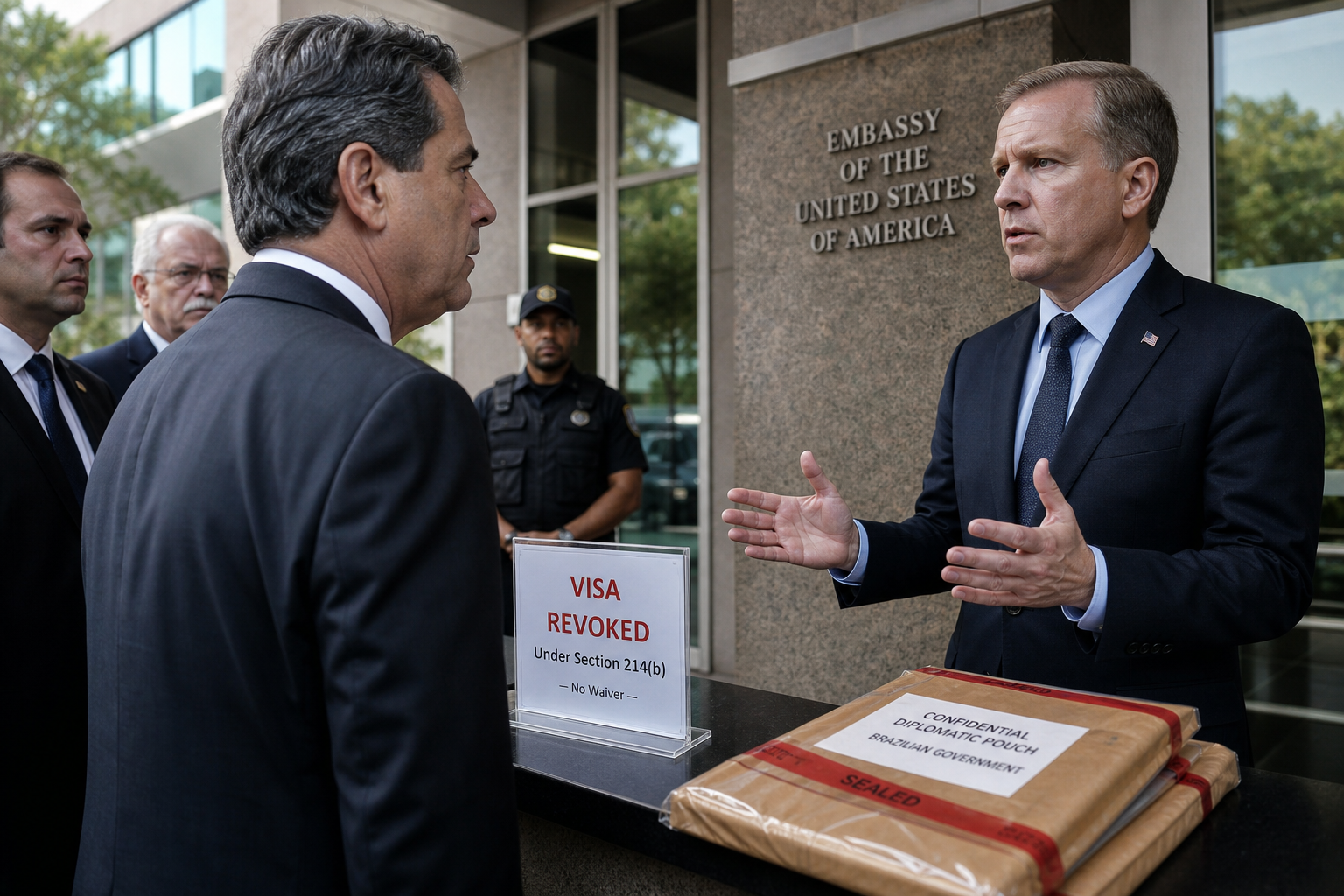
The article describes a sharp escalation in diplomatic tensions between the United States and Brazil after the U.S. State Department revoked the visa of Brazil’s ambassador to Washington, Maria Luiza Ribeiro Viotti. According to a senior State Department official, the move is tied to Brazil’s refusal to approve President Trump’s nominee for U.S. ambassador to Brazil, Daniel Perez, whose nomination requires Brazil’s diplomatic consent, known as agrément. The U.S. official signaled that Viotti’s visa could be restored if Brazil quickly approves Perez, and argued that Brazil has delayed the process for too long.
Brazil responded forcefully, condemning the U.S. decision and saying the stated reasons were false. Brasília also accused Washington of acting in a hostile and ideologically motivated way, insisting that the nomination should have been kept private until consent was granted. The visa dispute is part of a broader set of tensions between the two countries, including Brazil’s earlier denial of visas to two U.S. officials in July over accusations they were trying to influence Brazil’s October elections. The U.S. denied those claims.
The article also places the dispute in a wider political and economic context: Brazil’s upcoming election, President Luiz Inácio Lula da Silva’s contest with Flávio Bolsonaro, the imprisonment of former President Jair Bolsonaro, and the Trump administration’s 25% tariffs on Brazilian imports. Lula has denounced the tariffs as unjustified and framed U.S. actions as politically motivated, while also criticizing the U.S. designation of Brazilian criminal groups as foreign terrorist organizations. Overall, the piece portrays a widening diplomatic confrontation involving visas, trade, election interference allegations, and broader political mistrust.
Entities: U.S. State Department, Brazil, Washington, Brasília, Maria Luiza Ribeiro Viotti • Tone: analytical • Sentiment: negative • Intent: inform
05-08-2026
The article reports a sharp escalation in tensions between the United States and Brazil after the Trump administration revoked the visa of Brazil’s ambassador to Washington, Maria Luiza Ribeiro Viotti. The move was described by the US State Department as retaliation for Brazil’s refusal to approve Trump’s nominee for ambassador in Brasília, Daniel Perez, and for denying visas to two US diplomats who had planned a trip to Brazil. Washington stopped short of expelling Viotti outright, but said the visa could be restored if Brazil accepts Perez’s appointment, and warned that further diplomatic steps remain possible.
The dispute is unfolding amid Brazil’s heated election season, with President Luiz Inácio Lula da Silva seeking a fourth, non-consecutive term against Senator Flávio Bolsonaro, son of former president Jair Bolsonaro. Brazil condemned the US action as a deliberate attempt to influence the election and accused Washington of violating diplomatic norms by publicly announcing Perez’s nomination before receiving Brazil’s consent. The US rejected those claims, insisting that President Trump has the right to choose who represents the United States abroad and denying any attempt to interfere in Brazil’s domestic politics.
The article places the visa dispute in a broader pattern of deterioration in US-Brazil relations. Recent friction includes Brazil’s refusal to grant visas to US officials visiting on election-integrity issues, US tariffs on Brazilian exports, and Washington’s designation of Brazil’s major drug-trafficking groups as foreign terrorist organizations. Despite the conflict, the State Department said it still wants a normal and productive relationship with Brasília.
Entities: Donald Trump, Luiz Inácio Lula da Silva, Maria Luiza Ribeiro Viotti, Marco Rubio, Daniel Perez • Tone: analytical • Sentiment: negative • Intent: inform
05-08-2026
The article reports that the Trump administration revoked the visa of Brazil’s ambassador to Washington in response to Brazil’s failure to approve President Donald Trump’s nominee for ambassador to Brasília, former Florida House speaker Daniel Perez. U.S. officials described the move as reciprocal and emphasized that “reciprocity is the name of the game,” while also expressing regret over the worsening diplomatic dispute. Brazil’s government rejected the U.S. justification, saying international diplomatic rules require formal notification and consent from the receiving country, and arguing that the U.S. request remains under review with no fixed approval deadline under the Vienna Convention.
The visa dispute is the latest escalation in a broader clash between Washington and Brasília. The article notes that Brazil recently denied visas to two senior State Department officials who planned to visit and criticize Brazil’s electoral system, which Brazilian officials said would have been an attempt to interfere in domestic politics. The conflict also sits against a larger political backdrop involving President Luiz Inácio Lula da Silva, who is seeking another term, and Flávio Bolsonaro, the son of former president Jair Bolsonaro. Trump has repeatedly defended Jair Bolsonaro and has already imposed tariffs and sanctions on Brazil, including visa revocations of Brazilian officials, deepening tensions between the two countries. The article suggests the confrontation is becoming increasingly ideological and politically charged, with both sides using diplomatic tools to retaliate and signal resistance.
Entities: Donald Trump, Luiz Inácio Lula da Silva, Brazil, United States, Washington • Tone: analytical • Sentiment: negative • Intent: inform