05-08-2026
The article reports on the European Union’s response to the sudden arrival of tens of thousands of migrants in Spain’s North African enclave of Ceuta, praising Spain’s “swift response” while also exposing deep divisions among EU member states over migration policy and border control. According to Spain’s interior minister, about 72,000 migrants crossed into Ceuta over two days in late July, with most later returned to Morocco, though the crisis also left deaths on both sides of the border and a large number of migrants stranded in precarious conditions. Several EU countries, including Italy, Denmark, Finland, and the Czech Republic, criticized Spain’s handling of the situation and urged tougher border measures, with Italy even suspending its Schengen agreement with Spain, a largely symbolic move given the lack of a land border between the two countries.
Spain rejected accusations of mismanagement and argued that Ceuta is not part of the Schengen area, while Prime Minister Pedro Sánchez accused some governments of acting out of prejudice, misinformation, or political motives. After an emergency meeting of EU interior ministers, officials stressed solidarity with Spain and said the crisis was a test of Europe’s border resilience. The EU also offered emergency financial support to help Spain manage the situation. The article explains that the mass crossings may have been encouraged by criminal networks and social media disinformation, with one migrant saying he was drawn by what he saw online.
The article also highlights the humanitarian dimension of the crisis: migrants in Ceuta were shown sleeping on beaches and streets, receiving food and water from aid groups, and expressing frustration over poor conditions and uncertainty about their futures. Special concern was raised about unaccompanied minors, and Spain said it would continue to respect migrants’ rights while working with Morocco to prevent further crossings.
Entities: Ceuta, Morocco, Spain, European Union, Schengen agreement • Tone: analytical • Sentiment: neutral • Intent: inform
05-08-2026
Morocco says last week’s sudden mass movement of migrants into the Spanish enclave of Ceuta was driven not by spontaneous circumstances alone, but by a mix of factors that included misinformation on digital platforms, human trafficking networks, and misleading legal claims. A Moroccan interior ministry spokesman, Rachid El Khalfi, said posts and videos circulating online created the false impression that entry into Spain or Europe would be easy and without consequences. Some migrants told CBS News they saw messages such as “Spain is an open door” and videos showing people swimming from Morocco to Ceuta, which influenced their decision to cross.
Spain, meanwhile, blamed the surge on trafficking networks exploiting a recent Spanish Supreme Court ruling that made it harder to immediately turn away migrants arriving from Morocco by sea. The article notes that migrants said many crossings were spontaneous after seeing others attempt the swim. Moroccan authorities gave a lower death toll than Spanish officials, saying 11 people died versus Spain’s reported at least 72, and said they are working with Spain to verify the numbers and identities. Most of those who reached Ceuta or Melilla were returned to Morocco by Sunday. The episode prompted strong backlash across Europe, with Italy urging suspension of the Schengen agreement with Spain and France calling for stronger border controls.
Entities: Morocco, Ceuta, Melilla, Spain, Pedro Sánchez • Tone: analytical • Sentiment: neutral • Intent: inform
05-08-2026
The article focuses on the aftermath of a mass migrant rush to Ceuta, the Spanish enclave in North Africa, and the anguish of families in Morocco who still do not know whether their loved ones are alive, detained, injured, or dead. It centers on several missing or unaccounted-for people, including 24-year-old Omar Lotfi, 17-year-old Abdullah Al-Hafi, and 14-year-old Nada Shiba, showing how the border surge has turned into a crisis of uncertainty for relatives left behind.
The piece explains that more than 70,000 migrants moved toward Ceuta following a recent Spanish Supreme Court ruling on migrant returns, and that at least 72 people died during the crossing, with some drowning and others trampled. While most migrants have since returned to Morocco, a few thousand remain in Ceuta, including minors separated from their families. The article highlights the emotional toll on relatives, who have contacted police, hospitals, aid groups, and authorities but still lack answers.
Beyond the personal stories, the article places the episode in a broader context: economic hardship in Morocco and elsewhere in North Africa, Spain’s relative economic strength, and a legal pathway for some migrants already in Spain all helped drive the rush. It also notes that the scale of the influx overwhelmed Ceuta, prompting Spain to deploy the military. Human rights groups and child advocates warn that many minors remain in distress and call for urgent, independent investigations, as well as protections and safe care for children who crossed alone or were separated from family. The article’s core message is the human cost of migration crises, especially the unresolved grief and fear experienced by families awaiting a simple proof-of-life call.
Entities: Ceuta, Morocco, Spain, Omar Lotfi, Abdullah Al-Hafi • Tone: analytical • Sentiment: negative • Intent: inform
05-08-2026
The article describes a CNN video showing Spanish soldiers escorting a crying Moroccan boy toward the border in Ceuta, the Spanish enclave in North Africa. The brief report places the scene in the context of a much larger migration crisis, noting that it occurred only days after about 60,000 migrants stormed into the Spanish exclave. The footage underscores the human dimension of the border situation, focusing on a vulnerable child rather than the broader political debate. Although the article itself is short and centered on a single video clip, it points to the ongoing tension between Spain and Morocco over migration pressure at the border. The emotional image of the sobbing child is used to illustrate the immediate consequences of the mass movement of people into Ceuta and the role of Spanish security forces in controlling the frontier. The piece functions as a quick news update tied to video content rather than an in-depth analysis, but it still conveys the scale and urgency of the border crisis through a single, striking moment.
Entities: Ceuta, Morocco, Spain, Spanish soldiers, Moroccan child • Tone: emotional • Sentiment: negative • Intent: inform
05-08-2026
Five days after a mass migration from Morocco into Ceuta, Spain, the situation on the ground remains unresolved, with thousands of migrants still gathered on the Spanish exclave’s beach, many of them sleeping outdoors. The article, presented as a CNN video report, focuses on the persistence of the migrant presence at El Trampolín Beach in Ceuta and visually documents the aftermath of the border rush that brought an estimated 60,000 people into the enclave. The report suggests that, despite the passage of several days, the humanitarian and border-management challenge continues, with migrants still stranded in a precarious condition near the shoreline.
The piece frames Ceuta as a pressure point in the broader migration relationship between Morocco and Spain. While the main story centers on the migrants remaining on the beach, the surrounding video lineup places this event alongside other international crises, reinforcing CNN’s broader world-news coverage. The report by CNN Portugal’s Helena Lins underscores the human scale of the situation: people are still there, exposed and waiting, rather than having quickly dispersed or been processed.
Overall, the article conveys an urgent, observational snapshot of a border crisis that is still unfolding. It does not delve into policy detail or official response, but instead emphasizes the visible consequences of the mass crossing and the continued presence of migrants in a fragile and uncertain state on the beach in Ceuta.
Entities: Ceuta, Spain, Morocco, El Trampolín Beach, migrants • Tone: urgent • Sentiment: negative • Intent: inform
05-08-2026
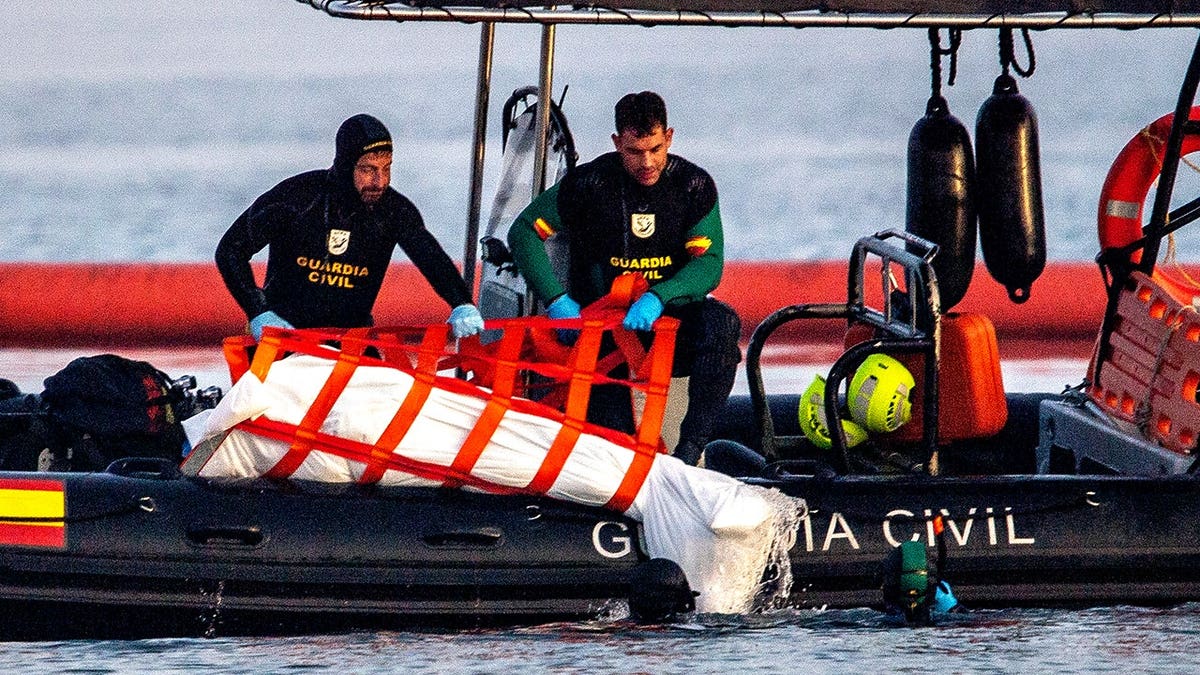
At least 72 migrants died during a chaotic mass attempt to cross into the Spanish enclave of Ceuta from Morocco, turning the incident into a major humanitarian and political crisis. Spanish authorities said between 50,000 and 60,000 migrants, mostly young men, surged toward the tiny North African territory over several days, overwhelming border controls and prompting rescue and recovery operations in the water off Ceuta. Many deaths were attributed to drowning, while others occurred in a stampede near a breakwater barrier.
The crossing temporarily swelled Ceuta’s population by more than half and left authorities searching for more victims as some migrants returned to Morocco and others remained in the city or tried to evade officials. The disaster quickly became a flashpoint in Spain and across Europe, with far-right leaders using the event to demand stricter border enforcement and the removal of migrants still in the enclave. Vox leader Santiago Abascal called the influx an “invasion,” while a rally by European Parliament member Alvise Pérez drew counterprotests and required police intervention.
The article also includes local voices expressing grief and conflict over responsibility. Some residents lamented the deaths of young people at sea, while others blamed authorities for opening the border and allowing the surge to happen. The piece notes that the event tested Ceuta’s multicultural identity and raised concerns about whether another mass crossing could occur. In response, the U.S. State Department raised its travel advisory for Ceuta to Level 3, warning of unpredictable and dangerous security conditions. The report frames the event as both a humanitarian tragedy and a renewed political battle over migration policy in Europe.
Entities: Ceuta, Morocco, Spain, Spanish enclave of Ceuta, migrants • Tone: urgent • Sentiment: negative • Intent: inform
05-08-2026
Thousands of migrants remained stranded in Spain’s North African enclave of Ceuta after a massive crossing from Morocco triggered a border crisis and prompted an emergency response from the European Union. Spanish officials said about 72,000 people entered Ceuta during the surge and roughly 70,000 later returned to Morocco, leaving around 2,000 people in the enclave. Authorities were especially focused on hundreds of unaccompanied minors, whose status is protected under Spanish law, while reception centers became overwhelmed and some children were reported sleeping outside or begging for food.
The EU pledged emergency support, including financial assistance, to help Spain reinforce Ceuta’s external border. At the same time, Spanish police and the Guardia Civil were reviewing footage and checking migrants against criminal and counterterrorism databases amid concerns that criminals or suspected jihadists may have exploited the chaotic crossing. The article says the surge was fueled in part by smuggling networks and social-media disinformation, with open-source intelligence pointing to coordinated online mobilization across platforms such as TikTok, Facebook, Instagram, and WhatsApp.
Beyond the immediate border crisis, the article frames the event as part of wider political tensions involving Spain, Morocco, and Islamist movements. It cites analysis suggesting Moroccan Islamists could use the crisis to attack the monarchy and exploit public frustration over unemployment, migration, and economic conditions ahead of elections. The piece also notes historical concerns about extremist activity in the Ceuta-Fnideq border area, including prior recruitment and terror-linked networks. Overall, the article presents the Ceuta surge as both a humanitarian emergency and a security challenge with regional political implications.
Entities: Ceuta, Morocco, Spain, European Union, Magnus Brunner • Tone: analytical • Sentiment: negative • Intent: inform
05-08-2026
The article describes how hundreds of people in the northern Moroccan town of Fnideq have gathered near the border with Spain’s Ceuta in hopes of finding missing relatives and friends after an extraordinary mass crossing that sent tens of thousands into the Spanish enclave. As Moroccan authorities and Spanish officials work to return most of the people who entered Ceuta, families on the Moroccan side remain in anxious uncertainty, scanning returnees and waiting for news of sons, daughters, and brothers who may still be in the enclave or may have died during the crossing.
The piece emphasizes the human cost of the crisis, reporting at least 88 deaths in Ceuta and 11 in Morocco, with many others still missing. It also highlights the precarious situation of unaccompanied minors, with Spain estimating that about 2,000 people remain in Ceuta, including at least 862 registered children. NGOs and UNICEF raise alarms that more children may be unprotected or being returned before they can request asylum. The article notes that Spanish police have set up an office to collect reports of missing people, while a video of a crying 12-year-old boy being prevented from being sent back underscores the emotional and legal complexity.
Beyond the immediate humanitarian crisis, the article places the Ceuta influx in a political context. Spanish and Moroccan officials dispute responsibility, with accusations that Morocco encouraged or allowed the crossing and counterclaims that misinformation spread through social media and a hostile “pull effect” drove people to attempt the journey. The article closes on the uncertainty and hope of families still waiting at the border, illustrating the broader trauma and confusion produced by the event.
Entities: Morocco, Spain, Ceuta, Fnideq, Tangier • Tone: analytical • Sentiment: negative • Intent: inform
05-08-2026
The article examines how a brief surge of migration into Ceuta, the Spanish enclave on Morocco’s coast, quickly became an international political flashpoint shaped less by the scale of the movement than by misinformation, viral images, and hardline anti-migration rhetoric. It notes that roughly 72,000 people attempted to cross into Ceuta over a short period, but most returned to Morocco within a day and there was no evidence of a sustained attempt to enter mainland Europe. At least 88 people died during the crossing, underscoring the human cost. The piece argues that European and right-wing narratives exaggerated the event into a supposed “invasion,” despite EU interior ministers saying Schengen was never truly threatened.
The article places Ceuta in a broader pattern that has emerged since the 2015 refugee crisis: as legal migration routes have narrowed and borders have been increasingly externalized to non-EU states such as Morocco, Turkey, and Belarus, migrants are pushed into riskier, illegal crossings. These moments then produce dramatic images and crises that are politically exploited to justify even stricter border controls. The piece highlights how social media hoaxes, deleted accounts, and amplified videos helped encourage the Ceuta crossings, while also discussing speculation that Morocco may have deliberately reduced border surveillance amid diplomatic tensions.
Through commentary from migration journalist Daniel Trilling, the article argues that the appearance of control often produces the opposite effect, and that tragedies like Ceuta are likely to recur unless European policy changes. It also criticizes figures such as Nigel Farage, Tommy Robinson, and Elon Musk for using the event to fuel anti-immigration narratives and advance harsher border policies.
Entities: Ceuta, Morocco, Spain, Schengen area, EU interior ministers • Tone: analytical • Sentiment: negative • Intent: analyze