06-08-2026
The article describes how Russia has intensified attacks on Ukraine’s Black Sea ports, especially around Odesa, making shipping and port work increasingly dangerous and disrupting one of Ukraine’s most important export routes. Through the experience of port worker Svitlana Halchenko and interviews with union leaders, port managers, and grain exporters, the piece shows the human toll of the strikes: deaths, injuries, fear, and mounting stress among workers who often have only minutes—or less—to reach shelter when missiles or drones arrive.
The article explains that July saw an unusually high number of Russian strikes on civilian vessels and port infrastructure, including a missile attack on the Turkish-owned cargo ship Golden Leo that killed nine crew members and a Ukrainian pilot. Shipping analysts now regard the Black Sea as one of the world’s most dangerous waters for merchant shipping. Odesa’s ports are technically open, but shipowners are increasingly unwilling to risk sending vessels there, leaving berths empty and supply chains stalled.
The reporting also places the attacks in a wider strategic context. Ukrainian officials and shipping executives argue that Russia is trying to choke off Ukraine’s grain and export economy, especially as the summer harvest is underway. The damage threatens Ukraine’s agricultural revenues and global food supply, given the country’s role as a major grain and oilseed exporter. At the same time, Odesa itself tries to project normality, with beaches crowded and tourists still enjoying summer, even as air raid sirens and explosions continue to remind residents that the war remains close and deadly.
Entities: Odesa, Black Sea, Russia, Ukraine, Svitlana Halchenko • Tone: urgent • Sentiment: negative • Intent: inform
06-08-2026
The article reports that Ukrainian President Volodymyr Zelenskyy shared a video he says shows a Russian drone deliberately pursuing and attacking a civilian vegetable vendor in Kherson, describing the incident as part of Russia’s so-called drone “safari” against civilians. According to Zelenskyy, the drone carried explosives, followed the man as he tried to evade it, and detonated near him. The man, identified as Yurii, survived the attack with shrapnel wounds to his torso, legs, and arms, along with a concussion, according to a doctor cited in a video posted by Kherson regional head Oleksandr Prokudin. In that footage, Yurii says he tried to signal to the drone operators that he was only selling vegetables, but the drone continued toward him and exploded near his vehicle. The article also places this incident in the broader context of ongoing Russian attacks on Ukraine, noting that an overnight missile and drone barrage on Kyiv and the surrounding region killed at least 17 people and wounded dozens more. Ukrainian officials described that attack as one of the region’s most tragic, emphasizing that civilians were killed and infrastructure damaged in residential areas and warehouses. Overall, the story combines a specific alleged drone strike on a civilian with the larger pattern of deadly Russian attacks across Ukraine.
Entities: Volodymyr Zelenskyy, Kherson, Ukraine, Russia, Russian drone • Tone: urgent • Sentiment: negative • Intent: inform
06-08-2026
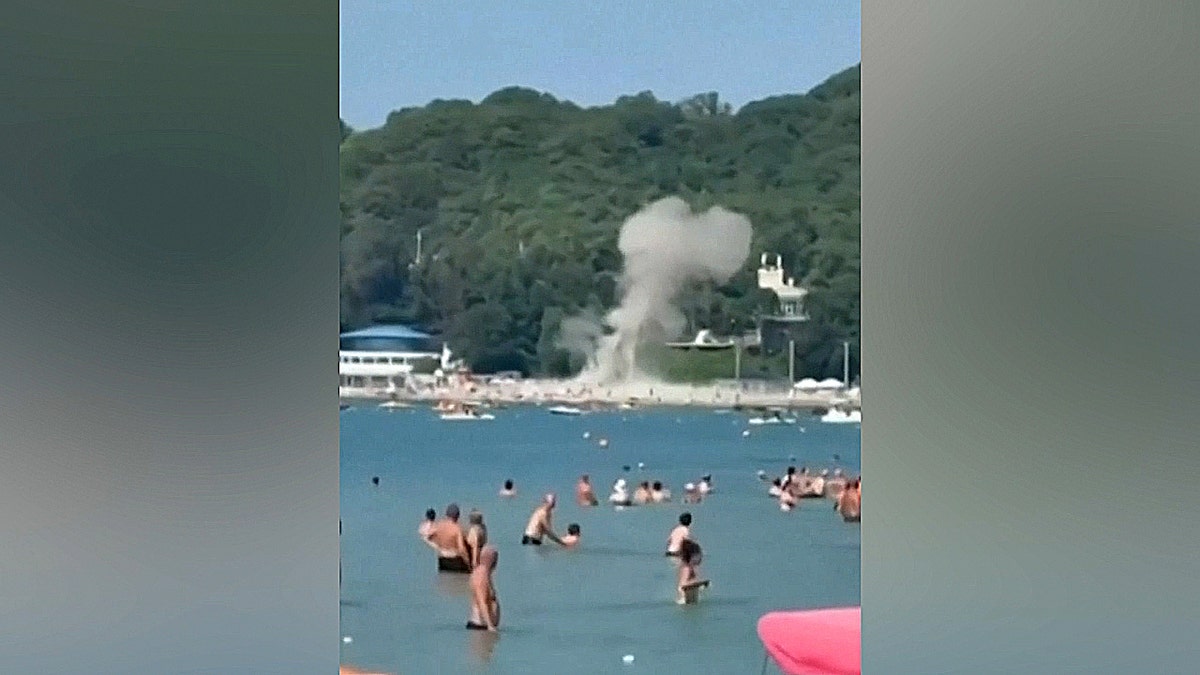
A projectile struck a crowded beach in the Russian Black Sea resort town of Arkhipo-Osipovka near Gelendzhik on Monday, killing seven people, including four children, and injuring dozens more, according to Russian officials. Video posted on social media and circulated by Reuters showed the moment of impact and the panic that followed as beachgoers ran for safety. Russian authorities blamed Ukraine, saying the strike was carried out by a drone launched by Kyiv and that the attack targeted civilian infrastructure and was a “terrorist attack” against children and civilians. Ukraine’s side disputed that account. Andriy Kovalenko, an officer with Ukraine’s Defense Forces, said the deaths were caused by Russian air defenses that intercepted a drone and sent debris onto the beach, rather than by a direct Ukrainian strike on civilians. The article presents the event as part of the wider drone war between Russia and Ukraine, with both sides using the incident to reinforce their broader narratives: Moscow accusing Kyiv of deliberately targeting civilians, and Kyiv arguing that Russian air defenses and Putin’s war are responsible for the deaths. The piece emphasizes the deadly impact of the blast, the presence of children among the victims, and the conflicting claims about what happened.
Entities: Arkhipo-Osipovka, Gelendzhik, Russia, Black Sea, Ukraine • Tone: urgent • Sentiment: negative • Intent: inform
06-08-2026
The article reports that Ukrainian President Volodymyr Zelenskyy condemned Russia after video emerged showing a Russian drone apparently tracking and striking near a civilian vegetable vendor at a market in Kherson, southern Ukraine. The footage, released by the Kherson Regional Military Administration, shows a drone hovering near a man beside a minibus, then following him as he moves and detonating near him. Zelenskyy described the incident as proof that Russia has gone "mad" and said the attack reflects a broader campaign against civilians that Ukraine has dubbed "human safaris." The vendor, Yuriy, survived but was injured in the blast and later told the BBC that he could see the vegetables he had laid out, suggesting he was clearly a civilian and unarmed. Ukraine’s Foreign Minister Andrii Sybiha called the attack a "barbaric war crime" and urged international action. The article situates the incident within a wider pattern of Russian drone strikes on civilians in Kherson, noting prosecutors’ claims that thousands of criminal cases have been opened in the region and that hundreds of civilians, including children, have been killed or wounded. Zelenskyy argued the video should be seen globally as evidence that Russia’s aggression is not limited to Ukraine and could threaten other European and regional countries if unchecked. The story closes by noting that the video was released about a year after a one-year-old boy was killed in a Russian drone attack in Kherson.
Entities: Volodymyr Zelenskyy, Russia, Kherson, Ukraine, Yuriy • Tone: urgent • Sentiment: negative • Intent: inform
06-08-2026
Russian strikes hit several regions of Ukraine overnight into Thursday, killing at least six people and injuring many more, according to local and national authorities. In the eastern Kharkiv region, three people died in Balakliia after attacks on homes sparked fires and left rescuers clearing debris. In the northern Sumy region, three more people were killed and at least 19 wounded in strikes on settlements, while 12 additional people were injured in the city of Sumy after guided aerial bombs were used. In southern Kherson, a drone attack on a van wounded six. The article also reports a Russian strike on a foreign-flagged cargo ship carrying wheat in the Black Sea area near Odesa, which killed one crew member and caused a fire, highlighting continuing attacks on Ukraine’s maritime trade routes. The piece places these events in the broader context of the war, noting that both Russia and Ukraine deny targeting civilians, while long-range strikes have intensified and diplomacy remains stalled more than four years after Russia’s full-scale invasion. It also mentions Russia’s claim that it shot down 605 Ukrainian drones overnight, with damage reported in regions near Moscow and elsewhere in Russia.
Entities: Ukraine, Russia, Kharkiv region, Sumy region, Balakliia • Tone: analytical • Sentiment: negative • Intent: inform
06-08-2026
The article reports on a deadly overnight Russian missile-and-drone assault on Kyiv and nearby areas that exposed Ukraine’s growing vulnerability to air attacks because of a shortage of interceptor missiles, especially U.S.-supplied Patriot interceptors. In the strike, Russia launched 115 drones and 24 ballistic missiles; most drones were intercepted, but none of the missiles were stopped in Kyiv’s depleted air defenses. The attack killed 21 people and injured dozens, while also damaging warehouses, a postal sorting center, and infrastructure near a railway station.
The piece uses the aftermath at Kvitneva railway station and the wrecked home of Anastasiia Dudley to illustrate the human toll of these attacks. Dudley describes the night as the scariest she has lived through since Russia’s full-scale invasion began in 2022. The article argues that Ukraine’s inability to intercept ballistic missiles is tied directly to a shortage of Patriot missiles, which Zelensky says could have saved lives. It notes that the United States has limited stockpiles, has been reluctant to provide more, and has also been equivocal about allowing Ukraine to manufacture Patriots under license.
The article includes analysis from Ukrainian former intelligence officer Ivan Stupak, who compares having Patriot systems without interceptor missiles to owning a Lamborghini with no fuel. It concludes that Ukraine’s defenses are not just insufficient but also vulnerable to being targeted themselves, leaving the country dependent on decisions about missile production and supply made far beyond its borders.
Entities: Kyiv, Ukraine, Kvitneva railway station, Russian military, Patriot interceptor missiles • Tone: analytical • Sentiment: negative • Intent: inform