05-08-2026
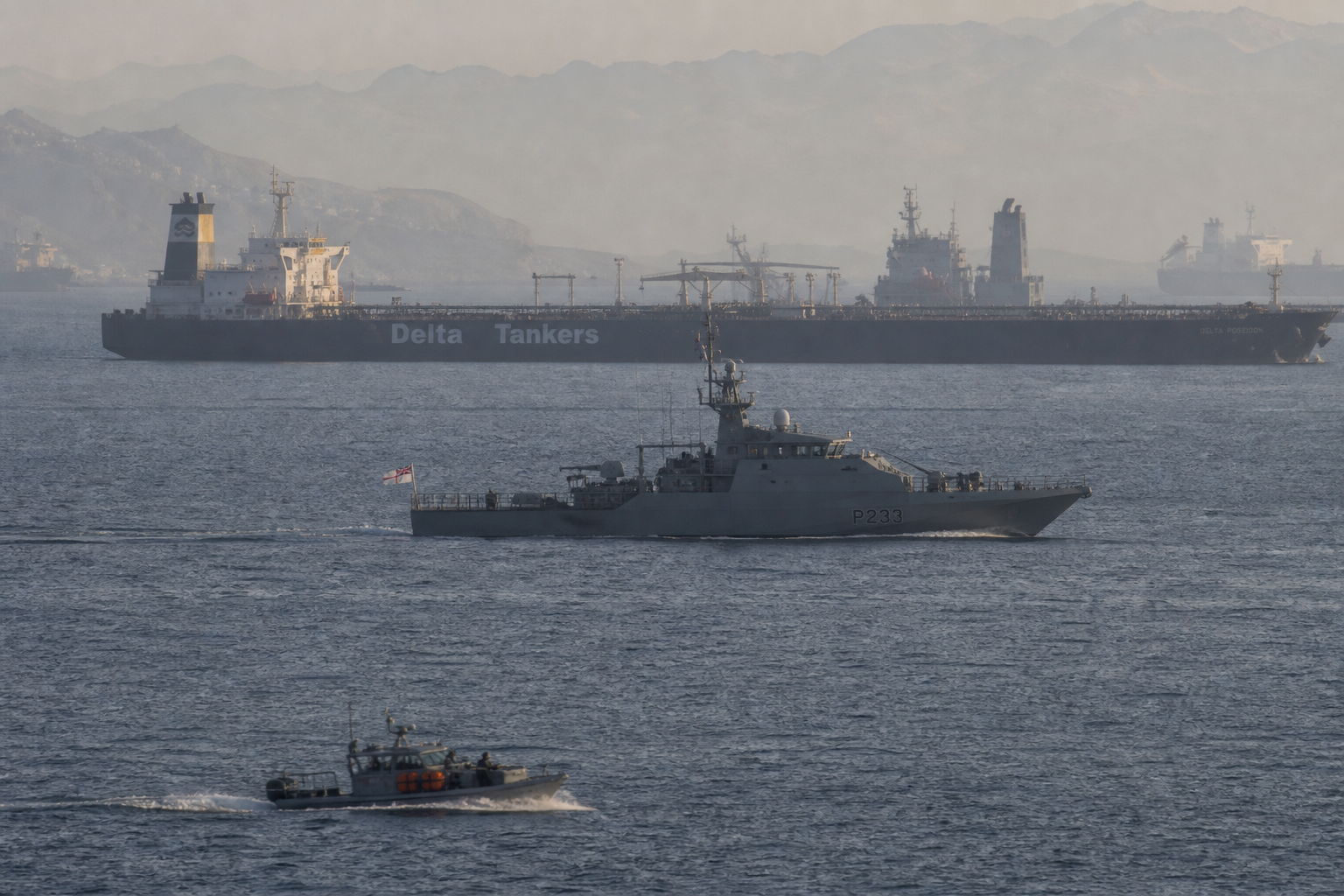
The article reports that Donald Trump warned Iran it would be "hit very hard" if the Strait of Hormuz is not reopened soon, as signs of progress in U.S.-Iran mediated talks helped push oil prices lower. Trump said the waterway would open "very soon" while senior officials, including Secretary of State Marco Rubio and Treasury Secretary Scott Bessent, suggested a deal could be reached within days. The prospect of easing disruptions in one of the world’s most important energy chokepoints caused Brent crude and West Texas Intermediate to fall to their lowest levels in weeks.
Despite the market reaction, the situation remains unresolved. Iran says it is not negotiating directly with the United States and is instead talking through Oman, while Qatar and other intermediaries continue diplomatic efforts. The article explains that the Strait of Hormuz is crucial because it carries about one-fifth of global daily oil and liquefied natural gas supplies. The conflict has already led to blockades, attacks on ships, and higher fuel prices worldwide.
The piece also highlights the broader economic fallout: fuel prices have risen in the UK and U.S., oil companies have benefited from higher profits, and investors remain uneasy because previous talks have repeatedly failed to produce lasting de-escalation. The article situates Trump’s threat as part of a wider standoff over maritime access, military pressure, and efforts to prevent further escalation in the Middle East.
Entities: Donald Trump, Marco Rubio, Scott Bessent, Iran, Strait of Hormuz • Tone: analytical • Sentiment: neutral • Intent: inform
05-08-2026
The CBS News article argues that the Trump administration, despite portraying itself as unusually transparent, has provided limited public detail about the American-led war against Iran as the conflict stretches into its sixth month. It notes that Pentagon press briefings have largely stopped, lawmakers say they are not getting adequate information, and the administration instead relies on President Trump’s frequent public comments, social media posts, and polished battlefield videos from U.S. Central Command. The article emphasizes that key facts about troop deployments, casualties, battle damage, strategy, and shifting ceasefire decisions remain difficult to assemble from fragmented official disclosures.
The story also describes the war’s rapidly changing course: heavy U.S. bombardments, ceasefire announcements, renewed hostilities after Iranian attacks on commercial ships, and Trump’s weekend consideration of broader strikes on Iranian energy infrastructure before backing off after talks with Saudi Arabia’s crown prince. It highlights concerns in Congress from both parties, including criticism from Republican Sen. John Kennedy and Rep. Mike Turner, who say the administration should provide more straightforward briefings. The Pentagon says it is still briefing Congress and that Trump and Hegseth are giving the public clear updates online, but the article presents that claim against a backdrop of reduced institutional transparency.
The article also points to wider information gaps, including Iran’s media blackout and the State Department’s halted daily briefings, while a CBS poll shows Americans are increasingly frustrated and uncertain about the war. Overall, the piece portrays a gap between the administration’s transparency rhetoric and the limited, highly controlled information reaching Congress, the press, and the public.
Entities: Pete Hegseth, Donald Trump, Iran, U.S. Central Command, Pentagon • Tone: analytical • Sentiment: negative • Intent: analyze
05-08-2026
CBS News reports that the United States has consumed nearly all of its global stockpile of long-range precision missiles in the war with Iran, according to two sources with direct knowledge of the matter. The weapons specifically cited are Army Tactical Missile Systems (ATACMS) and Precision Strike Missiles, which Reuters first reported had been used up almost entirely during Operation Epic Fury. The story says the depletion of these and other munitions has become a pressure point inside the administration, especially because the U.S. cannot keep up with the rate at which it used precision weapons early in the conflict.
The article also emphasizes broader concerns about U.S. missile defenses. Officials said the more urgent problem is the shrinking number of Patriot and THAAD interceptors, which are being expended faster than industry can replace them. Citing Center for Strategic and International Studies estimates, the report notes steep declines in stockpiles of both Patriot and THAAD interceptors and says it could take until at least mid-2029 to restore inventories to pre-war levels.
Pentagon spokesperson Sean Parnell pushed back, saying the military remains fully capable and has a deep arsenal to protect U.S. interests. Defense Secretary Pete Hegseth similarly dismissed concerns as media-driven exaggeration, insisting stockpiles are strong and improving. The article closes by noting that U.S. strikes on Iran are paused again to allow diplomacy over the Strait of Hormuz, but President Trump is still threatening renewed large-scale attacks if U.S. demands are not satisfied. Overall, the piece portrays a tension between public reassurance from officials and internal worries about the sustainability of U.S. munitions supply during an extended conflict.
Entities: United States, Iran, CBS News, Reuters, Army Tactical Missile Systems (ATACMS) • Tone: analytical • Sentiment: negative • Intent: inform
05-08-2026
Markets in Asia and elsewhere rallied on optimism that Washington and Tehran may soon reach an agreement to keep the Strait of Hormuz open, after U.S. Treasury Secretary Scott Bessent suggested a deal could be reached by Wednesday and emphasized “freedom of movement” through the waterway. The article frames this as the main driver of a risk-on mood in markets, especially after Wall Street’s record-setting session powered by AI and growth-stock enthusiasm. It also notes that the geopolitical backdrop remains fragile: tensions between Iran and the U.S. persist, with Iran reportedly warning that President Donald Trump could “ignite the spark” of World War 3. Beyond geopolitics, the piece highlights several market-moving developments in Asia and Europe. Asian technology stocks advanced, helping lift broader regional sentiment. General Motors and China’s SAIC Motor extended their joint venture for 20 more years, signaling a long-term commitment to the Chinese market. India’s retail inflation rose to an 18-month high, crossing the central bank’s 4% target. In Europe, Novo Nordisk’s raised guidance did not satisfy investors, as concerns remain about competition from Eli Lilly, the sustainability of obesity-drug growth, and mixed results from next-generation pipeline candidate CagriSema. Overall, the article presents a snapshot of markets being buoyed by geopolitical deal hopes and tech optimism, while still facing underlying uncertainty from Iran-U.S. tensions, inflation data, and company-specific disappointments.
Entities: Scott Bessent, Donald Trump, Iran, United States, Strait of Hormuz • Tone: analytical • Sentiment: neutral • Intent: inform
05-08-2026
The article reports that the U.S. military says the Strait of Hormuz remains open to commercial shipping, even as tensions around Iran continue and oil markets react to diplomatic signals. U.S. Central Command said the Strait’s southern route, which passes through Omani territorial waters, is still free and open, and that U.S. forces have helped more than 1,000 vessels transit the area despite Iranian aggression. The statement followed comments by Treasury Secretary Scott Bessent, who said the U.S. was in talks with Iran and that a deal to reopen the strait could be reached as soon as that day or the next, potentially normalizing the conflict. The article notes that oil prices fell sharply after Bessent’s comments, though Brent and WTI later recovered slightly. It also describes reporting from other outlets suggesting pressure on Oman to accept a temporary agreement, with mediation involving Pakistan and indirect U.S. involvement.
A second major thread in the story concerns reports that U.S. missile stockpiles have been strained by the Iran war. Reuters and CNN cited claims that the U.S. had used much of its long-range precision missile inventory and a large share of THAAD interceptors. The White House and Pentagon pushed back, insisting the military has more than enough munitions. President Donald Trump also rejected the shortage narrative, saying the U.S. has more munitions than anyone in the world and that defense manufacturers are ramping up production. Overall, the piece frames a volatile mix of military posture, diplomatic negotiations, and market sensitivity around the Strait of Hormuz.
Entities: Strait of Hormuz, U.S. Central Command (CENTCOM), Scott Bessent, Iran, Donald Trump • Tone: analytical • Sentiment: neutral • Intent: inform
05-08-2026
CNN’s live updates on the Iran war describe a fast-moving mix of diplomacy, military strain, and continued regional shipping threats. President Donald Trump says the Strait of Hormuz will be reopened “soon” or Iran will face another harsh attack, while also claiming “very good discussions” are underway with Tehran. At the same time, Qatar’s foreign ministry says talks over a short-term solution are in “very progressive stages,” though it stresses there are no direct US-Iran negotiations on the books. Iran says it is continuing discussions with Oman over safe shipping routes through the strait, and mediators hope reopening the waterway could allow broader nuclear talks to resume.
The article also highlights the military cost of the conflict. According to sources familiar with the inventory, the US has used up nearly 80% of its THAAD interceptors and about half of its Patriot interceptors since the war began, leaving Pentagon munitions stocks “dangerously low.” That shortage has alarmed senior commanders and raised concerns among Gulf allies about their ability to defend themselves against possible Iranian retaliation if the conflict escalates further.
Separately, the piece reports continued danger to commercial shipping in the region. An Indian-flagged vessel, the MSV Faize Noore Oliya, was struck and sunk by a projectile off Yemen, with India condemning the attack and saying all 14 crew members were rescued by the Yemeni Coast Guard. India and Reuters-linked reporting point to the Iran-backed Houthis as possible perpetrators, though no group publicly claimed responsibility. The article frames these incidents as part of a broader disruption to maritime security spanning the Bab al-Mandeb Strait and the Strait of Hormuz.
Entities: Donald Trump, Iran, United States, Strait of Hormuz, Bab al-Mandeb Strait • Tone: urgent • Sentiment: negative • Intent: inform
05-08-2026
A Marquette Law School poll suggests that public support in the United States for the Trump administration’s military campaign against Iran is weak and has declined further since April. The central finding is that 88 per cent of respondents said the US has not achieved its goals in the war with Iran, a seven-point increase from the prior poll, while only 12 per cent believed it had met its objectives. In addition, 75 per cent of Americans said the war has not been worth the cost, slightly up from 72 per cent in April. The article places these polling results in the context of ongoing diplomatic efforts to reopen the Strait of Hormuz and end five months of hostilities. It notes that negotiations intensified on Tuesday, with Iran talking to neighbouring Oman and US officials expressing cautious optimism that a deal could soon be reached. Secretary of State Marco Rubio is quoted saying there is an active conversation involving Oman and Iran about allowing more ships to pass safely through the strait, though he stressed that progress had been made but no final agreement had been reached. Overall, the piece highlights a disconnect between the administration’s war aims and public opinion, while also underscoring that diplomacy is still underway.
Entities: Donald Trump administration, Marquette Law School poll, Iran, United States, Strait of Hormuz • Tone: analytical • Sentiment: negative • Intent: inform
05-08-2026
U.S. stock futures pointed higher early Wednesday after a strong rally on Tuesday pushed major indexes to record highs, led by solid corporate earnings and easing concerns about geopolitical disruption in the Middle East. The S&P 500 closed above 7,700 for the first time, while the Dow also posted another record close, helped by gains in companies such as Caterpillar and Palantir and by comments from Treasury Secretary Scott Bessent suggesting that the U.S. and Iran may be close to a deal to reopen the Strait of Hormuz. Oil prices fell sharply on the prospect of reduced supply risk, while gold rose as investors balanced lower oil and a softer dollar against the broader risk-on mood.
The article also tracks overnight moves in global markets. Asian equities mostly advanced, with South Korea’s Kospi and Japan’s Nikkei surging on the back of the Wall Street tech rally, while Australian shares hit a record intraday high. In Europe, the Stoxx 600 reached a record close and was expected to extend gains. Currency markets showed the yen strengthening as investors watched for more intervention from Japanese authorities. Individual stocks saw sharp moves: SpaceX and AMD fell in after-hours trading after earnings-related news, while several Asian tech and semiconductor names rallied, including SoftBank, Samsung Electronics, SK Hynix, and Tokyo Electron. The report also previews a busy U.S. calendar of earnings from Disney, Uber, Eli Lilly, e.l.f. Beauty, and DoorDash, alongside key economic releases such as ADP private payrolls and services-sector surveys.
Entities: S&P 500, Dow Jones Industrial Average, Nasdaq-100, Stock futures, NYSE • Tone: analytical • Sentiment: positive • Intent: inform