04-08-2026
The article reports conflicting claims from Iran and the Trump administration over whether new negotiations are underway to end the war involving Iran and to address disruptions in the Strait of Hormuz. Iran said it is only talking with Oman about reaching an understanding for a temporary route through the strait to allow commercial shipping to resume, and denied negotiating directly with the United States. That denial came after Donald Trump announced that talks would begin on Monday and said he had canceled planned massive strikes on Iran because of the possibility of a deal. Trump did not clearly identify the participants in the talks, but later insisted the negotiations were happening and accused Iran of duplicity.
The piece explains that the Strait of Hormuz is a critical global oil chokepoint, carrying roughly 20% of the world’s crude oil and LNG, and that recent tensions have affected shipping and energy prices. Oil prices fell after Trump’s remarks, as traders interpreted them as a sign that military escalation might be avoided. Vessel-tracking data also suggested commercial traffic through the strait had slowed. The article places the latest dispute in the context of prior failed talks, repeated threats, and the White House’s longstanding claim that Iran says different things privately and publicly. It also notes domestic political pressure on Trump, with polls showing many Americans disapprove of the war and its management.
Entities: Iran, Oman, United States, Donald Trump, Truth Social • Tone: analytical • Sentiment: neutral • Intent: inform
04-08-2026
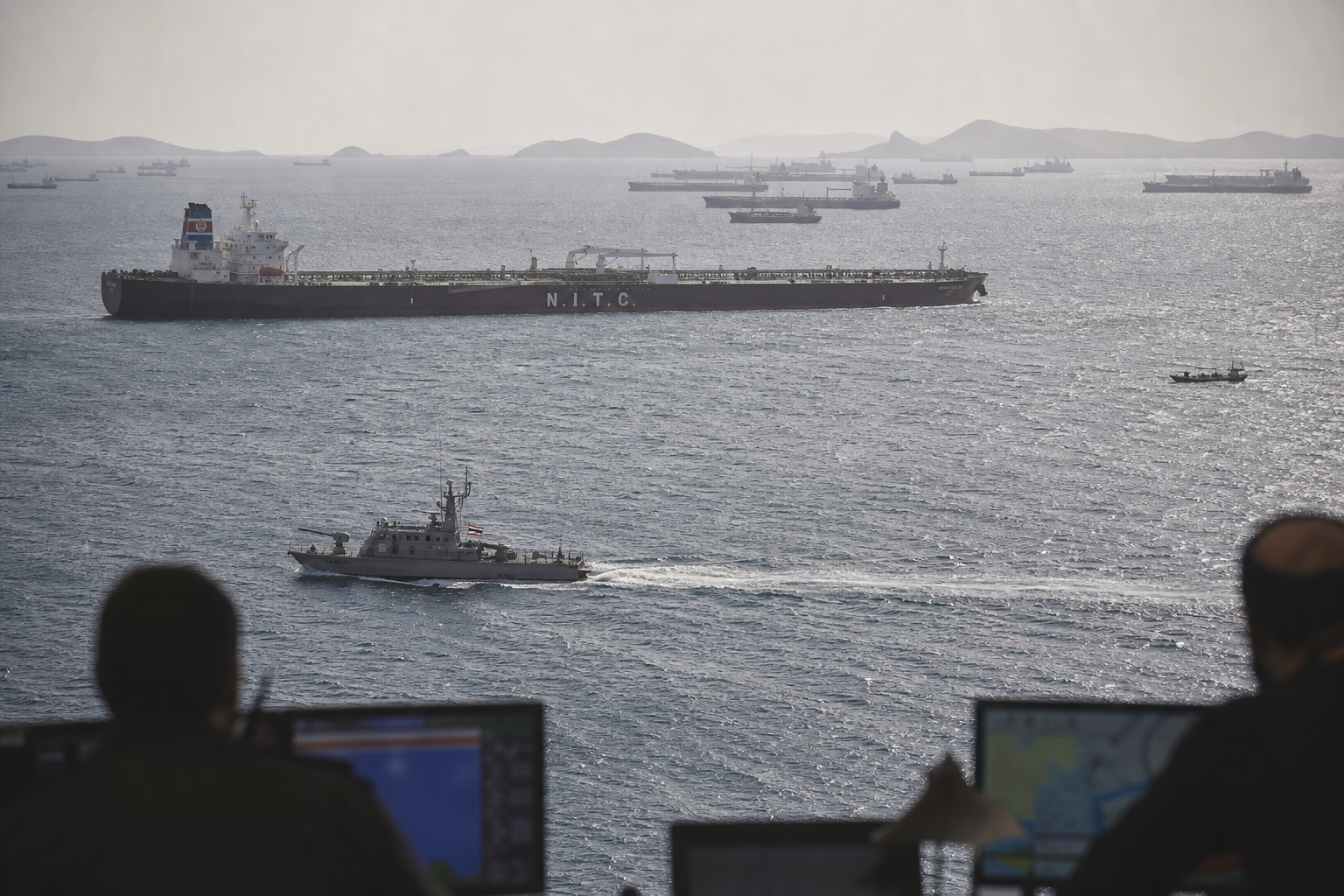
The article reports that the threat to oil tankers and other shipping in the Middle East has reached its highest level since the current Iran war began, according to shipping analysts. The main concern is the Strait of Hormuz, a vital chokepoint for global energy supplies, where traffic has dropped sharply as many vessels avoid detection by switching off transponders or stop sailing through altogether. Although some tankers previously shifted to the Red Sea route to bypass the Strait, recent Houthi attacks on Saudi-linked vessels in that waterway have created a second major security risk, worsening disruption across regional shipping lanes.
Analysts cited by BBC say the crisis is now affecting not just the Strait of Hormuz but also the Bab el-Mandeb and Red Sea corridor, expanding the area considered dangerous for commercial shipping. Kpler data shows a steep fall in vessel traffic and oil exports through the region, while Intertanko describes the security situation as broadening and deteriorating. The article also notes that, despite some talks involving Oman and Iran, there is no immediate deal to restore normal traffic through the strait, and any recovery in shipping flows would likely take months even if the route reopened quickly. Oil markets have reacted to the uncertainty, with Brent crude falling after Donald Trump said he would cancel planned strikes on Iran, but analysts warn that the shipping industry remains under severe strain and faces prolonged disruption.
Entities: Strait of Hormuz, Red Sea, Bab el-Mandeb strait, Iran, Saudi Arabia • Tone: analytical • Sentiment: negative • Intent: analyze
04-08-2026
The article argues that the Trump administration, despite branding itself as unusually transparent, has provided limited public and congressional information about the ongoing U.S.-led war against Iran. As the conflict enters its sixth month, the Pentagon has largely stopped holding regular press briefings, and reporters, lawmakers, and the public are left piecing together the war from presidential remarks, social media posts, and selective Central Command videos. The article notes the scale of the conflict—more than 50,000 U.S. troops deployed in the Middle East, 18 American service members killed, hundreds wounded, and a further $67 billion requested from Congress—while emphasizing that concrete details about strategy, troop movements, casualties, and battle damage remain scarce.
The piece highlights the administration’s shifting war posture: heavy bombardment, calls for Iran’s surrender, temporary ceasefires, resumed hostilities, then another pause and renewed talks. It recounts Trump’s claim that he considered strikes on Iranian energy infrastructure before backing off after a call with Saudi Arabia’s crown prince and saying he wanted a deal, though he warned the U.S. remained “locked and loaded.” The article also underscores the added difficulty of assessing the conflict because Iran has imposed a media blackout and there are no U.S. ground troops embedded for journalists.
The article further explores frustration from lawmakers in both parties, including Republican Sen. John Kennedy and Rep. Mike Turner, who say the administration is not providing enough straight answers. It also points to internal Pentagon rules limiting direct communication with Congress and to broader declines in information-sharing across the administration, including the State Department’s halted daily briefings. A CBS News poll suggests Americans are increasingly uneasy with the war and want it to end, even as they broadly support some of the administration’s stated goals.
Entities: Pete Hegseth, Donald Trump, Iran, U.S. Central Command, Defense Department • Tone: analytical • Sentiment: negative • Intent: analyze
04-08-2026
President Donald Trump said Saturday that the United States would cancel a planned attack on Iran after indications that a peace deal to end the conflict might be close. In a Truth Social post, Trump said the U.S. had been asked by Iran and other Middle Eastern countries to hold off because the terms of a deal had been agreed to, and he described the prospective agreement as including the immediate reopening of the Strait of Hormuz and an end to Iran’s nuclear threat. He said he had agreed to cancel the attack for the benefit of the world and in hopes of a prosperous future for Iran, while asserting that Israel supports the commitment to pursue a deal.
The article says the U.S. and Israel had been preparing what sources described as a severe bombing campaign against Iranian energy infrastructure, with strikes potentially imminent. Trump had previously warned Iran that the U.S. would hit it hard unless it yielded. The piece also notes that Saudi Crown Prince Mohammed bin Salman urged Trump not to launch another strike, citing concerns about the targets. Meanwhile, U.S. embassies across the Middle East issued security alerts amid rising tensions, and the State Department warned Americans to expect disruptions, including flight cancellations and airspace closures.
The story places these developments in the context of an escalating U.S.-Iran conflict, including joint U.S.-Saudi strikes on Iran-backed militants in Iraq, Iranian missile attacks on U.S. forces, and recent direct U.S. strikes on Iranian military and surveillance sites. It also notes that Israel had not directly attacked Iran since a temporary ceasefire and memorandum of understanding in June, though that arrangement later collapsed and fighting resumed.
Entities: Donald Trump, Iran, Israel, United States, Saudi Arabia • Tone: urgent • Sentiment: negative • Intent: inform
04-08-2026
President Donald Trump said the latest round of talks with Iran is the “last chance” to end the five-month conflict, even as Tehran continued to deny that direct U.S.-Iran negotiations are taking place. Trump told reporters that discussions are underway at Iran’s request and with the involvement or encouragement of regional actors including Saudi Arabia, the United Arab Emirates, Qatar, and others. Iranian officials, however, said there is no immediate plan for direct negotiations and that Tehran is only in talks with Oman about the Strait of Hormuz. The contradiction between Washington and Tehran added to uncertainty in global energy markets, helping push oil prices higher after an earlier slump.
The article highlights how diplomatic ambiguity has become a major market driver. Trump said he had called off planned “massive attacks” on Iran to allow time for negotiations, a move that briefly improved market sentiment and sent oil prices lower. But as confidence in a diplomatic breakthrough weakened, crude rebounded. West Texas Intermediate and Brent both rose in early trading Tuesday. The piece also notes that the U.S. Central Command has redirected dozens of commercial vessels amid the ongoing blockade of the Strait of Hormuz, underscoring the broader regional and shipping risks from the conflict. Overall, the article frames the Iran war as both a geopolitical crisis and a market-moving event, with little clarity on whether diplomacy can prevent further escalation.
Entities: Donald Trump, Iran, Tehran, Masoud Pezeshkian, Esmail Baghaei • Tone: analytical • Sentiment: neutral • Intent: inform
04-08-2026
This CNN live updates article covers escalating Middle East tensions as President Donald Trump says he called off planned U.S. strikes on Iran and warns Tehran it has a “last chance” to sign a deal with the United States. Trump claims negotiations could begin Monday and suggests a Strait of Hormuz arrangement is underway, but Iranian officials deny any talks with Washington are happening. Iran says it is only discussing the Strait of Hormuz with Oman and insists the U.S. has not honored its commitments. The article also tracks related regional disruptions, including an alleged Iranian military response to a reported strike on an Iranian commercial vessel in the Caspian Sea, tensions involving Ukraine, and shipping threats in the Red Sea and Bab al-Mandeb from the Iran-backed Houthi militia. Several Saudi-operated tankers have been rerouted around Africa, increasing costs and travel times and highlighting the vulnerability of global oil shipping routes. The article notes that oil prices fell after Trump said he canceled the strikes, while the situation remains volatile with another tanker reportedly struck in the Strait of Hormuz. Overall, the piece presents a rapidly evolving conflict-and-diplomacy backdrop, emphasizing uncertainty, maritime risk, and the broader economic consequences of regional instability.
Entities: Donald Trump, Iran, United States, Oman, Strait of Hormuz • Tone: analytical • Sentiment: neutral • Intent: inform
04-08-2026
CNN analysis argues that Donald Trump has so far avoided one major mistake in his confrontation with Iran: escalating the conflict beyond what the United States can realistically control. The article frames Trump as being trapped between three bad options: continuing an inconclusive campaign of airstrikes and limited coercion, dramatically widening the war by attacking Iranian civilian and infrastructure targets or even using ground troops, or cutting losses and leaving with his goals unmet. It emphasizes that history shows presidents often fall into the escalation trap when they fear the political and strategic costs of backing down.
The piece warns that any major escalation would be risky because Iran may not be bombed into negotiations and would likely retaliate against U.S. allies and critical infrastructure in the Gulf. It also notes the danger of trying to force open the Strait of Hormuz or conducting ground operations near Iranian oil and military assets, which could produce heavy casualties and deepen the war. The article places Trump’s dilemma in a historical context, comparing it to Vietnam under Lyndon B. Johnson and Richard Nixon, Iraq under George W. Bush, and Afghanistan under Barack Obama. In each case, leaders escalated wars to avoid the appearance of defeat, often worsening the conflict.
The analysis concludes that Trump, who once campaigned against endless wars, now risks repeating the same pattern. His predicament is politically dangerous because U.S. casualties would raise the domestic cost, especially with midterm elections approaching. The central argument is that Trump’s current restraint may be temporary, but so far he has not made the catastrophic choice to massively expand the war.
Entities: Donald Trump, Iran, United States, Pentagon, Saudi Arabia • Tone: analytical • Sentiment: negative • Intent: analyze
04-08-2026
The article is an opinion column arguing that Saudi Arabia, especially Crown Prince Mohammed bin Salman (MBS), cannot continue relying on the United States to confront Iran while simultaneously urging Washington to restrain itself. It opens by noting reports that Saudi Arabia helped persuade President Donald Trump to cancel a planned major strike on Iran, then questions whether Riyadh is willing to back that diplomatic influence with real action. The author contends that Iran is not serious about de-escalation, that talks are unlikely to produce meaningful concessions, and that only sustained military, financial, and strategic pressure can prevent Tehran from gaining nuclear capability or dominating the Strait of Hormuz.
The piece says Saudi fears of Iranian retaliation are understandable, but argues that caution and appeasement only prolong instability for the region and the world. It points out that Saudi Arabia has recently shown signs of becoming tougher, including reportedly joining limited U.S. strikes after previously denying use of its airspace and bases. Still, the author insists that the Gulf states must stop hiding under the American security umbrella and instead contribute more directly to deterrence and defense. The conclusion is blunt: if Saudi Arabia wants to shape U.S. policy and benefit from U.S. protection, it must also help lead the effort against Iran, or else stop demanding restraint from Washington.
Entities: Saudi Arabia, Iran, Houthis, President Donald Trump, Crown Prince Mohammed bin Salman • Tone: analytical • Sentiment: negative • Intent: critique
04-08-2026
The article argues that Saudi Arabia is failing to act in alignment with U.S. interests in the escalating conflict with Iran. It says Crown Prince Mohammed bin Salman reportedly urged President Trump to delay a strike on Iran, and that Trump backed off, missing an opportunity to strike a serious blow against the Iranian regime. While acknowledging that Saudi Arabia faces real threats from Iranian drones, missiles, and proxy forces, the piece contends the kingdom has benefited from American and other allied protection and should therefore do more than call for restraint and diplomacy.
The author criticizes Saudi Arabia for gravitating toward a loose regional alignment — described as “STEP” (Saudi Arabia, Turkey, Egypt, and Pakistan) — that prioritizes avoiding wider war over actively confronting Iran. In the article’s view, Iran repeatedly violates diplomatic arrangements and continues hostile actions through the Strait of Hormuz and against Gulf Arab states, making negotiations unreliable. The article insists that if Saudi Arabia wants U.S. restraint, it must offer real alternatives and contribute materially to the fight.
The piece points to limited Saudi military action against Iran-backed militias in Iraq and possible moves against the Houthis in Yemen as signs of potential involvement, but argues that the broader regional conflict demands more decisive participation. It concludes that Saudi Arabia must either join the fight against Iran, help pay the costs, or stop obstructing U.S. efforts. Overall, the article is a forceful opinion advocating a tougher, more interventionist Saudi role alongside the United States and Israel against Iran and its proxies.
Entities: Saudi Arabia, Mohammed bin Salman, Donald Trump, Iran, United States • Tone: analytical • Sentiment: negative • Intent: critique
04-08-2026
The article reports that Iran and Oman are nearing an agreement to reopen shipping through the Strait of Hormuz, a critical global energy corridor, but the deal could carry major political and strategic costs for President Trump and the United States. According to Iranian officials, the arrangement would route incoming and outgoing vessels through separate channels near Iran and Oman, with an Iranian-managed system that may include a service fee. U.S. officials dispute that characterization, saying any temporary shipping routes would not require Iranian approval and would involve no tolls.
The reopening would help ease market pressure and fulfill Trump’s urgent political need to restore shipping, but it may also implicitly ratify Iran’s claim to control over the waterway after the war. That prospect conflicts with statements by Secretary of State Marco Rubio, who insists the Strait must return to open international use and warns that allowing a state to charge tolls or threaten ships would set a dangerous global precedent. The article frames the issue as part of broader negotiations tied to Iran’s nuclear program, including the fate of Iran’s enriched uranium stockpile.
Trump has publicly suggested the strait could reopen quickly and says reopening is the first phase, with denuclearization to follow. But the article notes deep skepticism within the Pentagon and among some Iranian officials about whether the deal would actually work, whether the waterway remains unsafe because of mines and missile threats, and whether the arrangement would reduce the risk of renewed U.S. military action. Experts quoted say Iran views control over the strait as its key wartime gain, leaving Trump with an unattractive choice between prolonged conflict and a compromise that may be politically hard to defend.
Entities: Strait of Hormuz, Iran, Oman, President Trump, Marco Rubio • Tone: analytical • Sentiment: neutral • Intent: inform
04-08-2026
The article reports that Iran and Oman are nearing an agreement to reopen shipping traffic in the Strait of Hormuz after wartime disruption, based on accounts from Iranian and American officials. The proposed arrangement would allow vessels entering the Persian Gulf to use a channel controlled by Iran near its coast, while ships exiting would travel through a separate channel near Oman. While the deal could restore a critical international maritime route and reduce shipping risks, it also appears to concede significant control to Tehran over the waterway. That political cost is central to the article’s framing: reopening the strait may stabilize commerce and navigation, but it may also amount to a de facto ratification of Iran’s authority over a chokepoint traditionally treated as open international waters. The piece emphasizes that the arrangement is still emerging rather than finalized, and it situates the negotiation within broader regional tensions and the implications for U.S. policy under Trump.
Entities: Strait of Hormuz, Iran, Oman, Persian Gulf, New York • Tone: analytical • Sentiment: neutral • Intent: inform
04-08-2026
This article is a transcript of a CBS News interview on “Face the Nation” between Margaret Brennan and Democratic Sen. Mark Kelly of Arizona, focused primarily on the Trump administration’s conduct of a war with Iran and the political and budgetary consequences for the United States. Kelly criticizes President Trump for what he describes as an erratic, escalating approach that lacks a clear strategic goal, timeline, or exit plan. He argues that the administration has alienated allies, overused military munitions, and created strain on U.S. defense readiness, including concerns about whether the military can both defend the homeland and protect allies such as Israel.
The interview also centers on the administration’s request for additional defense funding, which Kelly views skeptically. He notes that Congress recently approved a trillion-dollar defense budget and says the Pentagon has already squandered those resources. He rejects the idea of a blank check, arguing that the military needs a reasonable, targeted approach rather than expensive systems he believes may not work, including space-based missile interceptors. Kelly frames the issue as one of fiscal responsibility, debt, and prioritization rather than simply spending more.
The conversation then shifts to domestic politics and the upcoming midterms. Brennan raises polling showing Democrats in a weak position, and Kelly acknowledges challenges but says Republicans’ redistricting efforts and Trump’s unpopularity create opportunities for Democrats to regain the House. He concedes the Senate will be harder to win but remains cautiously optimistic. Overall, the transcript presents Kelly as sharply critical of the administration’s foreign policy and defense management while attempting to project confidence about Democrats’ electoral prospects.
Entities: Mark Kelly, Margaret Brennan, Donald Trump, Pete Hegseth, General Grynkewich • Tone: analytical • Sentiment: negative • Intent: inform
04-08-2026
This article is a transcript of a "Face the Nation" interview with Republican Rep. Mike Turner of Ohio, focused on U.S. foreign policy toward Iran, cyber threats to American infrastructure, and questions about domestic politics in Ohio. Turner argues that the administration should share more information with Congress about the evolving conflict with Iran, but he also says the situation is dynamic and that Iran must ultimately abandon its nuclear ambitions and reopen the Strait of Hormuz. He frames the conflict as part of a larger strategic confrontation involving Iran’s nuclear program, energy flows, and military capabilities.
The interview then shifts to cybersecurity concerns after the FBI warned that cyber actors are attacking water utilities in at least seven states. Turner says Congress has not been fully briefed, but he agrees that U.S. adversaries such as Iran, Russia, China, and North Korea view critical infrastructure as legitimate targets and that such systems need to be monitored and hardened. He characterizes the situation as a broader conflict in which hostile actors may continue attacking U.S. infrastructure.
In the final segment, Brennan asks Turner about allegations of domestic abuse against Ohio Rep. Max Miller. Turner repeatedly declines to address the substance of the allegations, saying the matter belongs in court rather than on television. He resists calls for party-level scrutiny or ethics action, emphasizing that the issue is part of ongoing litigation and divorce proceedings. Overall, the transcript presents Turner as supportive of the administration’s approach to Iran, alarmed by cyber threats, and unwilling to engage substantively on the political implications of allegations against a fellow Republican.
Entities: Mike Turner, Margaret Brennan, Donald Trump, Pete Hegseth, Ohio • Tone: analytical • Sentiment: neutral • Intent: inform
04-08-2026
The article examines how escalating conflict around the Strait of Hormuz has trapped thousands of civilian sailors in a dangerous maritime standoff, with some vessels effectively caught between Iran, the United States, Israel, and proxy forces in the wider Middle East war. The most vivid case is the MSC Francesca, a container ship seized by Iran on April 22 and now anchored near Iran’s coast, where about two dozen crew members from multiple countries have spent months under guard with limited communication, uncertain prospects for release, and growing hardship. The piece places the Francesca within a broader disruption to global shipping: after U.S. and Israeli strikes and Iran’s closure of the strait, roughly 1,500 ships and nearly 20,000 sailors were stranded, with about 6,000 still unable to leave. Passage through the waterway has slowed sharply, and civilian seafarers have become unintended frontline casualties of the conflict, with 17 sailors killed in attacks around the strait and Red Sea since the war began. The article also details the efforts of governments, maritime organizations, and unions to negotiate releases, including Panama, Switzerland, Croatia, the Philippines, and the International Maritime Organization, while noting that shipowners like MSC have largely declined public comment. It underscores the human cost of geopolitical conflict on an industry essential to global trade, including fear, isolation, financial strain, mental health pressure, and the professional risks sailors face if they refuse dangerous assignments.
Entities: Strait of Hormuz, Iran, MSC Francesca, Epaminondas, MSC Mediterranean Shipping Company • Tone: urgent • Sentiment: negative • Intent: inform