04-08-2026
An explosion at a restaurant in central Moscow killed three people and injured 21 others, according to Russian authorities, who described the incident as a bombing carried out with a homemade explosive device. Moscow Mayor Sergei Sobyanin called it a “brutal terrorist act,” while investigators said the case remains under investigation and no one has claimed responsibility. Russian anti-terrorism officials said one of the dead was a woman who brought the device into the restaurant, along with a security agent who stopped her and a customer. The injured were reportedly receiving treatment in city hospitals.
The article places the attack in the broader context of recurring explosions and assassinations in Russia since the start of the war in Ukraine in 2022. It notes several high-profile incidents blamed on or linked to Ukraine, including the killing of military blogger Vladlen Tatarsky, General Igor Kirillov, Daria Dugina, and the wounding of pro-Kremlin writer Zakhar Prilepin. The piece emphasizes that the Moscow bombing is still under active investigation and that responsibility has not yet been established publicly.
Entities: Moscow, Russia, Sergei Sobyanin, Russia's national anti-terrorism committee, Moscow Investigative Committee • Tone: urgent • Sentiment: negative • Intent: inform
04-08-2026
Moscow Mayor Sergei Sobyanin condemned a deadly bombing at an upscale restaurant in central Moscow as a “brutal terrorist act,” promising that those responsible would be found and punished. The blast occurred Saturday evening at Balzi Rossi Italian restaurant on Kudrinskaya Square and killed three people, including the suspected bomber, a security guard, and a patron. Russian authorities said at least 21 others were injured, many of whom were hospitalized.
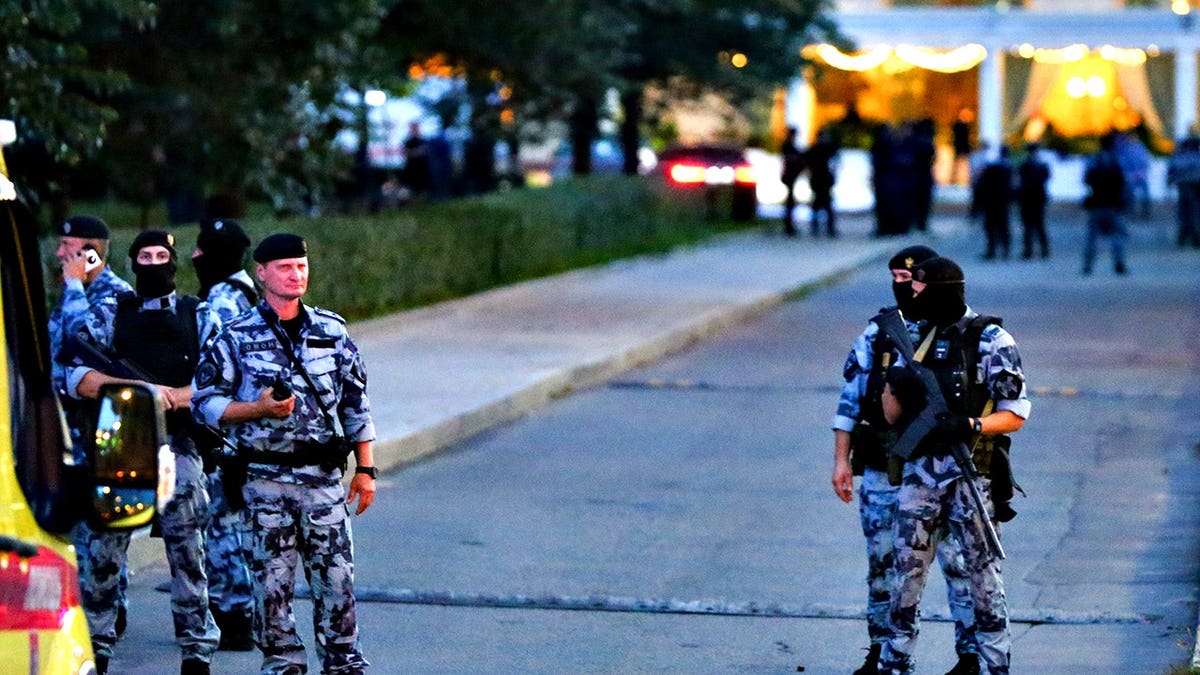
According to Russian state media and the National Anti-Terrorism Committee, the explosion was caused by a homemade explosive device. RIA Novosti, citing local officials, reported that a woman carrying the bomb tried to enter the restaurant but was stopped by a security guard before the device detonated. The restaurant was reportedly closed to the public for a private event at the time. Emergency vehicles, police, and investigators responded to the scene, while video from Russian state media showed a heavy security presence outside the damaged building.
Authorities had not identified any suspects or claimed responsibility by Sunday, and Russian officials did not immediately connect the bombing to the war in Ukraine or to earlier assassination attempts inside Russia. The article also notes that the Federal Security Service had recently tightened security for senior military and government officials after a series of attacks since the start of Russia’s full-scale invasion of Ukraine in 2022.
Entities: Moscow, Sergei Sobyanin, Balzi Rossi Italian restaurant, Kudrinskaya Square, Russia's National Anti-Terrorism Committee • Tone: urgent • Sentiment: negative • Intent: inform
04-08-2026
The article reports on a deadly explosion at an upscale Moscow restaurant that killed and injured multiple people, with Russian officials and commentators suggesting it may have been aimed at senior military personnel. The piece centers on an analyst’s view that Vladimir Putin’s effort to preserve a sense of normalcy in Moscow and St. Petersburg may have created security vulnerabilities, allowing Ukraine to exploit gaps in Russian protection of its elite. The article says Russian media claimed the attack may have targeted Col. Gen. Alexander Chaiko, though this could not be independently verified. It also notes that the Russian Embassy accused Kyiv of responsibility and described the attack as evidence of a spreading Ukrainian ‘terrorist contagion,’ while Ukrainian officials had not publicly commented.
The analysis emphasizes that the attack’s method — a civilian carrying an improvised explosive device that was allegedly detonated remotely — matches earlier attacks inside Russia that Moscow has blamed on Ukraine, including assassinations of high-ranking officers and pro-war figures. The article frames the bombing as part of a broader pattern in the war, where Ukraine has increasingly used asymmetric tactics to counter Russia’s advantages in manpower and firepower. The expert quoted argues that Russia’s large territory, porous borders, and the persistence of elite social events in Moscow have made such attacks easier to carry out. Overall, the article presents the bombing as both a direct security incident and evidence of deeper wartime vulnerabilities within Russia.
Entities: Vladimir Putin, Moscow, St. Petersburg, Ukraine, Russia • Tone: analytical • Sentiment: negative • Intent: analyze