04-11-2026
Iranian Supreme Leader Mojtaba Khamenei warned that the US midterm elections would not change Washington’s hostility toward Iran, despite Democrats’ victory and the Republicans’ loss of control of both chambers of Congress. In a statement marking Iran’s National Day of the Fight Against Global Arrogance, he rejected the idea that partisan shifts or concessions could alter US policy. He said Iran’s control of the Strait of Hormuz had undermined the image of American invincibility and warned that any renewed US attack would prompt a much broader response. The article notes that the strait carried about one fifth of the world’s oil and gas before the war, and reports Khamenei’s claim that Iran’s actions against US military bases in the region were a response to US aggression.
Other Iranian officials celebrated the election results as a rejection of war. Parliament Speaker and US negotiator Mohammad Bagher Ghalibaf said American voters had said “NO TO WAR”; officials Mohammad Mokhber and Gholam-Hossein Mohseni-Ejei portrayed Trump’s result as a political defeat. A presidential communications deputy blamed the Republican loss in part on the war with Iran, US support for Israel, and Israel’s war in Gaza. US President Donald Trump acknowledged that the conflict, which began in February, likely hurt Republicans, including because voters faced higher gasoline costs.
Reporting from Tehran, Al Jazeera’s Resul Serdar Atas described a contrast between the supreme leader’s caution and other officials’ celebratory reactions. Some Iranians hope a Democratic-controlled Congress could restrain Trump, while others fear he might take the results personally and retaliate. The United States has warned of a possible short, intensive campaign against Iran. An adviser to the Islamic Revolutionary Guard Corps warned that Iran could target locations beyond US bases if Gulf states, including the UAE and Bahrain, allowed attacks to be launched from their territory.
Entities: Mojtaba Khamenei, Donald Trump, Mohammad Bagher Ghalibaf, Mohammad Mokhber, Gholam-Hossein Mohseni-Ejei • Tone: analytical • Sentiment: neutral • Intent: inform
04-11-2026
Iranian parliament speaker Mohammed Bagher Ghalibaf, who is involved in negotiations with the United States, said American voters had sent a “NO TO WAR” message after Republicans suffered major losses in the midterm elections. He warned that the US government would face consequences if it ignored public opinion. President Donald Trump acknowledged that the conflict and higher petrol prices contributed to Republican losses, but said he did not regret the February joint US-Israeli attack on Iran. He also said voters supported his Iran policy but were reluctant to bear the short-term cost of more expensive fuel, and told CBS News that the conflict would end “when I say it ends.” Iran’s Supreme Leader Mojtaba Khamenei said US hostility toward Iran would not change, while President Masoud Pezeshkian said Iran had sought a diplomatic resolution and warned that renewed war would benefit no one. Negotiations mediated by Qatar have been stalled for months, though Iran says its revised proposal could be implemented within two days.
The article also reports escalating incidents around the Strait of Hormuz. Iran’s Revolutionary Guard claimed that four tankers caught fire after striking sea mines and that it intercepted two more vessels, but BBC Verify found no evidence that four tankers were destroyed. Separately, UKMTO reported that a tanker was hit by two unidentified projectiles near Oman; no casualties were reported. An Indian crew member was killed in an earlier attack on a dhow, and Iran claimed to have shot down another US drone. The Strait, a vital route for global oil and gas shipments, has been effectively closed since the war began. A preliminary US-Iran agreement to end the conflict and reopen the waterway collapsed, as attacks on shipping resumed and the US restored its blockade. Iran has sought some control over the Strait, while the US has escorted tankers carrying Gulf Arab states’ oil.
Entities: Mohammed Bagher Ghalibaf, Donald Trump, Mojtaba Khamenei, Masoud Pezeshkian, Esmaeil Baqai • Tone: analytical • Sentiment: negative • Intent: inform
04-11-2026
Iranian officials welcomed the U.S. midterm results, portraying Republican losses and President Donald Trump’s political setback as evidence that American voters oppose the Iran war. The elections came amid public frustration over rising fuel and other prices, and as the region awaited signs of how the results might affect U.S. policy. Iran’s chief negotiator, Mohammad Bagher Qalibaf, said Americans had voted against war and warned that ignoring their will would bring consequences. Supreme Leader Ayatollah Mojtaba Khamenei, in a letter posted on social media, cautioned against expecting a change in U.S. hostility as a result of partisan shifts or Iranian concessions.
The article describes a conflict more than eight months old that has damaged Iran and shaken global markets and shipping. Although diplomatic efforts and back-channel talks continue, confrontations have persisted in southern Iran and near the Strait of Hormuz. The United States recently struck targets on Qeshm and Hengam islands and near Bandar Abbas; Iranian authorities did not disclose the precise sites or extent of damage. Iran has restricted shipping through the strait, while the United States maintains a naval blockade of Iranian ports. The waterway carried about one-fifth of global oil supplies before the war.
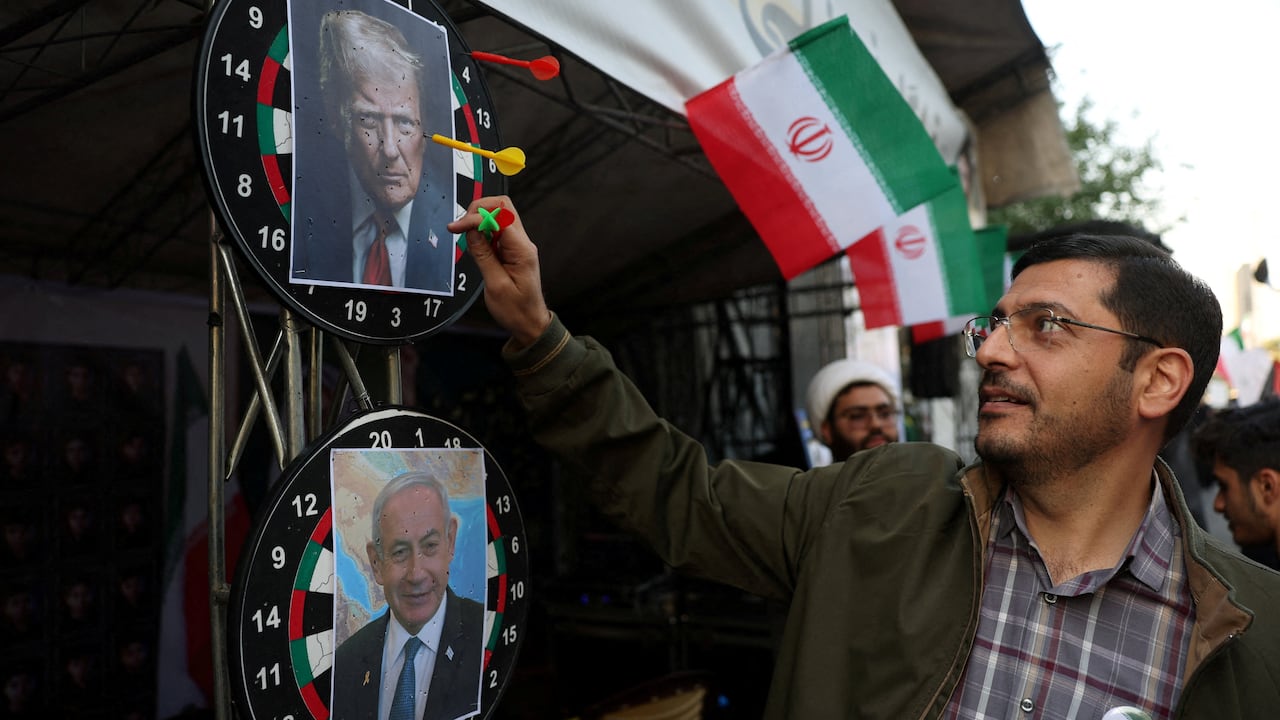
Iranian officials also connected U.S. election losses to the failure of sanctions and to Iran’s resistance. The comments came as Iran marked the anniversary of the 1979 seizure of the U.S. Embassy, with demonstrators burning U.S. and Israeli flags and chanting slogans against both countries. Officials including Tehran Mayor Alireza Zakani and judiciary chief Gholam Hossein Mohseni Ejehi described the United States and Israel as defeated.
The war began on Feb. 28 with U.S. and Israeli strikes that killed Iran’s longtime supreme leader, Ayatollah Ali Khamenei. Trump has alternated between threats of major attacks and support for a negotiated deal. Vice-President JD Vance said he and Trump viewed prospects for an agreement positively, while Netanyahu reportedly urged Trump to launch another wave of strikes. Negotiations continue as U.S. forces maintain the blockade and additional troops and an aircraft carrier head to the region.
Entities: Donald Trump, Mohammad Bagher Qalibaf, Ayatollah Mojtaba Khamenei, Benjamin Netanyahu, JD Vance • Tone: analytical • Sentiment: negative • Intent: inform
04-11-2026
The article’s November 3 live updates describe a widening regional conflict and uncertain prospects for a U.S.-Iran agreement. A senior Iranian figure said the Trump administration’s response to Iran’s latest proposal was “not convincing.” Iran has tied reopening the Strait of Hormuz and participating in peace talks to acceptance of its seven-point plan, which includes a halt to fighting across the region and other demands that the United States is unlikely to accept. President Trump nevertheless said a deal could still happen and that Tehran wanted a settlement soon.
Military and maritime risks remain prominent. U.S. forces carried out what officials characterized as limited, defensive strikes on Iranian targets near the Strait of Hormuz after an apparent Iranian attack on a U.S. aircraft. A tanker near Oman was later hit by two unidentified projectiles, while Saudi-led coalition forces intercepted drones over Saudi Arabia. The updates do not identify who was responsible for the tanker strike, and they report no injuries or environmental damage.
Diplomatic activity included Egyptian Foreign Minister Badr Abdelatty’s call urging Iran to show flexibility and prioritize negotiations. The article also reports consequences beyond the battlefield: Saudi Arabia’s 2027 Asian Cup was postponed, several other sporting events were moved or canceled, and Saudi Aramco reported substantially higher quarterly profits amid elevated oil prices and continued disruption to shipping. The updates note that Saudi Arabia has used its East-West pipeline and a U.S.-protected maritime corridor to maintain oil exports despite the conflict. Overall, the coverage presents a tense, unstable situation in which negotiations, attacks, shipping disruptions, and wider economic and sporting effects are unfolding simultaneously.
Entities: Iran, United States, Donald Trump, Strait of Hormuz, Badr Abdelatty • Tone: analytical • Sentiment: negative • Intent: inform
04-11-2026
The live report describes a widening standoff involving Iran, the United States, and regional actors, amid uncertainty about diplomacy and the political consequences of the war. Iran’s chief negotiator, Mohammad Bagher Ghalibaf, said the U.S. midterm election results showed Americans rejected President Trump’s war, warning of a “Nightmare” if Trump ignored voters’ message. Trump acknowledged that the conflict contributed to Republican losses but told The Wall Street Journal that he did not regret launching it and “would have done it again.” He later told the Financial Times that he had no immediate plan for new strikes, while saying U.S. forces were “locked and loaded” if needed.
The report also describes continued threats to shipping in the Strait of Hormuz. Iran’s Revolutionary Guard said four oil tankers caught fire after hitting mines, while the standoff has kept global oil prices substantially above prewar levels. In Yemen and Saudi Arabia, the Iran-backed Houthis claimed attacks on King Khalid International Airport, Saudi forces, military sites, and a Saudi-operated drone; Saudi authorities had not immediately commented on the claims. The article also notes that prior Houthi strikes on Saudi airports in October killed at least 20 people.
In Tehran, demonstrators gathered for a pro-regime rally marking the anniversary of the 1979 U.S. embassy takeover, with some calling for revenge and others expressing frustration with sanctions and higher oil prices. A statement attributed to Iran’s new Supreme Leader Mojtaba Khamenei rejected hopes that U.S. election results would change American policy and warned that renewed aggression could broaden the war. China, meanwhile, said preventing a resumption of hostilities was a top diplomatic priority and supported negotiations and a political settlement.
Entities: Donald Trump, Mohammad Bagher Ghalibaf, Mojtaba Khamenei, Ali Khamenei, Iran • Tone: analytical • Sentiment: negative • Intent: inform
04-11-2026
Iranian Parliament Speaker Mohammad Bagher Ghalibaf interpreted projected Democratic victories in the 2026 U.S. midterm elections as a public rejection of the war with Iran. In a post on X, he said Americans had said “NO TO WAR,” whether motivated by conscience or the cost of living, and warned that the Iranian response would be severe if the U.S. government disregarded public opinion. An account attributed to Iran’s Supreme Leader Ayatollah Mojtaba Khamenei also described the results as accelerating the “collapse” of the United States’ political system and rejected the idea that political changes or concessions would make Washington abandon its hostility. Khamenei had recently urged Iran’s armed forces to respond immediately and without geographic limits to threats.
The article connects the election results to the war’s domestic political effects. The conflict began after President Donald Trump launched joint strikes with Israel against Iran in February, and its impact on energy prices has intensified cost-of-living concerns for U.S. voters. Trump acknowledged that the war contributed to Republican losses, telling The Wall Street Journal that “Iran was a piece of it,” while continuing to defend his decision to launch the conflict. The article also says that, although Washington has not explicitly announced plans to resume attacks, reports in The Wall Street Journal and The New York Times indicate preparations for possible renewed military action after the elections.
Democrats’ projected control of both the House and Senate could give them an opportunity to pass a binding War Powers Resolution directing Trump to end the conflict unless Congress authorizes it. Earlier, when Republicans controlled both chambers, Congress passed a concurrent resolution seeking to end the war, but that measure was not binding. Previous efforts to impose a binding resolution had failed.
Entities: Mohammad Bagher Ghalibaf, Ayatollah Mojtaba Khamenei, Donald Trump, United States, Iran • Tone: analytical • Sentiment: neutral • Intent: inform
04-11-2026
Al Jazeera’s brief video-news item reports that US President Donald Trump acknowledged the war on Iran had contributed to Republican losses in the 2026 midterm elections. Democrats took control of Congress, according to the article. Trump also said he would veto legislation he described as “insane.” The report presents these developments together: an admission that the war had political costs for his party, and a warning that he would oppose bills he considered unacceptable. The supplied article text does not identify particular bills, provide details about the election results, or elaborate on Trump’s reasoning. It also does not include further reactions from Democrats or other officials. The item is dated November 4, 2026, and is presented as a short Al Jazeera Newsfeed video. Its main focus is the connection Trump drew between the Iran war and the Republican electoral setback, alongside his stated intention to use the presidential veto against what he called “insane” legislation. The text reports these claims without offering additional analysis or evidence about the extent to which the war affected voting.
Entities: Donald Trump, United States, Iran, Al Jazeera, Republican Party • Tone: neutral • Sentiment: neutral • Intent: inform