03-11-2026
The article reports that at least 26 people were killed in Russian strikes on a school in Ukraine’s Zaporizhzhia region that was being used as a humanitarian aid centre. It attributes details about the sequence of attacks to Ukraine’s president, who said there were two separate strikes: an initial attack followed by another strike on a building where residents had taken shelter. The report therefore describes both the reported death toll and the danger to civilians seeking refuge at the site. The brief article does not provide the date or circumstances of the strikes beyond its publication date, identify the victims, name the school or aid centre, or include a response from Russia. It also offers no further details about injuries, damage, or the ongoing humanitarian response. The report was published by Al Jazeera on 3 November 2026.
Entities: Russia, Ukraine, Zaporizhzhia region, Al Jazeera, Ukraine’s president • Tone: neutral • Sentiment: negative • Intent: inform
03-11-2026
Russian strikes across Ukraine killed at least 38 civilians and injured scores of others over a 24-hour period, with the death toll expected to rise. The deadliest attack hit a school building in Komyshuvakha, in the Zaporizhzhia region, while it was being used to distribute humanitarian aid. At least 33 people were reported killed after nine large aerial bombs struck; President Volodymyr Zelensky said more than 50 people might still be trapped beneath the rubble. Zelensky described the attack as a mass killing and said it followed Ukraine’s proposal to extend and expand a ceasefire that had enabled evacuations from Oleshky. Russia said it had targeted Ukrainian military units, but the article reports no credible evidence that the aid site was being used by the military. The UN human rights monitoring mission said the attack appeared to violate fundamental principles of international humanitarian law.
Other strikes hit a hospice in Dnipro, forcing the evacuation of nearly 50 terminally ill patients, and a hospital in Kharkiv, where Zelensky said 73 people were wounded, mostly elderly patients. Further attacks killed people in Donetsk and damaged energy infrastructure in nine regions. Kyiv’s water supply was cut off, its metro was suspended, and the mayor warned that the city’s power situation was becoming very difficult.
The attacks came as Russia announced it would join Ukraine and the United States for peace talks in Abu Dhabi on 10–11 November, the first three-way meeting since February. Zelensky said he had seen no indication that Moscow was serious about a ceasefire or peaceful settlement. The article places the latest civilian deaths amid a wider escalation in Russian missile and drone attacks, record civilian casualties, and a critical shortage of Ukrainian air-defence equipment.
Entities: Volodymyr Zelensky, Komyshuvakha, Zaporizhzhia region, Dnipro, Kharkiv • Tone: analytical • Sentiment: negative • Intent: inform
03-11-2026
Ukrainian officials say Russian bombs struck a humanitarian aid distribution centre in Komyshuvakha, in the Zaporizhia region, killing at least 31 people. Regional head Mykhailo Semikin said at least nine 3,000kg aerial bombs hit the village on Monday and that the centre, located in a school used for humanitarian purposes, collapsed after a direct hit. President Volodymyr Zelensky said people were still trapped beneath the rubble and described the attack as “utterly horrific.” He also said that a second strike hit a place where people had taken shelter after the initial bombing. Ukrainian officials say local residents regularly received aid at the site. Russia’s military had not publicly commented on the attack at the time of the report.
The death toll rose as rescue efforts continued. Earlier figures cited by Semikin listed 29 dead, 10 injured and 48 missing. Ukraine’s state emergencies service said two rescuers and four police officers were among those killed. Rescue teams have sometimes had to stop searching because of Russian drone attacks nearby, and officials fear the toll may rise. Three days of mourning have been declared in the region.
Zelensky called the bombing evidence that Russia does not want de-escalation, contrasting it with a recent joint Russian-Ukrainian operation to evacuate civilians from Oleshky during a temporary ceasefire brokered by Melania Trump. Meanwhile, US special envoy Steve Witkoff said peace talks involving Ukraine, Russia and the United States are due to resume in Abu Dhabi next week. Discussions are expected to cover post-war security, de-escalation, humanitarian efforts and further steps toward peace, with US negotiators also scheduled to meet European and Nato officials in Brussels. The article notes that Moscow has intensified attacks since talks were suspended in February, while Kyiv has nearly exhausted Western-supplied missile interceptors. No major breakthrough is expected.
Entities: Komyshuvakha, Zaporizhia region, Mykhailo Semikin, Volodymyr Zelensky, Vladimir Putin • Tone: urgent • Sentiment: negative • Intent: inform
03-11-2026
Rescuers in Komyshuvakha, in Ukraine’s Zaporizhzhia region, continued searching through the wreckage of a Russian airstrike that hit a school compound being used as a humanitarian aid hub and underground shelter. At least 31 people were killed, including four police officers and two rescue workers, and more than 45 residents remained missing. At least five people were injured. Regional officials called the attack one of the worst civilian tragedies in the area since Russia’s full-scale invasion began, and three days of mourning were declared. The report says Russian bunker-busting bombs, some carrying nearly 1.5 tonnes of explosives, were used in Monday’s attack.
The strike came amid a wider wave of attacks. Ukrainian President Volodymyr Zelenskyy said Russia launched 289 drones, 17 ballistic missiles and 59 cruise missiles across nine regions, while Ukraine’s Energy Ministry reported overnight strikes on energy infrastructure in 10 regions. Attacks also caused casualties and damage in Kharkiv and Dnipro, including damage to medical facilities and the transfer of patients to other hospitals.
Diplomatic efforts are continuing alongside the fighting. Zelenskyy met German Chancellor Friedrich Merz in Berlin, and Russia, Ukraine and U.S. officials are expected to meet in Abu Dhabi on Nov. 10–11. Zelenskyy said discussions would include security guarantees, an energy ceasefire and a Black Sea truce to protect food exports. The Kremlin named Vladimir Medinsky as Russia’s chief negotiator. The article also describes European and U.S. diplomatic activity, while noting doubts about U.S. loyalties and earlier mediation efforts that did not produce a breakthrough. A limited humanitarian ceasefire in Oleshky was agreed last week, with Melania Trump credited with helping broker it.
The report also notes Russian claims that its forces shot down hundreds of Ukrainian drones, a Ukrainian drone strike that damaged a refinery in Yaroslavl, and Moscow’s claim that drones targeted the Russian capital.
Entities: Komyshuvakha, Zaporizhzhia region, Russian airstrike, humanitarian aid hub and underground shelter, Mykhailo Semikin • Tone: analytical • Sentiment: negative • Intent: inform
03-11-2026
U.S. special envoy Steve Witkoff says the United States will mediate working-level talks between Ukrainian and Russian officials in Abu Dhabi on November 10 and 11. The discussions are expected to address postwar security arrangements, de-escalation, humanitarian efforts, and further steps toward peace. Witkoff also said U.S. negotiators would meet with representatives of European allies, including France, Germany, and the United Kingdom, as well as NATO, to discuss future security guarantees for Ukraine—a recurring demand of President Volodymyr Zelenskyy. He described the planned talks as building on earlier diplomatic efforts in Kyiv, Oslo, and St. Petersburg.
Previous U.S.-mediated discussions during President Donald Trump’s second term have produced prisoner exchanges and other limited agreements, but not a broader settlement. Russian President Vladimir Putin continues to demand that Ukraine accept Russia’s unilateral annexation of occupied territory. Zelenskyy rejects legitimizing territory seized by force, a position shared by many European allies concerned about the precedent such recognition could set. The upcoming meetings are at the working level, generally involving technocrats rather than senior leaders.
The announcement follows a short, localized cease-fire in Ukraine’s Kherson region. It enabled humanitarian supplies to reach Russian-occupied Oleshky and some residents to be evacuated. Both sides credited the truce to U.S. first lady Melania Trump and Pope Leo, raising limited hopes for further diplomatic progress.
Fighting elsewhere continued. Russian strikes reportedly killed at least 29 people in a village in Zaporizhzhia and wounded 25 at a medical facility in Kharkiv, where about 200 patients were evacuated. Russia’s defense ministry said it struck Ukrainian energy facilities and port infrastructure in the Odesa region. Moscow’s mayor said Russian defenses destroyed 500 Ukrainian drones heading toward the capital.
Entities: Steve Witkoff, Volodymyr Zelenskyy, Vladimir Putin, Donald Trump, Melania Trump • Tone: analytical • Sentiment: negative • Intent: inform
03-11-2026
Russia confirmed that peace talks involving Ukraine and the United States are scheduled for Nov. 10-11 in Abu Dhabi, with Vladimir Medinsky, an aide to Russian President Vladimir Putin, serving as Moscow’s chief negotiator. U.S. special envoy Steve Witkoff said the talks will focus on security arrangements, de-escalation and humanitarian issues. U.S. negotiators are also expected to meet European and NATO officials in Brussels to discuss post-war security guarantees and Ukraine’s reconstruction.
Separately, the White House said First Lady Melania Trump will host Russian and Ukrainian representatives on Thursday to discuss a local ceasefire in the Kherson region. The meeting follows a six-day pause in fighting around Russian-occupied Oleshky, intended to allow residents to evacuate. The ceasefire ended Monday. Ukraine accused Russia of using the pause to reinforce its military positions. The White House described Melania Trump’s summit as an extraordinary moment in American history, but did not identify the participants. She is expected to make remarks about the ceasefire.
Kremlin spokesperson Dmitry Peskov also said Russia hopes to finalize plans soon for a trilateral meeting between the leaders of Russia, the United States and China. Earlier reports suggested the countries might discuss ending the war without Ukrainian President Volodymyr Zelenskyy. Zelenskyy has insisted that Ukraine must be included in any negotiations concerning its future, saying, “Nothing about Ukraine without Ukraine.”
The diplomatic announcements come amid continued Russian and Ukrainian strikes, including attacks on civilian and energy targets, and recent questions about the reliability of U.S. support for Kyiv. The article reports on several parallel diplomatic efforts but does not indicate that a broader agreement to end the war has been reached.
Entities: Melania Trump, Vladimir Medinsky, Dmitry Peskov, Vladimir Putin, Donald Trump • Tone: analytical • Sentiment: neutral • Intent: inform
03-11-2026
German Chancellor Friedrich Merz said he had seen no evidence that Russia was genuinely prepared to negotiate a ceasefire in Ukraine. Speaking in Berlin alongside Ukrainian President Volodymyr Zelenskyy, he argued that Europe must help shape any lasting peace agreement, including decisions on sanctions and postwar security. European representatives are expected to travel to Abu Dhabi for US-led talks next week, although they may not have a place at the negotiating table. Merz said a local ceasefire in Oleshky could offer a model for a broader truce, while warning that Russian attacks in the Black Sea risk further escalation and worsen global food insecurity.
Zelenskyy said Ukraine wants attacks on energy infrastructure to stop, safe passage for grain shipments through the Black Sea, and additional prisoner exchanges. He stressed that a ceasefire alone would not ensure lasting peace: Ukraine needs security guarantees backed by Europe and the United States, and Europe must be included in negotiations. He was due to join discussions on security guarantees and reconstruction with US, European and NATO partners in Brussels.
Merz said Germany would soon provide additional air-defense and energy-sector assistance, with both areas priorities ahead of winter. Zelenskyy thanked Germany for its support but said Ukraine urgently needed more air-defense equipment, including Patriot interceptors. Their meeting followed Russian missile and drone attacks; a strike on a hospital in Kharkiv injured at least 73 people and forced the transfer of 226 patients, according to regional prosecutors. Zelenskyy has said Ukraine will need an additional €70 billion from European governments next year. Germany plans to host a mid-November summit of countries supporting Ukraine to discuss further aid.
The visit coincided with the Berlin Security Conference, where Russia’s war in Ukraine was a central topic. Police deployed about 3,400 additional officers, closed roads in parts of Berlin, and used armed officers and specialist units to secure the government district and conference.
Entities: Friedrich Merz, Volodymyr Zelenskyy, Ukraine, Russia, Germany • Tone: analytical • Sentiment: negative • Intent: inform
03-11-2026
German Chancellor Friedrich Merz said he sees no evidence that Russia is serious about negotiating a ceasefire, speaking in Berlin alongside Ukrainian President Volodymyr Zelenskyy. The two leaders stressed that Europe must help shape any lasting peace, including decisions about sanctions and Ukraine’s postwar security. European representatives are expected to attend next week’s US-led talks in Abu Dhabi, although they may not participate directly. Zelenskyy hopes those discussions will lead to a meeting among Ukraine, Russia and the United States at the leaders’ level, potentially including Russian President Vladimir Putin, who has declined previous offers to meet him.
Merz said a local ceasefire in Oleshky could provide a model for a broader truce, while warning that Russian attacks in the Black Sea could worsen a global food crisis. Zelenskyy called for a halt to strikes on energy infrastructure, safe grain shipments and further prisoner exchanges. He argued that a ceasefire alone would not guarantee peace and called for security assurances backed by Europe and the United States. Ukraine was also due to discuss security guarantees and reconstruction with US, European and NATO partners in Brussels.
The Berlin talks took place amid intensified Russian strikes. Zelenskyy reported at least 33 deaths after attacks on a school being used as an aid distribution center, with more people possibly trapped. Ukrainian officials said a second strike hit the site as rescuers arrived, killing some and destroying emergency vehicles. A separate strike on a Kharkiv hospital injured at least 73 people and forced the transfer of 226 patients.
Merz said Germany would provide further air-defense and energy assistance ahead of winter. Zelenskyy thanked Germany but said Ukraine urgently needed more air-defense systems, including Patriot interceptors. Germany plans to host a mid-November summit on additional support. The visit coincided with the Berlin Security Conference and prompted a major police deployment and road closures.
Entities: Friedrich Merz, Volodymyr Zelenskyy, Vladimir Putin, Ukraine, Russia • Tone: analytical • Sentiment: negative • Intent: inform
03-11-2026
U.S. Special Envoy Steve Witkoff says the United States will mediate working-level negotiations between Ukraine and Russia in Abu Dhabi on November 10 and 11. The discussions are intended to advance President Donald Trump’s effort to end the war and will address post-war security arrangements, de-escalation, humanitarian issues, and possible next steps toward peace. Witkoff described the broader goal as reaching a comprehensive, durable agreement that can provide lasting security.
Before the Abu Dhabi talks, U.S. negotiators are scheduled to meet in Brussels with representatives from France, Germany, the United Kingdom, the European Union, and NATO. Their agenda includes security guarantees for Ukraine, Europe’s post-war security architecture, and economic opportunities to support Ukraine’s reconstruction.
The planned meetings build on previous diplomatic discussions in Kyiv, Oslo, and St. Petersburg. The Trump administration is continuing its efforts to broker an end to Russia’s full-scale invasion, which began in February 2022. The article also recalls Trump’s statement last month that efforts to resolve the conflict were “maybe now the closest we’ve been,” and his view that both sides wanted to end the war after years of fighting and heavy casualties. The report provides no details about the participants from Ukraine or Russia, the proposed terms of a settlement, or whether the talks are expected to produce an agreement.
Entities: Steve Witkoff, Donald Trump, Ukraine, Russia, Abu Dhabi • Tone: neutral • Sentiment: neutral • Intent: inform
03-11-2026
Ukrainian President Volodymyr Zelenskyy told Fox News that Ukraine will continue striking Russian oil refineries despite pressure from the Trump administration to stop. He argued that the attacks are a response to Russia’s repeated strikes on Ukrainian energy infrastructure, which have caused power outages as winter approaches. “If you want us not to attack Russia's refineries, they have not to attack our energy system,” Zelenskyy said, adding that Ukraine’s response must be painful for Russian military forces.
Zelenskyy said he had discussed refinery strikes in several conversations with President Donald Trump and his team. He also suggested Ukraine could be more willing to pause such attacks if the United States supplied additional Patriot missile interceptors to defend Ukrainian skies. Asked whether that amounted to leverage, Zelenskyy said he was sharing the truth with partners and urged Trump not to help Russia or Vladimir Putin. The article notes that U.S.-Ukraine relations were further strained in October when Trump made a deal to import Russian diesel, which Zelenskyy’s remarks connect to concerns about U.S. policy toward Moscow.
Ahead of planned trilateral peace talks in Abu Dhabi, Zelenskyy called on Trump to propose an energy ceasefire in which both Russia and Ukraine stop attacking energy facilities. He said such a step could address the war’s effects on energy prices. The interview took place shortly before residents of Russian-controlled Oleshky crossed into Ukrainian-held territory under a humanitarian truce brokered by first lady Melania Trump. Zelenskyy praised her role in arranging the evacuation, describing it as a major result and expressing gratitude.
Entities: Volodymyr Zelenskyy, Donald Trump, Melania Trump, Trey Yingst, Ukraine • Tone: analytical • Sentiment: negative • Intent: inform
03-11-2026
Russian strikes killed at least 26 people in a village in Ukraine’s southeastern Zaporizhzhia region, according to Ukrainian officials. The attack hit a school where humanitarian aid was being distributed. President Volodymyr Zelensky said the first strike came as people arrived to collect aid and that a second strike targeted the shelter. The dead included two rescue workers and four police officers; emergency services named the rescuers as Denys Konovalenko and Oleksy Sushchevsky.
The strikes came hours after a rare local ceasefire ended. The truce, which began Tuesday and concluded Sunday, was arranged to enable an evacuation mission from Russian-occupied Oleshky and was described as the longest pause in fighting between the two countries since Russia’s 2022 invasion. Neither side reported violations during the ceasefire. Kyiv said Russia refused an offer to extend it and accused Moscow of using the pause to strengthen its positions. Kremlin spokesman Dmitry Peskov called fortifying positions normal in such circumstances and said Ukraine had also used pauses to regroup. He described the evacuation mission as successful; evacuees were taken to both Ukrainian-controlled territory and Russian-annexed Crimea.
Zelensky said the attack undermined hopes that the truce might lead to further progress toward peace, and called for a response. Meanwhile, US special envoy Steve Witkoff said US-led talks would resume in Abu Dhabi on November 10 and 11. President Donald Trump has pushed for a settlement, but no breakthrough has been reached, and Kyiv and its European allies are concerned that he has increasingly sided with Moscow.
Both countries also reported cyberattacks on emergency warning apps after the ceasefire ended. Ukraine said false radiation-threat alerts were sent to millions and suspected its air-raid alert system had been compromised. Russia said its emergency situations ministry app was also hacked. The report notes that Russian attacks have intensified this year, including the use of ballistic missiles and fast jet-powered drones.
Entities: Ukraine, Russia, Zaporizhzhia, Kherson, Oleshky • Tone: urgent • Sentiment: negative • Intent: inform
03-11-2026
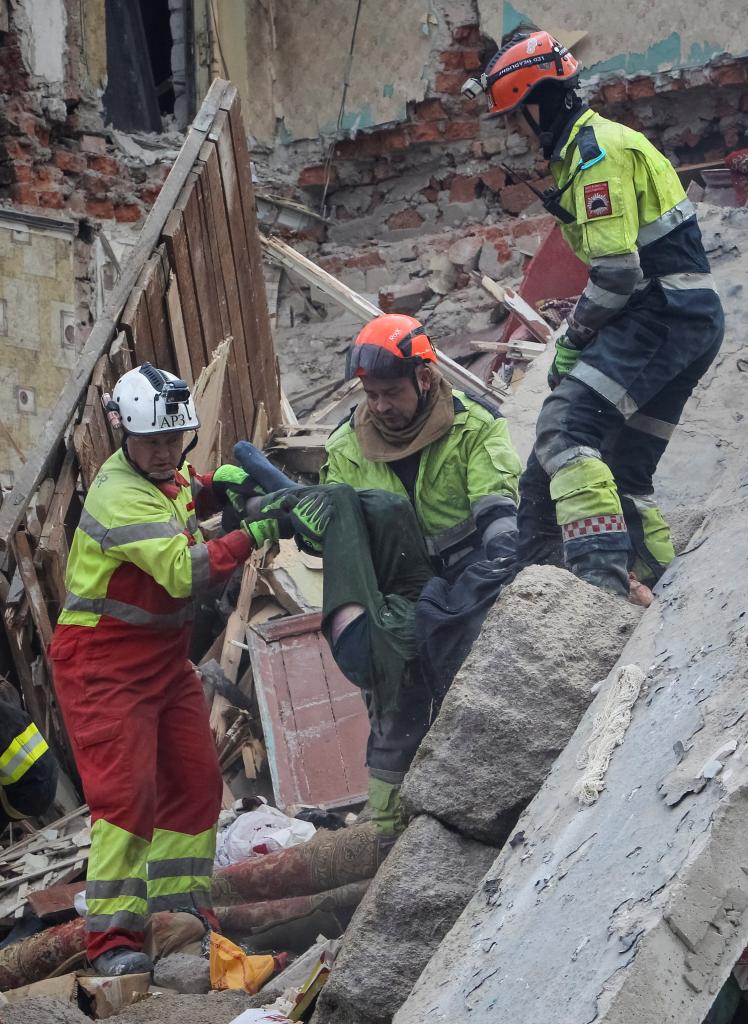
Rescuers in Komyshuvakha, a village in Ukraine’s southern Zaporizhzhia region, continued searching Tuesday for survivors after a Russian strike hit an aid facility and shelter. At least 31 people were killed, and more than 45 residents remained missing. Emergency workers and volunteers searched the heavily damaged site, where bodies had been recovered from the rubble. The dead included four police officers and two rescue workers; at least five people were injured. Zaporizhzhia declared three days of mourning. Mykhailo Semikin, the acting head of the regional military administration, described the attack as one of the region’s worst civilian tragedies since Russia’s full-scale invasion.
The strike came as Ukraine prepared for another round of U.S.-brokered peace negotiations the following week. Russia also carried out a large overnight barrage across nine regions, launching 289 attack drones, 17 ballistic missiles and 59 cruise missiles, according to President Volodymyr Zelenskyy. The attacks triggered emergency power cuts. Zelenskyy said the barrage coincided with U.S. elections and urged the United States to take notice and help Ukraine defend its skies.
Further attacks caused casualties and damage in other parts of the country. In the northeastern Kharkiv region, a combined missile and drone strike wounded at least 62 people, damaged a medical facility, shattered windows in four apartment buildings and damaged cars. More than 200 patients were moved to other facilities. In the Dnipro area, one person was killed and 17 were wounded; strikes damaged an outpatient clinic and a hospital. Rescuers pulled a woman alive from rubble there on Tuesday morning, and patients were transferred elsewhere.
Ukraine’s energy ministry said Russia carried out 20 strikes in 10 regions overnight, targeting power plants and energy infrastructure and causing extensive damage and outages ahead of winter. The article portrays a widening campaign of attacks on civilians, medical facilities and critical energy infrastructure amid ongoing war and anticipated peace talks.
Entities: Komyshuvakha, Zaporizhzhia region, Kharkiv region, Nemyshlianskyi district, Dnipro area • Tone: urgent • Sentiment: negative • Intent: inform
03-11-2026
A Russian attack on a site in Komyushuvakha, a village in Ukraine’s southern Zaporizhzhia region where people had gathered to receive humanitarian aid, killed 29 people and left 48 missing, according to Ukrainian officials. Rescuers and volunteers searched the destroyed aid facility and shelter, recovering bodies from the rubble. The dead included four police officers and two rescue workers. At least five people were injured, and Zaporizhzhia declared three days of mourning. Regional official Mykhailo Semikin called the attack one of the region’s worst civilian tragedies since Russia’s full-scale invasion.
The attack came amid a broad overnight barrage. President Volodymyr Zelenskyy said Russia launched 289 attack drones, 17 ballistic missiles and 59 cruise missiles across nine regions, causing emergency power cuts. He said the strikes coincided with U.S. elections and called for help defending Ukraine’s skies. Ukrainian authorities also reported at least 62 people wounded in the Kharkiv region, where a strike damaged a medical facility, apartment buildings and cars; more than 200 patients were moved to other facilities. In the Dnipro area, one person was killed and 17 wounded. A woman was rescued alive from rubble, while an outpatient clinic and a hospital were damaged and patients transferred elsewhere.
Russia’s Defense Ministry said it had shot down 856 Ukrainian drones overnight, while Moscow’s mayor said 493 drones were directed toward the capital. Ukrainian drone attacks also wounded two workers and damaged infrastructure at an oil refinery in Yaroslavl, according to the regional governor. Moscow-installed officials reported rolling blackouts in parts of Russian-occupied Crimea after attacks on energy infrastructure.
Entities: Komyushuvakha, Zaporizhzhia region, Kyiv, Kharkiv region, Nemyshlianskyi district • Tone: neutral • Sentiment: negative • Intent: inform
03-11-2026
Rescuers in Komyshuvakha, in Ukraine’s Zaporizhzhia region, continued searching the wreckage of an aid facility and shelter after a Russian attack killed at least 31 people. More than 45 residents were missing, and at least five people were injured. The dead included four police officers and two rescue workers. Regional officials declared three days of mourning and described the strike as among the region’s worst civilian tragedies since Russia’s full-scale invasion.
The attack was part of a broader overnight barrage. President Volodymyr Zelensky said Russia launched 289 drones, 17 ballistic missiles and 59 cruise missiles across nine regions, with strikes hitting energy infrastructure and medical facilities. In Kharkiv, at least 62 people were wounded, a medical facility was damaged, and more than 200 patients were moved elsewhere. In the Dnipro area, one person was killed and 17 injured; rescuers also pulled a woman alive from rubble. Attacks damaged a clinic and hospital there as well.
Ukraine’s energy ministry reported 20 strikes in 10 regions, while utility DTEK said three power plants had stopped operating after sustaining significant damage. The article also describes drone attacks affecting Russia: Moscow said it intercepted hundreds of Ukrainian drones, while a strike on a refinery in Yaroslavl wounded two employees. Russian-occupied Crimea experienced rolling blackouts after attacks on energy infrastructure.
As the attacks continued, Zelensky traveled to Germany to consult with European leaders before US-mediated peace talks scheduled for Nov. 10–11 in Abu Dhabi. The discussions are expected to address security arrangements, de-escalation and humanitarian issues. Russia confirmed it would send a delegation. The European Commission also planned a meeting with international partners on Ukraine’s postwar reconstruction.
Entities: Komyshuvakha, Zaporizhzhia region, Mykhailo Semikin, Volodymyr Zelensky, Russia’s overnight missile and drone barrage • Tone: urgent • Sentiment: negative • Intent: inform
03-11-2026
Russia launched a major attack on Ukraine’s energy infrastructure on Tuesday, triggering emergency power outages in seven regions, including Kyiv, and disrupting water supplies. Ukraine’s energy company said Russian forces had attacked energy facilities more than 20 times. The strikes involved 289 drones, 17 ballistic missiles and 59 cruise missiles, according to Energy Minister Denys Shmyhal, and hit transmission systems and power plants across the country. A substation important to the Khmelnytskyi Nuclear Power Plant was also struck, which Shmyhal warned could threaten nuclear safety beyond Ukraine. Ukraine’s energy supplier said crews were working to restore power, prioritizing critical infrastructure. DTEK, the country’s largest private energy company, said attacks halted production at three thermal power plants and damaged grid infrastructure in Odesa. The strikes come as Ukraine prepares for winter after Russian attacks last year left millions without heat and electricity. Meanwhile, rescuers in the southern Zaporizhzhia region continued searching the rubble of an aid facility and shelter in Komyshuvakha, struck by Russian bombs on Monday. At least 31 people were killed and more than 45 remained missing. Regional official Mykhailo Semikin called it one of the region’s worst civilian tragedies since the full-scale war began. The article also reports that Ukrainian forces struck Russian oil refineries, while President Volodymyr Zelensky traveled to Germany for discussions with European leaders ahead of US-brokered peace talks in Abu Dhabi. Kremlin spokesman Dmitry Peskov said Russia would send a delegation to the talks, the first since February, which are aimed at ending the four-and-a-half-year war.
Entities: Russia, Ukraine, Kyiv, Zaporizhzhia region, Komyshukakha • Tone: neutral • Sentiment: negative • Intent: inform
03-11-2026
At least 26 people were killed when Russian forces struck a school in the village of Komyshuvakha, in Ukraine’s southeastern Zaporizhzhia region. The school was being used to distribute humanitarian aid. Ukrainian authorities said two rescue workers and four police officers were among the dead, while five people—including two rescue workers—were hospitalised. About 20 people remained missing, raising concerns that the death toll could increase. President Volodymyr Zelenskyy said the school was hit before a nearby shelter and described the attack as evidence that Russia did not want de-escalation. Rescue teams searching the rubble also faced further Russian drone attacks, according to a Ukrainian military official.
Separately, cyberattacks on government mobile applications in Ukraine and Russia generated false emergency warnings. Ukrainians received fabricated alerts about radiation, chemical threats and an imminent nuclear attack. Ukraine temporarily suspended its emergency app, then restored it; officials said the breach had not affected security or defence operations. Russia’s emergency ministry reported that a false alert was sent to its app across 33 regions, while SMS warnings and sirens continued to work. Kremlin spokesperson Dmitry Peskov called for stronger cybersecurity measures.
The attacks and cyber incidents came as a limited ceasefire in the southern Kherson region expired. The truce, which began October 27, was meant to enable humanitarian aid deliveries and evacuations in Russian-occupied areas. Ukraine’s general staff accused Russia of using the pause to reinforce drone defences and replenish ammunition. Russian drone attacks also injured 12 people in Kharkiv and five in Odesa, damaging buildings and facilities. Russia’s defence ministry said it had downed 212 Ukrainian drones overnight; independent Russian media reported that Ukrainian drones had targeted an oil transport hub in the Samara region.
Entities: Russia-Ukraine war, Volodymyr Zelenskyy, Mykhailo Semikin, Dmitry Peskov, Komyshuvakha • Tone: neutral • Sentiment: negative • Intent: inform