03-11-2026
On Election Day for the 2026 US midterm elections, Homeland Security Secretary Markwayne Mullin warned that people who vote illegally would be identified and prosecuted. In a post on X, he said only American citizens should decide US elections. Immigration and Customs Enforcement issued a similar threat, saying it would track down, arrest and prosecute illegal voters. California Governor Gavin Newsom responded with a near-identical warning directed at ICE, turning the exchange into a public dispute between the Trump administration and the state governor.
The article describes the administration’s broader efforts to identify suspected noncitizens on voter registration rolls. In July, Mullin sent letters to election officials in California, New Jersey, Nevada and Pennsylvania, citing more than 250,000 potential noncitizens across those states. State officials challenged the claims: Nevada Secretary of State Francisco Aguilar said DHS had not supplied supporting evidence and called the numbers speculative, while Pennsylvania Secretary of State Al Schmidt said noncitizen voting was extremely rare and that the state would assess the information. The administration has also expanded use of the federal SAVE programme to compare citizenship information with voter registration records.
The warning came as those efforts faced legal challenges. A federal judge temporarily blocked the Justice Department and DHS from sending states lists of suspected noncitizens or urging officials to segregate or withhold their ballots while citizenship was checked. Judge Tanya Chutkan cited concerns about the reliability of the data and the risk of disenfranchising eligible voters. Voting-rights and privacy groups argue that the federal effort intrudes on state election administration and may rely on inaccurate information; the administration says it is enforcing federal law. The article also clarifies that federal law bars noncitizens, including Green Card holders, from voting in federal elections.
Entities: Markwayne Mullin, Gavin Newsom, Donald Trump, Tanya Chutkan, Francisco Aguilar • Tone: analytical • Sentiment: neutral • Intent: inform
03-11-2026
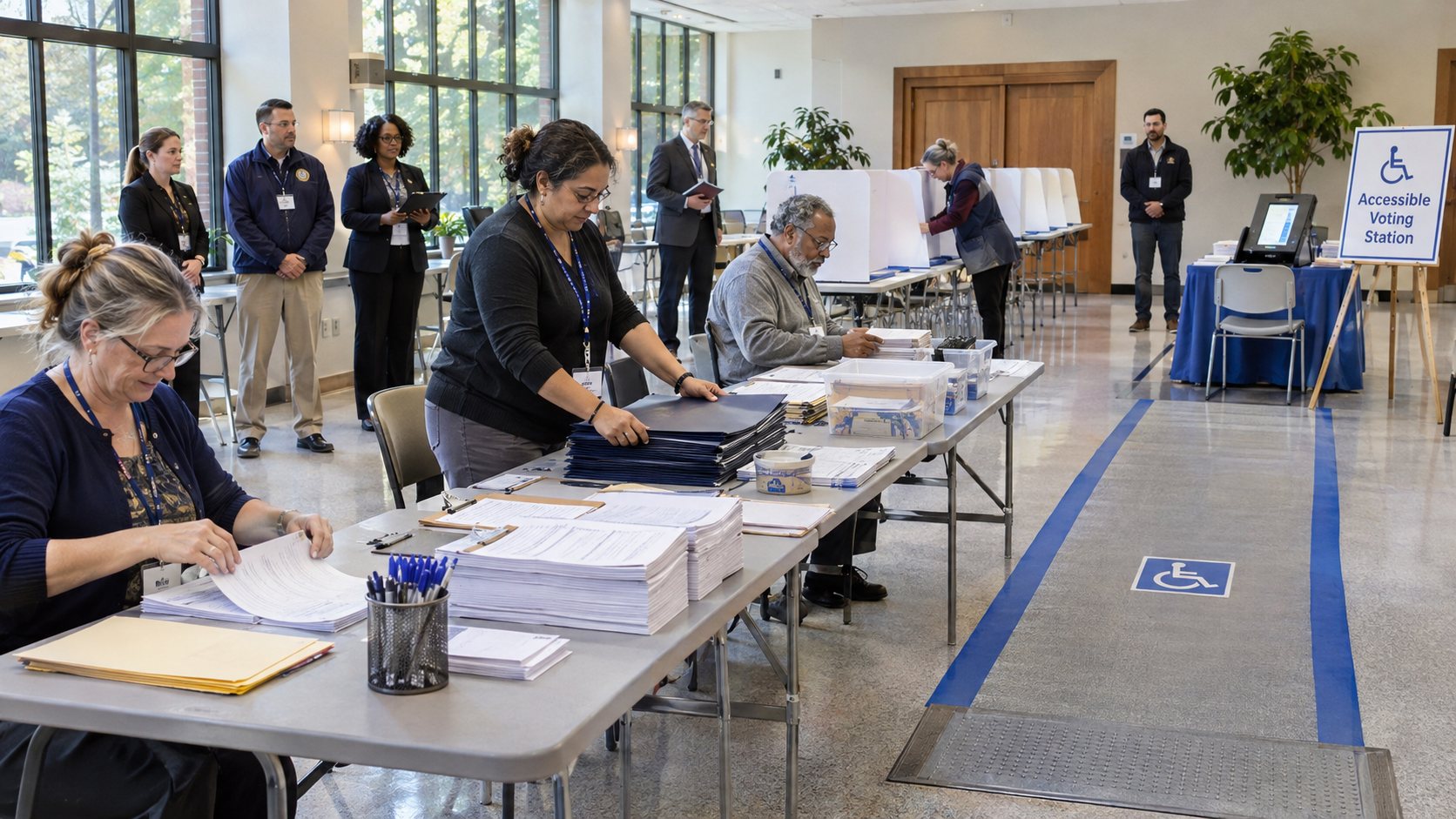
Local election workers across the United States are facing increased security measures amid persistent threats, harassment and concerns about interference during the 2026 midterm elections. Election offices have added protections such as bulletproof glass, restricted-entry systems and panic buttons linked to law enforcement. Officials in Maricopa County, Arizona, have taken additional steps to secure vote-counting facilities, while workers elsewhere are receiving training to respond to threats, suspicious packages and aggressive behaviour.
The article cites a 2025 Brennan Center for Justice survey in which 38 per cent of local election officials said they had experienced threats, harassment or abuse related to their work. In the Center’s 2026 survey, 32 per cent reported such treatment and 14 per cent said they had been threatened. A WBUR report described risks including drone surveillance, bomb threats, suspicious packages containing unknown powders and cyberattacks against election systems. Tina Barton, co-chair of the Committee for Safe and Secure Elections, said her organization had delivered more than 140 training sessions for local officials and law enforcement in 2026—more than twice the number in 2024.
Threats are also contributing to staff turnover and recruitment difficulties. Issue One found that half of chief local election officials in Western states had left their positions between November 2020 and November 2025, with roughly 76 per cent of departures voluntary. More than 250 officials left across the 11 states in the analysis. The Brennan Center reported that over half of surveyed officials worried intimidation would make it harder to recruit and retain election workers.
Election offices are also protecting technology, ballot transportation and records of ballot handling. The Cybersecurity and Infrastructure Security Agency has traditionally provided security guidance and support, but the Brennan Center says federal cuts have raised concerns among local authorities. Some states have enacted legal protections against intimidation, yet worker safety and staffing remain unresolved challenges.
Entities: Tina Barton, Maricopa County, Arizona, United States, 2026 US midterm elections, Brennan Center for Justice • Tone: analytical • Sentiment: negative • Intent: inform
03-11-2026
The US Justice Department said on November 3 that it was deploying 1,000 election monitors and observers across all 50 states, describing the operation as the largest Election Day monitoring effort in the department’s history. The department identified the jurisdictions where monitors would be sent. Officials have said they will prioritize places with histories of voter-access problems and areas with competitive races that could be vulnerable to voter intimidation. The number of monitors is roughly three times the total deployed during the previous midterm election.
The deployment comes amid a broader expansion of federal election oversight by the Trump administration. The administration has pressed states to provide voter-registration data and argued that tougher measures are needed to maintain public confidence in elections. Critics, however, regard these steps as federal overreach. The expanded monitoring program has prompted several states to issue guidance to local election officials and poll workers explaining the limited authority of Justice Department observers.
The department said its monitors would check compliance with federal voting-rights laws within the Civil Rights Division’s jurisdiction. Their role is constrained by state and local laws, some of which permit officials to bar Justice Department monitors from entering polling locations. The department’s staff cannot investigate issues on the spot or otherwise prevent anyone from voting. The article reports the deployment and its stated scope while also describing the legal limits and political concerns surrounding it.
Entities: US Justice Department, Trump administration, Civil Rights Division, United States, Election Day monitoring • Tone: analytical • Sentiment: neutral • Intent: inform
03-11-2026
The article reports growing concern among US election and law-enforcement officials that President Donald Trump’s offer of a US$1 million reward for information leading to an election-fraud conviction could inflame suspicion and encourage vigilantism. Officials say the reward comes amid Trump’s repeated, unsubstantiated claims that elections are manipulated and a broader rise in threats against public servants and election workers. Local police and election offices have conducted hundreds of exercises to prepare for disruptions, including confrontations between voters at polling places.
The article also describes tensions over federal involvement in elections, which are administered by states and local authorities. The Justice Department sought to have California set aside 20,000 mail ballots and tried to challenge the outcome of an Alaska Senate race; courts blocked those efforts. California Governor Gavin Newsom warned federal judges that the administration might try to seize ballots. Some local authorities have restricted federal election monitors’ access to polling places, while the Justice Department says its monitors are trained to obey local access laws and do not need local approval.
Officials and experts express sharply different views about the atmosphere and its causes. Arizona Sheriff Chris Nanos and Green Bay Police Chief Chris Davis fear the reward and election rhetoric could provoke accusations and disturbances. Utah Lieutenant Governor Deidre Henderson says threats now also come from within government. The White House declined to explain how the reward would be funded or reported, while spokeswoman Lauren Bis defended Trump’s position and criticized Democrats. Michigan election official Aghogho Edevbie says authorities are preparing without overreacting. Brennan Center expert Gowri Ramachandran urges voters to retain confidence in election workers and exercise their right to vote.
Entities: Donald Trump, US$1 million election-fraud reward, Election security and voter confidence, Vigilantism and threats against election workers, Chris Nanos • Tone: analytical • Sentiment: negative • Intent: inform