03-11-2026
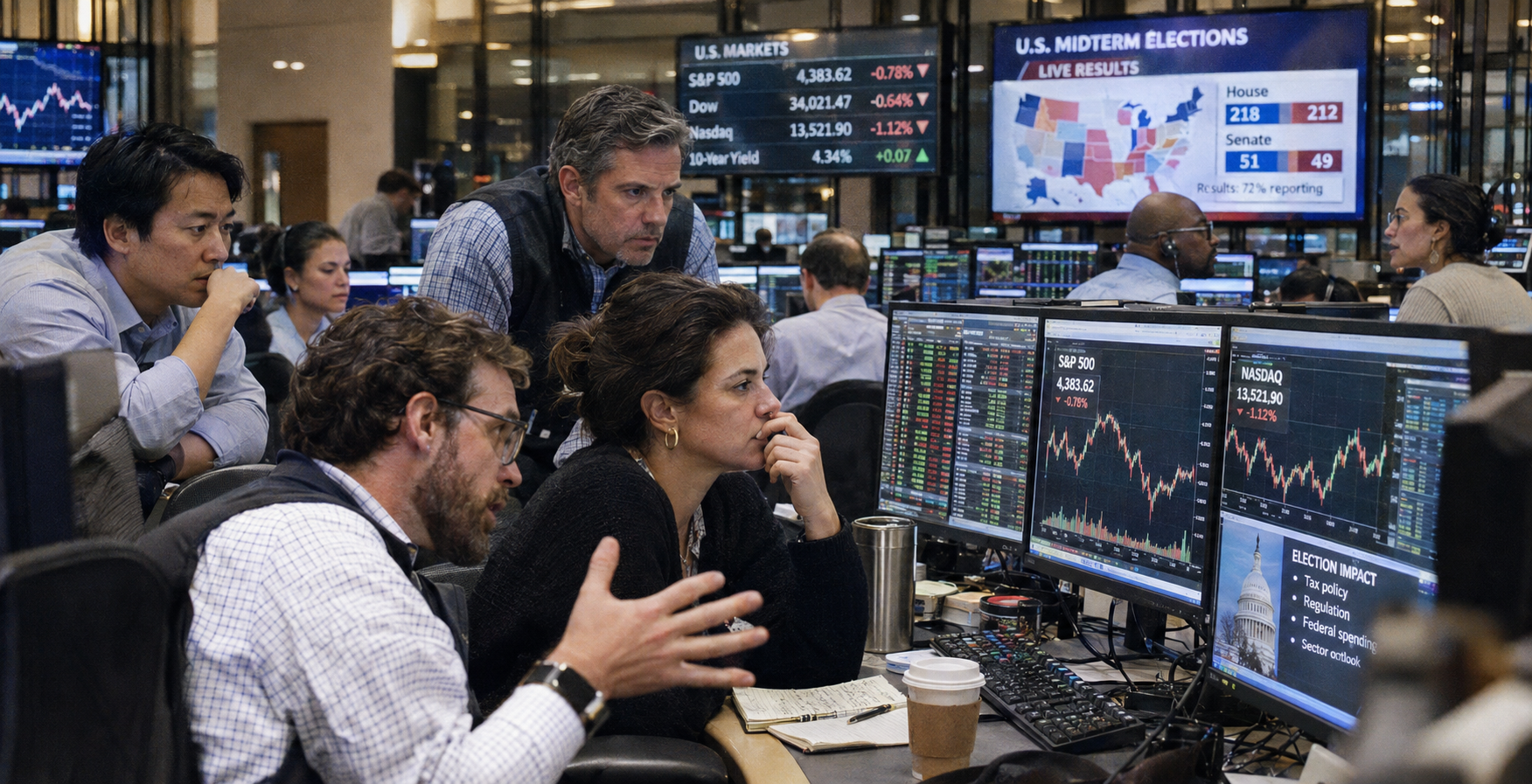
The article examines how the S&P 500 has performed after U.S. elections, focusing on midterms and the 2026 election. A CNBC analysis of returns from 1980 through 2024 found that the index gained an average of 13.7% in the year after midterms and 13.8% after presidential elections, with positive one-year returns in 91% of cases. The S&P 500 rose in the year following each of the 11 midterms from 1982 through 2022, although immediate post-election returns were less consistent. Market strategist Ryan Detrick says investors’ relief once election uncertainty passes may help explain the tendency toward strong subsequent performance.
The article also finds that markets have historically done better when government is divided. After 15 elections that produced divided government, the S&P 500 averaged a 15% gain over the following year, compared with 11.5% after elections that gave one party control of the White House and Congress. But the article cautions that elections may coincide with, rather than cause, market moves. The dot-com bust contributed to a 22.1% decline in the year after the 2000 election, while a post-pandemic rebound helped drive a 38.3% gain after the 2020 election.
Other forces may outweigh election outcomes. The Federal Reserve’s rate increases helped shape the market’s decline in 2018, even though stocks later rose in the year after that midterm. For the current market, the article identifies the AI investment cycle, corporate earnings, economic growth, Fed policy, bond yields, and geopolitical risks—including tensions involving Iran and a debt crisis in France—as important influences. Historical seasonality may point to further gains, but the article stresses that it is not a guarantee.
Entities: S&P 500, 2026 U.S. midterm elections, Divided government, Ryan Detrick, Carson Group • Tone: analytical • Sentiment: neutral • Intent: analyze
03-11-2026
The article examines how U.S. stocks could react to the 2026 midterm elections, focusing on a possible Democratic sweep of Congress and the competing short- and longer-term market outlooks. Polls favor Democrats in the House and show a close Senate race, while prediction markets suggest a “blue wave.” Investors appear skeptical that Democrats will do as well as polls indicate and are not strongly positioned for a particular outcome. JPMorgan estimates a Democratic sweep could trim the S&P 500 by about 0.5% on Wednesday, whereas Republican control of both chambers could prompt a relief rally; a split outcome could also support equities into year-end.
Historically, stocks have risen in the year after midterms, but the S&P 500 has already posted double-digit gains in 2026. That raises concern that the usual post-election rally may not materialize. BTIG’s Jonathan Krinsky argues that the typical setup—weak markets before the election followed by a November recovery—is absent this year, making a decline more plausible than consensus expects.
The article also identifies sectors that could be affected by election results. Strong Democratic gains may increase restrictions on data centers or limit tax incentives, adding pressure to AI-related stocks already weakened by market turbulence. A surprise Democratic victory in Texas’s governor race could heighten those concerns. Defense stocks could face spending constraints, while healthcare companies might benefit from renewed support for Affordable Care Act subsidies or changes to Medicaid reforms. Financial firms could come under pressure if lawmakers pursue credit-card interest-rate caps as part of an affordability agenda. Finally, the article flags the possibility that President Donald Trump could restart the war against Iran after the election, a geopolitical risk that could unsettle markets and support energy stocks.
Entities: 2026 U.S. midterm elections, Democratic sweep (blue wave), S&P 500, Nasdaq Composite, Tobin Marcus • Tone: analytical • Sentiment: neutral • Intent: analyze
03-11-2026
North American stock markets traded unevenly on Tuesday, November 3, 2026, as investors considered the U.S. midterm elections and corporate earnings. Apple shares fell sharply after the company warned that rising memory-chip costs, driven by demand from AI data centres, would reduce its profit margin in the final quarter of the year. The decline came despite Apple reporting quarterly revenue and profit above analysts’ expectations. Some Wall Street investors were also concerned that a Democratic sweep of Congress could bring more regulation of artificial-intelligence development, although President Donald Trump would retain veto power. Markets generally favour divided government, which investors see as less likely to produce major policy changes. Still, historical data offered some reassurance: the S&P 500 has recorded a positive return in the six months after every midterm election since 1970, according to an Edward Jones analyst. In early trading, the S&P 500 gained 0.2 per cent, the Nasdaq rose 0.5 per cent, and the Dow fell 0.4 per cent. Canada’s TSX was down about 0.75 per cent, with Shopify dropping nine per cent after reporting mixed earnings. Nvidia and CoreWeave advanced, while Palantir declined despite beating profit expectations; Palantir reported that commercial revenue had grown sharply and exceeded revenue from the U.S. government for the first time. Shares of Celanese and DuPont rose after stronger-than-expected results. The article notes that market expectations for corporate profit growth remain high amid inflation and elevated interest rates, following the S&P 500’s record high the previous month. Oil prices were volatile amid uncertainty over the war with Iran: Brent briefly topped US$107 per barrel, then fell below US$101, and was later down 0.9 per cent at US$103.80. Overseas markets were mixed. South Korea’s Kospi fell 3.6 per cent, while Australian stocks gained 0.3 per cent after the country’s central bank raised interest rates for the fifth time that year.
Entities: U.S. midterm elections, Apple, Donald Trump, Democratic Party, S&P 500 • Tone: analytical • Sentiment: neutral • Intent: inform