02-10-2026
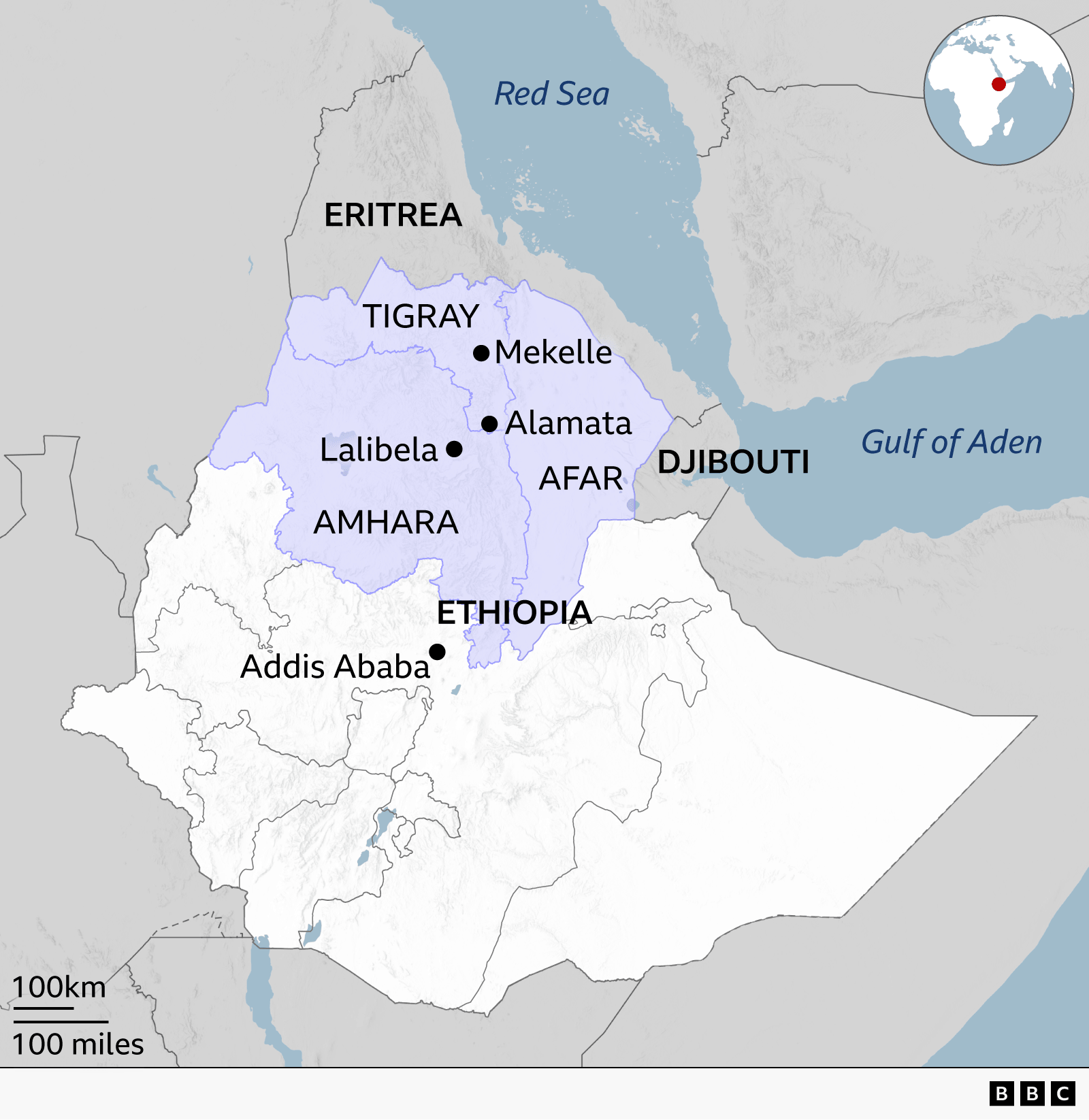
Ethiopia and Eritrea have severed diplomatic relations amid renewed fighting in northern Ethiopia, raising fears that the devastating Tigray war could return. Ethiopia accused Eritrea of backing the Tigray People’s Liberation Front (TPLF), which has reportedly launched attacks into the neighbouring Afar and Amhara regions. In response, Ethiopia said it would expel 10 Eritrean diplomats and close its embassy in Asmara. Eritrea said it had “no option” but to reciprocate by cutting diplomatic ties.
The renewed conflict has reportedly killed or wounded hundreds since fighting resumed the previous week, while aid groups say thousands of people have been displaced. Doctors Without Borders reported that hospitals in several parts of Tigray had treated more than 700 wounded people.
The crisis is heightening regional concerns in a region with a history of conflict between the two countries. Ethiopia and Eritrea fought a border war from 1998 to 2000, and relations later improved under Ethiopian Prime Minister Abiy Ahmed in 2018.
An explosion at the Ethiopian military headquarters in Addis Ababa has added to concerns that violence could be spreading toward the capital. The cause of the explosion and whether it caused casualties remain unclear. On the frontlines, government-aligned forces say they have retaken several towns from Tigrayan fighters. However, independent verification is difficult because access is restricted and communications have been disrupted. The reported battlefield developments and the explosion therefore remain subject to uncertainty, as the diplomatic rupture deepens an already dangerous regional crisis.
Entities: Ethiopia, Eritrea, Tigray, Addis Ababa, Asmara • Tone: neutral • Sentiment: negative • Intent: inform
02-10-2026
The article reports a sharp deterioration in relations between Eritrea and Ethiopia amid renewed fighting involving Ethiopia’s Tigray region. Eritrea has severed diplomatic ties with Ethiopia following Ethiopia’s closure of its embassy in Asmara and its expulsion of 10 Eritrean diplomats. The article presents those actions as the immediate context for Eritrea’s decision, without providing further details about how or when the diplomatic break will be implemented.
The dispute is described as part of a broader regional diplomatic fallout. Ethiopia has also moved to expel diplomats from Sudan and Egypt, the report says, linking those expulsions to the same period of renewed fighting involving Tigray. The article does not specify the reasons for the measures against Sudanese and Egyptian diplomats, identify the parties involved in the renewed fighting, or describe the fighting’s scale and consequences.
Overall, the report centers on the reciprocal diplomatic rupture between Eritrea and Ethiopia and places it within a regional context of escalating tensions. It offers a concise account rather than analysis or extensive background: no official statements, reactions from the affected governments, or predictions about the consequences are included in the provided text. Its main point is that Ethiopia’s diplomatic actions—including closing its embassy in Asmara and expelling Eritrean diplomats—were followed by Eritrea’s severing of ties, amid renewed conflict involving Tigray and additional Ethiopian expulsions of diplomats from Sudan and Egypt.
Entities: Eritrea, Ethiopia, Tigray region, Addis Ababa, Asmara • Tone: neutral • Sentiment: negative • Intent: inform
02-10-2026
Ethiopia and Eritrea have severed diplomatic relations amid renewed fighting in northern Ethiopia, raising concern that the conflict could destabilise the wider region. Ethiopia closed its embassy in Asmara and ordered 10 Eritrean diplomats to leave, alleging threats to national security. Eritrea called the expulsion “astounding” and said it had no choice but to retaliate. The announcement followed overnight explosions in Addis Ababa, including near the military headquarters. Ethiopia has also expelled an Egyptian diplomat; Egypt responded with a reciprocal order, against the backdrop of long-running tensions over Ethiopia’s Grand Ethiopian Renaissance Dam and Nile water supplies.
Ethiopian federal forces are fighting the Tigray People’s Liberation Front (TPLF) and allied groups in Tigray, Afar and Amhara. The TPLF recently joined six other armed movements, including the Fano militia, in an alliance seeking to remove Prime Minister Abiy Ahmed’s government. A pro-government militia commander alleged Eritrean soldiers were fighting in Tigray, but the BBC could not verify the claim. Eritrea denied involvement, while the Ethiopian government has accused it of supporting rebels.
The crisis marks a reversal of the 2018 rapprochement between Abiy and Eritrea, which followed two decades of hostility. The countries had fought together against the TPLF during the 2020–2022 Tigray war, but relations have since deteriorated, particularly over Ethiopia’s pursuit of access to the Red Sea. Current fighting is the most serious since the 2022 peace agreement. A doctor in Alamata reported at least 52 civilian deaths over three days, and tens of thousands are estimated to have fled in Afar. Communications disruptions and insecurity are limiting independent reporting and humanitarian operations. The African Union has urged restraint, while the UN warns that drone activity, air strikes and road closures are putting civilians and aid work at risk.
Entities: Ethiopia, Eritrea, Tigray conflict, Tigray People's Liberation Front (TPLF), Abiy Ahmed • Tone: analytical • Sentiment: negative • Intent: inform
02-10-2026
The France 24 video report describes a sharp deterioration in relations between Eritrea and Ethiopia. According to the article’s brief description, Ethiopia ordered its embassy in Eritrea to close on Thursday and declared 10 Eritrean diplomats persona non grata. Eritrea responded by severing all diplomatic ties with its neighbour. The report places these developments amid heightened concern after overnight blasts were heard in Addis Ababa, Ethiopia’s capital. Those blasts have raised fears that renewed conflict in northern Ethiopia could spread. France 24 correspondent Tom Canetti is identified as reporting further on the situation. The available text does not provide details about the cause of the blasts, the location or extent of any damage, the specific grounds for Ethiopia’s actions, or Eritrea’s formal explanation for cutting ties. It also offers no additional statements from either government. As a result, the article establishes the sequence of diplomatic measures and the security concern surrounding them, but does not clarify whether the blasts are connected to the diplomatic dispute or to renewed fighting. The video itself is listed as 2 minutes and 6 seconds long, but no full transcript is included in the supplied page text. The central development is the reciprocal breakdown in official relations against a backdrop of anxiety about conflict spreading in northern Ethiopia.
Entities: Eritrea, Ethiopia, Asmara, Addis Ababa, France 24 • Tone: neutral • Sentiment: negative • Intent: inform
02-10-2026
Ethiopia and Eritrea have severed diplomatic relations as fighting in northern Ethiopia intensified, raising fears that the two neighbouring countries could again become involved in a wider conflict. The break came on Thursday, amid accusations from both governments that the other was supporting internal unrest.
Ethiopia alleges that Eritrea is backing the Tigray People’s Liberation Front (TPLF), which launched a major assault on Ethiopian government forces the previous week. The attack has heightened concern about a possible return to the devastating 2020–2022 civil war in the Tigray region. That conflict killed an estimated 600,000 people, according to the article.
In response to what it described as a threat to national security, Addis Ababa announced that it would expel 10 Eritrean diplomats and close Ethiopia’s embassy in Asmara. Eritrea’s foreign ministry then said it had “no option but to reciprocate in kind” and sever all diplomatic ties with Ethiopia.
The article presents the diplomatic rupture against the backdrop of continuing northern fighting and a strained relationship between the neighbours. It reports the immediate actions and accusations on both sides, while emphasizing the risk that the latest escalation could lead to renewed full-scale war in Tigray. It does not provide further details about the fighting, Eritrea’s alleged support for the TPLF, or what either government might do next.
Entities: Ethiopia, Eritrea, Tigray region, Tigray People’s Liberation Front (TPLF), Addis Ababa • Tone: urgent • Sentiment: negative • Intent: inform
02-10-2026
Ethiopian government forces were reported to be nearing Mekelle, the capital of Tigray, as fighting with a rebel alliance led by the Tigray People’s Liberation Front (TPLF) escalated. Residents said banks and shops had closed and that federal troops and allied militias were within striking distance of the city. The latest clashes, which began the previous week, are the most serious escalation since Ethiopia’s 2020–2022 civil war. Suspected drone attacks in Addis Ababa have also raised concerns that anti-government forces may be able to strike far beyond the northern front lines, although the reports could not be independently verified by Reuters and Ethiopian officials did not respond to requests for comment.
The conflict is unfolding amid deteriorating regional relations. Ethiopia announced that it was closing its embassy in Eritrea and ordered Eritrean diplomats to leave, accusing Eritrea of hostility. Eritrea then severed diplomatic ties. The countries fought a border war from 1998 to 2000 and restored relations in 2018, but tensions have resurfaced, including over Ethiopia’s pursuit of sea access and Eritrea’s concerns about its Assab port. Ethiopia has also accused Eritrea, Sudan and Egypt of supporting the opposition alliance; all three deny the allegations. Egypt and Ethiopia have each expelled a diplomat, while the African Union Commission called for restraint.
Federal forces and allied militiamen reportedly captured a town south of Mekelle. TPLF leader Debretsion Gebremichael acknowledged government forces had occupied parts of Tigray and threatened a counter-attack. The TPLF has joined six other armed groups seeking to overthrow Prime Minister Abiy Ahmed’s government. Although the alliance initially made gains in Amhara and Afar, pro-government forces say they have largely reversed them. The article warns that the fighting could widen within an already fragile region affected by conflicts and competition for influence.
Entities: Mekelle, Tigray, Ethiopia, Eritrea, Sudan • Tone: urgent • Sentiment: negative • Intent: inform
02-10-2026
An armed group aligned with Ethiopia’s federal government, the Tigray Peace Forces (TPF), says it is close to taking full control of Tigray. The TPF commander claimed that Tigray People’s Liberation Front (TPLF) forces had been wiped out, but Al Jazeera said it could not independently verify the statement. The claim follows the resumption of fighting in September between federal forces, including the TPF, and an opposition alliance led by the TPLF. Residents told Reuters that government forces were advancing towards Mekelle, Tigray’s capital. TPLF leader Debretsion Gebremichael acknowledged that federal forces had occupied some areas and said his forces would counterattack.
The renewed fighting follows the apparent breakdown of a 2022 peace agreement. In September, seven armed and political groups, including the TPLF, announced an alliance seeking to remove Prime Minister Abiy Ahmed’s administration and form an inclusive transitional government. The conflict has extended beyond Tigray into neighbouring Amhara and Afar. The African Union previously reported that Tigrayan forces had seized airports and detained federal personnel, disrupting civilian flights.
The article also describes rising regional tensions. Ethiopian military officials accuse Eritrea, Egypt and Sudan of supporting the alliance, while Eritrea and Egypt deny backing efforts to destabilise Ethiopia. Diplomatic expulsions have followed, and the African Union has urged restraint.
Civilians face worsening conditions in Tigray, where an estimated six to seven million people are affected by electricity cuts, internet blackouts and a lack of communications. Some residents are fleeing towards Amhara and Afar in fear that fighting will reach major cities. Aid organizations, including the United Nations, have moved some operations to areas they consider newly secure to preserve limited humanitarian access. Al Jazeera’s Ethiopia bureau chief warned that the conflict could become an internal struggle among Tigrayans, even as the TPLF retains several towns and links with Eritrea.
Entities: Tigray, Ethiopia, Mekelle, Tigray Peace Forces (TPF), Tigray People’s Liberation Front (TPLF) • Tone: analytical • Sentiment: negative • Intent: inform
02-10-2026
Four years after the 2022 Pretoria Peace Agreement formally ended the devastating Tigray war, fighting has escalated again in northern Ethiopia. The renewed crisis follows the formation of an alliance among several armed groups that had previously been enemies, united by opposition to Prime Minister Abiy Ahmed’s federal government. The coalition includes the Oromo Liberation Army, a faction of the Ogaden National Liberation Front, and smaller groups from Benishangul-Gumuz and Afar. Eritrea is not formally part of the alliance but is believed to be supporting the rebels.
DW journalist Negash Mohammed says the peace deal failed to address key actors and grievances: Eritrea’s role in the war, the Amhara Fano militias’ participation and subsequent exclusion from negotiations, and TPLF hardliners who regarded the agreement as a military defeat. Tensions worsened when the federal government tried to disarm Fano by force. Patricia Rodrigues of Control Risks describes the rebels’ coordination as alarming, though she notes their different interests could eventually fracture the coalition. She expects fighting to remain concentrated around Tigray, Amhara, and Afar rather than spread nationwide.
The article also attributes the renewed violence to weak international follow-through after the agreement. Although the TPLF surrendered heavy weapons in 2022 and 2023, international attention shifted elsewhere, allowing the sides to rearm and recruit. The United States’ recent lifting of sanctions may further reduce Western leverage for encouraging negotiations.
Civilians continue to face displacement and disrupted services. Many people displaced since 2020 have not returned home; there are reports of drone strikes in civilian areas and military equipment being placed in schools and clinics. Communications, electricity, and flights have also been disrupted. UN Secretary-General António Guterres has sent an envoy to support mediation, but the analysts see limited prospects for a near-term resolution. They argue that negotiations are unlikely to succeed until a party recognizes that violence will not achieve its aims, and expect intense but geographically contained fighting to continue.
Entities: Tigray, Ethiopia, Abiy Ahmed, Tigray People's Liberation Front (TPLF), 2022 Pretoria Peace Agreement • Tone: analytical • Sentiment: negative • Intent: analyze