02-10-2026
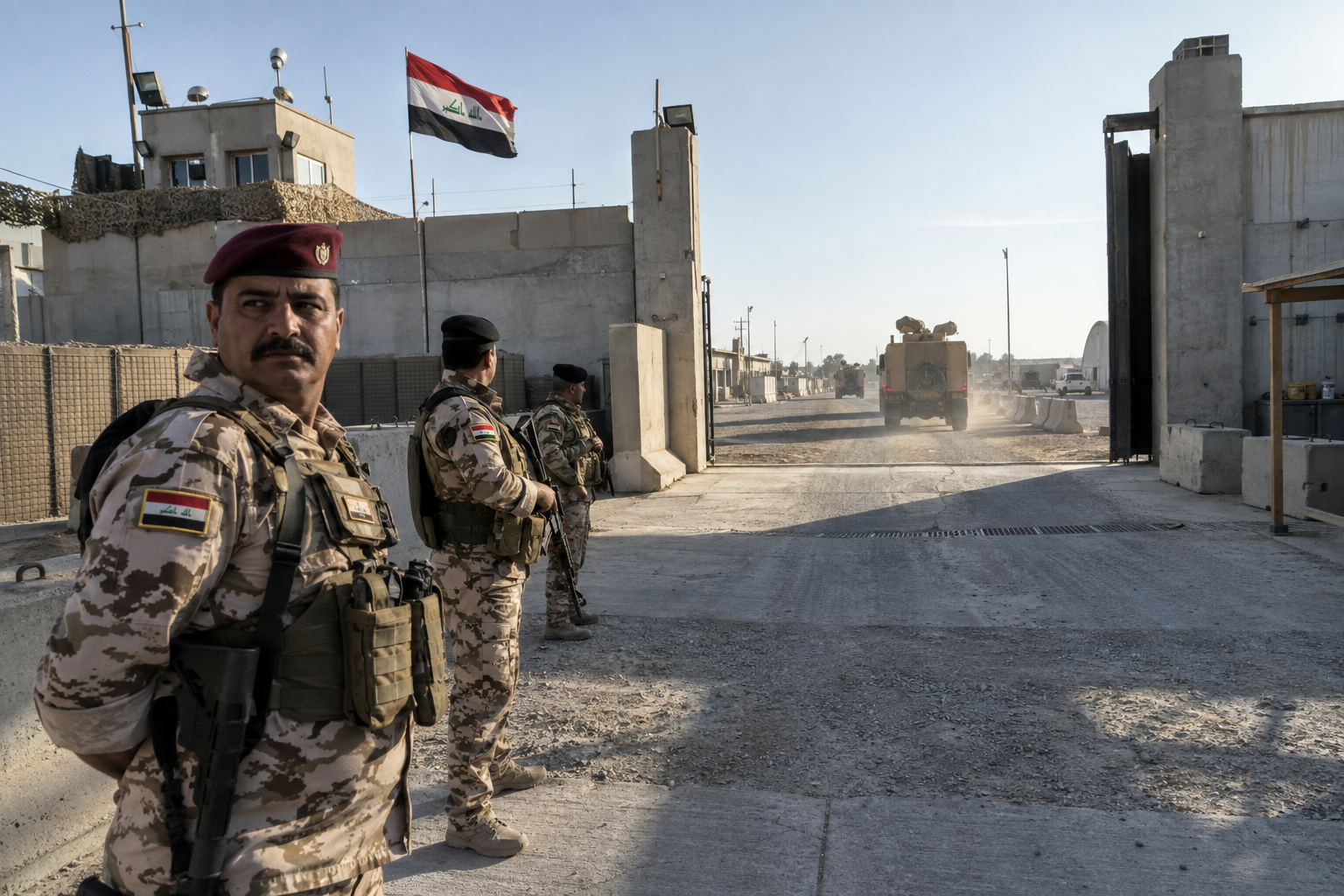
The France 24 segment examines the end of the American military presence in Iraq and its implications for the country’s internal balance of power. Presenter Erin Ogunkeye speaks with Bamo Nouri, an investigative journalist and Honorary Research Fellow in the Department of International Politics at City St George’s, University of London. The segment’s title foregrounds a strongly critical assessment: “America is leaving Iraq, but Iran isn’t,” and describes the withdrawal as a “massive strategic and tactical mistake.”
The article description presents Nouri’s main concern as the consequences of the withdrawal for Iraq’s ability to govern itself and maintain stability. In his view, the development represents a profound shift in Iraq’s balance of power. The central issue, as summarized by France 24, is not simply whether Iraq has formally regained sovereignty. It is whether the country has the political cohesion, security capacity, and economic independence required to exercise that sovereignty in practice.
The supplied page does not include a transcript or further details of the interview, so it does not establish Nouri’s specific predictions, supporting evidence, or the full reasoning behind the title’s judgment. The article is therefore best understood from the available text as an analytical discussion of the strategic consequences of the US-led coalition’s departure, Iran’s continuing role, and the gap between legal sovereignty and the practical ability to control national affairs. Its framing emphasizes potential risks to Iraq’s autonomy and power balance rather than presenting the withdrawal as an uncomplicated restoration of sovereignty.
Entities: Bamo Nouri, Erin Ogunkeye, France 24, City St George’s, University of London, Iraq • Tone: analytical • Sentiment: negative • Intent: analyze
02-10-2026
Iran’s Quds Force commander, Brig Gen Esmail Qaani, has described the end of the US-led military mission in Iraq as an opportunity for Tehran-backed militias to maintain or expand their role in the country. His remarks came after the formal end of the 12-year US mission to defeat ISIS and despite the Iraqi government’s stated intention to bring armed groups under state control. The government’s initial September 30 deadline for placing weapons under state authority has been postponed to June next year.
Qaani credited what he called the resistance of Iraqis and the “Resistance Front” with forcing US troops out. He also called for coordination between the government, state institutions and resistance groups, and urged the strengthening of an Iran-backed “belt of defence” across the region. He said the remaining US presence in other arenas should also be eliminated. The Islamic Revolutionary Guard Corps likewise described the withdrawal as a step towards ending foreign domination in West Asia.
The article notes that the future of Iran-backed armed groups is uncertain as Iraq enters a new phase in its security relationship with Washington. Kataib Hezbollah, a powerful Iran-backed militia, denied that it had reached an understanding with Prime Minister Ali Al Zaidi on disarmament, hours after US troops left Iraq. The Iraqi government’s postponed deadline further underscores the unresolved question of militia weapons and authority.
Iran formed proxy groups in Iraq after the 2003 US-led invasion as part of a strategy to protect its regime and extend its influence. The article places Qaani’s comments in a broader regional context: after direct wars involving Iran, Israel and the US, Tehran has relied more heavily on allied groups. Efforts to revive the so-called Axis of Resistance have become more visible, while Yemen’s Houthis have taken a greater role as Hezbollah’s military capabilities have been significantly weakened.
Entities: Esmail Qaani, Ali Al Zaidi, Iraq, Iran, United States • Tone: analytical • Sentiment: neutral • Intent: inform
02-10-2026
The article introduces an episode of The National’s podcast Beyond the Headlines examining the consequences of the United States’ withdrawal from Iraq. The US anti-ISIS mission officially ended that week, and Iraq’s government called the departure “Sovereignty Day.” The withdrawal was widely celebrated as a milestone, coming more than 20 years after the US-led invasion of Iraq and 12 years after the start of the international coalition campaign against ISIS.
However, the departure takes place amid heightened regional tensions. The US-Iran war has made Iraq a battleground for competing influence, and the article says Iraq is the only country to have been attacked by both sides. Iran-backed militias in Iraq were expected to disarm by the same deadline as the US withdrawal, but that deadline has been postponed until June 2027. Iran and its allies are presenting both the withdrawal and the delay as a victory.
The episode’s host, Nada AlTaher, considers what the US exit may change inside Iraq and what it could mean for American and Iranian influence across the region. She discusses these questions with Iraqi political analyst Sajad Jiyad and The National’s deputy foreign editor, Aveen Karim. The supplied article is a podcast introduction, not a transcript: it outlines the competing implications and questions for discussion but does not provide the guests’ answers or a definitive assessment of what will happen next.
Entities: Nada AlTaher, Sajad Jiyad, Aveen Karim, The National, Beyond the Headlines • Tone: analytical • Sentiment: neutral • Intent: analyze