02-10-2026
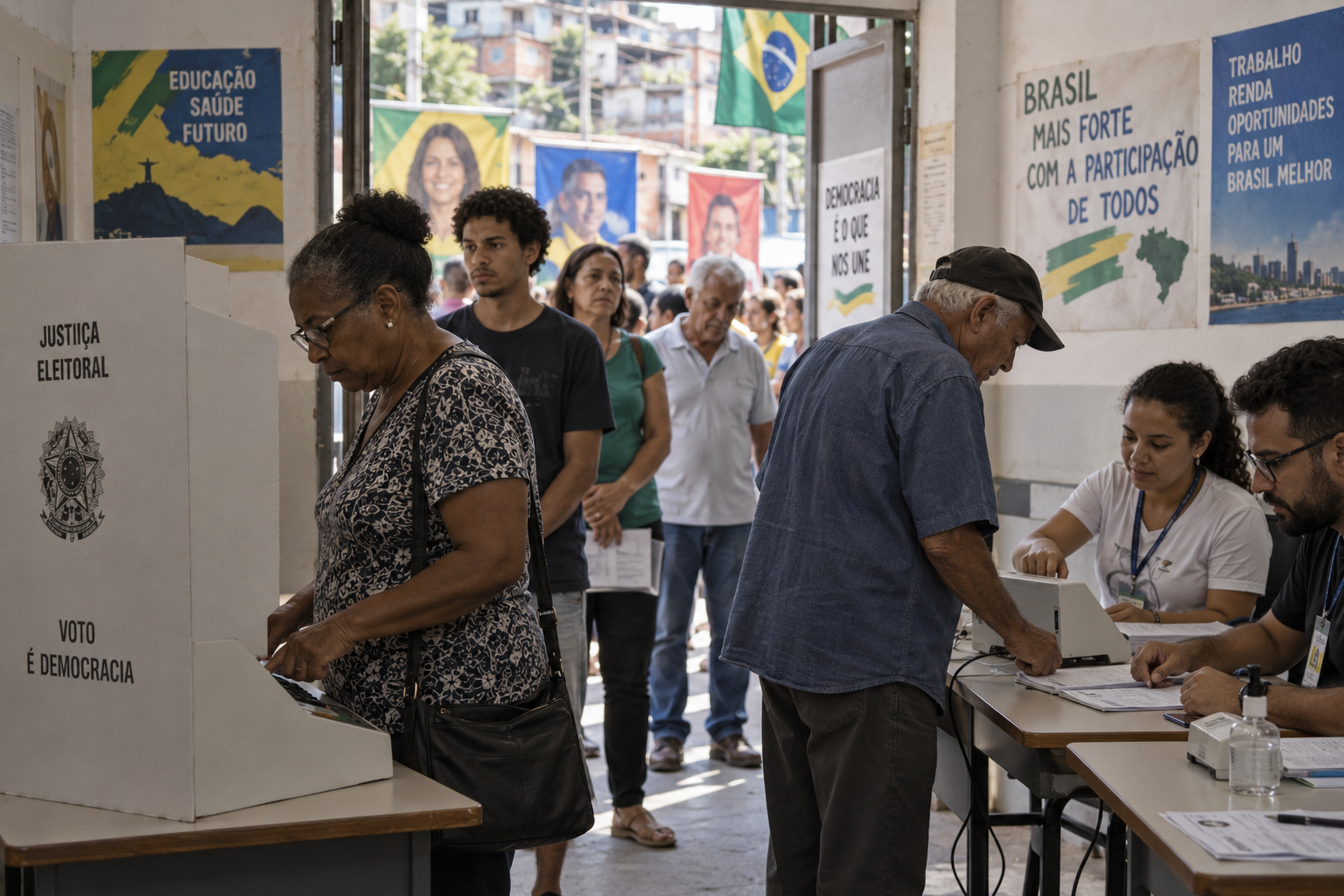
The article introduces Brazil’s closely contested presidential election, which is scheduled for the Sunday following its publication on October 2, 2026. Voters are choosing between incumbent President Luiz Inácio Lula da Silva and the son of former President Jair Bolsonaro. The report characterizes the contest as too close to call, but gives no polling figures, vote shares, party details, or further information about the candidates’ campaigns.
The central electoral contingency is whether either candidate can secure an outright majority. If neither does, Brazil will hold a runoff vote on October 25. The article presents the possibility of a second round as a key part of the election’s immediate outlook, rather than predicting which candidate is likely to prevail.
Al Jazeera correspondent Monica Yanakiew explains what is at stake. However, the supplied article text does not spell out those stakes or provide details about policy differences, the candidates’ platforms, or the broader political context. It is a brief introduction to a news video, directing attention to the tight race, the two choices identified, and the possible runoff. The article’s framing is informational and restrained: it highlights the uncertainty of the result without endorsing either candidate or expressing a clear positive or negative view.
Entities: Brazil, Luiz Inácio Lula da Silva, Jair Bolsonaro, Son of Jair Bolsonaro, Monica Yanakiew • Tone: neutral • Sentiment: neutral • Intent: inform
02-10-2026
Brazil’s Oct. 4 presidential election is a close contest between incumbent Luiz Inácio Lula da Silva and Sen. Flávio Bolsonaro, with a runoff scheduled for Oct. 25 if no candidate wins more than half the first-round vote. The result could shape Brazil’s domestic economic policies and its relations with the United States and China. Lula is campaigning on Brazilian sovereignty, social programs, tax relief for lower-income people, a shorter work week and policing reforms. Bolsonaro, son of former president Jair Bolsonaro, favors privatization, spending cuts and close alignment with Washington. His father is under house arrest after receiving a 27-year prison sentence for plotting a coup following his 2022 election loss.
The article frames the vote as consequential for regional geopolitics. Analysts say a Bolsonaro victory could strengthen the Trump administration’s influence in Latin America and complicate Brazil’s relationship with China, its largest trading partner. Brazil’s reserves of critical minerals and rare earths add to its strategic importance amid U.S.-China rivalry. Lula’s return to office, by contrast, would broadly maintain recent foreign-policy relationships and could frustrate Washington’s effort to limit Chinese influence. Tensions with the Trump administration have included 50% U.S. tariffs announced in 2025 over what Trump called a politically motivated prosecution of Jair Bolsonaro.
Fiscal conditions are another major concern for voters and investors. Brazil’s government debt reached 82.9% of GDP in August, while its budget deficit was 9.48% of GDP. Inflation remains above 4%, growth forecasts have been trimmed, and high interest rates reflect concerns about fiscal fragility. Higher oil prices have benefited Brazil as a net exporter, though they have also made inflation harder to control. One analyst said whichever candidate wins will need to present a credible plan to rein in public finances, warning that debt could become unsustainable over time and bring higher borrowing costs. Brazil’s 10-year government bond yield was reported at about 14.16%.
Entities: Brazil, Luiz Inácio Lula da Silva, Flávio Bolsonaro, Jair Bolsonaro, Donald Trump • Tone: analytical • Sentiment: neutral • Intent: analyze
02-10-2026
The article introduces a Guardian podcast episode about Brazil’s upcoming presidential election and the unexpected political resurgence of the Bolsonaro family. It recalls that Jair Bolsonaro was convicted in September 2025 of attempting a coup, an event that might have appeared to end his political career and permanently damage his legacy. However, the article says that in the first round of Brazil’s presidential election, taking place on Sunday, his son Flávio Bolsonaro has genuine hopes of winning the presidency. Flávio is also campaigning to have his father released from jail.
The episode’s host, Annie Kelly, speaks with the Guardian’s Latin America correspondent, Tom Phillips, who explains how Brazil has returned to this political situation. Phillips also considers what a Flávio Bolsonaro victory could mean for the wider region. The article frames the election as historic and emphasizes the contrast between Jair Bolsonaro’s conviction and his son’s continued political prospects. It names Luiz Inácio Lula da Silva among the topics associated with the piece, but the supplied text does not describe Lula’s role in the election or provide polling figures, policy comparisons, or further detail about the candidates’ campaigns. Overall, the article is a brief introduction to a political podcast rather than a full report: it highlights the Bolsonaro family’s renewed relevance, the election’s significance, and the potential regional implications, while directing readers to the podcast for further explanation.
Entities: Brazil, Jair Bolsonaro, Flávio Bolsonaro, Luiz Inácio Lula da Silva, Tom Phillips • Tone: analytical • Sentiment: neutral • Intent: inform