02-10-2026
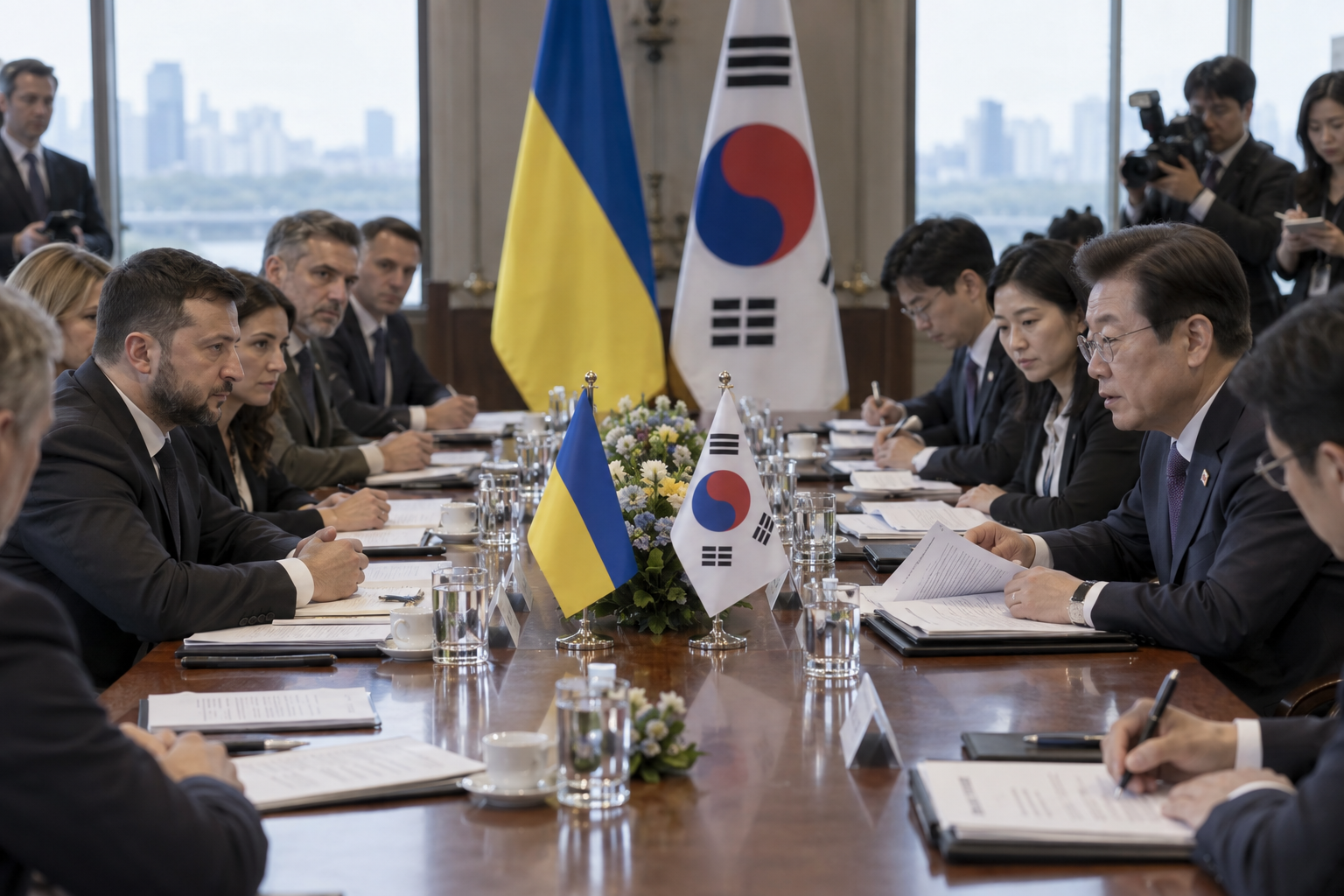
South Korean President Lee Jae Myung has criticized Ukraine after President Volodymyr Zelenskyy said at the United Nations General Assembly that Kyiv had transferred two North Korean prisoners of war to South Korea. The soldiers had been captured while fighting for Russia in the Kursk region. Lee said Zelenskyy’s remarks appeared to disclose an arrangement that had been intended to remain confidential, and accused Ukraine of undermining South Korea. He also objected to Zelenskyy’s comments about the prospect of an imminent military clash between North and South Korea, saying they invoked the risk of war on the Korean Peninsula.
Lee called on Kyiv to acknowledge the agreement and apologize, describing the matter as one of national honor. South Korean officials say Ukraine had discussed the transfer with Seoul through multiple channels and had requested secrecy. Ukraine, however, says there was no secrecy agreement.
Ukraine’s Foreign Minister Andrii Sybiha sought to ease tensions in an interview with Ukrainian media, calling the dispute a “diplomatic misunderstanding” rather than an incident. He emphasized South Korea’s importance to Ukraine and expressed hope for continued cooperation and concrete results. Lee nevertheless voiced regret over Ukraine’s response and reiterated his demand for an explanation and apology.
The dispute has placed two US-aligned countries with significant military capabilities at odds. The article notes that the diplomatic tension could complicate US efforts to maintain a united international front toward Russia, China and North Korea.
Entities: Lee Jae Myung, Volodymyr Zelenskyy, Andrii Sybiha, Seong Ghi-hong, South Korea • Tone: analytical • Sentiment: negative • Intent: inform
02-10-2026
South Korean President Lee Jae Myung has threatened unspecified “further action” unless Ukraine publicly apologises for disclosing that two North Korean prisoners of war had been sent to South Korea. Ukrainian President Volodymyr Zelensky revealed the transfer at the UN General Assembly last week, prompting Seoul to object that the information was supposed to remain confidential. Ukraine’s Foreign Minister Andrii Sybiha called the matter a “diplomatic misunderstanding” and said Kyiv was working to resolve it. Lee rejected that description, saying the dispute involved the dignity of the Korean people and the nation.
The disagreement centres on conflicting accounts of whether the countries had agreed to keep the transfer secret. Lee’s office said Ukraine had requested confidentiality, partly to protect the prisoners’ families and partly to avoid criticism for giving up the chance to exchange the soldiers for Ukrainian prisoners. Zelensky’s office denied that such an agreement existed. Lee has also faced domestic criticism: South Korea’s opposition accused him of concealing the transfer to appease North Korea.
The two soldiers were among thousands of North Koreans supporting Russia in its war against Ukraine, and they had previously told local media they wanted to go to South Korea. Sybiha said he hoped the matter would be resolved soon, stressing the importance of South Korea to Ukraine and calling for continued cooperation and concrete results. Lee, however, accused Kyiv of trying to provoke war on the Korean Peninsula and criticised it for discussing an imminent military clash between North and South Korea instead of acknowledging the alleged agreement and apologising. South Korea has supported Ukraine politically since Russia’s full-scale invasion but maintains a longstanding policy against supplying lethal weapons to countries engaged in active war.
Entities: Lee Jae Myung, Volodymyr Zelensky, Andrii Sybiha, South Korea, Ukraine • Tone: neutral • Sentiment: neutral • Intent: inform
02-10-2026
Ukrainian President Volodymyr Zelenskyy triggered a diplomatic dispute with South Korea when he said at the UN General Assembly that Ukraine had sent two North Korean prisoners of war to the Republic of Korea. The soldiers had been captured in Russia’s Kursk region in January 2025 and, according to Zelenskyy, wanted to resettle in South Korea. Seoul summoned Ukraine’s ambassador, objecting that Kyiv had disclosed the transfer unilaterally despite an alleged agreement to keep it confidential, and requested an explanation and apology. The two governments dispute whether such an agreement existed: Zelenskyy’s spokesperson denied it, while a South Korean presidential spokesperson said Ukraine had requested secrecy to avoid domestic criticism and protect the prisoners and their families in North Korea.
Experts interviewed by DW say the controversy reflects weak trust and limited dialogue between Kyiv and Seoul, as well as South Korea’s domestic political tensions. The transfer has become contentious in South Korean media and politics because the country’s constitution regards North Koreans as South Korean citizens. Opposition figures have questioned President Lee Jae Myung’s handling of the matter, while his government is seeking to reduce tensions with North Korea and may worry that the prisoners’ transfer will undermine efforts to restore inter-Korean communication. Experts also suggest Seoul may be more open to rebuilding ties with Russia than to closer military cooperation with Ukraine.
Ukraine may consequently lose an opportunity to strengthen relations with South Korea. One analyst argues that quiet diplomacy could have encouraged support such as technology cooperation, potentially through third countries. However, the experts differ on the prospects for future cooperation: one considers military-technology collaboration unlikely, while noting that trade and humanitarian assistance could continue. South Korea is also considered unlikely to side with Russia because of its obligations to the United States. Overall, the episode risks further cooling Kyiv-Seoul relations amid the wider consequences of North Korea’s military cooperation with Russia.
Entities: Volodymyr Zelenskyy, Lee Jae Myung, Andrii Vieshkin, Dmytro Lytvyn, Kim Sung-wan • Tone: analytical • Sentiment: negative • Intent: analyze
02-10-2026
Ukraine is working to resolve a diplomatic dispute with South Korea after President Volodymyr Zelensky publicly disclosed that Kyiv had transferred two captured North Korean servicemen to Seoul. The prisoners were taken during the war against Russia, and South Korea had expected the transfer to remain confidential. Ukrainian Foreign Minister Andrii Sybiha described the disagreement as a “diplomatic misunderstanding,” rather than an incident, and said Ukraine hoped to settle the matter soon. He emphasized that South Korea is important to Ukraine and expressed hope for continued cooperation and concrete results.
South Korea’s presidential office demanded an explanation and apology from Ukraine, saying Kyiv had also falsely denied that the two governments agreed to keep the transfer secret. A senior South Korean official said confidentiality was sought because of security, diplomatic and humanitarian concerns, including the safety of the prisoners and their families.
Ukraine captured the two North Koreans in January 2025. They were described as the first North Korean soldiers captured alive since Pyongyang entered the war in 2024 to support Russia. North Korea and Russia have since signed a strategic partnership that includes a mutual defence pact. North Korea reportedly sent about 14,000 troops to help Russia drive Ukrainian forces out of the Kursk region. Zelensky said more than 8,000 North Korean troops remained in Russia, while another 10,000 were being trained for possible future deployment. The article reports the dispute and its military context without taking a position on either government’s claims.
Entities: Andrii Sybiha, Volodymyr Zelensky, Ukraine, South Korea, North Korea • Tone: neutral • Sentiment: neutral • Intent: inform
02-10-2026
South Korean President Lee Jae Myung has warned Ukraine that Seoul may take unspecified “additional actions” unless Kyiv acknowledges what South Korea says was a confidential agreement and publicly apologizes over the transfer of two captured North Korean soldiers. Lee made the warning in a post on X, adding that he felt “grave regret” over Ukrainian remarks that he said suggested an imminent military confrontation between North and South Korea. He argued that such comments could encourage conflict on the Korean Peninsula.
The disagreement began after Ukrainian President Volodymyr Zelenskyy announced at the United Nations General Assembly last month that Ukraine had transferred the two North Korean prisoners of war to South Korea. The soldiers had been captured while fighting alongside Russian forces. Seoul says Kyiv breached an agreement to keep the transfer confidential to protect the soldiers. Ukrainian officials deny that such an agreement existed.
Amid the dispute, Ukrainian media reported that Kyiv was seeking to repair relations with South Korea. Ukrainian Foreign Minister Andrii Sybiha characterized the matter as a “diplomatic misunderstanding,” rather than an incident, speaking to journalists at an event.
The diplomatic tension comes at a sensitive point for Lee’s administration. Seoul has been trying to ease tensions with North Korea while also dealing with political fallout from a recent landmine incident in the Demilitarized Zone, the heavily fortified area separating the two Koreas. The article reports the competing positions and the potential for further diplomatic measures but provides no details about what Seoul’s threatened actions might involve.
Entities: Lee Jae Myung, Volodymyr Zelenskyy, Andrii Sybiha, South Korea, Ukraine • Tone: analytical • Sentiment: neutral • Intent: inform