31-10-2026
Canadian Foreign Affairs Minister Anita Anand said Canada considers the Court of Arbitration for Sport’s decision to clear Russia’s return to international ice hockey championships “very unwelcome” and a “great disappointment.” The ruling overturns International Ice Hockey Federation exclusions imposed after Russia’s full-scale invasion of Ukraine began in early 2022. Anand said Canada is still assessing the decision and is not comfortable with the prospect of a Russian team competing at the 2026–27 World Junior Ice Hockey Championships, scheduled for Dec. 26 to Jan. 5 in Red Deer and Edmonton, Alberta. She said “all options are on the table” and that Canada will maintain its restrictions on Russian athletes at events hosted in Canada that receive federal funding. Hockey Canada and Secretary of State for Sport Adam van Koeverden also criticized the ruling. Van Koeverden said Russia should not be represented in international sport while its invasion continues. The federal government had not committed funding to the tournament, according to Hockey Canada.
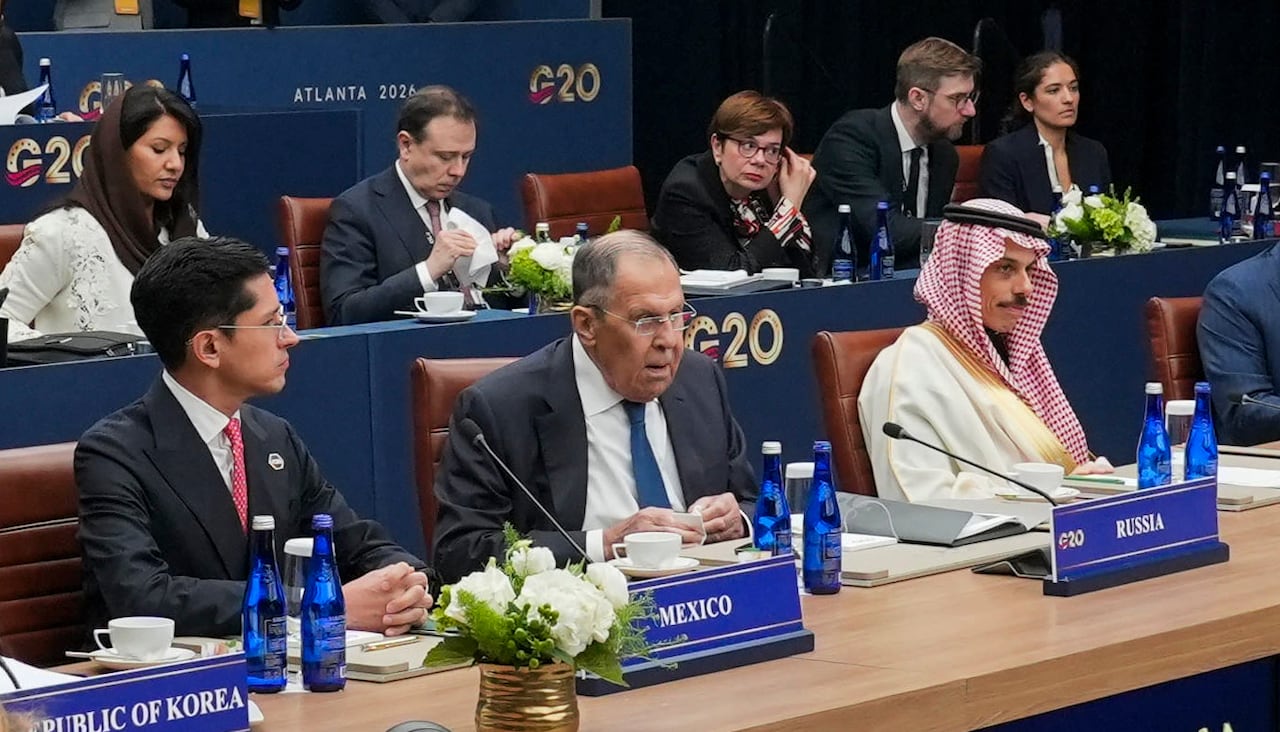
The article also describes objections to Russia’s participation in a G20 foreign ministers’ meeting in Atlanta. The United States cancelled the meeting’s traditional group photo after European officials threatened to boycott it because Russian Foreign Minister Sergey Lavrov would be included. Anand said she missed the photo because she was travelling to a Canada–EU summit, but would have joined the boycott. She said she confronted Lavrov at the meeting about Russia’s attacks on Ukraine, calling them reprehensible and contrary to international law. The report places the dispute amid broader tensions over U.S. policy toward Ukraine and Russia, and notes Canada’s stated solidarity with Ukraine and the countries’ recently declared 100-year partnership.
Entities: Anita Anand, Adam van Koeverden, Sergey Lavrov, Donald Trump, Canada • Tone: analytical • Sentiment: negative • Intent: inform
31-10-2026
A meeting of G20 foreign ministers in Atlanta began with a visible diplomatic rift when European officials declined to appear in a group “family photo” with Russian Foreign Minister Sergey Lavrov. US Secretary of State Marco Rubio, the meeting’s host, canceled the photo to avoid turning it into a spectacle. German Foreign Minister Johann Wadephul said the refusal reflected the absence of normal relations with Russia while its war against Ukraine continues.
Rubio nevertheless urged ministers to work together on interconnected economic and geopolitical crises, including disruptions to energy and trade and threats to the global economic order. The gathering was intended to prepare for a G20 leaders’ summit in Miami in December, but the article notes that conflicts involving Russia and the United States, among other countries, make consensus difficult. Wadephul said he would urge Russia to accept Ukraine’s proposed Black Sea ceasefire.
Lavrov told DW that Vladimir Putin would meet Ukrainian President Volodymyr Zelenskyy if Zelenskyy traveled to Moscow, adding that Russia would guarantee his safety. The Kremlin has rejected direct meetings so far. Lavrov did not say whether Putin would attend the Miami summit, and Russia has continued attacks on Ukrainian cities and infrastructure. EU foreign policy chief Kaja Kallas and British Foreign Secretary Ed Miliband criticized Lavrov’s statements and called for a just and lasting peace.
The article also describes strained US-Russia relations despite recent US actions that appeared to signal warmer ties, including a reported diesel deal and a waiver of new energy sanctions. Lavrov said there had been no real progress in relations. Separately, South Africa, a G20 founding member, was excluded from the US-hosted ministerial meeting, while Ukraine was also not invited. South Africa said its nonparticipation was not voluntary. With divisions unresolved, the meeting was expected to conclude with a US-drafted chair’s summary rather than a joint declaration.
Entities: Sergey Lavrov, Marco Rubio, Johann Wadephul, Kaja Kallas, Ed Miliband • Tone: analytical • Sentiment: neutral • Intent: inform
31-10-2026
At a G20 foreign ministers’ meeting in Atlanta, European Union foreign policy chief Kaja Kallas said she confronted Russian Foreign Minister Sergey Lavrov over Russia’s war in Ukraine and accused him of advancing “a lot of lies” and false narratives. Kallas said European officials challenged those claims directly. A diplomatic source told AFP that officials also pressed Moscow to agree to a ceasefire in the Black Sea, an effort Lavrov resisted.
British Foreign Minister Ed Miliband said he urged Lavrov to tell Russian President Vladimir Putin that Russia would not win the war. Miliband also reportedly raised a recent Russian attack on a railway in Dnipro that killed 15 people, describing Moscow as the aggressor. The conflict began with Russia’s full-scale invasion of Ukraine in February 2022.
Lavrov praised the United States’ willingness to engage in dialogue with Moscow and criticised what he called Europe’s “arrogant boycott.” Several officials reportedly declined to stand for a group photograph with him, and US organisers cancelled it. US Secretary of State Marco Rubio also met Lavrov on the sidelines of the gathering.
Separately, the US State Department approved a $2.1 billion package of 500 Patriot PAC-3 interceptors for Ukraine. Ukrainian President Volodymyr Zelenskyy welcomed the decision but warned that deliveries might not begin for years, despite Ukraine’s urgent need to defend against Russian missile and drone attacks. He said the interceptors could provide an effective defence this winter if delivered soon, and appealed to US partners to find a way to meet immediate needs. The G20 meetings took place shortly before pivotal US midterm elections that will determine the balance of power in Congress during President Donald Trump’s final two years in office.
Entities: Kaja Kallas, Sergey Lavrov, Ed Miliband, Volodymyr Zelenskyy, Marco Rubio • Tone: analytical • Sentiment: negative • Intent: inform
31-10-2026
The France 24 report says that a two-day meeting of G20 foreign ministers in the United States is concluding without agreement on several major global security issues. Russia’s participation was a point of division: European ministers confronted Russian Foreign Minister Sergei Lavrov over the war in Ukraine and declined to join him for the meeting’s traditional group photograph. The report presents this as a visible sign of disagreement among participants, alongside the lack of consensus on security matters.
The meeting also produced activity on other diplomatic fronts. On its sidelines, US Secretary of State Marco Rubio signed an Arctic cooperation agreement with Japan and South Korea. Rubio also confirmed that the United States would participate in Riyadh’s World Expo in 2030. These developments are mentioned in contrast with the unresolved security discussions, but the supplied text gives no further details about the agreement’s terms, the ministers’ specific exchanges with Lavrov, or the issues on which G20 members failed to agree.
The item is a brief video report, credited to Jack Pownall, rather than a detailed account of the negotiations. Its central emphasis is the tension caused by Russia’s presence at the meeting, particularly in relation to the war in Ukraine and the refusal to take a group photo with Lavrov. It also notes the separate US diplomatic announcements made during the gathering. The supplied article text does not report any resolution to the disagreements or describe the full positions of the participating governments.
Entities: G20, G20 foreign ministers’ meeting, Russia, Sergei Lavrov, United States • Tone: analytical • Sentiment: negative • Intent: inform
31-10-2026
At a G20 foreign ministers’ meeting in Atlanta chaired by U.S. Secretary of State Marco Rubio, participants struggled to present a united front amid disagreements over Russia, Iran and the Middle East. The meeting ended without a joint communiqué or the customary group photograph, after several ministers objected to being pictured with Russian Foreign Minister Sergey Lavrov. Rubio said, however, that countries had found common ground on themes such as freedom of navigation.
Rubio highlighted the danger to commercial shipping from Iran and said the United States remained open to diplomacy, while declining to rule out further attacks. He also praised U.S. Central Command’s efforts to protect shipping in the Strait of Hormuz, where ships have faced repeated drone and missile threats. Other G20 governments are concerned about the risk of further escalation in the Middle East, while European officials are uneasy about possible U.S. sanctions relief for Russia.
Germany’s foreign minister, Johann Wadephul, emphasized shared support for bringing Russia to negotiations to end its war in Ukraine, describing Rubio as a reliable partner despite differences over tactics. Rubio met briefly with Lavrov, who defended Russia’s position and dismissed the dispute over the group photograph. Poland’s foreign minister, Radek Sikorski, argued that Europe has leverage through Russia’s frozen assets and its purchases of U.S. weapons for Ukraine. Poland is also seeking G20 membership and pressed for a Black Sea ceasefire that would allow Ukrainian and Russian grain to reach countries including Egypt.
Rubio said he could not predict whether a ceasefire would be possible, though he reported interest in the proposal. He defended inviting Lavrov to Atlanta and Russian President Vladimir Putin to a future G20 summit in Florida, arguing that forums can enable dialogue with Russia and other countries. Rubio also met Brazil’s foreign minister amid political tensions following Flávio Bolsonaro’s election loss and departure for the United States. Rubio said President Trump approved Bolsonaro’s entry, but the U.S. government did not arrange his travel.
Entities: Marco Rubio, G20 foreign ministers’ meeting, Atlanta, Sergey Lavrov, Iran • Tone: analytical • Sentiment: neutral • Intent: inform
31-10-2026
A planned group photograph at a US-hosted G-20 foreign ministers’ meeting in Atlanta was cancelled after some diplomats objected to being pictured alongside Russian Foreign Minister Sergey Lavrov, amid continuing opposition to Russia’s war in Ukraine. US Secretary of State Marco Rubio, the event’s host, cancelled the photo once it became clear that some participants would not join it, according to US officials. They said the decision was intended to prevent the disagreement from distracting from the meeting’s substantive agenda. Poland’s foreign minister, Radoslaw Sikorski, supported the cancellation, saying it was the right decision and that he was not alone in refusing to be photographed with Lavrov.
Lavrov has been under US sanctions since Russia invaded Ukraine in February 2022. The article places the incident in the context of broader disputes about Russia’s participation in G-20 events. In September, 14 US senators from both parties urged President Donald Trump not to allow Russian President Vladimir Putin or other sanctioned Russian officials to attend upcoming meetings. Trump’s administration, meanwhile, has held talks with Putin in an effort to broker peace in Ukraine, and Trump has encouraged Putin to attend a planned G-20 leaders’ meeting in Miami. Rubio, formerly a prominent critic of Russia, said Russia had been invited because the president had decided it would be represented at the summits.
Russia’s Foreign Ministry spokeswoman, Maria Zakharova, mocked the photo dispute, highlighting reports that German Foreign Minister Johann Wadephul opposed the group picture and sharing an image showing him and Lavrov together during a working session. The article notes that G-20 foreign ministers also omitted traditional group photos in 2022, 2023 and 2025 amid tensions over Russia, and that Russia’s finance minister was excluded from a separate photo session in North Carolina.
Despite the diplomatic friction, US officials said the Atlanta meeting was expected to address economic concerns, including energy and food supplies and freedom of navigation in the Strait of Hormuz. Rubio described the world as facing interconnected economic and geopolitical crises and called for G-20 cooperation.
Entities: Marco Rubio, Sergey Lavrov, Radoslaw Sikorski, Donald Trump, Vladimir Putin • Tone: analytical • Sentiment: neutral • Intent: inform
31-10-2026
US Secretary of State Marco Rubio is scheduled to host foreign ministers from Australia, India and Japan on Saturday for the Quad’s third meeting of the year. The meeting comes as preparations advance for a leaders’ summit in Manila, expected to take place during the Association of Southeast Asian Nations conference from November 15 to 18. It would be the Quad’s first leaders’ summit since 2024 and the first attended by US President Donald Trump. Trump had been due to attend a Quad summit in India in late 2025 but canceled amid trade tensions and tariff disputes with New Delhi.
The Quad meeting follows a two-day gathering of G20 foreign ministers in Atlanta, which Rubio will also conclude. The State Department schedule says he invited the visiting ministers to a college football game between the University of Florida and the University of Georgia; Rubio’s son Anthony plays for Florida.
At a Friday reception, Rubio urged G20 members to cooperate on shared economic and geopolitical challenges, even when their interests do not fully align. He said countries should seek opportunities to work together where their interests coincide. However, the G20 gathering exposed significant divisions over the wars in Ukraine and the Middle East. Organizers dropped the customary group photograph after some European members objected to appearing alongside Russian Foreign Minister Sergei Lavrov.
Rubio is due to hold a press conference after Saturday’s meetings. He said he hopes the foreign ministers’ discussions will help prepare for a successful G20 leaders’ summit on December 14 and 15 at Trump’s Doral golf resort. The article reports on diplomatic meetings, planned summits and disagreements among G20 members without taking an explicit position on the disputes.
Entities: Marco Rubio, Donald Trump, Joe Biden, Anthony Rubio, Australia • Tone: neutral • Sentiment: neutral • Intent: inform
31-10-2026
US Secretary of State Marco Rubio said international interest is growing in a limited Black Sea ceasefire that would protect grain and energy shipments by Russia and Ukraine. The United States is reviewing proposals from Turkey and India to restart grain shipments, while continuing to seek a broader negotiated settlement. Rubio emphasized that a partial agreement would not end the war, but could address threats to food and energy security. He also warned that sabotage and drone strikes straying into NATO airspace risk widening the conflict.
The war dominated a two-day G20 foreign ministers’ meeting in Atlanta. Russia’s Foreign Minister Sergei Lavrov attended despite objections from European and Canadian leaders, who argued his participation risked normalizing Russia’s aggression. The meeting concluded without a joint statement or agreement on major issues. Rubio defended speaking with Russia as necessary for diplomacy, while acknowledging that a broader deal was not imminent. Ukraine’s foreign minister, Andrii Sybiha, was not invited, though Rubio said US officials spoke frequently with Ukrainian leaders.
Canada’s Foreign Minister Anita Anand said she confronted Lavrov over Russia’s invasion, the alleged abduction of Ukrainian children, and attacks on Ukrainian ships. Anand said she had discussed a limited Black Sea ceasefire with Ukrainian and Indian counterparts, along with a moratorium on attacks against Ukraine’s electrical infrastructure. She said food supply chains and protection of energy infrastructure were urgent priorities before winter. Canada had been discussing the proposal since the UN General Assembly in September, and India and Egypt were concerned about the safety of their ships and sailors. Anand said Ukraine was engaged, but Russia had not shown willingness to proceed.
Lavrov reiterated that Moscow would not accept Ukraine as a military threat to Russia’s security interests. Rubio also urged G20 countries to cooperate where their interests aligned. He said he had briefly discussed with Lavrov the possibility of a meeting between US President Donald Trump and Russian President Vladimir Putin at upcoming international summits. Putin had made no firm commitment to attend the December G20 summit in Miami, and Rubio said Trump might invite Ukrainian President Volodymyr Zelenskiy if his attendance could produce a positive outcome.
Entities: Marco Rubio, Anita Anand, Sergei Lavrov, Andrii Sybiha, Donald Trump • Tone: analytical • Sentiment: negative • Intent: inform
31-10-2026
India’s external affairs minister, S. Jaishankar, met US secretary of state Marco Rubio in Atlanta on Friday to review bilateral cooperation between India and the United States. Jaishankar described the meeting as productive and said in a post on X that he appreciated Rubio’s hospitality during the G20 foreign ministers’ meeting and that the two sides had taken stock of their cooperation. The discussions took place alongside the G20 meeting, which Jaishankar had arrived in Atlanta late Thursday to attend, according to PTI. US ambassador to India Sergio Gor and Indian ambassador to the US Vinay Mohan Kwatra were also present.
The article places the meeting within a wider schedule of diplomatic activity. The foreign ministers of the four Quad countries—the United States, India, Japan and Australia—were due to meet in Atlanta on Saturday. It would be their second foreign ministers’ meeting of the year, ahead of a possible leaders’ summit that the article says the US is likely to host in the Philippines the following month. Separately, US president Donald Trump was scheduled to host the G20 leaders’ summit in Miami on December 14 and 15.
After completing his G20 and Quad engagements in Atlanta, Jaishankar was expected to travel to Antigua and Barbuda. There, he was to participate in the Commonwealth Heads of Government Meeting, scheduled for November 1 to 4. Overall, the report presents Jaishankar’s meeting with Rubio as one part of a sequence of multilateral and bilateral diplomatic engagements, without offering detailed statements about specific agreements or new outcomes from their discussion.
Entities: S. Jaishankar, Marco Rubio, India-US bilateral cooperation, Atlanta, G20 Foreign Ministers’ Meeting • Tone: neutral • Sentiment: neutral • Intent: inform