31-10-2026
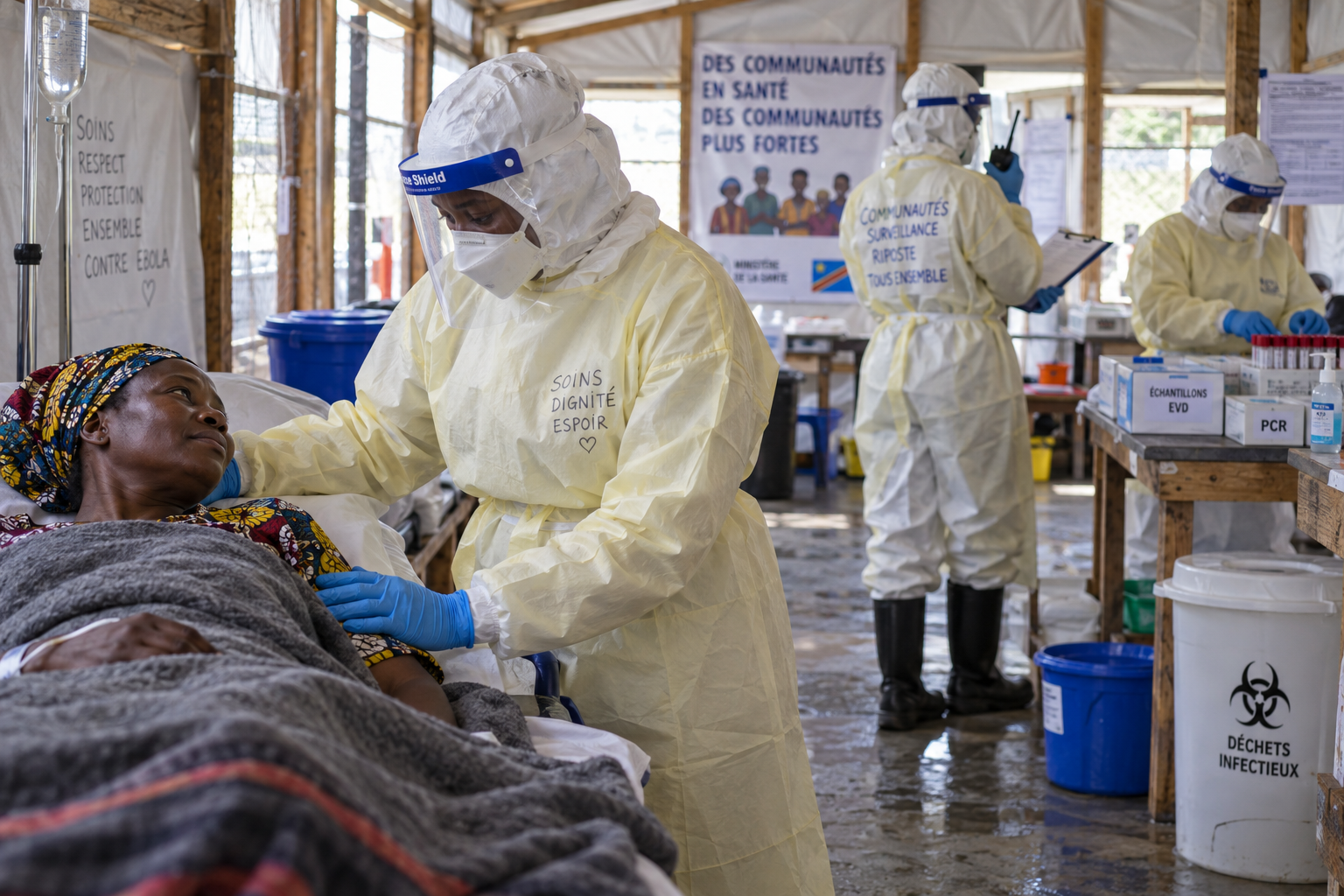
Deaths in the latest Ebola outbreak in the Democratic Republic of Congo have exceeded 5,000, with government figures reporting 5,026 deaths among 10,351 infected people—a fatality rate of nearly 50%. The outbreak, caused by the Bundibugyo virus, was declared in mid-May and has spread despite efforts by health authorities to contain it. It is now the second-deadliest Ebola outbreak on record, behind the 2014–2016 West Africa epidemic, which killed about 11,000 people across several countries.
The virus has reached 67 of Congo’s 178 health zones, spanning eight of the country’s 26 provinces. Most cases and deaths are concentrated in the eastern provinces of Ituri and North Kivu, which together account for 9,782 confirmed cases and 4,792 deaths. Although 2,788 people have recovered, the Bundibugyo virus has no known vaccine or treatment; patients receive care to manage their symptoms.
Health officials are concerned that weak contact tracing and testing are allowing transmission to go undetected. The Africa Centers for Disease Control and Prevention estimates that around 80% of new cases are occurring outside monitored chains of contacts. The World Health Organization also says that one-third of recorded deaths occurred outside treatment centers, before victims were tested or received care. WHO official Dr. Patrick Otim described the death toll as a tragic milestone representing devastated families and communities. He emphasized the difficulty of reaching people early enough to bring them to health facilities, where they could have a chance of surviving.
Entities: Democratic Republic of the Congo, Bundibugyo virus, Ebola outbreak, Congolese Ministry of Health, Dr. Patrick Otim • Tone: urgent • Sentiment: negative • Intent: inform
31-10-2026
The Democratic Republic of the Congo’s Ebola outbreak has killed more than 5,000 people, according to government data announced on Friday, making it the deadliest recorded outbreak in the country. More than 10,000 people have been infected since the outbreak was declared in May. The virus is the Bundibugyo strain, for which there are no approved treatments or vaccines.
The outbreak has spread quickly amid delayed detection, armed conflict and strained health services. It has reached eight of the DRC’s 26 provinces and crossed into neighbouring countries. Nigeria reported a case last week, making it the fourth African country to report one; Kenya and Uganda have also reported cases. The outbreak is the world’s second-largest Ebola epidemic, after the 2014–2016 outbreak in Guinea, Liberia and Sierra Leone, which infected more than 28,600 people and killed more than 11,000.
Some governments have responded by restricting travel or quarantining travellers who have recently visited affected countries. Saudi Arabia announced on Friday that it was suspending travel to and entry from Kenya. The restrictions bar Saudi citizens from travelling to Kenya, pause all types of visas for travellers from Kenya, and prohibit entry by people arriving from Kenya, including those who transited through third countries after staying in Kenya or another Ebola-affected country during the previous 21 days. Saudi Arabia had already suspended travel to and entry from the DRC, Uganda and South Sudan in June.
Entities: Democratic Republic of the Congo (DRC), Ebola, Bundibugyo strain, Nigeria, Kenya • Tone: neutral • Sentiment: negative • Intent: inform
31-10-2026
More than 5,000 people have died in an ongoing Ebola outbreak in the Democratic Republic of Congo (DR Congo), according to government data. The outbreak began in May and has spread to eight of the country’s 26 provinces, with more than 10,300 confirmed cases and a case fatality rate of 48.6%. It became DR Congo’s deadliest Ebola outbreak in August. The epicentre is in Ituri province, a conflict-affected area where insecurity makes efforts to contain the virus more difficult. Cases have also been confirmed in Kenya, Nigeria and Uganda.
The outbreak is caused by the Bundibugyo species of Ebola, for which there is currently no treatment or vaccine. Testing and treatment are taking place, and vaccine clinical trials are under way. The World Health Organization’s Africa office has called for expanded control measures, better access to affected communities and more outreach. The UN says the outbreak is taking lives faster than previous outbreaks. DR Congo’s previous deadliest outbreak caused 2,299 deaths between 2018 and 2020; the global record remains the West African outbreak of 2014–2016, which killed more than 11,325 people.
The response is also hindered by attacks on health workers and officials. A nurse was recently killed and another health worker seriously injured while responding to an Ebola alert, reportedly after local youths accused them of contaminating water and spreading the virus. A politician was beaten to death after advocating prevention measures, and Red Cross volunteers were injured and an ambulance set on fire during a series of violent incidents.
Uganda recorded two deaths and 20 cases early in the outbreak but has reported no cases since August; travel restrictions remain for people arriving from DR Congo. Kenya has recorded nine cases and two deaths. Nigeria is testing two suspected cases, following an earlier confirmed case in a woman who was flown to Switzerland for treatment. European authorities assess the likelihood of infection in Europe as very low.
Entities: Democratic Republic of Congo (DR Congo), Ituri province, Bundibugyo species of Ebola, Ebola outbreak, United Nations (UN) • Tone: urgent • Sentiment: negative • Intent: inform
31-10-2026
The Democratic Republic of Congo’s Ebola outbreak has passed 10,000 confirmed cases and 5,000 deaths, making it the country’s largest-ever outbreak and one of the fastest-growing Ebola crises on record. Dr. Jean Kaseya, director-general of the Africa Centres for Disease Control and Prevention, warns that the virus could spread widely across borders and potentially reach other continents if the outbreak continues at its current pace. He urges African countries to strengthen preparedness and calls on Western nations, particularly Canada, to provide more support.
Kaseya, originally from Kinshasa and a Canadian resident since 2013, says he is working away from his family in Canada to help contain the outbreak. He advises Canadians not to panic but to take the threat seriously and encourage further assistance. Although he says the risk to Canada remains low, he argues that supporting containment efforts in Africa is the best way to reduce it further.
The outbreak was declared in mid-May, but scientists suspect the Bundibugyo strain had been spreading undetected for months in remote parts of Congo. Conflict, public distrust, and the absence of an approved treatment or vaccine for this strain are making containment harder. Infections have also been reported in Uganda, Kenya, and Nigeria, while some patients have been evacuated to Europe for treatment.
Canada has committed $8 million to the response, including funding for Africa CDC, authorized a Moderna vaccine trial, and introduced temporary border measures. Canadian and Congolese researchers have sequenced more than 1,000 viral genomes, but microbiologist Jason Kindrachuk says research teams need sustained funding. Kaseya and Kindrachuk both call for broader international investment, warning that the crisis may persist for months without it.
Entities: Dr. Jean Kaseya, Africa Centres for Disease Control and Prevention (Africa CDC), Democratic Republic of Congo, Addis Ababa, Canada • Tone: urgent • Sentiment: negative • Intent: warn