30-10-2026
The live-update article reports on the continuing Iran-U.S. war and its consequences for diplomacy, shipping, regional security, and global energy markets. President Donald Trump said the war was “going to end soon,” but gave no details. Qatari mediators returned to Tehran to advance a peace deal under discussion between Iran and the United States. Iran had not responded to a letter from Vice President JD Vance to senior Iranian figure Mohsen Rezaei; Trump characterized Vance’s outreach as focused on medical aid rather than broader peace negotiations.
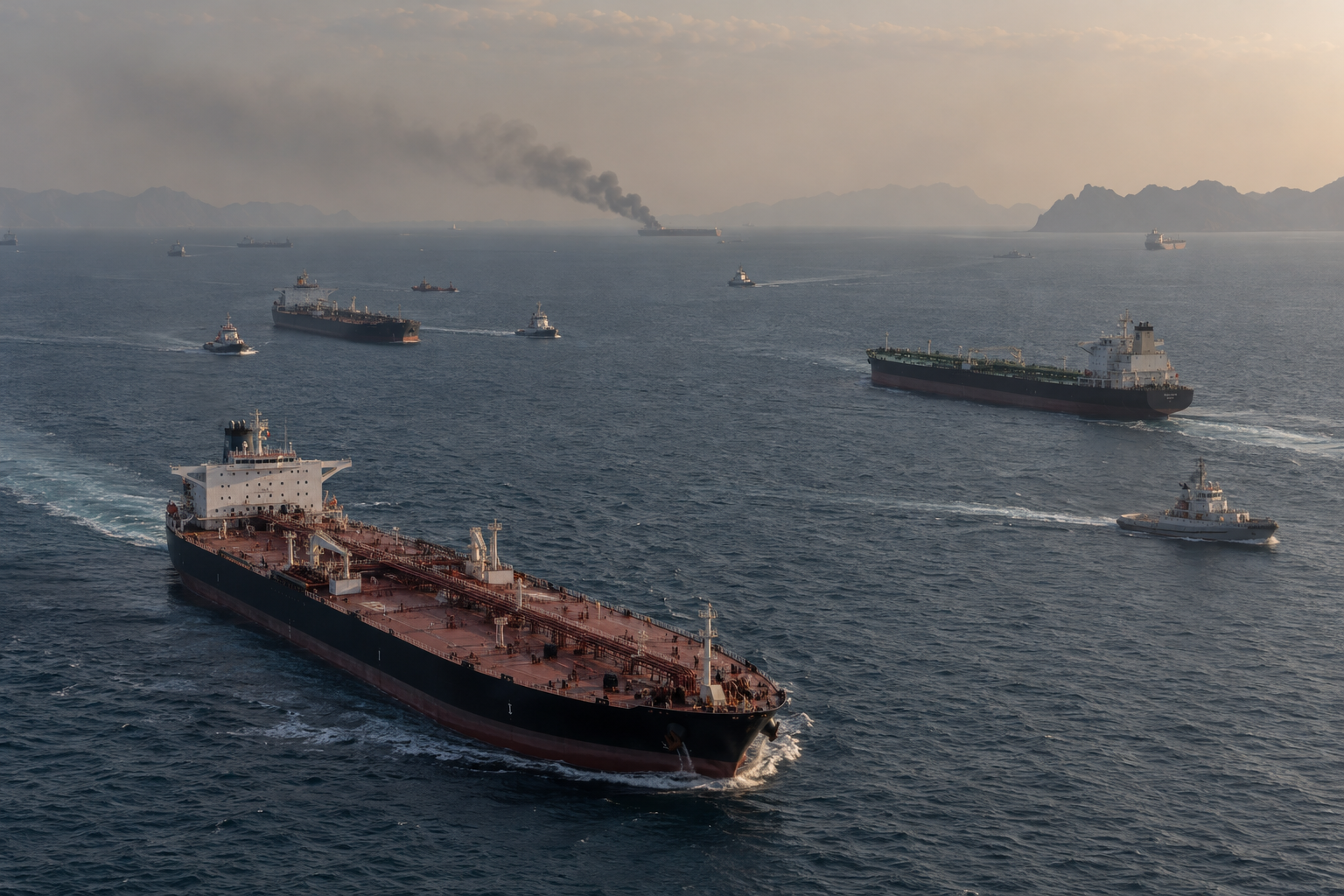
Maritime security is a major focus. U.S. Central Command chief Adm. Brad Cooper said Iran’s navy had been destroyed and the southern route through the Strait of Hormuz was safe and open. Iran, however, claimed that several commercial vessels had hit mines. The Revolutionary Guards said a supertanker carrying more than two million barrels of oil caught fire after striking a mine, and reported three other tanker fires. Those claims could not be independently verified by the Associated Press. Oman reported evacuating 25 crew members from a tanker that caught fire, while the U.K. maritime monitoring center said another vessel was struck by an unknown projectile. The article also notes that October had the highest monthly number of reported strikes in the strait region since the war began.
Other updates describe Houthi missile attacks targeting Yemen’s presidential palace in Aden, an oil spill from a tanker in UAE waters that authorities said was contained, and Secretary of State Marco Rubio’s meeting with G20 foreign ministers. The ministers face divisions over the wars in Iran and Ukraine, as well as rising energy costs and threats to supply chains. Overall, the updates depict a widening regional crisis, contested accounts of attacks at sea, and uncertain efforts to secure a diplomatic resolution.
Entities: Donald Trump, JD Vance, Mohsen Rezaei, Marco Rubio, Iran-U.S. war • Tone: analytical • Sentiment: negative • Intent: inform
30-10-2026
The live updates report escalating military and maritime dangers connected to the Iran war, alongside uncertain diplomatic efforts. Iran’s navy said four oil tankers had struck sea mines in the Strait of Hormuz, claiming the vessels used a U.S.-promoted southern shipping route that Iran considers prohibited. Separately, the U.K. Marine Trade Operations Centre reported that a tanker was hit by a projectile while exiting the strait; it reported no crew injuries or environmental damage. Iran also said another tanker caught fire after striking mines, and warned ships against uncoordinated travel through areas it deems unsafe.
Diplomatically, Vice President JD Vance reportedly sent Iranian security chief Mohsen Rezaei a letter intended to restart peace negotiations. President Donald Trump characterized the outreach as focused on enabling medical supplies to reach Iran. Iranian media said Tehran had not responded and would not abandon core ceasefire conditions, including lifting the U.S. blockade of Iranian ports, easing sanctions, and access to frozen assets.
The updates also describe regional attacks involving Yemen’s Houthis and Saudi Arabia. Saudi forces said they intercepted a Houthi drone in the Mecca region and two ballistic missiles aimed at Riyadh, while the Houthis denied conducting operations against Saudi territory. The reports follow deadly strikes in western Yemen and a collapse of a longstanding truce. The article also says Defense Secretary Pete Hegseth fired Lt. Gen. Brett Sylvia amid accusations of leaking classified information related to the war. The Pentagon raised the U.S. military death toll to 23, including 11 deaths from enemy fire and 12 classified as nonhostile. Finally, Qatar denied allegations that it interfered in Israeli elections, calling them part of a disinformation campaign; the supplied text cuts off during this item.
Entities: Strait of Hormuz, Iran war, Iranian Navy, Pete Hegseth, Lt. Gen. Brett Sylvia • Tone: neutral • Sentiment: negative • Intent: inform
30-10-2026
Iran said four tankers were damaged by mines in or near the Strait of Hormuz, disputing a U.S. military statement that mines had been cleared from the waterway’s main shipping routes. Iran’s Revolutionary Guard said three tankers caught fire on an “unauthorized southern route” near Oman, while the army reported a fourth vessel burning east of the strait. Separately, the UK Maritime Trade Operations agency reported that a small boat attached two explosive devices to a tanker northeast of Khasab, Oman. The resulting blasts caused an engine-room fire and disabled the vessel; its crew was safe. Iran’s Guards demanded independent evidence for the U.S. claim that the strait was clear. The waterway carries about one-fifth of global energy supplies, but daily traffic has fallen to single digits since the war began in late February.
Regional tensions also rose after Iran-backed Houthi forces claimed six operations against Saudi airports and oil facilities. Saudi Arabia did not confirm those attacks, but said its air defenses intercepted a Houthi drone heading toward the Mecca region. The claims came after senior Saudi and Iranian officials met in Tehran and agreed to address regional differences through dialogue.
At the same time, diplomatic and military efforts involving the United States are proceeding in parallel. Vice President JD Vance reportedly sent Iran a proposed framework for talks through Qatari mediators. President Donald Trump said he had allowed Vance to pursue the outreach, while characterizing Iran’s needs as involving medical supplies and other assistance. The article also reports that the Trump administration may consider renewed military action after the Nov. 3 midterm elections. The Wall Street Journal, citing unnamed U.S. officials, reported that Adm. Brad Cooper briefed Trump on military options for Iran during a White House visit, where the continuing U.S. blockade was also discussed.
Entities: Iran, Strait of Hormuz, Islamic Revolutionary Guard Corps, UK Maritime Trade Operations, Oman • Tone: analytical • Sentiment: negative • Intent: inform
30-10-2026
Iran’s Revolutionary Guard said two oil tankers caught fire and were stopped in the Strait of Hormuz on Friday, alleging that the vessels were using routes Tehran considers unauthorized and had ignored warnings. The Guard gave no identities or details about the causes of the incidents or the crews’ condition. It was unclear whether these were new vessels or among tankers involved in incidents reported the previous day, when Iranian authorities said several ships had struck mines or caught fire.
Other maritime incidents added to the uncertainty. UKMTO reported that a small boat attached two explosive devices to the hull of a tanker, identified by the Financial Times as the Louise 1. The blast caused an engine-room fire, but it was extinguished, the crew was safe, and the tanker resumed its voyage. Oman’s Maritime Security Center separately said Omani forces evacuated 25 crew members from a Panama-flagged vessel that caught fire after an attack near Musandam. Responsibility for these incidents and any links among them were not established.
The United States disputed Iran’s account of events in the strait. CENTCOM commander Adm. Brad Cooper said the main shipping lanes had been cleared of Iranian mines and claimed Iran’s navy had been destroyed and its Guard forces were no longer operating there. CENTCOM also rejected an Iranian claim that it had captured a U.S. drone, while a separate Iranian report that an American unmanned surface vessel had been destroyed was not confirmed by the U.S. military. The competing claims reflect a broader dispute over whether commercial ships should coordinate with Iran and use routes nearer its northern shores or take the southern route.
Meanwhile, Qatari mediators returned to Tehran to pursue an agreement intended to avert renewed large-scale U.S. strikes. Reports described possible progress, but disagreements remained over nuclear-facility inspections, sanctions relief and conditions for formal talks. U.S. and Israeli strike options were reportedly being considered, and Washington had warned regional allies of possible attacks and Iranian retaliation. President Donald Trump said the war would end “soon,” while reiterating that the United States wanted guarantees Iran would never acquire a nuclear weapon; no agreement or final decision on renewed strikes had been announced.
Entities: Iran, Islamic Revolutionary Guard Corps (IRGC), United States, Strait of Hormuz, Qatar and Qatari mediators • Tone: analytical • Sentiment: negative • Intent: inform
30-10-2026
Iran’s Revolutionary Guard claimed that three fuel tankers, including a supertanker carrying more than 2 million barrels of oil, exploded after striking naval mines in the Strait of Hormuz on Friday. The Guard said the supertanker was traveling on an “unauthorized” route, while the other two vessels allegedly struck mines after switching off navigation signals and disregarding radio warnings. Iran did not identify the ships, disclose their origins, report the crews’ condition, or say who laid the mines. The tanker claims could not be independently verified. The United States said it had cleared all internationally recognized primary transit routes in the strait of mines.
The report also noted that Saudi Arabia said it had shot down a drone near Mecca, which it attributed to Yemen’s Iran-backed Houthi rebels. The Houthis denied that the drone had come close to Islam’s holiest site.
The events came as oil prices surged to their highest level since late April. A Saxo Bank briefing said prices could become more volatile over the next couple of weeks amid Israel’s recent elections and the November 3 US midterm elections. The bank forecast that crude could trade in a higher range of $70 to $90 a barrel even after the conflict ends, compared with a pre-war range of $60 to $70. Saul Kavonic of MST Marquee said continued military action around the strait, together with doubts about a viable diplomatic path, was keeping prices elevated amid expectations of possible further escalation. The article presents the tanker reports as unverified claims while emphasizing the potential security and economic consequences of conflict around a major oil transit route.
Entities: Strait of Hormuz, Iran, Iranian Revolutionary Guard, United States, Saudi Arabia • Tone: analytical • Sentiment: negative • Intent: inform
30-10-2026
Iran’s Revolutionary Guards Navy (IRGC Navy) said that three oil tankers caught fire and exploded on Friday while trying to travel through what Iran described as unauthorised routes in the Strait of Hormuz. The report was attributed to Iranian state media. According to an IRGC Navy statement, one of the tankers was carrying 2 million barrels of crude oil and had struck a mine. The article does not identify the tankers or provide details about their crews, the extent of damage, or whether there were casualties.
Iran also said it had destroyed an unmanned US vessel in the eastern Strait of Hormuz. The report gives no further details about the vessel or the alleged destruction. Neither claim had been independently confirmed at the time of publication. Reuters said it was unable immediately to verify the tanker statement and could not independently verify the report about the US vessel. The article also noted there was no immediate confirmation from the US military concerning the latter claim.
The report therefore presents the incidents as statements made by Iran, rather than as independently established events. It offers no response from the tanker operators or other parties, and does not provide additional evidence about the alleged mine strike, the routes used, or the reported vessel destruction. The article, published on October 30, 2026, focuses on the claims and the limits of available verification, without drawing conclusions about responsibility or broader consequences.
Entities: Iran, Iranian Revolutionary Guards Navy (IRGC Navy), Strait of Hormuz, Musandam, Oman, United States military • Tone: analytical • Sentiment: neutral • Intent: inform