30-10-2026
Euro zone economic growth slowed to 0.4% in the third quarter of 2026, down from 0.6% in the second quarter, though it exceeded the 0.2% expansion economists had forecast. The overall figure concealed a sharply uneven performance across member states: France unexpectedly contracted by 0.1%, Germany grew just 0.2%, and Italy stagnated. Spain expanded 0.6%, supported by productivity, tourism and domestic demand, while Ireland reported 5.5% growth, a figure the article cautions is volatile and subject to revision because of multinational companies’ activity there.
France’s contraction comes amid high borrowing costs, political disputes over reducing its budget deficit and national debt, and public unrest over the cost of living and other concerns. The article also notes protests in Spain over economic pressures and housing ahead of a snap election scheduled for next month.
The European Central Bank held interest rates steady, judging that higher energy prices had not yet produced broader second-round effects. However, analysts said another rate increase in December remained possible as energy costs stayed elevated. The ECB also warned that downside risks to growth had increased.
Despite geopolitical and economic uncertainty, analyst Joe Nellis described the euro area as showing “unexpected resilience.” He cautioned that this resilience may obscure persistent structural weaknesses, including low productivity growth and investment, demographic pressures and declining industrial competitiveness. The outlook for 2027 could be further complicated by inflation if the Middle East crisis continues to push up energy and transportation costs, adding pressure to household finances while consumer confidence remains weak.
Entities: Euro zone, Eurostat, European Central Bank (ECB), France, Germany • Tone: analytical • Sentiment: neutral • Intent: inform
30-10-2026
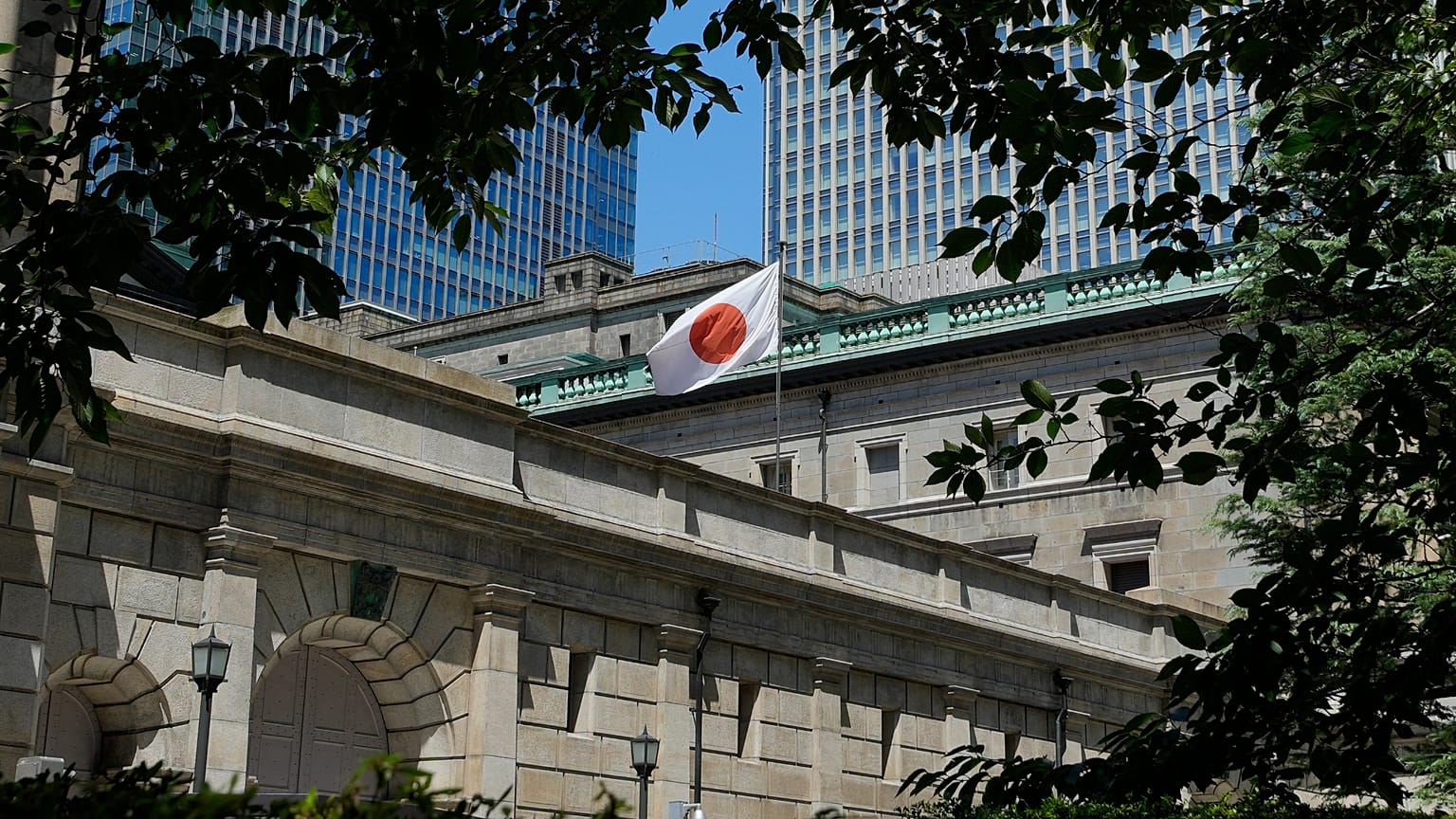
The Bank of Japan (BoJ) said that Japan’s underlying inflation has reached a level generally consistent with its 2% target and is expected to remain around that level. The target was adopted in 2013 alongside major monetary easing measures intended to end decades of deflation. Although core inflation exceeded 2% at times in the early 2020s, Friday’s statement was the first time the central bank confirmed that the longer-term trend had met its price-stability goal.
The BoJ left its key interest rate unchanged at 1.25%, with an eight-to-one vote, despite its assessment that inflation is sustainable. Japan’s government has been more hesitant to declare deflation defeated. Prime Minister Sanae Takaichi is viewed as favoring economic stimulus, while Economy Minister Minoru Kiuchi recently said, “We’re not there.” The article notes that this stance may create an impression of pressure on the central bank to keep rates low.
Prices have risen persistently since spring 2022, and the BoJ began raising rates in March 2024 after a decade of ultra-loose policy. September core inflation rose to 2.1% from 1.7% in August. The BoJ expects inflation excluding fresh food to accelerate further above 2%, citing higher oil costs, energy and goods prices, rising semiconductor prices linked to global AI demand, and the yen’s depreciation.
Although the BoJ held rates steady, officials are expected to raise them in December as price pressures build. Marcel Thieliant of Capital Economics expects the policy rate to reach 2% by the middle of next year, with risks leaning toward further tightening after that.
Entities: Bank of Japan (BoJ), Japan, Sanae Takaichi, Minoru Kiuchi, Marcel Thieliant • Tone: analytical • Sentiment: neutral • Intent: inform
30-10-2026
Inflation diverged across the eurozone’s four largest economies in October, with Italy recording the highest rate and Germany the lowest. Prices rose 5.4% year on year in Italy, 4.9% in Spain, and 3.4% in France, while Germany’s rate fell to 2.8%. Energy costs were a common pressure, but national factors—including fuel taxes, gas tariffs, and the strength of underlying demand—helped produce different results.
Italy’s inflation accelerated from 4.2% in September, driven chiefly by energy prices, which were up 31.4% year on year. Regulated energy prices rose especially sharply, while food, household goods, personal-care products, transport services, and core inflation also picked up. The increase comes as the Italian economy showed no growth in the third quarter, raising concern that the energy shock is weighing on consumer spending.
Spain’s inflation held at 4.9%. Cheaper fuel compared with a year earlier helped keep the annual rate steady, partly offset by higher gas tariffs. Underlying inflation remained at 3.1%, while Spain’s economy grew 0.6% in the third quarter. France’s rate climbed to 3.4%, its highest since January 2024, as energy and services prices rose. That increase coincided with a 0.1% contraction in the French economy, prompting one economist to describe the situation as stagflation.
Germany was the exception: inflation eased from 3.3% to 2.8%, helped by a temporary fuel-tax cut. Economists cautioned that this relief could reverse when the tax reduction expires. The national figures point to a potentially high eurozone-wide reading, with forecasts raised to as much as 4%, double the European Central Bank’s 2% target. The ECB held its deposit rate at 2.5% after a September hike, but officials and analysts say another increase in December remains possible. The bank faces a dilemma between weak growth and renewed price pressures, while President Christine Lagarde’s planned early departure may add market uncertainty.
Entities: Italy, Spain, France, Germany, Eurozone inflation • Tone: analytical • Sentiment: negative • Intent: analyze
30-10-2026
France’s economy contracted by 0.1% in the third quarter of 2026, following no growth in the second quarter and a 0.2% decline in the first. The figures, reported by the National Institute of Statistics and Economic Studies (Insee), mean France has recorded no growth since the beginning of the year and leave the eurozone’s second-largest economy close to a technical recession. Household consumption rose by 0.4%, but falling output—especially in transport equipment, aerospace, automotive and agri-food—pulled down GDP. Inflation also rose to 3.4% year on year in October, its highest level since January 2024.
The weak data intensify pressure on a government already confronting higher borrowing costs, volatile public sentiment and a parliament in which it lacks a majority. Economy and Finance Minister Roland Lescure called the economy “at a standstill” and warned that France could “hit the wall” if the 2027 budget is not adopted. The government may consider using the Constitution’s article 49.3 to pass the bill without a vote, or adopting it by ordinance.
Economists quoted in the article disagree with the idea that simply passing a budget would quickly revive activity. Jérôme Mathis of Paris-Dauphine University argues that fiscal adjustment can initially weigh on growth, and identifies the deeper problem as a lack of visibility about the country’s medium- and long-term public-finance trajectory. Uncertainty can discourage business investment and household spending while prompting markets to demand a higher risk premium.
French 10-year bond yields had eased to 4.9% by Friday, below their 22 October peak, while the spread over German borrowing costs remained around 1.55 percentage points. Analysts say a budget passed by ordinance might reduce short-term uncertainty, but could fail to restore confidence if investors regard it as fragile or politically unsustainable. The article concludes that markets are less concerned about France’s ability to raise taxes or repay debt than about its ability to control the growth of that debt. Until that concern is addressed, pressure on borrowing costs may continue regardless of how the budget is passed.
Entities: France, French GDP contraction, 2027 French budget, National Institute of Statistics and Economic Studies (Insee), Roland Lescure • Tone: analytical • Sentiment: negative • Intent: analyze
30-10-2026
The Bank of Japan (BOJ) kept its policy rate unchanged at 1.25%, its highest level since 1995, but made a notable shift in its assessment of inflation. It said underlying inflation was “generally consistent” with its 2% target—the first time it has used that characterization since adopting the target in 2013. Previously, the bank had described inflation as “approaching 2 percent.” The decision was split 8-1: board member Hajime Takata dissented in favor of raising the rate to 1.5%. The BOJ also raised its fiscal 2027 inflation forecast to 2.6% from 2.4%, and its “core-core” forecast, which excludes fresh food and energy, to 2.7% from 2.6%. It warned that underlying inflation could exceed 2%, citing businesses’ growing tendency to raise wages and prices. State Street Investment Management economist Krishna Bhimavarapu characterized the decision as a “hawkish hold,” suggesting the BOJ sees further increases ahead and greater confidence in a self-sustaining cycle linking wages, prices, and consumption. He cautioned, however, that weak growth and consumption do not justify rushing the next move. Before the decision, all 16 economists in a CNBC survey expected the BOJ to prepare the ground for a rate hike in December or January. Thirteen expected the eventual peak rate to reach 1.75% to 2% around mid-2027. Japan continues to face a weak yen and high energy costs, while energy subsidies have been holding down consumer inflation readings. September core inflation reached 2.1%, its highest level of 2026 and above expectations. Finance Minister Satsuki Katayama said Japan was nearing a period of sustained inflation driven by wage growth. Inflation-adjusted wages rose 1.5% year over year in August, marking an eighth consecutive month of increases.
Entities: Bank of Japan (BOJ), Japan, Hajime Takata, Krishna Bhimavarapu, State Street Investment Management • Tone: analytical • Sentiment: neutral • Intent: inform