30-09-2026
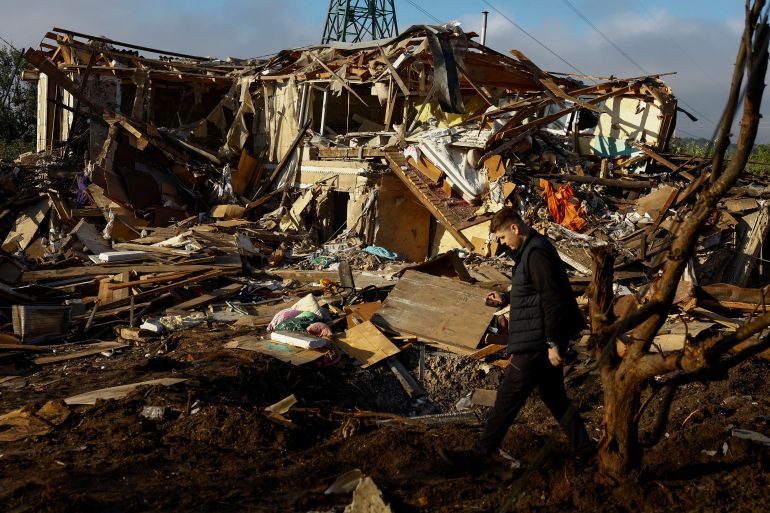
Russian air strikes killed three people, including a child, and injured seven in Kyiv and the surrounding region early Wednesday, September 30, 2026, according to Ukrainian officials. In the capital, the Kyiv City Military Administration reported two deaths and four injuries. Mayor Vitali Klitschko said fires broke out and affected private homes, a store and a warehouse. A Reuters witness heard explosions in Kyiv.
In the surrounding region, governor Tymur Tkachenko said a Russian missile and drone strike killed a child and injured three people. The attack also damaged infrastructure, homes, warehouses and cars. The article reports that Romania and Poland, both neighbouring Ukraine and members of the European Union and NATO, scrambled military jets to protect their airspaces amid Russian attacks on Ukraine. Their actions were described in statements from defence and armed forces authorities on X.
The report also describes a Ukrainian drone attack in Russia’s Samara region, an oil-producing and refining hub about 1,100 kilometres by road southeast of Moscow. Regional governor Vyacheslav Fedorishchev said the attack damaged private homes. Reuters said it could not immediately independently verify the reports. The article presents the casualty and damage accounts as statements from officials and does not provide further details about the strikes or the military response.
Entities: Kyiv, Ukraine, Russia, Tymur Tkachenko, Vitali Klitschko • Tone: neutral • Sentiment: negative • Intent: inform
30-09-2026
Russian attacks on Kyiv and the surrounding region killed at least four people, including a child, according to Ukrainian officials. The overnight assault on September 30 targeted energy facilities, damaged the power grid and disrupted electricity supplies in and around the capital. Kyiv was under air alerts for much of the night as missiles and drones approached. Officials also reported damage to homes, businesses, warehouses and vehicles. DTEK, a major private Ukrainian energy company, said repair crews restored electricity to about 8,000 households, though parts of the grid remained damaged. Kyiv officials reported three deaths in the capital, while emergency services confirmed a child was killed elsewhere in the region.
President Volodymyr Zelenskyy said critical infrastructure was also hit in the Zhytomyr, Mykolaiv, Kirovohrad and Rivne regions. Russia’s Defence Ministry acknowledged strikes on power infrastructure in Kyiv region, describing the facilities as linked to Ukrainian military production. It also said its operation used missiles and drones and struck a communications facility in Kyiv and port infrastructure in Izmail.
The attacks followed several days of intensified pressure on Kyiv, including daytime strikes and repeated overnight barrages. The article notes that Russia has increasingly used faster, jet-powered attack drones, which are more difficult for Ukrainian air defences to intercept. This has sharpened Ukraine’s calls for allied support, especially air-defence systems and interceptors capable of stopping ballistic missiles. Belgian Defence Minister Theo Francken also warned that Europe could face more Russian “hybrid threats” in the coming months and urged faster expansion of air defences, weapons stocks and production.
With temperatures beginning to fall, damage to Ukraine’s energy network raises concerns about the approaching winter. Russian attacks on energy infrastructure during the previous winter caused electricity and heating outages during severe cold, making the resilience of the power system a significant concern as the war continues.
Entities: Volodymyr Zelenskyy, Theo Francken, Kyiv, Vyshhorod, Zhytomyr region • Tone: neutral • Sentiment: negative • Intent: inform
30-09-2026
Russia launched what Ukrainian Prime Minister Serhiy Koretskyi described as the largest combined attack on Ukraine’s energy infrastructure since the end of the previous heating season. The overnight assault primarily targeted Kyiv and the surrounding region, but strikes were reported across 11 regions. At least five people were killed, including a child in the Kyiv region; further deaths were reported in Kyiv, Mykolaiv and Sumy. Residential buildings, civilian businesses, social infrastructure and railways were also hit.
Ukraine’s largest private energy company, DTEK, said electricity had been restored to 8,000 homes after what it called a difficult night. Some households in several regions remained without power, and state grid operator Ukrenergo advised people to avoid using powerful appliances during the day while electricity supplies were reduced. The Trypilska thermal power plant, a major electricity supplier to Kyiv, was among the Russian defence ministry’s stated targets. Plant operator Centrenergo confirmed damage and said it was assessing its extent. Russia claimed the plant supplied electricity to Ukrainian defence facilities.
Kyiv residents awoke to thick smoke, while air-raid alerts and the sound of air-defence gunfire continued. Authorities advised residents in several districts to keep their windows closed until the smoke cleared. Ukrainian officials said attacks also struck critical infrastructure in Zhytomyr, Mykolaiv, Kirovohrad and Rivne.
The article says Ukraine has anticipated another sustained campaign against its energy grid, which Russia has attacked during each winter since its full-scale invasion began in 2022. Russia currently controls about 20% of Ukrainian territory.
Entities: Serhiy Koretskyi, Volodymyr Zelensky, Vladimir Putin, Kyiv, Ukraine • Tone: neutral • Sentiment: negative • Intent: inform
30-09-2026
The supplied text is only the opening of a Washington Post article, not the full story, so its broader account of the unusual meteorological effect cannot be summarized without inventing details. In the excerpt, Steve Hendrix describes Kyiv residents anticipating a clear, cool autumn day on Wednesday. The forecast offered a brief prospect of relief after a night marked by air-raid sirens, explosions, and ballistic missile strikes. The headline frames the story as a “fog of war” connected to strikes and an unusual weather effect, but the provided body text does not explain what that effect was, how it developed, or what consequences it had. The excerpt establishes a contrast between the city’s battered state and the pleasant weather forecast, while emphasizing the danger and disruption of the preceding night. The article’s remaining reporting, including any explanations from meteorologists or accounts of the strikes’ effects, is not included in the supplied content.
Entities: Kyiv, Steve Hendrix, The Washington Post, Ukraine, ballistic missile strikes • Tone: analytical • Sentiment: negative • Intent: inform