30-09-2026
Tens of thousands of French public-sector workers joined a one-day strike to demand higher pay, improved working conditions and an end to planned budget cuts. Unions estimated that 300,000 people took part nationwide, while police counted 30,000 in Paris. The proposed 2027 budget would freeze state employees’ base salaries for a fourth consecutive year, according to unions, which say repeated freezes have significantly reduced workers’ purchasing power. They are calling for a 6 percent raise. Sophie Binet, head of the General Confederation of Labor, described the protests as a “red alert” and gave the government 48 hours to reconsider before her union decides whether to take further action.
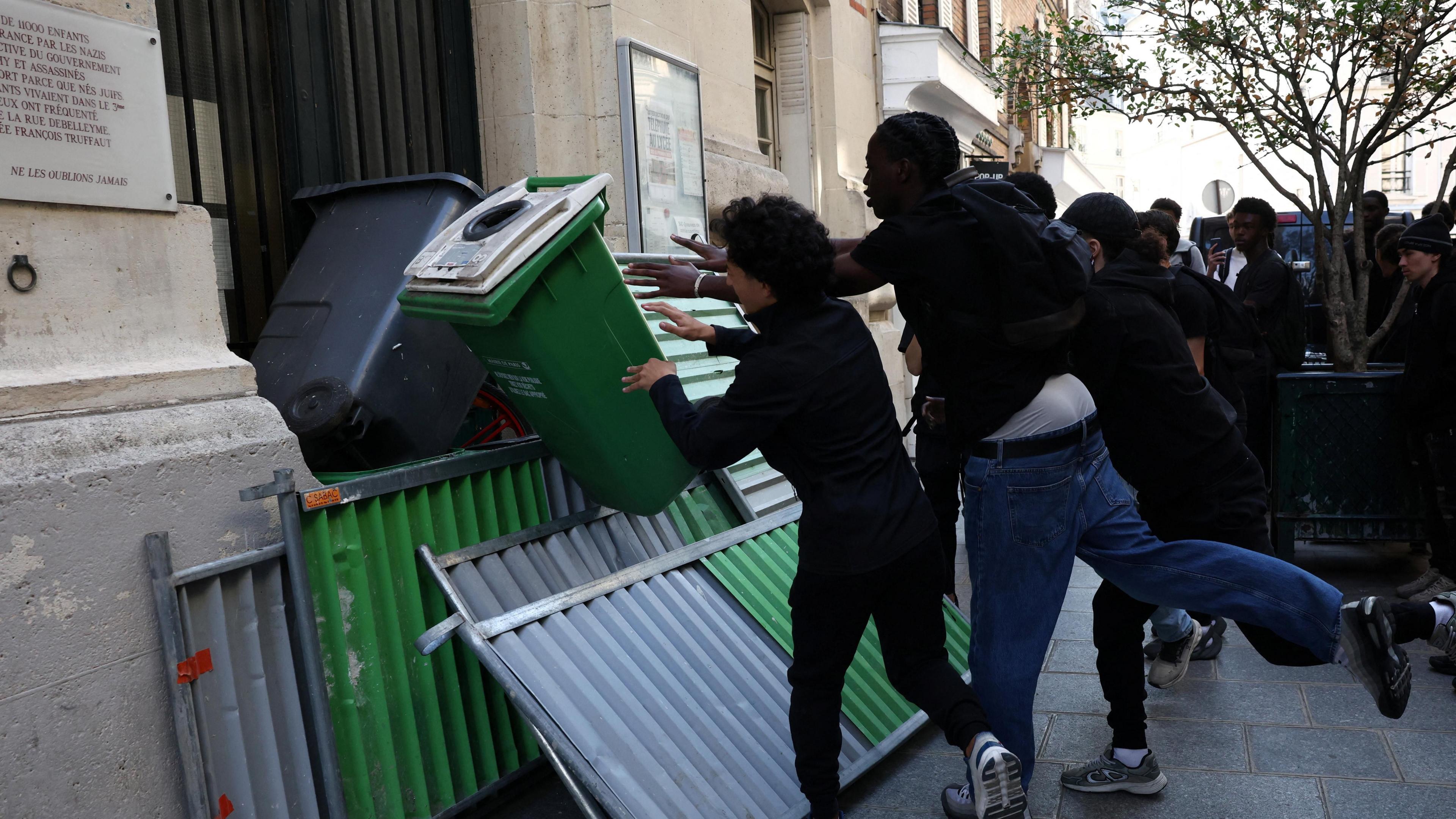
The strike coincided with student demonstrations at more than 400 schools over class sizes, timetables, teacher shortages, school funding and overheated classrooms. Authorities reported that 40 schools were blockaded and another 44 faced attempted blockades. Clashes in some locations involved students throwing projectiles and setting fire to rubbish bins; police responded with batons and tear gas. Ten students and staff members and 48 law enforcement officials were reported injured, and at least 440 people were detained. Government ministers condemned the violence, while the education minister said legal proceedings had begun.
Participation varied by sector: just over 11 percent of teachers and school staff struck, fewer than one in ten other civil servants joined, and hospital participation was lower still. Firefighters also marched, citing resource shortages exposed by summer wildfires. The demonstrations came two days before the government’s draft budget announcement and seven months before the presidential election. The government has introduced measures to help households with higher energy prices, but dissatisfaction with President Emmanuel Macron’s administration continues. Political figures across the left and far right featured in the debate, while a poll suggested that Jean-Luc Mélenchon and Marine Le Pen could reach the presidential run-off, with Le Pen favored to win.
Entities: France, French public-sector strike, Student protests and school blockades, 2027 draft budget and proposed salary freeze, General Confederation of Labor (CGT) • Tone: neutral • Sentiment: neutral • Intent: inform
30-09-2026
A wave of student protests over overcrowded classrooms and teacher shortages has spread from the Paris region to cities including Dijon, Lyon, Strasbourg, Lille and Marseille. French officials say 440 people, mostly minors, have been arrested and 76 people injured since the demonstrations began last week. The injuries include both students and school staff; Education Minister Édouard Geffray cited a young man who lost part of the use of his hand after firing a mortar firework and said a teacher was beaten.
Students have blockaded schools, and the secondary students’ union USL says as many as 400 of France’s 3,700 lycées have been affected. Fires, projectiles and confrontations have been reported in several cities, with police using tear gas and, in some cases, batons. A student near a school in Tours suffered a serious eye injury, though reports that police fired a flashball at him were unconfirmed. Protesters say they are trying to draw attention to a failing education system and unmanageable class sizes; one student described classes of 34 and overworked teachers.
The response has become politically contentious. Geffray accused the radical-left party La France Insoumise of stirring up trouble, while the mayor of Seine-Saint-Denis, Bally Bagayoko, praised protesters and said violence could sometimes be legitimate in the face of police force. Regional conservative leader Valérie Pécresse called for him to pay for damage. USL leader Ryad Rani accused the government of repression and police of excessive force; Interior Minister Laurent Nuñez said police acted proportionately. Prime Minister Sébastien Lecornu warned against escalation. USL has called for a national protest on 6 October, following demonstrations that coincided with wider public-sector walkouts over wages and working conditions. Those broader protests reportedly drew at least 200,000 participants and mostly passed without incident.
Entities: Édouard Geffray, Bally Bagayoko, Valérie Pécresse, Laurent Nuñez, Sébastien Lecornu • Tone: analytical • Sentiment: negative • Intent: inform
30-09-2026
France saw a nationwide wave of strikes and student protests as the government prepared to present its draft 2027 budget, which proposes €54 billion in savings. Students blocked or disrupted hundreds of schools, citing teacher shortages, overcrowded classrooms, poor facilities and demanding schedules. The education ministry said about 400 of France’s roughly 3,700 schools were affected on Tuesday. Interior Minister Laurent Nuñez reported that more than 440 people—mostly minors—were detained; officials also reported injuries among teachers, students and police officers.
The school demonstrations, which began in the Paris region, spread to cities including Lille, Lyon, Nantes, Marseille, Bordeaux and Rennes. Many blockades were peaceful, but some turned into confrontations. In Lille, bins were set on fire and police used tear gas and batons after objects were thrown. Students also displayed signs criticizing police presence and calling for more funding. Prime Minister Sébastien Lecornu condemned violence while recognizing that students’ concerns should be addressed. Education Minister Édouard Geffray defended students’ right to protest but called violence indefensible.
The protests coincided with a wider public-sector strike involving teachers, healthcare workers and firefighters. Unions held more than 170 rallies against proposed budget cuts and a planned freeze on state employees’ base salaries in 2027. The CGT said repeated pay freezes had reduced workers’ purchasing power, and its leader Sophie Binet warned that further strike action could follow if the government did not reverse the cuts.
The budget dispute reflects France’s mounting debt. Public debt stood at €3.595 trillion, around 119% of GDP, at the end of June, and the government warned it could reach 121.7% in 2027. Interest payments were projected at €79 billion this year and €91 billion in 2027. The government is seeking to reduce the deficit while unions oppose pay restraint and students demand more resources for schools.
Entities: Sébastien Lecornu, Laurent Nuñez, Édouard Geffray, Sophie Binet, France • Tone: analytical • Sentiment: neutral • Intent: inform