30-09-2026
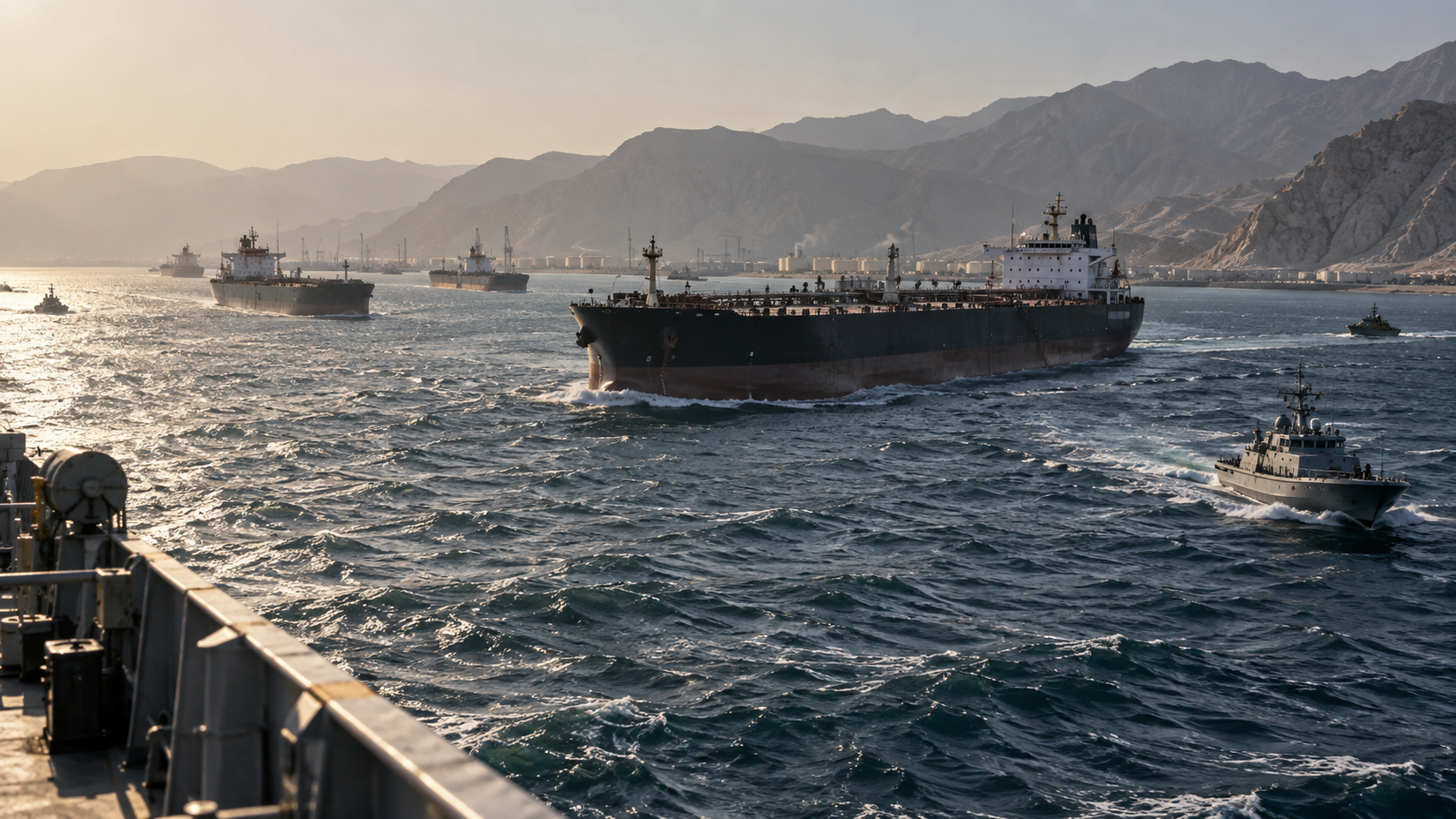
The article examines whether recovering traffic through the Strait of Hormuz is weakening Iran’s bargaining power as Tehran and Washington negotiate an end to seven months of hostilities. Data from commodity analytics firm Kpler indicate that Middle Eastern crude exports rose to an estimated 16.328 million barrels per day in September, with about 9.719 million barrels per day expected to pass through the strait. Exports have recovered to just under 80 percent of their prewar level, though they remain below February’s volume. Saudi Arabia accounted for much of the rebound. Before the conflict, roughly 120–140 vessels crossed the strait daily; traffic fell to as few as two tankers a day at the height of the fighting.
The article argues that this recovery could reduce Tehran’s leverage, particularly as a US naval blockade restricts Iran’s own exports. However, experts caution that the waterway is not secure or back to normal. Iran says military conflict continues, and the UK Maritime Trade Operations centre reported projectiles striking three ships. Oil prices, tanker insurance costs, constrained refined-fuel flows, infrastructure damage and depleted strategic reserves all indicate continuing risk. Brent crude fell as markets responded to recovering exports, but remained elevated and was on course for a substantial monthly rise.
Iran is also under growing economic pressure. Official figures showed GDP contracting 10.1 percent year on year in the March–June period, while the oil and gas sector shrank 26.4 percent. Inflation was nearly 70 percent, and the rial had fallen beyond 2.2 million per US dollar. The US has announced a broader campaign targeting Iranian financial interests. A University of Tehran researcher describes the blockade’s impact on oil, petrochemical and dollar revenues as part of an “economic war.” The supplied article text ends mid-sentence, so its final discussion is incomplete.
Entities: Strait of Hormuz, Iran, United States, Bandar Abbas, Usaid Siddiqui • Tone: analytical • Sentiment: negative • Intent: analyze
30-09-2026
Iranian officials and state media said the United States had submitted a counterproposal in response to Tehran’s proposed seven-day ceasefire and phased reopening of the Strait of Hormuz. The proposal was being considered after President Donald Trump publicly rejected Iran’s plan. At the same time, Iran’s Revolutionary Guard Corps said the war would end only if Washington admitted defeat and withdrew its forces, while a message from Iran’s military urged Americans to protest the Trump administration.
The updates also describe a plea from Mahboubeh Shahbani, a 33-year-old Iranian woman sentenced to death over protests. In an audio message from prison, she asked the public, the United Nations and human rights organizations to act for her and other prisoners whose death sentences have been upheld. Rights groups say Iran has intensified executions to deter further protests; the article notes Amnesty International’s report that Iran more than doubled executions in 2025. Shahbani’s conviction and the account of her role in the protests are disputed in the reporting, and the recording could not be independently authenticated.
Iranian President Masoud Pezeshkian said Gulf security and the security of the Strait of Hormuz should depend primarily on cooperation among regional states. Meanwhile, Iranian media alleged that Israel was considering a false-flag operation, but the report offered no independent confirmation. A British maritime agency said three vessels—a crude oil tanker, an LNG tanker and another ship—were struck by unknown projectiles in the strait, a critical route for global oil and gas shipments.
The updates further report that U.S. forces completed their withdrawal from Iraq after a 12-year mission against ISIS. Iran-backed militias welcomed the move, while some Iraqis, particularly in the Kurdish region, expressed concern. The article’s final update begins describing Iran’s receipt of a formal U.S. response but cuts off before the account is complete.
Entities: Iran, United States, Donald Trump, Masoud Pezeshkian, Mahboubeh Shahbani • Tone: analytical • Sentiment: negative • Intent: inform
30-09-2026
The article reports uncertainty over U.S.-Iran ceasefire talks and the wider effects of the war and the closure of the Strait of Hormuz. Iranian Foreign Minister Abbas Araghchi says Tehran is awaiting a formal U.S. response to its seven-day proposal, delivered through Qatar, for a ceasefire and phased reopening of the strait. The proposal is tied to conditions in a mid-June memorandum of understanding. President Trump has publicly rejected it, while also acknowledging that the sides have communicated through mediators; he denied reports that he offered sanctions relief or access to frozen Iranian funds. Iran’s security chief, Mohsen Rezaei, accused Trump of being unable to choose between further fighting and negotiations.
Meanwhile, the U.S. Treasury sanctioned 10 people and companies it accuses of helping Iran’s military obtain weapons, components, and electronics. The measures are part of the Trump administration’s Operation Economic Outcast, intended to isolate Iran’s government and raise the cost of supporting its military supply chain. The status of diplomacy remains uncertain even as sanctions pressure continues.
The strait’s closure is also disrupting regional energy flows and markets. Iraq has begun importing gasoline through Syria’s Baniyas port under a three-month agreement, building on earlier use of the route to export Iraqi oil. The disruption has affected a waterway through which about one-fifth of the world’s traded oil and gas previously passed, and has contributed to rising fuel prices and efforts to find alternatives.
Other developments include Turkey’s seizure of a Caspian Airlines aircraft at Istanbul Airport over a reported commercial debt, and largely steady U.S. stock markets as oil prices eased slightly. Overall, the updates describe simultaneous diplomatic uncertainty, economic pressure, sanctions, and efforts to adapt to the continuing closure of the Strait of Hormuz.
Entities: Abbas Araghchi, Donald Trump, Mohsen Rezaei, Scott Bessent, Iran • Tone: analytical • Sentiment: neutral • Intent: inform
30-09-2026
President Donald Trump denied reports that he had offered Iran sanctions relief or access to frozen Iranian funds in exchange for steps on its nuclear program. In a post on Truth Social late Tuesday, Trump rejected an Axios report describing such an offer, writing, “I offered them NOTHING!” and calling the report a “HOAX.” The denial comes as diplomatic efforts continue to address the seven-month conflict in the Middle East.
Iranian Foreign Minister Abbas Araqchi briefed Iran’s cabinet on a U.S. proposal on Wednesday, according to a government spokesperson. The proposal followed meetings earlier in the week between Araqchi and Qatari mediators in Doha. The article does not provide details of the U.S. proposal or say whether Iran has accepted or rejected it.
Qatar is continuing to mediate between Washington and Tehran and push for a lasting settlement. Qatari Foreign Ministry spokesperson Majed al-Ansari said the goal was to establish common ground for a deal that would spare all sides from the consequences of the conflict.
Energy markets also featured in the report: at 5:34 a.m. Eastern Time, Brent crude was up 1.16% at $103.78 per barrel, while U.S. West Texas Intermediate futures had risen 1.13% to $90.39 per barrel. The article presents the talks as ongoing, with Trump disputing claims about the terms of a possible U.S. offer and Qatar continuing its mediation effort.
Entities: Donald Trump, Abbas Araqchi, Majed al-Ansari, Iran, Qatar • Tone: neutral • Sentiment: neutral • Intent: inform