30-07-2026
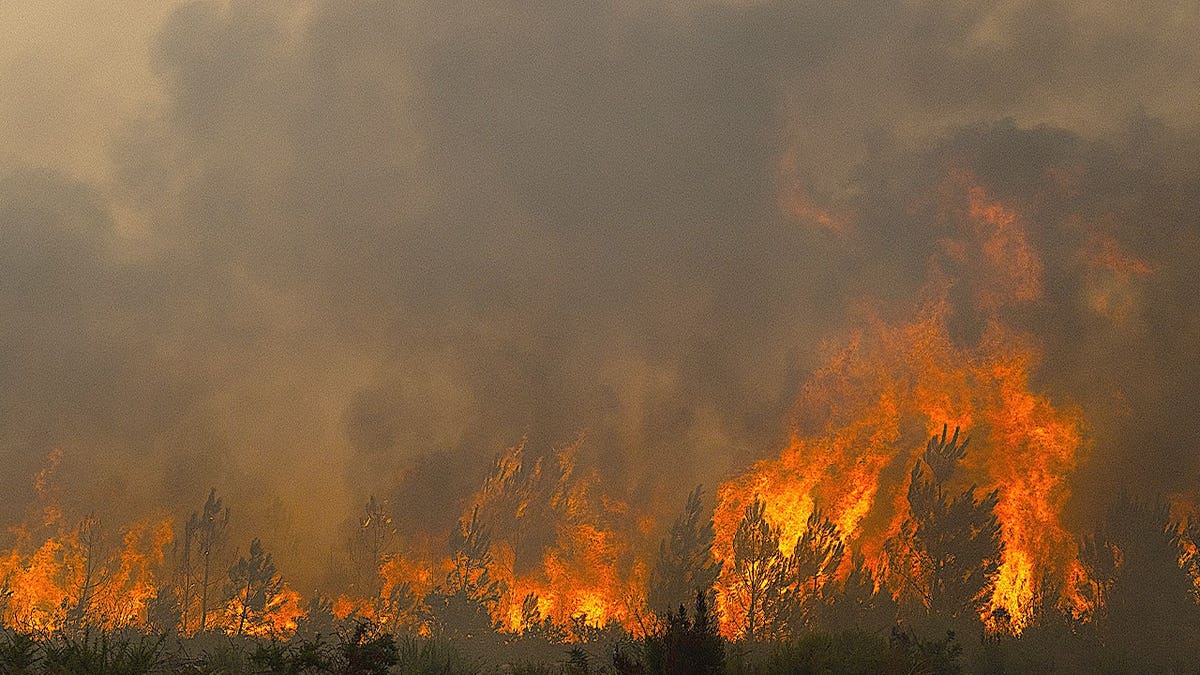
BBC reports from France’s Gironde region as firefighters, volunteers, and residents battle a fast-moving wildfire that has burned for a week amid extreme heat. The article describes aerial firefighting efforts by Canadair planes and helicopters, followed by ground crews who try to contain flare-ups in a landscape of dry pine forest and powder-like soil that makes the fires spread quickly. Temperatures around 40C and constant rekindling make the operation feel like a relentless game of containment rather than eradication.
The piece also focuses on the human side of the disaster. Locals such as Pierre Alexandre refused to abandon their homes immediately, hoping to protect their property even as firefighters ordered evacuations. Volunteers, including Hugo and Maëlys, join the effort despite lacking professional training, motivated by attachment to their home region and fear for their families’ houses. The article emphasizes the emotional toll of losing land, homes, and forests that residents consider part of their identity.
It also highlights the wider mobilization of firefighters from across France, from Brittany to Marseille and Lyon, and explains one containment tactic known locally as “noyer,” or drowning the vegetation to stop the fire’s advance. Although the fires are said to be under relative control, the article makes clear that the danger is not over, especially as more hot weather threatens to worsen conditions.
Entities: Gironde region, Bordeaux, Arès, Le Temple, France • Tone: analytical • Sentiment: negative • Intent: inform
30-07-2026
Wildfires continued to ravage parts of southern Europe, with Greece suffering the most immediate loss as three firefighters died while battling blazes in Crete and the Peloponnese. In Crete, strong winds accelerated the spread of fire, forcing evacuations from several villages, including Krya Vrysi, and leaving firefighters trapped in dangerous conditions. A third Greek firefighter died after being found unconscious near Gytheio in the southern Peloponnese. Beyond Greece, severe fire activity and heatwave conditions affected Spain, France, Turkey, and Portugal, underscoring a broader regional emergency driven by extreme heat and dry weather.
In Spain, officials warned that the next hours would be critical as a major wildfire near Madrid remained difficult to control. The country has already seen more than 207,000 hectares burned this year, including the largest recorded wildfire in Spanish history in Ávila province. While some evacuation restrictions were lifted and thousands of residents were allowed to return home, many communities remained under strain, with homes lost and local recovery expected to be difficult. France was also battling flare-ups in the Gironde and Landes regions under orange heatwave alerts, while Portugal and Turkey reported additional fire-related disruptions. The article places these events in the context of climate change, noting that Europe is warming faster than the global average and is experiencing more intense heatwaves and wildfires as a result.
Entities: Greece, Crete, Peloponnese, Rethymno, Gytheio • Tone: urgent • Sentiment: negative • Intent: inform
30-07-2026
Two firefighters died while battling a wildfire on the Greek island of Crete, underscoring a worsening Europe-wide fire emergency driven by extreme heat, drought, and strong winds. At the same time, southern France faced its largest remaining blaze in Gironde, a fire that had already forced massive evacuations and threatened tourist towns, vineyards, and forests near Bordeaux. French authorities said more than 2,200 firefighters and over 20 aircraft were still deployed, with residents, volunteers, and local crews working alongside emergency teams to stop the flames from spreading further.
The article explains that the Gironde fire may have been sparked by routine brush-clearing near a high-voltage power line, though the work appeared to comply with regulations. A calm night slowed the fire’s spread, but forecasts of 40-degree Celsius heat and strengthening winds warned that the reprieve could be temporary. Officials described the situation as highly unstable, with large-scale evacuations continuing across coastal resorts while tens of thousands of other residents were allowed to return to suburbs spared by the flames.
The piece also places the crisis in a broader European context. Wildfires in France and Spain have displaced hundreds of thousands of people this summer, while Spain continued to fight active blazes and begin limited returns home in other regions. The article connects these fires to Europe’s record heat, worsening drought, and rapid warming, emphasizing that western Europe’s environmental conditions are making wildfire seasons more intense, dangerous, and destructive.
Entities: Crete, Greece, France, Gironde, Lège • Tone: urgent • Sentiment: negative • Intent: inform
30-07-2026
Western Europe’s intensifying heatwaves and wildfires are increasingly being framed as a macroeconomic risk rather than just a seasonal weather problem. The article describes major fires in Spain and France that have burned hundreds of thousands of acres and forced mass evacuations, while also noting that Western Europe recorded its hottest June on record. Economists and climate experts quoted by CNBC say the consequences extend well beyond direct fire damage: extreme heat is driving up costs for cooling, health care, emergency response, transportation, agriculture, and insurance, while also disrupting supply chains, reducing productivity, depressing tourism, and pushing up food prices.
The article argues that repeated heatwaves are already measurably affecting output. A University of Mannheim and European Central Bank paper found that summer heatwaves, droughts, and floods in 2025 cut European economic output by about 0.3%, with losses potentially rising to 0.8% by 2029. ING’s Carsten Brzeski characterizes heatwaves as a “macro variable,” and Bruegel’s Georg Zachmann warns that governments and systems must adapt faster to avoid exceeding society’s capacity to absorb these shocks. The piece also highlights fiscal consequences, including emergency spending and the likelihood of higher insurance losses. Allianz Commercial data show wildfire-related payouts have surged over the last two decades, underscoring the growing financial burden.
Experts also point to human land management and climate change as contributors to the severity of the fires. A wildland fire science professor says decades of land abandonment and altered landscapes have made parts of southern Europe more flammable during hot, dry periods. While reconstruction may eventually create some economic activity, the article’s main message is that Europe’s worsening summer extremes are becoming a recurring and costly drag on growth, budgets, and markets.
Entities: Western Europe, Spain, France, Germany, Berlin • Tone: analytical • Sentiment: negative • Intent: inform
30-07-2026
Massive wildfires in southwestern France are threatening a cluster of sensitive defense, aerospace, and nuclear-related industrial sites near Bordeaux, prompting evacuations, shutdowns, and heightened security measures. The fires are part of a broader and unusually severe wildfire season affecting France and Spain, with more than 250,000 people evacuated across both countries in recent days and France entering a fourth major heat wave of the year, which is worsening conditions for firefighters.
In the Gironde region, the blazes have already burned more than 104,000 acres and destroyed around 240 homes. Authorities have evacuated nearly 4,000 holidaymakers from campsites, holiday villages, and tourist resorts near Lacanau, while businesses across the region have been disrupted or forced to close. The article emphasizes that the fires are moving toward or near facilities tied to France’s strategic defense infrastructure, including plants that produce propellants for Ariane rockets and French missiles, as well as factories linked to nuclear missiles, Rafale fighter jets, and other military systems.
The French government has deployed 1,500 military personnel to assist with firefighting and to secure critical industrial sites. Some facilities, including a military research center in Le Barp, were closed as a precaution, and companies such as ArianeGroup evacuated employees from affected zones. Officials said there is no radioactive leakage risk at the CEA site because it does not contain nuclear materials. The article frames the event as one of France’s worst wildfire episodes in recent history, driven by extreme heat and dry conditions, with national leaders underscoring the severity of the crisis.
Entities: France, Bordeaux, Gironde region, Emmanuel Macron, Roland Lescure • Tone: urgent • Sentiment: negative • Intent: inform
30-07-2026
The article is a live update on a series of wildfires affecting southern Europe, with France, Spain, and Greece all facing active fire emergencies amid extreme heat, drought, and strong winds. In southwest France, a large wildfire near Bordeaux remained extensive at 42,000 hectares, and authorities said two people were arrested on suspicion of arson. A flare-up in the Fontainebleau forest south of Paris was brought under control, with officials revising the burned area down to 6 hectares and maintaining a large-scale response overnight. Another new fire broke out near Dijon in Burgundy, burning 125 hectares but causing no injuries or damage to homes, while firefighters and helicopters were deployed to contain it.
Elsewhere, Spanish authorities reported that the blaze near Madrid had nearly been extinguished, with “almost no flames” left. In Greece, conditions were far more severe: thousands of people were evacuated from Crete as fires threatened a tourist resort and continued to rage, fanned by violent winds. The liveblog also notes that three firefighters died battling blazes in Greece earlier in the week, underscoring the danger to emergency responders. Overall, the piece emphasizes the scale, spread, and human cost of the fires, while tracking rapid developments across multiple countries in real time.
Entities: France, Spain, Greece, Crete, Rethymno • Tone: urgent • Sentiment: negative • Intent: inform
30-07-2026
The article reports that Spain and France are facing severe wildfire crises amid a new heatwave sweeping across southern Europe. In Spain, firefighters made progress against some of the country’s worst blazes in decades, allowing thousands of evacuees to return home, although some residents came back to find their homes destroyed. Officials said improved overnight conditions had helped stabilise some fire zones, but Prime Minister Pedro Sanchez warned that the next hours would be crucial in fully extinguishing the remaining flames. In France, authorities also battled fresh outbreaks in multiple regions. The Gironde area near Bordeaux remained stable after a calmer night, despite rising temperatures during the summer’s fourth heatwave. But a new fire in the Var region forced more than 600 people to evacuate, and another blaze broke out near Dijon in Burgundy, burning 125 hectares without damaging homes or causing injuries. The article places these events in a wider European context, noting that successive heatwaves and drought conditions linked to human-caused climate change have created dangerous tinderbox conditions. It cites record or near-record acreage burned in both Spain and France this year, and says the EU has warned that fire-prone conditions could spread farther into central Europe. The piece also briefly mentions active fires elsewhere in Europe, including Greece and Turkey, where emergency crews were already responding to dangerous blazes and evacuations.
Entities: Spain, France, Avila province, Madrid, Aldea del Fresno • Tone: urgent • Sentiment: negative • Intent: inform