29-09-2026
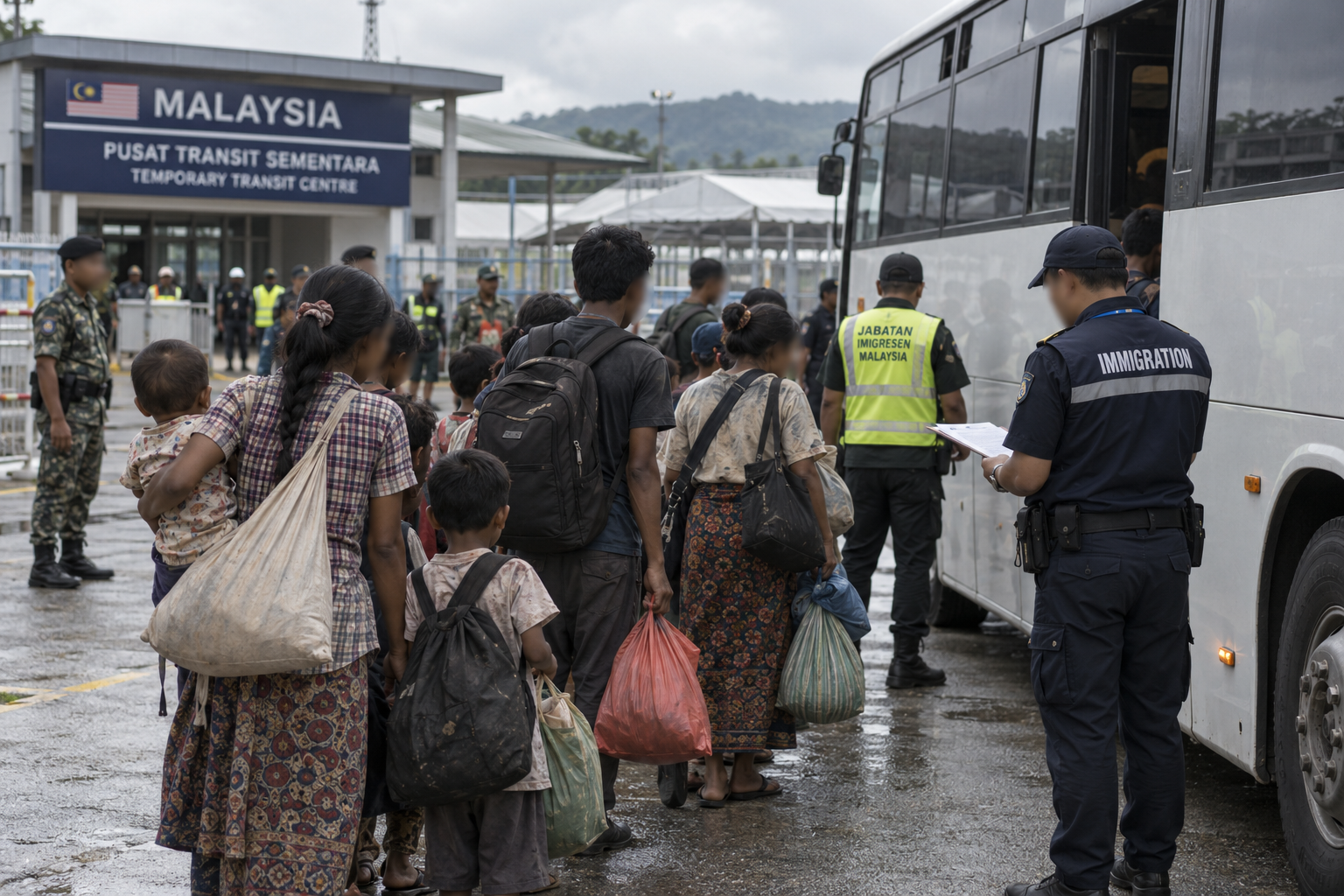
Malaysia has begun returning Rohingya refugees to Myanmar, despite warnings from the United Nations and human rights groups that the country remains unsafe. The first group includes nearly 1,500 people, and the government says all are returning voluntarily and that their safety is guaranteed. Critics argue that Myanmar’s ongoing civil war makes such assurances unreliable. The policy is part of Prime Minister Anwar Ibrahim’s pledge to return 5,000 Myanmar nationals, marking a shift from Malaysia’s longstanding tolerance of Rohingya arrivals.
The article describes the difficult conditions facing an estimated 125,000 Rohingya in Malaysia. They cannot access formal education or public healthcare, and they are barred from working legally. Some children attend informal learning centres supported by donors, while adults depend on precarious informal jobs. Despite these hardships, a Rohingya activist says life in Malaysia is safer than in Myanmar, where Rohingya are denied citizenship and have faced severe persecution.
The article places the repatriation decision in the context of Myanmar’s 2017 military crackdown, which drove more than 700,000 Rohingya from the country, and the military coup in 2021 that was followed by civil war. The crackdown, involving killings and destruction of property, has been widely condemned as tantamount to genocide; a case brought by The Gambia is before the International Court of Justice.
Public attitudes in Malaysia are also changing. Economic pressures and online misinformation have fuelled hostility, including harassment and campaigns calling for refugees’ expulsion. Rohingya advocates say fear and discrimination are affecting people’s ability to move freely and find even informal work. With national elections approaching, the article warns that political parties may exploit anti-Rohingya sentiment for votes, leaving refugees increasingly vulnerable.
Entities: Rohingya, Malaysia, Myanmar, Kuala Lumpur, Rakhine • Tone: analytical • Sentiment: negative • Intent: inform
29-09-2026
The article reports that Malaysia has begun returning approximately 1,500 Rohingya refugees to Myanmar. The action is taking place despite warnings from the United Nations and human-rights groups that Myanmar remains unsafe for the Rohingya. The headline and brief description frame the returns as a serious protection concern, emphasizing the contrast between Malaysia’s decision and the warnings issued by international and rights organizations.
The report provides no further details about how the returns are being carried out, where in Myanmar the refugees are expected to go, or what conditions they may face after arrival. It also does not identify the specific UN bodies or rights groups that issued the warnings, explain Malaysia’s stated reasons for the returns, or include comments from government officials, refugees, or advocates. No additional background on the Rohingya’s circumstances is supplied in the provided text. Accordingly, the central information is limited to the reported scale of the returns, the two countries involved, and the warnings about safety. The article’s primary function is to alert readers to Malaysia’s action and the associated concern that the refugees are being sent back to a country described by the cited warning sources as unsafe. The source contains only a headline and a short description, so more detailed conclusions about policy, circumstances, or outcomes cannot be drawn from it.
Entities: Malaysia, Myanmar, Rohingya, Rohingya refugees, United Nations (UN) • Tone: neutral • Sentiment: negative • Intent: inform
29-09-2026
Malaysia has begun returning asylum seekers to Myanmar under a controversial agreement with the country’s military ruler, Min Aung Hlaing. The first 1,476 people were transported on three Myanmar navy ships, as part of a plan involving around 5,000 returnees. Malaysia says the returns are voluntary, but the refugees have been detained and the UN refugee agency has not been allowed to screen them. Human rights groups warn that returnees could face persecution, violence or forced conscription. It is not clear whether any Rohingya were included in the first group.
The article explains the shift in Malaysia’s policy through economic pressure and domestic politics. Public hostility towards Rohingya refugees grew during the pandemic and intensified again in 2026 amid viral online claims and a petition calling for their expulsion. Prime Minister Anwar Ibrahim, who previously presented himself as a human-rights advocate, says Rohingyas have become a security and economic burden. Critics accuse him of abandoning his principles, while political analyst Tricia Yeoh describes him as weakened by an unstable coalition, declining popularity and pressure from UMNO.
The possibility of returning Rohingya to Myanmar is especially troubling because they lack citizenship and basic travel documents, and are restricted to Rakhine State. Much of the state is controlled by the Arakan Army and faces bombardment; Rohingya in the capital, Sittwe, are confined to camps with severe shortages. Rights groups fear men could be forced into military service. The article questions how repatriation could be safe or consistent with humanitarian principles, and notes that Bangladesh’s prolonged efforts to secure Rohingya returns have made little progress. A refugee advocate says people want to go home only when it is safe.
Entities: Malaysia, Myanmar, Rohingya refugees, Anwar Ibrahim, Min Aung Hlaing • Tone: analytical • Sentiment: negative • Intent: analyze
29-09-2026
Malaysia has begun the first phase of a repatriation plan agreed with Myanmar’s military-led government, with buses carrying migrants arriving near the Lumut naval base in Perak on Tuesday. The broader plan could return as many as 5,000 people to Myanmar; Malaysia previously said the initial phase would involve 1,476 citizens identified by the Myanmar government. The identities of those being returned were not clear, and ships, including two naval vessels and a hospital ship, were docked nearby.
Malaysia says the returns are strictly voluntary. However, the UN refugee agency, UNHCR, and civil society organizations have raised concerns that returnees could face recruitment into the military, persecution, detention, or other dangers. UNHCR says conditions in Myanmar do not support the safe and sustainable return of refugees and says it was not involved in the agreement. Roughly 193,000 refugees from Myanmar are in Malaysia, around two-thirds of them Rohingya.
Myanmar has been in intensified turmoil since the 2021 military coup triggered civil war, with armed groups fighting the military on multiple fronts. Rohingya Muslims have also faced allegations of persecution and ethnic cleansing predating the current conflict, while some regional conflicts have lasted for decades. Activist James Bawi Thang Bik warned that people returned could be detained or forcibly conscripted to fight, describing the prospect for many as akin to a death sentence.
The article situates the repatriation amid rising hostility toward refugees in Malaysia, including online harassment of Rohingya, and the government’s tighter immigration enforcement. Prime Minister Anwar Ibrahim said he would invite Myanmar’s military chief-turned-president, Min Aung Hlaing, for an official visit in exchange for accepting the returns. Myanmar’s government, internationally isolated since ousting Aung San Suu Kyi, is seeking greater international acceptance.
Entities: Malaysia, Myanmar, Lumut naval base, Perak, Rohingya Muslims • Tone: analytical • Sentiment: negative • Intent: inform