28-09-2026
Iranian Foreign Minister Abbas Araghchi said Tehran is prepared both to resume the war and to pursue diplomacy, leaving the choice to President Donald Trump. Trump told Axios that he expected negotiations to resume during the week and described Iran as badly weakened and eager for a deal, while rejecting Tehran’s latest proposal for a seven-day ceasefire and a phased reopening of the Strait of Hormuz. The proposal was tied to U.S. conditions in a mid-June memorandum of understanding that had previously fallen apart. Although an official told Reuters that the two sides were expected to continue discussions separately through mediators on Monday or Tuesday, Iranian state media said Iran’s U.N. delegation did not plan direct negotiations with the United States. Qatar was identified as a mediator, and earlier negotiations have largely taken place indirectly.
The live updates also describe wider effects of the conflict. Saudi Arabia has resumed oil exports through its East-West Crude Oil Pipeline, which had been closed after drone strikes. The route provides an alternative to shipping through the heavily disrupted Strait of Hormuz, although Yemen’s Houthi allies have threatened Saudi Red Sea ports and ships. Iran has filed a complaint with the United Nations over U.S. sanctions on its aviation industry, which have led to flight cancellations. A message attributed to Supreme Leader Mojtaba Khamenei predicted U.S. forces would be pushed out of the Arabian Sea; he has not appeared publicly since taking office, and U.S. officials reportedly believe he was seriously wounded in the strike that killed his father.
Iran is also facing severe economic strain: the rial fell to a record low, while reported annual inflation reached 61.4% and food prices were up 128% year over year. Separately, British police arrested five men near RAF Fairford on suspicion of preparing a terrorist act involving three trucks and were investigating possible Iranian links. The supplied article ends partway through that report.
Entities: Abbas Araghchi, Donald Trump, Mojtaba Khamenei, Iran, United States • Tone: analytical • Sentiment: negative • Intent: inform
28-09-2026
Oil prices rose Monday after President Donald Trump rejected Iran’s conditional proposal to reopen the Strait of Hormuz and resume nuclear negotiations with Washington. Brent crude futures gained 2.7% to $107.11 a barrel by 8:32 a.m. ET, after reaching $108.83 earlier in the session. U.S. West Texas Intermediate futures rose 3% to $95.20.
The Wall Street Journal reported that Trump had told aides he expects U.S. strikes on Iran to resume after November’s midterm elections. Trump later confirmed he rejected Tehran’s proposal, saying, “They made a proposal but I rejected it.” The conflict began with U.S. and Israeli airstrikes on Iran on February 28. Earlier this month, Trump had said he expected the conflict to end soon after the midterms, a comment that was followed by falling oil prices.
Iranian Foreign Minister Abbas Araghchi had offered to reopen the strategic shipping route and restart nuclear talks within seven days if the U.S. met Tehran’s conditions. These included ending what Iran calls U.S. acts of aggression, lifting the naval blockade and economic pressure, and releasing Iranian assets. Meanwhile, a Saudi-led coalition in Yemen said it intercepted projectiles launched by Iran-backed Houthi rebels.
Energy market participants are factoring in the risk that U.S.-Iran hostilities will resume after the elections, according to Cornelia Meyer, CEO of Meyer Resources. She described the danger as “clear and present” and said countries are relying on their inventories, or “borrowed barrels.” The article presents renewed conflict and uncertainty over the Strait of Hormuz as factors supporting higher oil prices.
Entities: Donald Trump, Abbas Araghchi, Esmaeil Baghaei, Cornelia Meyer, Iran • Tone: analytical • Sentiment: neutral • Intent: inform
28-09-2026
US President Donald Trump said he expects negotiations with Iran to resume next week, even after rejecting Tehran’s proposal for a seven-day truce and the reopening of the Strait of Hormuz. In an interview with Axios, Trump said Iran wants a deal but is seeking terms he would not accept, adding that Tehran had “overplayed their hand.” Axios, citing sources familiar with the matter, reported that indirect talks could begin as early as Monday. Trump has also raised the possibility of renewed US air strikes against Iran.
Iran continues to make reopening the Strait conditional on meeting its demands. Foreign Minister Abbas Araghchi said Tehran’s proposal called for an end to hostilities across the Middle East, including in Lebanon, and a return to terms from an earlier ceasefire agreement. That agreement included releasing frozen Iranian assets, lifting sanctions on Iranian oil, and ending the US naval blockade. Araghchi said Iran remained open to diplomacy but would not abandon its conditions. US Ambassador to the UN Mike Waltz characterized Iran’s demands as excessive and questioned whether Washington could trust another negotiation after a previous effort collapsed.
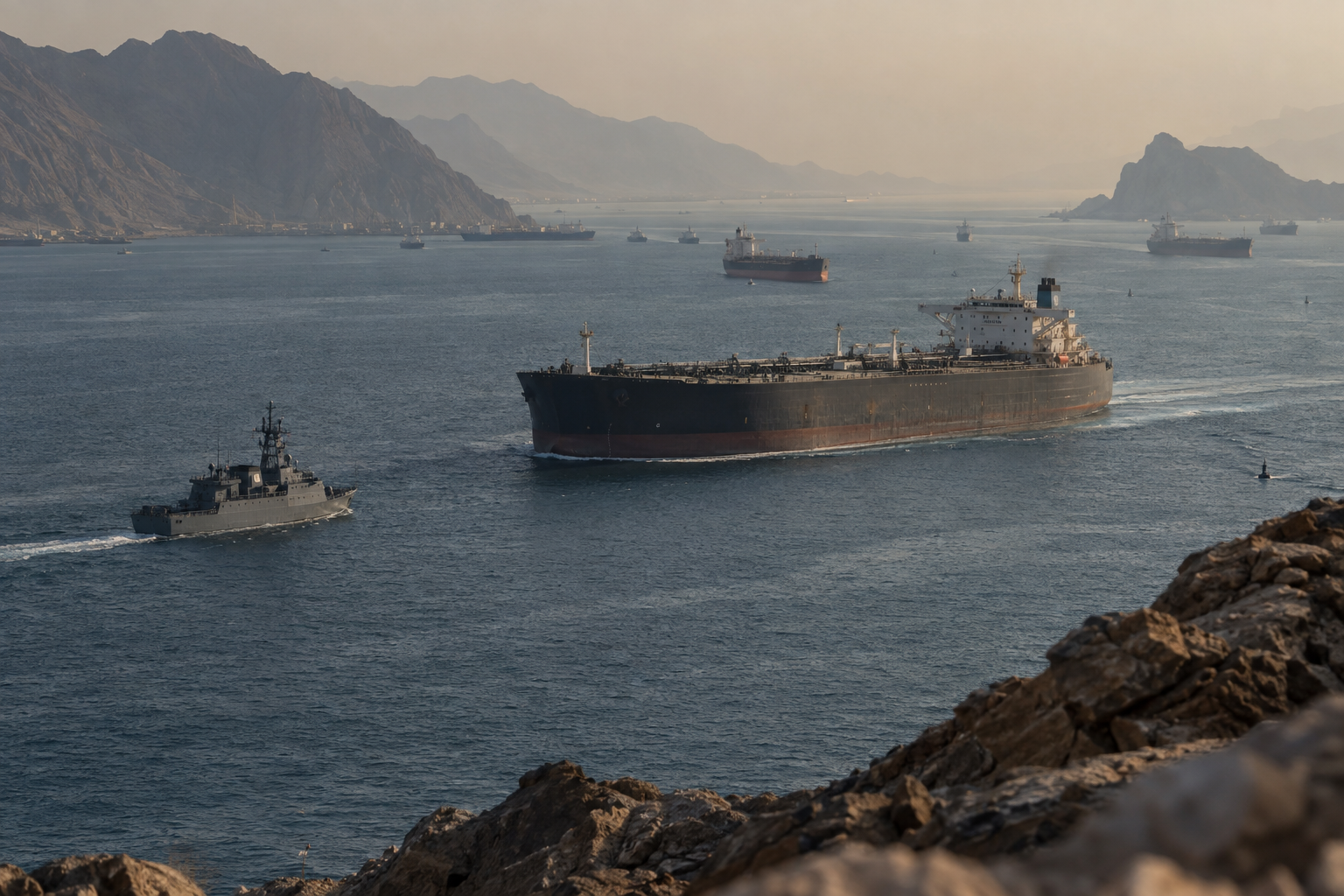
The Strait of Hormuz, a critical route for global energy supplies, remains at the center of the conflict. The article describes a stalemate around the Gulf while fighting continues in Yemen. Iran’s Revolutionary Guards also said they had seized an American submersible drone in the strait, alleging it was being used for espionage.
A June memorandum of understanding between Washington and Tehran, intended to end the war, reopen the strait, and begin nuclear talks, broke down after Iran fired on commercial ships it accused of straying from authorized routes. Iran says vessels need its permission to pass for security and sovereignty reasons; the United States has periodically bombed Iranian coastal areas in response. Tehran says it conveyed its seven-day plan through Qatar and has also demanded an end to hostilities in Yemen.
Entities: Donald Trump, Abbas Araghchi, Mike Waltz, Hossein Mohebi, United States • Tone: analytical • Sentiment: neutral • Intent: inform
28-09-2026
In this France 24 Spotlight segment, host François Picard speaks with Barbara Slavin, a Distinguished Fellow at the Stimson Center, about the US-Iran conflict and the uncertain prospects for diplomacy. Slavin describes the situation as a dangerous mix of military escalation, ambiguous diplomatic signals and political calculation. She argues that indirect contacts between Washington and Tehran, mediated by Qatar, have been too limited and fragile to produce a meaningful breakthrough. She characterizes the exchanges as “kabuki diplomacy”: both sides engage only partially while trying to avoid looking as though they are compromising.
The conflict’s effects extend across the region and beyond. Saudi Arabia has been drawn further into the crisis, the Houthis remain a threat to regional security and shipping, and disruption around the Strait of Hormuz has had serious consequences for global energy markets. Slavin says domestic political pressures make concessions difficult for both governments. President Donald Trump risks a political cost if he appears weak, while Iran may see continued pressure on oil markets as a reason to wait rather than compromise.
Slavin expects diplomacy to remain elusive in the coming months. The central challenge, she says, is for both sides to step back from brinkmanship without abandoning their hardline political positions. Still, the fact that contacts have occurred matters. The key task is to turn those exchanges into a sustained diplomatic process that can end the war, rather than simply manage recurring threats and escalations.
Entities: Donald Trump, François Picard, Barbara Slavin, Stimson Center, France 24 • Tone: analytical • Sentiment: negative • Intent: analyze
28-09-2026
Persian Gulf oil exports have recovered to about 72% of their prewar level, while crude shipments through the Strait of Hormuz remain below half of their previous volume, according to maritime tracker Kpler. September saw the highest Strait traffic of any month since the war began, with an average of 7.3 million barrels of oil passing through daily. Gulf exports overall averaged more than 13 million barrels a day, aided by ship-to-ship transfers in the Gulf of Oman and the United Arab Emirates’ Fujairah pipeline, which bypasses the strait. US Energy Secretary Chris Wright said flows exceeded pre-conflict levels for at least one day.
US officials say a naval blockade has severely constrained Iran’s trade and supplies, leaving the country economically weakened. One official described Iran as “exhausted” and said it was running short of water, food, and industrial feedstock. Iran’s currency has fallen to a record low of 2.45 million rials per US dollar. Treasury Secretary Scott Bessent said the US operation targeting Iran’s economy is intended to reduce the regime’s ability to fund terrorism and develop nuclear weapons.
US officials argue that rising oil flows improve Washington’s negotiating position. President Trump is reportedly willing to offer sanctions relief and release frozen assets in return for a concrete nuclear agreement. Iranian hardliners have rejected the proposed conditions and called for ending cooperation with the Nuclear Non-Proliferation Treaty.
Despite the recovery in shipping, maritime security remains precarious. Iranian media claimed its military struck 19 ships over the weekend, but no such attack has been independently confirmed since Wednesday. Iranian officials have warned ships against using routes Tehran does not recognize and threatened US forces. Separately, officials said a cruise missile hit a vessel operated by US Marines, injuring at least eight. The International Maritime Organization reports 22 seafarers killed in 79 confirmed attacks in the strait since the war began.
Entities: Persian Gulf oil exports, Strait of Hormuz, Iran, United States Navy blockade, Donald Trump • Tone: analytical • Sentiment: negative • Intent: inform
28-09-2026
Qatari mediators are expected to hold separate talks with Iranian Foreign Minister Abbas Araqchi and representatives of the United States in New York on Monday or Tuesday, according to an official briefed on the negotiations. The discussions are expected to focus on an amended version of a seven-day proposal Iran presented on the sidelines of the United Nations General Assembly. The identity of the US representatives was not immediately known.
Iran’s proposal calls for an end to hostilities in Iran and Lebanon, the release of billions of dollars in frozen Iranian assets, an end to sanctions on Iranian oil, and the lifting of a US blockade on Iranian ports. In return, Tehran would permit the Strait of Hormuz to reopen, while both sides would resume negotiations over Iran’s nuclear programme.
US President Donald Trump said on Saturday that he had rejected Iran’s proposal, arguing that Tehran wanted a quick agreement because of severe economic pressure. However, he told Axios on Sunday that US negotiators were expected to take part in further talks during the week.
Araqchi said that Iran had not received formal notification from mediators of a US rejection. He said Tehran was waiting for Washington to state its position definitively before deciding what to do next. Araqchi also stressed that Iran’s conditions were clear and that reopening the Strait of Hormuz depended on those conditions being met. He said the impasse could be resolved only through a negotiated settlement.
Entities: Iran, United States, Qatari mediators, Abbas Araqchi, Donald Trump • Tone: neutral • Sentiment: neutral • Intent: inform
28-09-2026
The supplied page is a live-news roundup about the Iran war, updated on September 28, 2026, at 1:29 PM. Its main headline says the United States and Iran are expected to hold separate talks with mediators. Other listed updates indicate that President Donald Trump expects US-Iran talks during the week, while Iran’s Foreign Minister Abbas Araghchi claims that US envoy Mike Waltz has not read a proposal concerning the Strait of Hormuz. The page also carries a warning from US Treasury Secretary Scott Bessent that Iran could soon have “nothing left to trade,” and a statement attributed to Iran’s Supreme Leader Ayatollah Ali Khamenei that “enemy forces” will be driven out of the Arabian Sea.
Regional developments include Saudi Arabia lifting danger warnings in Jazan and Najran, and Saudi calls for a comprehensive political solution in Yemen. The page’s video headlines cover additional conflict-related issues, including Houthi missiles supplied by Iran and the risk they pose to civilian aircraft, a sailor killed when torpedoes struck a ship off Oman, and warnings about the potential for a wider world war. Other clips feature statements by Pakistan’s Prime Minister Shehbaz Sharif about attacks on Makkah or Madinah, and by Iran’s president on refusing to bow in the face of pressure.
The supplied material contains headlines and video teasers, not the full text of the live report. It therefore provides limited detail about the proposed mediated talks, their participants, or their prospects. Overall, the page presents diplomacy alongside military threats and regional security concerns, without offering enough context to establish what has been agreed or independently verify the claims in the headlines.
Entities: Iran, United States, Saudi Arabia, Donald Trump, Ayatollah Ali Khamenei • Tone: analytical • Sentiment: negative • Intent: inform
28-09-2026
Iran’s Supreme Leader Mojtaba Hosseini Khamenei warned that foreign forces would soon be driven from the Arabian Sea, claiming Iranian forces had already pushed adversaries back from waters near southern Iran. In a message marking Iran’s Sacred Defense Week and the anniversary of Hezbollah leader Sayyid Hassan Nasrallah’s death, he said Iran’s people and armed forces remained prepared to confront threats. He also portrayed Iranians from different social and ethnic groups as united in defending the country’s position on the Strait of Hormuz.
The remarks came amid heightened tensions between Tehran and Washington over the strategic waterway and Iran’s nuclear programme. Iran’s Foreign Minister Abbas Araghchi had proposed reopening the Strait of Hormuz under certain conditions, including easing US military pressure. US Ambassador to the United Nations Mike Waltz said President Donald Trump rejected the proposal because Iran sought sanctions relief and access to frozen assets before nuclear negotiations. Araghchi disputed Waltz’s account, saying the ambassador had not seen the proposal.
Araghchi said Iran remained open to diplomacy but was prepared for renewed hostilities, while Waltz said Washington would need an agreement with Iran and that the US would keep all options on the table. Khamenei also invoked Iran’s history of foreign interference, asserting that past efforts to undermine the country would not be repeated. He said public demonstrations over the previous seven months had shown support for Iran’s defence efforts, and referred to women’s participation in acts of courage. The article concludes by noting that Nasrallah was killed in an Israeli airstrike in Beirut on September 28, 2024, a death confirmed at the time by the Israel Defence Forces.
Entities: Mojtaba Hosseini Khamenei, Iran, United States, Arabian Sea, Strait of Hormuz • Tone: analytical • Sentiment: negative • Intent: inform
28-09-2026
The supplied material does not contain the body of the Al Jazeera liveblog. It includes a headline—“Iran war live: Tehran open to ‘real diplomacy’, ready for ‘apocalyptic war’”—and website clutter indicating “22 Updates,” along with an alert prompt and advertisements. As a result, there is not enough article text to provide a comprehensive account of the live updates, identify what events or statements were reported, or explain their context. The headline frames the story around an apparent contrast: Tehran is described as open to diplomacy while also prepared for an extreme escalation of war. It also signals tensions related to the Strait of Hormuz and identifies the broader subject as the US-Israel war on Iran. These are headline-level indications only; the supplied text does not establish who made the statements, when or where they were made, what developments prompted them, or how other parties responded. The “22 Updates” label suggests the original page was a liveblog with multiple entries, but none of those entries are present in the provided content. Accordingly, any fuller summary would require inventing details not supported by the source text. The headline’s wording conveys urgency and a grave, conflict-focused framing, while the primary apparent purpose is to inform readers about the war and related diplomacy and maritime tensions. The analysis below is therefore limited to the headline and the small amount of page text supplied.
Entities: Iran, Tehran, United States, Israel, Strait of Hormuz • Tone: urgent • Sentiment: negative • Intent: inform