28-09-2026
President Donald Trump says the White House is still seriously considering restricting or banning U.S. diesel exports as fuel prices rise ahead of the November midterm elections. Trump said an export ban might also increase gasoline prices, but indicated the administration could still act. Energy Secretary Chris Wright has described the possibility as restrictions, while a Politico report said officials were preparing a 90-day ban plan. No decision has been announced, and the scope and likelihood of any measure remain unclear.
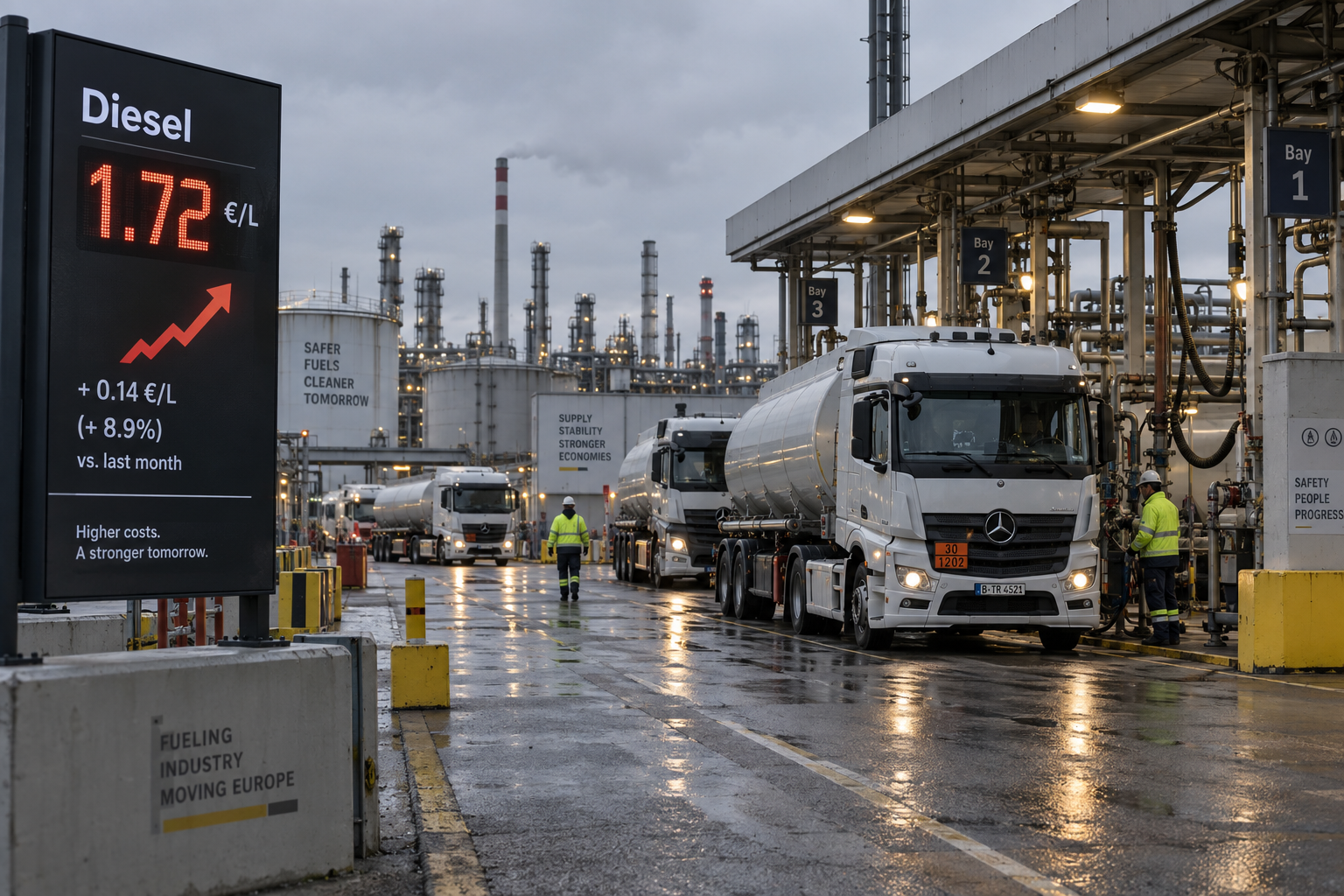
U.S. diesel prices were about $6.50 per gallon on Friday, near the record of $6.53 reached on September 22. Prices have climbed amid conflicts involving the United States and Iran, and Russia and Ukraine, which have disrupted oil and fuel trade routes. The article notes that high diesel costs are adding pressure on farmers, agricultural workers, drivers and households.
Analysts caution that an export restriction could offer U.S. consumers some initial relief but create wider problems. Morgan Stanley strategists warn that reduced U.S. exports could raise global diesel prices and feed back into U.S. gasoline prices as refinery operations adjust. Europe is especially vulnerable: the United States has supplied about half of its diesel imports in recent months, and Argus Media’s Benedict George said restrictions could push European diesel prices and premiums to unprecedented levels.
The U.S. energy industry has opposed the proposal. American Petroleum Institute CEO Mike Sommers argued that restricting exports would worsen refining challenges and hurt consumers, advocating more supply and flexibility instead. The article also connects the crunch to Ukrainian attacks on Russian refineries and uncertainty around the Strait of Hormuz. George describes diesel as the global oil system’s biggest problem and says market forecasts are exceptionally difficult. Any U.S. restriction discussed so far would likely be short-term—perhaps two or three months—while the duration of the broader supply disruption remains unpredictable.
Entities: Donald Trump, Chris Wright, Benedict George, Mike Sommers, Volodymyr Zelenskyy • Tone: analytical • Sentiment: negative • Intent: inform
28-09-2026
Diesel prices are rising sharply because global refining capacity has become tight, leaving supply vulnerable to disruptions. Unlike gasoline, diesel is essential across freight transport, farming, construction and industry, so shortages or price increases can raise business costs, consumer prices and inflation. The article reports that the average US diesel price has climbed to $6.52 per gallon, compared with $3.74 a year earlier. Russian refinery attacks attributed to Ukraine have reduced Russian diesel production, according to the International Energy Agency, and Moscow has restricted exports to protect domestic supply. The US has helped fill some of the gap, but President Donald Trump has also considered limiting US diesel exports, a move experts warn could have little effect on domestic prices or could worsen supply and prices.
Europe is especially exposed because decades of policy incentives have left it with a diesel-heavy vehicle fleet. The EU exports gasoline but depends on diesel imports, while road transport accounts for a large share of diesel and gas oil use. A Transport & Environment briefing estimates that the war in Iran has added €40 billion in road-diesel costs to the EU economy, including substantial extra expenses for drivers and truckers.
Experts say the main immediate constraint is no longer crude oil availability but refining capacity. Ukrainian strikes on Russian refineries and conflict affecting the Strait of Hormuz are disrupting facilities faster than they can be replaced. The Strait remains a longer-term structural risk. Possible further conflict, US export restrictions, and winter demand for heating oil could tighten supplies further. Refinery closures in Europe and the US have also reduced spare capacity, leaving fewer reserve supplies to absorb shocks.
Entities: Donald Trump, Georg Zachmann, Juliette Egal, Skip York, European Union • Tone: analytical • Sentiment: negative • Intent: analyze
28-09-2026
Diesel prices are rising because global refining capacity is tight and disruptions are reducing the supply of finished fuel, even though crude oil itself is not the main constraint. Diesel is essential not only for cars but also for freight, farming, construction and industry, so higher prices can raise the cost of transporting goods and operating equipment, feeding inflation and the cost-of-living crisis.
The article describes several pressures on supply. Russian refineries have been repeatedly attacked since 2022, and the International Energy Agency estimates Russian diesel production is nearly 30% below 2025 levels. Russia has restricted diesel exports to protect domestic supply. US President Donald Trump has blamed Ukrainian attacks for shortages and has considered restricting US diesel exports, though industry groups and experts warn a ban may not quickly lower prices and could instead reduce production or make prices worse.
Europe is especially exposed because decades of tax incentives helped make its vehicle fleet more diesel-dependent than that of regions such as the United States. The EU exports gasoline but must import diesel. A Transport & Environment briefing estimates that EU drivers now pay an average of €30 more for a 50-liter diesel tank since the start of the Iran war, while a German long-haul truck driver faces an additional €236 per week. The briefing puts the added cost to EU road transport at €270 million a day and the overall additional cost from road diesel at €40 billion since the war began.
Experts say refinery outages—not a lack of crude—are now the key near-term constraint. The Strait of Hormuz is a major long-term structural risk, while continued conflict, a possible US export ban and winter demand for heating oil could further tighten supply. Refinery closures have also reduced spare capacity, leaving fewer reserves to absorb disruptions and making each lost barrel more consequential.
Entities: Donald Trump, Georg Zachmann, Skip York, Juliette Egal, European Union • Tone: analytical • Sentiment: negative • Intent: analyze
28-09-2026
US President Donald Trump says he is “very seriously” considering a temporary ban on diesel exports as his administration seeks ways to reduce record-high domestic fuel prices. Trump made the remarks on September 27 while attending the Presidents Cup golf tournament near Chicago, saying an export restriction could be implemented. Farm-state lawmakers have urged limits during the fall harvest, when farmers depend heavily on diesel. Their calls come amid disruptions to global fuel supplies linked to reduced flows through the Strait of Hormuz and Ukrainian attacks on Russian refineries. US diesel exports reached a weekly record of nearly 2 million barrels a day in August, making the country a major supplier to international markets. Senior officials—including National Economic Council director Kevin Hassett, Treasury Secretary Scott Bessent and US Trade Representative Jamieson Greer—have been assessing the effects of a short-term ban. Energy Secretary Chris Wright said the administration is also working with refiners on voluntary export curbs. Oil executives and industry groups favor suspending the federal diesel excise tax instead, arguing that it could lower prices without disrupting overseas supply, although officials have debated how to implement a tax suspension while the House is in recess. US retail diesel prices are averaging about US$6.50 a gallon, adding to concerns about living costs ahead of November’s midterm elections. A ban could bring US prices down in the short term, but would leave allies such as Brazil and Britain scrambling to find fuel. Some companies are reportedly adding contractual protections in case export pauses prevent deliveries to foreign customers.
Entities: Donald Trump, Kevin Hassett, Scott Bessent, Jamieson Greer, Chris Wright • Tone: analytical • Sentiment: neutral • Intent: inform