26-05-2026
This CBS News transcript features Sen. Chris Van Hollen of Maryland discussing several major political and legal issues on Face the Nation. He sharply criticizes the Trump administration’s approach to Iran, calling the war a “big blunder” and arguing the U.S. should stop escalating and focus on domestic economic concerns like prices and interest rates. He then turns to the Justice Department’s new anti-weaponization fund, which he labels a “political slush fund” of $1.8 billion, and argues it should be abolished or tightly restricted so that Jan. 6 rioters, child molesters, and members of Congress are ineligible. Van Hollen also condemns the fund as corrupt and lacking transparency, alleging it gives Trump excessive control and even includes a “get out of jail free card” on taxes.
The interview also addresses the legal case of Kilmar Abrego Garcia, a Maryland man previously wrongfully deported to El Salvador. Van Hollen says the dismissal of federal human smuggling charges was the right decision, characterizing the prosecution as vindictive retaliation for Garcia’s assertion of constitutional rights. Finally, Van Hollen comments on the Democratic National Committee’s post-2024 election review, calling it incomplete and shoddy, but urging Democrats not to replace leadership so close to another election. He says the party should more clearly acknowledge voters’ economic pain and fight against special interests, rather than returning to the pre-Trump status quo.
Entities: Chris Van Hollen, Nancy Cordes, Margaret Brennan, Maryland, Iran • Tone: analytical • Sentiment: negative • Intent: inform
26-05-2026
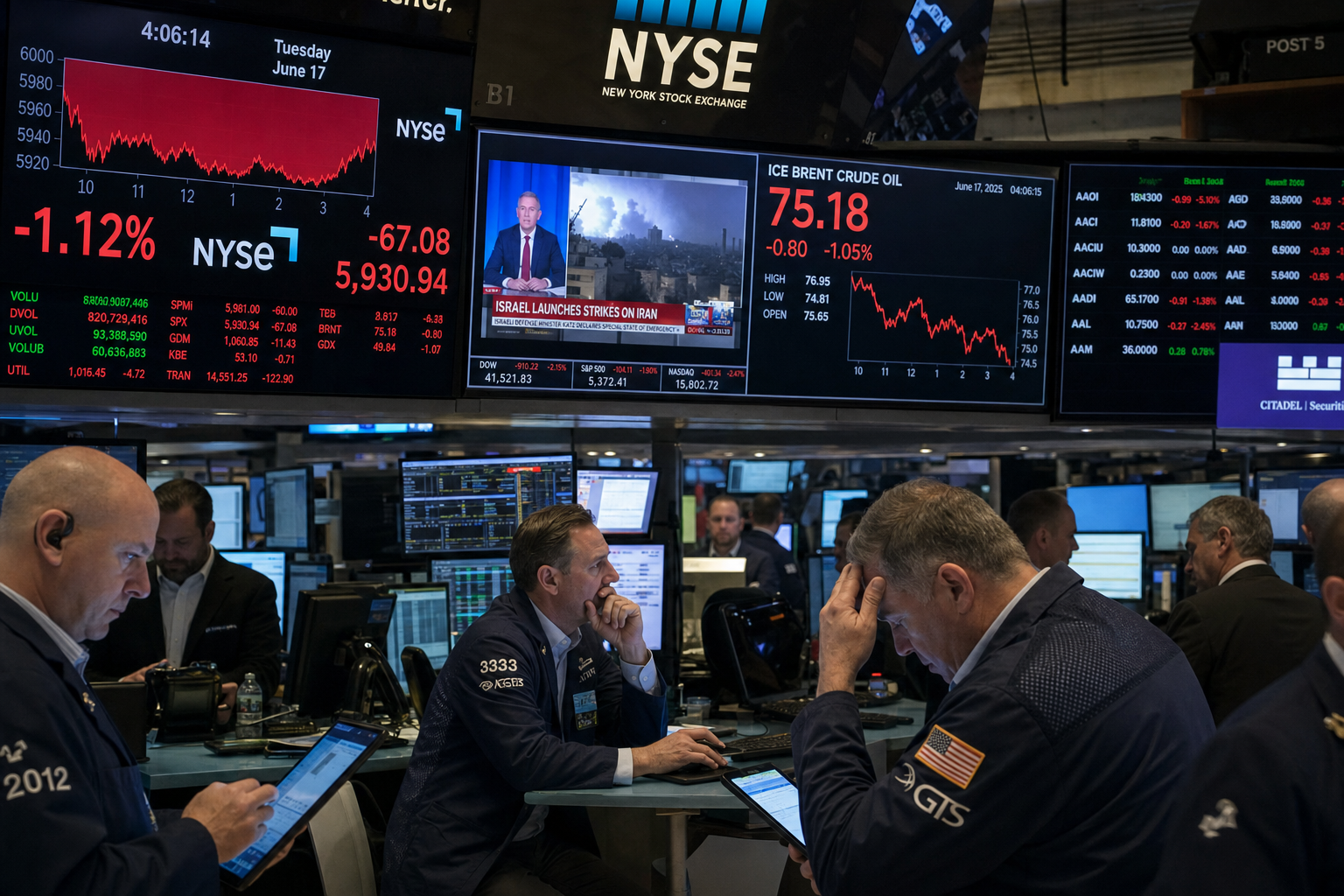
European stock markets were poised to open lower on Tuesday as investors reacted to renewed geopolitical tensions in the Middle East and continued uncertainty around the war in Ukraine. Futures pointed to declines across major indexes, including the FTSE 100, CAC 40, DAX, FTSE MIB, and Stoxx 50, after a strong session on Monday that lifted European equities to multi-month highs. Monday’s gains were partly aided by the U.K. market closure for the late spring bank holiday, while the broader Stoxx 600 reached its highest level in more than 10 months as markets recovered losses tied to the start of the Middle East conflict in late February.
The article highlights that U.S. forces carried out what Central Command called “self defense” strikes in southern Iran, adding to market unease. This military action came despite President Donald Trump suggesting in a Truth Social post that a peace deal could be near and that negotiations were progressing well. Oil markets reacted sharply to the mix of peace hopes and conflict escalation: Brent crude rose while West Texas Intermediate futures fell in early U.S. trading, reflecting uncertainty about supply risks and regional stability.
Separately, the article notes escalating tensions in Ukraine after Russia’s foreign minister Sergei Lavrov warned his U.S. counterpart Marco Rubio to evacuate diplomats and citizens from Kyiv ahead of what he described as new “systematic strikes” on the capital. With no major economic data scheduled for the day, the market’s direction appears driven primarily by geopolitical developments and energy-price volatility rather than macroeconomic releases.
Entities: European markets, Stoxx 600, FTSE 100, CAC 40, DAX • Tone: analytical • Sentiment: negative • Intent: inform
26-05-2026
U.S. stock futures rose sharply in early Tuesday trading, with investors reacting positively to signs that talks between the U.S. and Iran could lead to an end to the war and to a steep decline in oil prices. Dow Jones Industrial Average futures climbed 319 points, or 0.63%, while S&P 500 futures gained 0.65% and Nasdaq-100 futures advanced 0.87%. The move followed a holiday closure for U.S. markets on Memorial Day and came after President Donald Trump said negotiations with Iran were “proceeding nicely,” while also warning that the U.S. could resume offensive action if talks fail.
The article places the futures rebound in the context of a strong recent stretch for equities. The S&P 500 had risen 0.9% the prior week, its longest weekly winning streak since late 2023, while the Dow gained 2.1% and the Nasdaq added 0.5%. Market commentary from Trivariate Research’s Adam Parker suggests fundamentals are helping support the rally, citing projected earnings growth and a modest contraction in forward price-to-earnings ratios.
A major driver of market optimism is the drop in oil prices, which had already helped equities the previous week as U.S. crude fell 8.4%, its worst week since April 17. However, the article notes that crude prices remain elevated enough to keep inflation concerns and expectations for Federal Reserve easing in check. Traders are even pricing in a small chance of a July rate hike, reflecting a shift away from expectations for easier policy. The article also reports mixed trading in Asian markets, where South Korea’s Kospi hit a record high, while Japan, Australia, China, and Hong Kong showed more subdued or negative moves amid holiday-thinned trading and ongoing geopolitical uncertainty.
Entities: Dow Jones Industrial Average futures, S&P 500 futures, Nasdaq-100 futures, President Donald Trump, U.S.-Iran war • Tone: analytical • Sentiment: positive • Intent: inform