27-05-2026
Iran has accused the United States of committing a “gross violation” of the ceasefire by launching fresh air strikes in southern Iran, near the strategic Strait of Hormuz. According to US Central Command, the strikes were “self-defense” actions against Iranian missile sites and boats allegedly trying to lay mines, and were intended to protect American troops from threats. Iran’s foreign ministry condemned the attacks as “aggressive and unjustified,” warning that the Islamic Republic would not leave the action unanswered. The episode adds new tension to an already fragile ceasefire that began on 8 April after weeks of war between the US, Israel, and Iran.
The article places the strikes in the context of ongoing diplomatic efforts to extend the ceasefire and possibly move toward a broader settlement. US officials, including Secretary of State Marco Rubio, say a deal may still be possible but will take time. President Donald Trump initially said an agreement was close, then urged negotiators not to rush. Media reports suggest the potential arrangement would be a memorandum of understanding, not a final peace deal, and could include a 60-day ceasefire extension, reopening the Strait of Hormuz, and further talks over Iran’s nuclear program.
Negotiations have reportedly centered on issues such as frozen Iranian assets, Iran’s stockpile of highly enriched uranium, and the Strait of Hormuz itself. The article also notes conflicting claims involving Iran’s air defenses and drone incidents, as well as the broader strategic importance of the waterway, through which about one-fifth of global oil passes. Overall, the report highlights the fragile balance between military escalation and diplomatic efforts to prevent the conflict from widening.
Entities: Iran, United States, US Central Command (Centcom), Strait of Hormuz, Hormozgan region • Tone: urgent • Sentiment: negative • Intent: inform
27-05-2026
A draft memorandum for a proposed U.S.-Iran agreement reportedly outlines a major de-escalation framework that would extend the current ceasefire for 60 days, require Iran to end military operations across multiple fronts, and include steps related to the Strait of Hormuz, nuclear commitments, and sanctions relief. According to two regional officials familiar with the diplomacy, the draft says Iran would agree to dispose of its stockpile of enriched uranium under a mechanism both sides still need to define, and would immediately reopen the Strait of Hormuz with a goal of returning traffic there to pre-war conditions within 30 days. The agreement would also include mutual pledges by Iran, the U.S., and their allies to stop military operations, not to initiate war, and not to threaten or use force. In return, issues involving frozen Iranian assets and sanctions would be addressed based on Iran’s compliance.
The article emphasizes that the deal is not finalized and that key details remain unresolved, especially how the enriched uranium would be disposed of and verified. Iranian Foreign Ministry spokesman Esmaeil Baqaei said talks would continue and that some issues remain unfinished, while also criticizing the shifting positions of U.S. officials. A senior U.S. official confirmed some of the draft’s elements, but not all, and President Trump said the deal had been largely negotiated though final details were still under discussion. The report also notes that the administration had been preparing for additional military strikes, but those did not occur as diplomacy continued.
Entities: Iran, United States, Strait of Hormuz, Lebanon, nuclear weapons • Tone: analytical • Sentiment: neutral • Intent: inform
27-05-2026
The article argues that President Donald Trump may have few politically viable options for ending the Iran war, because public opinion is increasingly skeptical of both the war itself and Trump’s ability to manage it. Citing multiple recent polls, CNN says Americans generally want U.S. military operations in Iran to end even if no peace deal is reached, and many doubt the war will achieve its stated objectives. Large majorities also express little confidence that any deal would stop Iran’s nuclear program or that the administration will accomplish its goals. The piece also notes that even a favorable deal may not be seen as worth the costs, since voters believe the war has increased terrorism risks, weakened U.S. relationships, and worsened regional stability. Beyond public opinion, the article argues that Trump has already weakened his own position by setting extremely high expectations early on, including demands for “UNCONDITIONAL SURRENDER,” and by failing to present a clear, achievable path to victory or a persuasive case to the American people. As a result, the article concludes that Trump’s least bad political option may simply be to get out of the war before it drags on further.
Entities: Donald Trump, Iran, Hamas, Hezbollah, CNN • Tone: analytical • Sentiment: negative • Intent: analyze
27-05-2026
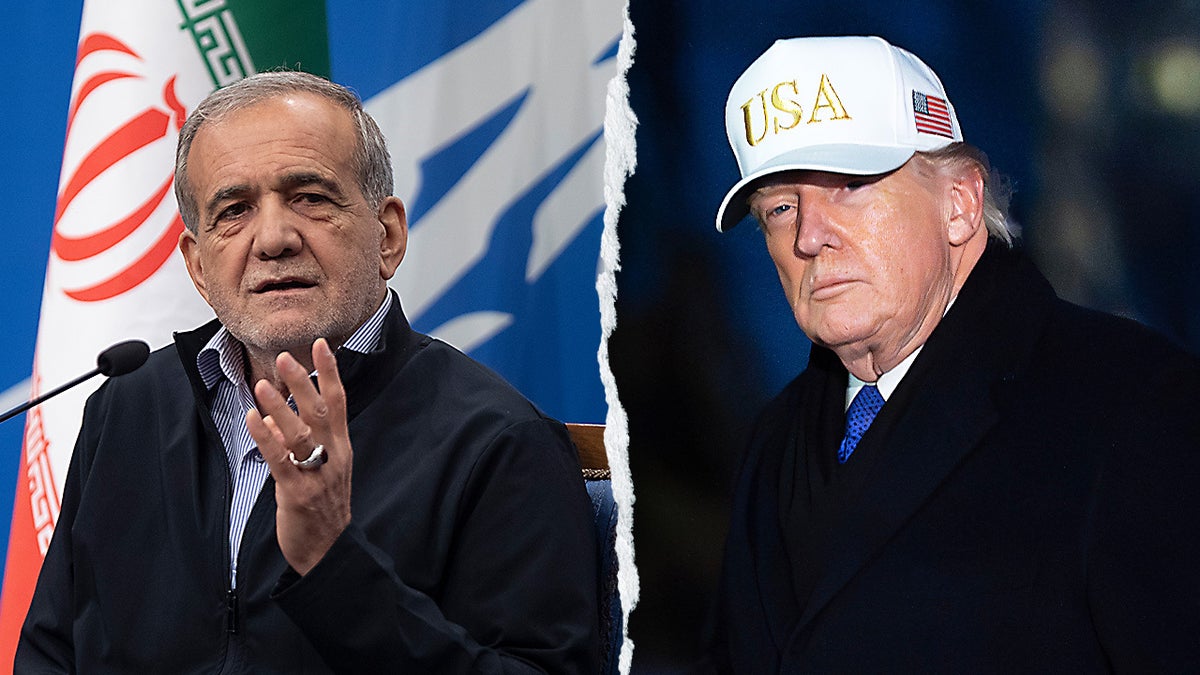
Iranian President Masoud Pezeshkian used a symbolic anniversary tied to the 1982 recapture of Khorramshahr during the Iran-Iraq War to send a pointed message about Tehran’s willingness to resist pressure from the United States and Israel. According to a counterterrorism analyst quoted in the article, Pezeshkian’s post was not just commemorative but a deliberate signal that Iran sees the current standoff in existential terms, echoing one of the Islamic Republic’s core narratives of sacrifice, resistance, and defense against aggression. The timing was notable because it came as President Donald Trump said a deal with Iran was close to being finalized, though he also warned the U.S. would either secure a meaningful agreement or walk away.
The article explains that Pezeshkian’s message referenced Khorramshahr, the southwestern city Iran lost and later retook in brutal fighting, and linked that symbolism to present-day Iran, the Persian Gulf, and the Strait of Hormuz. Analysts said this language suggests Iran is preparing domestic and regional audiences for a hardline posture, framing negotiations not as compromise but as resistance under threat. The piece also notes that while Tehran and Washington appear to have broad alignment on some issues, Iranian officials say final agreement is not imminent and several details remain unresolved. Overall, the article portrays the exchange as a high-stakes diplomatic and rhetorical battle, with Iran signaling resolve while U.S.-Iran talks continue.
Entities: Masoud Pezeshkian, Donald Trump, Iran, United States, Israel • Tone: analytical • Sentiment: negative • Intent: inform
27-05-2026
The article argues that any final U.S.-Iran deal would need approval from Iran’s hidden supreme leader, Mojtaba Khamenei, who is reportedly in hiding and communicates only through secret courier networks. Counterterrorism experts quoted in the piece say this creates an unprecedented negotiating environment: the United States would be effectively bargaining with an invisible counterpart whose location is unknown and whose survival affects the ability to enforce any agreement. The article frames the courier system as a central part of Khamenei’s rule and suggests that even routine delays in Iranian responses, as noted by Secretary of State Marco Rubio, reflect the structural difficulty of negotiating with a leader who cannot appear publicly. It also states that Khamenei has been underground for months after a February strike that killed his father, with reports that he was badly wounded, and that officials inside the Iranian government may not know where he is. The article says talks are continuing and that the U.S. may ease sanctions if Iran makes major concessions on uranium enrichment, while frozen Iranian assets and the war’s broader regional implications remain major obstacles. Iran, meanwhile, says no agreement is imminent and that discussions remain broad rather than detailed, including issues such as the Strait of Hormuz and conflict across the region.
Entities: Mojtaba Khamenei, Ayatollah Ali Khamenei, Marco Rubio, Dr. Omar Mohammed, George Washington University • Tone: analytical • Sentiment: neutral • Intent: inform
27-05-2026
The article argues that the apparent public friction between President Donald Trump and Israeli Prime Minister Benjamin Netanyahu over Iran was not a genuine rupture, but a deliberate strategic maneuver designed to mislead Tehran. According to Kobi Michael, a senior researcher at the Institute for National Security Studies and the Misgav Institute, leaked reports of tense calls and disagreement were used as a calculated feint to create uncertainty in Iran about U.S.-Israeli coordination and the timing of any possible military action. The article says this public tension was followed by a weekend phase of renewed synchronization, culminating in a phone call in which Trump reportedly reassured Netanyahu that any final agreement with Iran would fully dismantle its nuclear program. Netanyahu then publicly emphasized the strength of the U.S.-Israel partnership and reiterated that Iran must not obtain nuclear weapons.
The piece places this in the context of ongoing U.S.-Iran negotiations, reports of Israeli frustration over being sidelined, and speculation about whether diplomacy or military pressure will prevail. It notes that Washington has been keeping Jerusalem informed about talks involving the Strait of Hormuz and disputed points in a prospective agreement. Michael suggests that the leak-driven narrative of discord served Trump’s diplomatic posture while preserving the option of force, and that it may also have been intended to prepare the Israeli public to see any eventual diplomatic outcome as coordinated with Washington. Despite the appearance of unity, he says skepticism remains in Jerusalem over whether the gaps between the U.S. and Iran can actually be bridged.
Entities: Donald Trump, Benjamin Netanyahu, Iran, Tehran, Israel • Tone: analytical • Sentiment: neutral • Intent: analyze
27-05-2026
President Donald Trump is meeting with his Cabinet at a delicate moment in negotiations aimed at ending the war with Iran, as his administration tries to turn a fragile ceasefire into a broader deal. Trump is portraying himself as close to a settlement that would reopen the Strait of Hormuz and let him claim Iran’s nuclear capabilities have been sufficiently reduced to declare victory. But the emerging agreement remains unsettled, with major issues still unresolved and critics — including some Republicans — arguing the terms may be too generous to Tehran.
The article details several sticking points. One is Iran’s stockpile of highly enriched uranium: under the reported framework, Iran would give up the material in exchange for sanctions relief, but the method and timeline for doing so remain under discussion. Another unresolved issue is whether the ceasefire would also limit Israel’s actions against Hezbollah in Lebanon. The administration’s language leaves some room for Israel to continue acting in self-defense.
Trump is also trying to tie the Iran deal to his broader Middle East diplomacy, specifically expanding the Abraham Accords to include additional countries such as Saudi Arabia, Qatar, and Pakistan. That idea appears far from certain, especially because Saudi Arabia has insisted on a credible path toward Palestinian statehood as a condition for normalization. Throughout the piece, Trump is depicted as confident but politically exposed, with the deal potentially shaping perceptions of his leadership heading into the midterm elections and amid rising concerns about fuel prices and regional instability.
Entities: Donald Trump, Marco Rubio, Benjamin Netanyahu, Roger Wicker, Lindsey Graham • Tone: analytical • Sentiment: negative • Intent: inform
27-05-2026
Michael Goodwin argues that President Trump has given Iran multiple opportunities to make peace, but says the Iranian regime is refusing to accept what he describes as generous and reasonable terms. The article says the cease-fire is under increasing strain after US strikes on Iranian vessels and a missile site, while Iranian leaders threaten retaliation. Goodwin frames the conflict as both a security issue and a political one, noting domestic pressure on Trump because of the war’s effects on energy prices, inflation, and Republican prospects in Congress. He emphasizes that Trump’s longstanding red line—preventing Iran from obtaining a nuclear weapon—has not changed, and that the central obstacle is Iran’s refusal to give up its enriched uranium stockpiles. The piece also highlights broader regional diplomacy, especially Trump’s push to expand the Abraham Accords and get Gulf states and Turkey to normalize relations with Israel as part of a larger peace framework. Goodwin presents this as a risky but potentially transformative strategy, while warning that Hezbollah’s actions in Lebanon and Iran’s hard-line posture make a lasting settlement difficult. The article ultimately portrays Trump as still seeking peace, but constrained by a regime the author sees as untrustworthy and ideologically committed to confrontation.
Entities: Donald Trump, Iran, the mullahs, United States, Strait of Hormuz • Tone: analytical • Sentiment: negative • Intent: analyze
27-05-2026
The article reports escalating military tension in the Middle East as fragile ceasefires in Iran and Lebanon come under renewed pressure. Tehran accused Washington of violating its ceasefire after overnight US strikes hit targets in southern Iran, including missile sites and boats alleged to be laying mines. Iranian officials vowed retaliation, while US Central Command described the strikes as self-defence operations aimed at protecting American troops. The attacks pushed Brent crude prices up more than 3 per cent, underscoring the economic risk of renewed conflict around the Strait of Hormuz, a vital oil and gas shipping lane.
At the same time, Israel’s bombardment in south Lebanon killed 31 people, including children, according to Lebanon’s Health Ministry, deepening concern that the truce there could collapse. Iran has insisted that any broader peace arrangement must include Lebanon, where fighting has continued after Hezbollah’s attacks on Israel and Israel’s expansion of ground operations. Despite the violence, US Secretary of State Marco Rubio said a peace deal with Iran was still possible, while China urged all parties to honor ceasefire commitments and resolve disputes peacefully.
The article also notes ongoing negotiations between Washington and Tehran, including Iranian discussions in Qatar and a proposed 14-point framework that could release frozen Iranian assets. Separately, Iran’s internet restrictions appear to be easing after a prolonged blackout, with connectivity partially restored after what NetBlocks called the longest nationwide internet shutdown in modern history. Overall, the story portrays a precarious mix of military escalation, diplomatic bargaining, and economic uncertainty.
Entities: Iran, United States, Tehran, Lebanon, Israel • Tone: urgent • Sentiment: negative • Intent: inform
27-05-2026
Asia-Pacific markets advanced on Wednesday as investors balanced two opposing forces: lingering geopolitical tension surrounding Iran and optimism that a U.S.-Iran deal could still emerge. Japan’s Nikkei 225 and South Korea’s Kospi led the regional rally, both hitting record highs, while Australia’s ASX 200 and mainland China’s CSI 300 also posted modest gains. Hong Kong’s Hang Seng was little changed. The article ties the regional market strength to broader global risk appetite after Wall Street’s technology-led gains pushed the S&P 500 and Nasdaq Composite to record closes overnight.
The report emphasizes that markets were reacting to recent U.S. military strikes in southern Iran, which the Pentagon described as “self-defense” actions against missile launch sites and Iranian vessels allegedly deploying mines. Those strikes underscored how fragile the Washington-Tehran ceasefire remains, even as negotiations continue. President Donald Trump said talks with Iran were proceeding well, but he also warned that the U.S. could still take offensive action if talks fail. In Japan and South Korea, local factors also boosted sentiment: Samsung Electronics jumped 6% after unionized workers approved a provisional wage agreement, avoiding a possible strike that might have disrupted semiconductor supply chains. Overall, the article presents a market snapshot shaped by geopolitics, diplomacy, and strong U.S. tech-led momentum.
Entities: Asia-Pacific markets, Japan, South Korea, Nikkei 225, Topix • Tone: analytical • Sentiment: neutral • Intent: inform
27-05-2026
European stocks were set to open mixed on Wednesday as investors weighed renewed military tensions involving Iran against a pullback in oil prices. According to IG data, the U.K.’s FTSE 100 was expected to open slightly lower, while Germany’s DAX, France’s CAC 40 and Italy’s FTSE MIB were seen modestly higher. The main market driver remained the conflict surrounding Iran, after U.S. forces carried out what Central Command called self-defense strikes in southern Iran, targeting missile launch sites and vessels allegedly attempting to lay mines. Iran’s foreign ministry condemned the action as a gross violation of the fragile ceasefire, while U.S. Secretary of State Marco Rubio said the Strait of Hormuz would need to be opened “one way or the other.” The report notes that the flare-up occurred even after President Donald Trump had suggested peace negotiations were progressing well. In commodity markets, oil prices retreated, with Brent crude and WTI both lower on the day. Outside Europe, Asian markets had risen, with Japan and South Korea hitting record highs, and U.S. futures were little changed after major U.S. indexes also reached new peaks. The article concludes that there were no major European earnings or data releases scheduled for the day.
Entities: European stocks, Stoxx 600, FTSE 100, DAX, CAC 40 • Tone: analytical • Sentiment: neutral • Intent: inform