Articles in this Cluster
26-06-2026
The article reports on the aftermath of a powerful earthquake sequence in Venezuela, with particular attention to damage on the outskirts of Caracas. It says back-to-back earthquakes have struck the country, causing widespread devastation and leaving at least 235 people dead. Caracas and nearby areas appear to have suffered some of the worst impacts. In El Junquito, a district on the city’s outskirts, a content creator recorded footage of a building collapsing, illustrating the force of the quakes and the danger faced by residents in affected neighborhoods.
The piece is brief and focuses primarily on a visual account of destruction rather than a detailed written report. Its central message is that the earthquake disaster has produced severe casualties and structural damage, and that the Caracas area is among the hardest-hit regions. The mention of a building collapse in El Junquito serves as a concrete example of the broader emergency unfolding in Venezuela. Overall, the article functions as a short news update conveying the scale and immediacy of the disaster.
Entities: Venezuela, Caracas, El Junquito, earthquakes, building collapse • Tone: urgent • Sentiment: negative • Intent: inform
26-06-2026
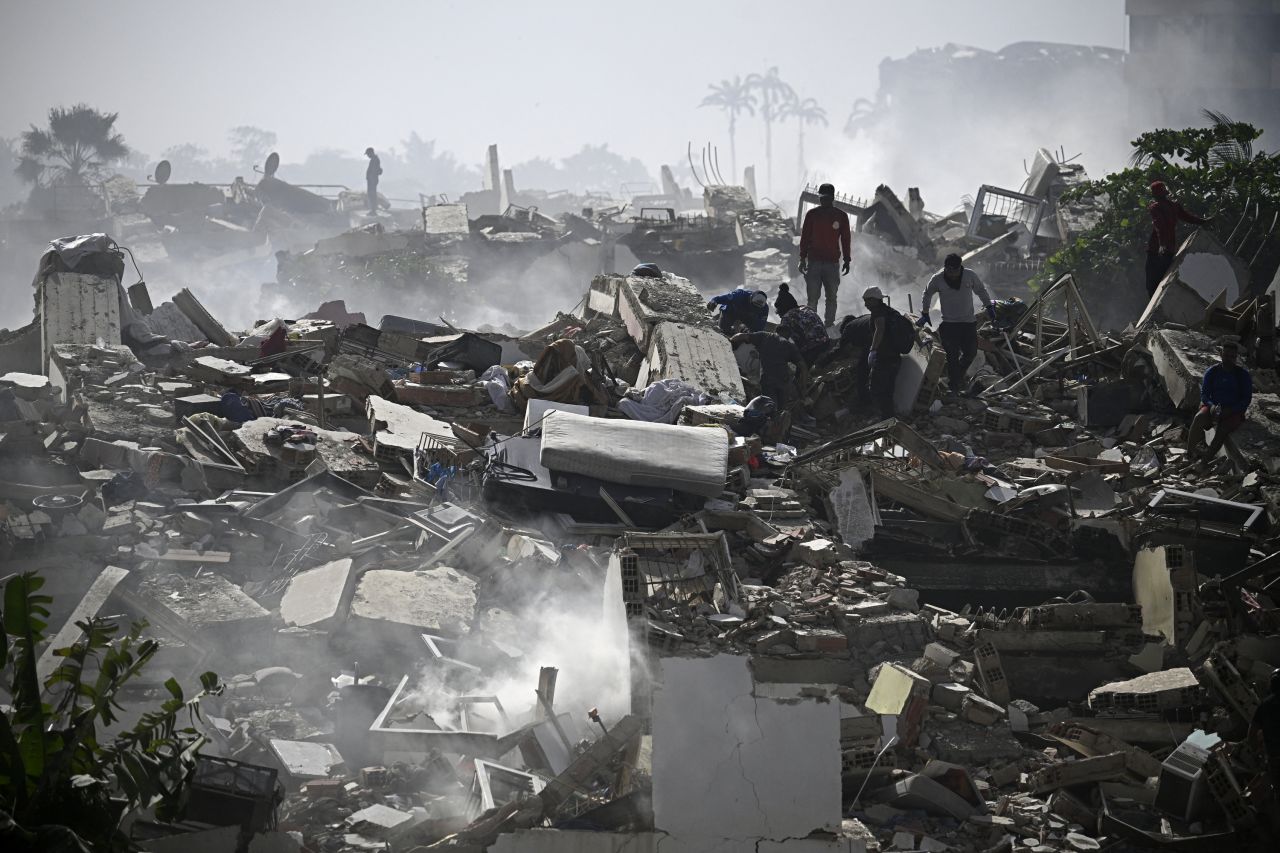
Venezuela is facing a major earthquake disaster after two powerful shallow quakes, measuring 7.2 and 7.5, struck near Caracas and La Guaira, killing at least 235 people and injuring more than 4,300. Rescue teams are urgently searching collapsed buildings for survivors, with officials warning the death toll is likely to rise as many people remain missing and aftershocks continue. The tremors caused widespread damage in the capital region and other states, including collapsed buildings, a damaged international airport, power cuts, and communication failures that are complicating assessments of the disaster.
The earthquakes hit on a national holiday, increasing the number of people likely to have been at home when the quakes struck. Local officials reported severe damage in neighborhoods such as Altamira and Los Palos Grandes, while verified video showed a hotel reduced to rubble in La Guaira and a collapsed building in Tucacas. The US Geological Survey said the event could involve very high casualties and extensive damage, and noted that the shallow depth of the quakes intensified their destructive impact. International assistance has begun to mobilize, with the United States pledging aid and sending military transport and rescue support, while other countries including the Dominican Republic, El Salvador, Mexico and Qatar have also offered help.
Beyond the immediate humanitarian crisis, the disaster is unfolding amid political tension and uncertainty in Venezuela. US officials framed the response as part of a newly strained relationship with the Maduro government, and Venezuelan opposition and public figures expressed grief and solidarity. The article emphasizes the scale of destruction, the difficulty of rescue operations, and the likelihood that the full human cost will not be known until access improves and searches continue.
Entities: Venezuela, Caracas, La Guaira, US Geological Survey (USGS), Jorge Rodríguez • Tone: urgent • Sentiment: negative • Intent: inform
26-06-2026
Venezuela’s powerful twin earthquakes have struck a country already facing deep political uncertainty, infrastructural decay, and strained public services. The article frames the disaster not just as a humanitarian emergency, but also as a test of the current interim leadership under Delcy Rodríguez, who has been governing since Nicolás Maduro was seized by U.S. forces months earlier and brought to New York on drug-trafficking charges. Rodríguez’s handling of the crisis highlights both continuity and change in Venezuela: continuity in the central role of military figures in government and in the weakness of state communications and emergency systems, and change in the form of a more open approach to foreign assistance. The article explains that official information was slow to emerge because damaged communications and restrictions on independent media limited reporting from affected areas. It also notes that years of mismanagement, sanctions, shortages, and the collapse of key industries have left housing and infrastructure especially vulnerable to collapse. Rodríguez’s visible emotional response, her call for national unity, and her decision to accept help from foreign governments including the United States suggest a more pragmatic stance than Maduro’s, who had previously rejected aid from ideological opponents. The piece concludes that, for Venezuelans confronting destruction and searching for survivors, this openness to outside support offers a rare source of hope amid anguish and uncertainty.
Entities: Venezuela, Caracas, Nicolás Maduro, Delcy Rodríguez, María Corina Machado • Tone: analytical • Sentiment: negative • Intent: inform
26-06-2026
Survivors and officials described widespread devastation after two powerful earthquakes struck western Venezuela, especially La Guaira state, leaving hundreds dead, thousands injured, and many people trapped in collapsed buildings. Journalist Tony Frangie recounted being inside a Caracas elevator when the first tremor hit, describing the experience as terrifying and saying he prayed while pressing every button until the elevator opened in the basement. Once outside, he saw the building still shaking and later learned that two major quakes of magnitude 7.2 and 7.5 had struck within a minute of each other, making them the strongest to hit Venezuela in more than a century. The quakes were shallow, which intensified the shaking at the surface, and their effects were felt in neighboring Colombia and Brazil, prompting tsunami alerts.
Residents in hard-hit areas such as Catia La Mar and La Guaira described entire buildings collapsing, widespread structural damage, lack of electricity, and no access to water. Many feared aftershocks and were unable to enter damaged buildings to search for loved ones. Rescue officials said they had never seen destruction like this in decades of work and called for specialized technical aid and heavy machinery to help reach trapped victims. Venezuelan authorities declared a state of emergency, while U.S. Secretary of State Marco Rubio announced that the United States was deploying search-and-rescue teams, medical support, and humanitarian assistance, along with help offered by Qatar and El Salvador. The article emphasizes both the scale of the disaster and the mounting human toll, with survivors expecting conditions and the death count to worsen as rescue efforts continue.
Entities: Venezuela, Caracas, La Guaira, Catia La Mar, Tony Frangie • Tone: urgent • Sentiment: negative • Intent: inform
26-06-2026
A pair of powerful earthquakes struck Venezuela on Wednesday evening, killing at least 235 people and injuring about 4,300, with officials warning the toll could rise as rescuers continue searching collapsed buildings and damaged neighborhoods. The U.S. Geological Survey said the quakes measured 7.2 and 7.5 magnitude and occurred less than a minute apart, with the second quake following a 7.2 foreshock 39 seconds earlier. Authorities said La Guaira on the northern coast appeared to be the hardest-hit state, and the tremors caused widespread destruction in Caracas and other areas, including collapsed buildings, toppled poles, power outages, and communication failures. The main airport, Simón Bolívar International Airport, was damaged and closed, and schools were shut or repurposed as shelters and donation centers.
The article details the emergency response at home and abroad. Venezuelan officials declared a state of emergency, urged residents to remain calm, and called on health workers to report to hospitals. The United States announced it would deploy search teams, medical supplies, and humanitarian aid, while the Treasury temporarily eased sanctions to facilitate earthquake relief transactions. Several Latin American and global governments also offered assistance. The article includes eyewitness accounts from Caracas residents describing panic, collapsed walls, dust, and neighbors trapped or fleeing buildings, underscoring the scale of the disaster and the emotional impact on civilians. Officials and public figures, including opposition leader María Corina Machado, appealed for solidarity and aid as rescue efforts continued.
Entities: Venezuela, Caracas, La Guaira, Montalbán, Simón Bolívar International Airport • Tone: urgent • Sentiment: negative • Intent: inform
26-06-2026
CNN’s video report shows the aftermath of a powerful earthquake in Venezuela, where a building collapses as people flee into the street. The report says the quake sequence included a 7.2 magnitude foreshock followed by a larger 7.5 magnitude earthquake, striking the country in quick succession. The article emphasizes the scale of destruction and human impact, noting that at least 164 people have been killed and hundreds more injured. In the footage and accompanying description, panic spreads as residents run for safety and multiple structures appear damaged or destroyed.
The piece is presented as a brief news/video item rather than a long-form article, so its focus is on conveying the immediacy of the disaster through a striking visual and a concise description of the event. It also references additional related CNN videos in the page layout, but the central story is the earthquake’s impact on Venezuela, including collapsed buildings, public fear, and significant casualties. Overall, the report serves as a stark update on a natural disaster with severe loss of life and widespread damage.
Entities: Venezuela, Janelle Gonzalez, CNN, 7.5 magnitude earthquake, 7.2 foreshock • Tone: urgent • Sentiment: negative • Intent: inform
26-06-2026
The article is a CNN video report about the immediate aftermath of two powerful earthquakes in Venezuela. Emotional residents in Caracas describe the terrifying moments after a magnitude 7.2 foreshock was followed just 40 seconds later by a larger magnitude 7.5 quake. The report emphasizes the scale of destruction and human toll, noting that at least 164 people were killed and hundreds more were injured. It also includes footage and descriptions of collapsed buildings, panic in the streets, and widespread damage across the country, conveying the shock and fear experienced by residents as the quakes struck in rapid succession. The article’s framing highlights both the suddenness of the disaster and the devastating consequences for people in Venezuela, especially in and around Caracas and other affected areas.
Entities: Venezuela, Caracas, Heather Dockery, CNN, 7.2 magnitude foreshock • Tone: urgent • Sentiment: negative • Intent: inform
26-06-2026
CNN’s live updates report on the aftermath of twin earthquakes in Venezuela, which have killed at least 235 people and injured thousands more. Rescue teams are racing against time to find survivors trapped beneath rubble as the “golden window” for saving lives narrows. The quakes devastated neighborhoods in La Guaira, Caracas, and surrounding areas, leaving many residents homeless, without power, and unable to contact relatives because of damaged communications infrastructure.
The article emphasizes both the scale of destruction and the strain on Venezuela’s already weakened state institutions. A Caracas-based journalist describes a “vacuum of authority,” saying the government and military response appears limited and that civil groups, schools, churches, and families are carrying much of the rescue burden. A British resident in Caracas recounts collapsed tower blocks, street-level chaos, and widespread fear after the tremors.
The piece also details a large international response. The United States is deploying elite rescue teams, medical aid, and military support and has pledged $150 million in assistance. The United Nations is coordinating urban search-and-rescue deployments, while countries including Colombia, El Salvador, Chile, Cuba, the Dominican Republic, Panama, Spain, Mexico, France, and others are sending personnel, equipment, medical supplies, and humanitarian aid. Religious and nongovernmental groups, including Pope Leo and Japanese NGO Peace Winds, are also contributing. The overall focus is on the humanitarian emergency, the urgent search for survivors, and the growing global relief effort.
Entities: Venezuela, Caracas, La Guaira, Nicolás Maduro, Carlos Alvarado • Tone: urgent • Sentiment: negative • Intent: inform
26-06-2026
The article centers on video footage captured at Simon Bolivar International Airport in Venezuela showing the moment powerful earthquakes struck the country. Former lawmaker Wilmer Azuaje recorded the scene as a magnitude 7.2 foreshock hit, followed about 40 seconds later by a stronger magnitude 7.5 quake near the northern coast, according to the US Geological Survey. The earthquakes caused widespread destruction, including collapsed buildings in Caracas and other areas, and triggered a major rescue response. CNN notes that the back-to-back quakes led to extensive panic, damage, and emergency efforts across Venezuela. The article also references related CNN video coverage showing residents describing the event as horrific and rescue teams searching through affected neighborhoods. A casualty update in one of the embedded video descriptions reports at least 164 people killed and hundreds injured, underscoring the severity of the disaster. Overall, the piece is a short news-video article focused on documenting the striking visual moment of the quake and situating it within the broader emergency unfolding in the country.
Entities: Venezuela, Simon Bolivar International Airport, Wilmer Azuaje, Yoyo Chow, CNN • Tone: urgent • Sentiment: negative • Intent: inform
26-06-2026
CNN reports on powerful back-to-back earthquakes that struck Venezuela’s northern coast, causing widespread panic, major structural damage, and a large-scale rescue response. The key event described is a 7.5 magnitude earthquake that hit about 40 seconds after a 7.2 magnitude foreshock, according to the US Geological Survey. Videos from the country show terrified residents fleeing into the streets and collapsed buildings, especially in Caracas and the Los Palos Grandes district east of the capital. The article frames the disaster as rapidly escalating and severe, with emergency crews and search-and-rescue teams working amid the destruction. CNN also notes that the earthquakes have already killed at least 164 people and injured hundreds more, underscoring the human toll and urgency of the situation. The overall piece functions as a visual breaking-news dispatch, using video segments and eyewitness-style reporting to convey the scale of the catastrophe and the immediate response underway.
Entities: Venezuela, Caracas, Los Palos Grandes, northern coast of Venezuela, Aria Chen • Tone: urgent • Sentiment: negative • Intent: inform
26-06-2026
CNN investigates the deadly consequences of “pancake” building collapses seen after two earthquakes in Venezuela. After reviewing and verifying dozens of videos, the outlet found that many residential towers collapsed floor by floor, with one level crushing the next in a rapid downward chain reaction. The article explains that this collapse pattern is especially lethal because it leaves people trapped in tightly compressed layers of concrete, steel, and debris, making survival and rescue far more difficult. Rather than a simple fall or partial structural failure, a pancaked building creates a dense, stacked ruin that can suffocate or crush occupants almost immediately. The piece frames the collapse type as a major factor in the death toll from the earthquakes and uses video evidence and investigative review to help viewers understand the mechanics and human cost of the disaster. The article is presented in a CNN investigations format, emphasizing verification, visual analysis, and explanation of why this structural failure mode is so dangerous.
Entities: Venezuela, earthquakes, pancake building collapse, residential towers, building collapse mechanics • Tone: analytical • Sentiment: negative • Intent: inform
26-06-2026
Venezuela’s deadly seismic event on Wednesday, initially reported as a magnitude 7.1 earthquake, may have been either a rare earthquake “doublet” or a single large rupture that unfolded in two pulses, according to seismologists cited by CNN. The US Geological Survey said the country experienced a 7.2 quake followed 39 seconds later by a 7.5 quake, a sequence that devastated buildings and killed more than 100 people. Scientists say doublet earthquakes are uncommon but can be especially destructive because two similarly sized quakes strike in close succession. However, researchers caution that early seismic data can be ambiguous, and the event may ultimately prove to be one long rupture rather than two separate quakes.
The article explains why the distinction matters scientifically. A single large rupture can sometimes look like two quakes when the larger pulse occurs during the shaking of the first, making it difficult to interpret seismographs. Determining which scenario occurred could help scientists better understand how faults rupture, how large earthquakes grow, and whether any fault patterns or orientations are associated with doublets. The piece also notes that the tremors occurred along the boundary between the Caribbean and South American plates, a region prone to damaging quakes, and that local conditions such as soft sediments, sinking ground, limited seismic networks, and power outages may complicate damage assessments. Satellite data and aftershocks are expected to help clarify what happened.
Entities: Venezuela, Caracas, Northern Venezuela, Caribbean Plate, South American Plate • Tone: analytical • Sentiment: negative • Intent: inform
26-06-2026
President Donald Trump said Wednesday night that two powerful earthquakes in Venezuela caused a devastating number of deaths and offered U.S. assistance as the country dealt with widespread damage and a rising casualty count. According to initial reports, a magnitude 7.2 quake struck first, followed 39 seconds later by a magnitude 7.5 quake, with epicenters near San Felipe and Yumare. The U.S. Geological Survey issued a rare red alert warning of likely high casualties and extensive damage, and officials said the earthquakes were among the strongest to hit Venezuela in more than a century.
Venezuela’s interim president, Delcy Rodríguez, declared a state of emergency and later announced that at least 32 people were killed and more than 700 injured. Rescue crews searched through rubble in Caracas and other affected areas as nearly two dozen aftershocks followed the initial quakes. Rodríguez urged calm and unity in a televised address. Trump said the United States was ready to help and directed federal agencies to prepare a rapid response. U.S. Deputy Secretary of State Christopher Landau and the State Department said American officials were monitoring the situation, in contact with Venezuelan authorities, and mobilizing assistance. The article also notes that U.S. citizens in Venezuela were advised to enroll in STEP and follow embassy updates.
Entities: Donald Trump, Delcy Rodríguez, Christopher Landau, Venezuela, Caracas • Tone: urgent • Sentiment: negative • Intent: inform
26-06-2026
The article follows the aftermath of two earthquakes in Venezuela through the experience of Venezuelan immigrants in South Florida, especially in the Miami-area community of Doral. It centers on Jorge Erazo, who had fled Venezuela, sought asylum in the United States, worked in Florida, and was later deported during the Trump administration’s immigration crackdown. After the quakes struck, Erazo, his wife, and children were among the many feared missing, prompting friends and relatives in Florida to circulate flyers and search for information while anxiously tracking developments through WhatsApp and social media.
The piece also broadens to show how deeply the Venezuelan diaspora in South Florida was affected by the disaster. Residents rushed to donate supplies, checked on loved ones, and shared accounts of collapsed buildings, trapped relatives, and desperate waiting. One woman, Alondra Bechara, described the collapse of her sister’s apartment building in La Guaira and the deaths of multiple family members, while later learning her sister had been rescued but was critically injured and might lose both legs.
Beyond the immediate tragedy, the article highlights the fragility of displacement: Erazo had rebuilt his life enough to buy an apartment and reunite with his family, only for the earthquake to threaten them again. The story leaves his fate uncertain, underscoring the confusion, grief, and helplessness spreading through Venezuelan families in the United States and abroad.
Entities: Jorge Erazo, Venezuela, South Florida, Miami, Doral, Florida • Tone: emotional • Sentiment: negative • Intent: inform
26-06-2026
Venezuela is reeling from two major earthquakes that struck west of Caracas within a minute of each other, killing nearly 190 people, injuring or trapping many more, and devastating homes, hospitals, public buildings and infrastructure across Caracas, La Guaira and nearby coastal areas. Rescue crews, volunteers and residents are digging through rubble for survivors as aftershocks, damaged roads, power outages and limited heavy equipment complicate operations. Authorities described the hardest-hit coastal state of La Guaira as a disaster zone, while some residents complained that official help had been slow to arrive and that they were searching for missing family members on their own.
The article emphasizes the scale of destruction: hundreds of buildings are damaged or destroyed, the Caracas airport has closed after sustaining damage, and thousands of families are left homeless or without water, electricity, food or medicine. Officials and predictive modelling suggest the death toll could continue to rise significantly, though exact numbers remain uncertain because many people are still unaccounted for.
The disaster has prompted an international response. The United States moved to ease sanctions for quake-related aid, and Washington, the United Nations and other countries are preparing rescue assistance, logistics support and humanitarian relief. SpaceX’s Starlink also announced temporary free service and terminal deployment to restore communications. Despite the catastrophe, Venezuela’s oil infrastructure appears largely unaffected, and foreign energy companies reported no major disruption to their operations.
Entities: Venezuela, Caracas, La Guaira, Moron, Carabobo state • Tone: urgent • Sentiment: negative • Intent: inform
26-06-2026
Rescue teams and international aid are pouring into Venezuela after two powerful earthquakes struck the country’s northern coast in rapid succession, causing catastrophic destruction and raising fears that the death toll could climb far beyond the official figure of 235. The quakes, measured at 7.2 and 7.5 magnitude and occurring less than 40 seconds apart, badly damaged infrastructure including Simón Bolívar international airport near Caracas, complicating relief efforts. The hardest-hit area appears to be La Guaira, especially around La Guaira, Catia La Mar, and Caraballeda, where dozens of buildings collapsed and families are searching desperately for missing relatives. The UN says more than 100 buildings have collapsed in the region, while officials report at least 4,300 injuries and 157 people missing. The next 72 hours are described as critical for survival as rescue crews dig through rubble. Governments including the US, Brazil, Mexico, Spain, Portugal, Canada, Qatar, and France have pledged aid, and sanctions waivers have been issued to permit relief transactions. The disaster is unfolding against the backdrop of Venezuela’s ongoing economic, humanitarian, and political crisis, intensifying the urgency and scale of the response.
Entities: Venezuela, La Guaira, Caracas, Catia La Mar, Caraballeda • Tone: urgent • Sentiment: negative • Intent: inform
26-06-2026
Former Mets pitcher Jenrry Mejia says he survived the deadly Venezuela earthquakes by what he describes as divine intervention: an elevator malfunction in his hotel carried him to the ground floor and out of the building moments before it collapsed. Mejia, who was in La Guaira after finishing a gym session, said he had pressed for the sixth floor but the elevator instead descended to the basement and opened directly into the lobby, allowing him to escape roughly 40 seconds before the hotel fell. He also said he helped an elderly man get out with him and believes they may have been the only two people from the hotel who survived.
The article places Mejia’s escape in the context of a major earthquake disaster affecting Venezuela, especially the coastal city of La Guaira near Caracas, where rescue crews searched through rubble after twin quakes measuring 7.2 and 7.5 struck within seconds of each other. The quakes killed at least 235 people and injured more than 1,500, leaving the region devastated and many families affected. Mejia said he lost all of his possessions, including his passport, and could not return home to the Dominican Republic because flights were suspended.
The piece also briefly recaps Mejia’s baseball background, noting that he spent his MLB career with the Mets, was later banned for life after a third failed drug test, then reinstated and eventually played in the Mexican League. Overall, the article combines a survival anecdote with coverage of the earthquake’s destruction and aftermath.
Entities: Jenrry Mejia, New York Mets, La Guaira, Caracas, Venezuela • Tone: analytical • Sentiment: neutral • Intent: inform