12-05-2026
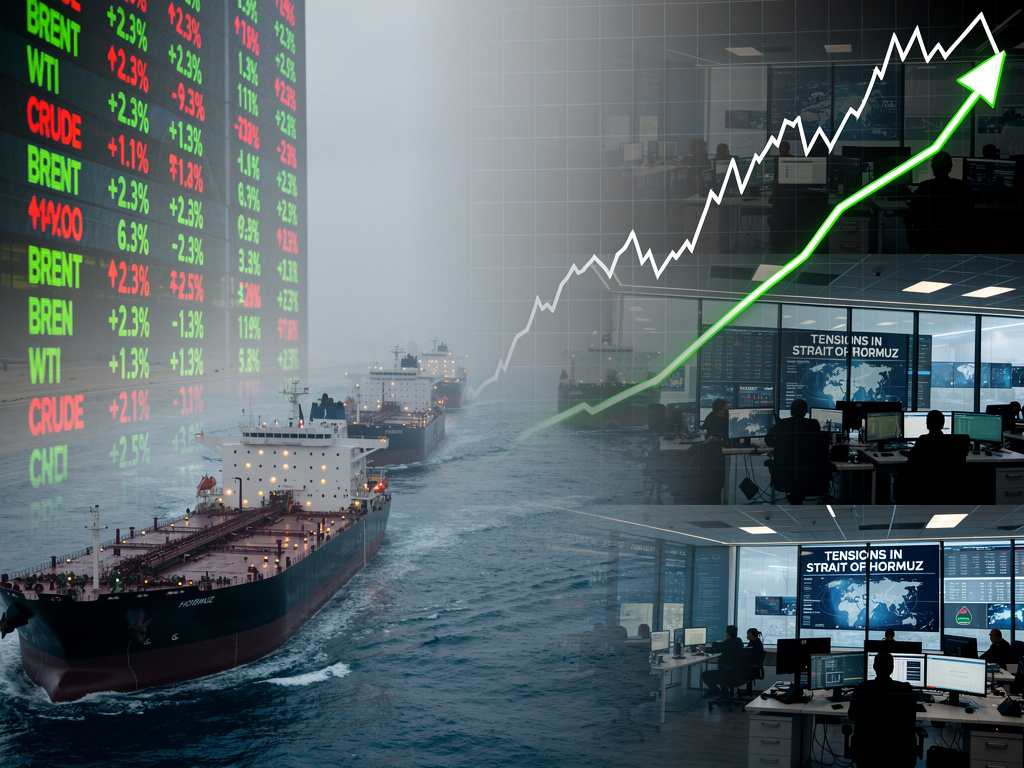
CNBC’s Daily Open opens with a cautiously alarmed assessment of geopolitical and market developments. The article says U.S. President Donald Trump has acknowledged that the Iran ceasefire is “on life support” and “unbelievably weak,” after weeks of insisting the truce was holding despite continued strikes. Markets quickly responded: Brent crude rose nearly 3% above $104 a barrel and West Texas Intermediate also climbed, reflecting fears that oil supply disruptions could persist. The article notes that crude prices have already surged more than 40% since the U.S. and Israeli-led war against Iran began on Feb. 28, and it highlights political attempts to soften the impact, including talk of suspending the federal gas tax.
It then broadens out to the global backdrop. Saudi Aramco CEO Amin Nasser warns that even if the Strait of Hormuz reopens, oil markets could take months to rebalance and potentially remain unsettled into 2027. Despite these geopolitical shocks, Wall Street showed remarkable resilience, with the S&P 500 and Nasdaq Composite hitting new highs.
The piece shifts attention to diplomacy and business power dynamics, noting that a group of high-profile CEOs—including Elon Musk, Tim Cook, and Larry Fink—are expected to accompany Trump to a summit with Chinese President Xi Jinping, while Nvidia’s Jensen Huang is absent. In Japan, Treasury Secretary Scott Bessent is meeting with Prime Minister Sanae Takaichi and Finance Minister Satsuki Katayama to discuss Iran, rare earth cooperation, and the weak yen.
The article closes with a separate market-moving item: Nintendo shares fell sharply after the company raised Switch 2 prices and lowered sales expectations because of rising memory costs. Overall, the article frames a world where geopolitical tensions, energy markets, and major corporate and political leaders are all tightly interwoven.
Entities: Donald Trump, Iran, Tehran, Brent crude, West Texas Intermediate (WTI) • Tone: analytical • Sentiment: neutral • Intent: inform
12-05-2026
European markets are set to open lower as investor sentiment weakens on signs that a quick end to the U.S.-Iran war is becoming less likely. Futures point to declines across major regional benchmarks, including the FTSE 100, DAX, CAC 40, and FTSE MIB, after President Donald Trump said the ceasefire between the two sides is “on life support” and described Tehran’s latest response to Washington as “unacceptable.” The renewed uncertainty pushed oil prices higher and added to a cautious global trading mood, with Asia-Pacific markets mixed and U.S. stock futures flat as investors awaited an important U.S. inflation reading. The article also highlights domestic political pressure in the U.K., where more than 70 Labour lawmakers are urging Prime Minister Keir Starmer to resign or commit to a departure timetable after poor local election results. Starmer has acknowledged the backlash and promised to confront the country’s major challenges, but his response has not satisfied party critics. In addition to geopolitical and political concerns, the market focus includes a busy day of corporate earnings from Siemens Energy, Bayer, Vodafone, Imperial Brands, and Uniper, along with key economic data such as German inflation and EU economic sentiment figures. Overall, the article frames the day as one shaped by war-related uncertainty, inflation concerns, political instability in Britain, and several important corporate and macroeconomic catalysts for European investors.
Entities: European stocks, Stoxx 600, FTSE 100, DAX, CAC 40 • Tone: analytical • Sentiment: negative • Intent: inform
12-05-2026
Oil prices rose on Tuesday as markets reacted to escalating tensions between the United States and Iran, with President Donald Trump signaling that the ceasefire was near collapse after rejecting Tehran’s latest proposal to end the war. Trump described Iran’s counterproposal as “garbage” and said the ceasefire was “unbelievably weak,” reinforcing fears that the Middle East conflict could deepen and keep pressure on global energy supplies. As a result, Brent crude futures climbed to $105.21 a barrel and West Texas Intermediate rose to $99.15 per barrel. The article notes that both benchmarks are already up more than 40% since the U.S. and Israeli-led war against Iran began on Feb. 28.
The piece frames the oil market’s move as a direct response to geopolitical risk, with analysts warning that prices could rise further if U.S.-Iran negotiations remain difficult. Citi said oil prices have been volatile and may climb if dealmaking stays “thorny,” while Dragonfly’s Henry Wilkinson said re-escalation remains possible. Wilkinson also suggested Trump may seek help from Chinese President Xi Jinping in pressuring Iran during upcoming U.S.-China talks.
A major concern in the article is the Strait of Hormuz, a critical oil transit chokepoint. Saudi Aramco CEO Amin Nasser warned that if the strait remains blocked beyond mid-June, global oil markets may not normalize until 2027. Overall, the article underscores how diplomatic breakdowns and regional conflict are driving oil volatility and threatening longer-term market stability.
Entities: Donald Trump, Iran, Brent crude, West Texas Intermediate (WTI), Strait of Hormuz • Tone: analytical • Sentiment: negative • Intent: inform
12-05-2026
U.S. stock futures were slightly lower early Tuesday as investors prepared for the release of April consumer price index (CPI) data, a key inflation reading that could influence market expectations for interest rates and broader risk appetite. The article notes that futures for the S&P 500, Nasdaq 100, and Dow were all modestly weaker, coming after a strong prior session in which the S&P 500, Nasdaq Composite, and Dow Jones Industrial Average all finished higher, with the S&P 500 and Nasdaq closing at fresh records. The market’s recent strength has been supported by solid corporate earnings and optimism around profit growth, capital spending, and labor market resilience.
The article also highlights broader macro and geopolitical factors affecting markets, especially oil prices, which rose after President Donald Trump criticized the fragile ceasefire between the U.S. and Iran and Iran presented a counterproposal involving war reparations, sovereignty over the Strait of Hormuz, release of frozen assets, and sanctions relief. Beyond inflation data, traders were watching a set of economic reports due Tuesday, including final hourly earnings, average workweek, and the Treasury budget. The piece also previewed several earnings reports from companies such as Under Armour, Vodafone, On Holding, Aramark, eToro, and Tencent Music Entertainment.
In the live-market updates, the article notes that six of the 11 GICS sectors ended Monday higher, led by energy, materials, industrials, and information technology, while communication services, consumer staples, and consumer discretionary lagged. It also summarizes notable after-hours stock moves, including sharp declines in Hims & Hers Health, Gitlab, and Cleanspark after disappointing guidance or wider-than-expected losses. Overall, the article presents a market centered on record highs, inflation data, corporate earnings, and geopolitical uncertainty.
Entities: S&P 500, Nasdaq Composite, Dow Jones Industrial Average, consumer price index (CPI), April inflation • Tone: analytical • Sentiment: neutral • Intent: inform
12-05-2026
The article explains the emergence of a new Wall Street buzzword, “Nacho,” as investors shift from a Trump-focused trade to one centered on geopolitical risk in the Middle East. “Nacho” stands for “Not a chance Hormuz opens,” capturing the market’s expectation that the Strait of Hormuz will remain blocked and that oil prices will stay elevated amid the fragile US-Iran ceasefire and unresolved regional tensions. This is presented as a major change from last year’s popular “Taco” trade, shorthand for “Trump always chickens out,” which reflected the belief that Donald Trump would ultimately soften his tariff threats during his earlier trade confrontations.
The piece says the new term gained attention after Bloomberg columnist Javier Blas shared it on social media, attributing it to a trader. The article frames the shift as evidence that investors are no longer primarily focused on Trump’s trade brinkmanship, but on the escalating Middle East conflict and its implications for energy markets and the global economy. Although the US military operation against Iran called “Operation Epic Fury” has ended, and Secretary of State Marco Rubio has said as much, the article notes that the regional outlook remains unstable. The Strait of Hormuz is still effectively blocked, de-escalation has not materialized, and uncertainty continues to weigh on markets.
Overall, the article depicts a nervous, fast-moving trading environment in which Wall Street is rapidly adapting its shorthand to a more dangerous geopolitical backdrop. The new jargon signals a market that is bracing for prolonged disruption rather than betting on a quick policy reversal or resolution.
Entities: Donald Trump, Xi Jinping, US-Iran ceasefire, Strait of Hormuz, Wall Street • Tone: analytical • Sentiment: negative • Intent: inform