12-05-2026
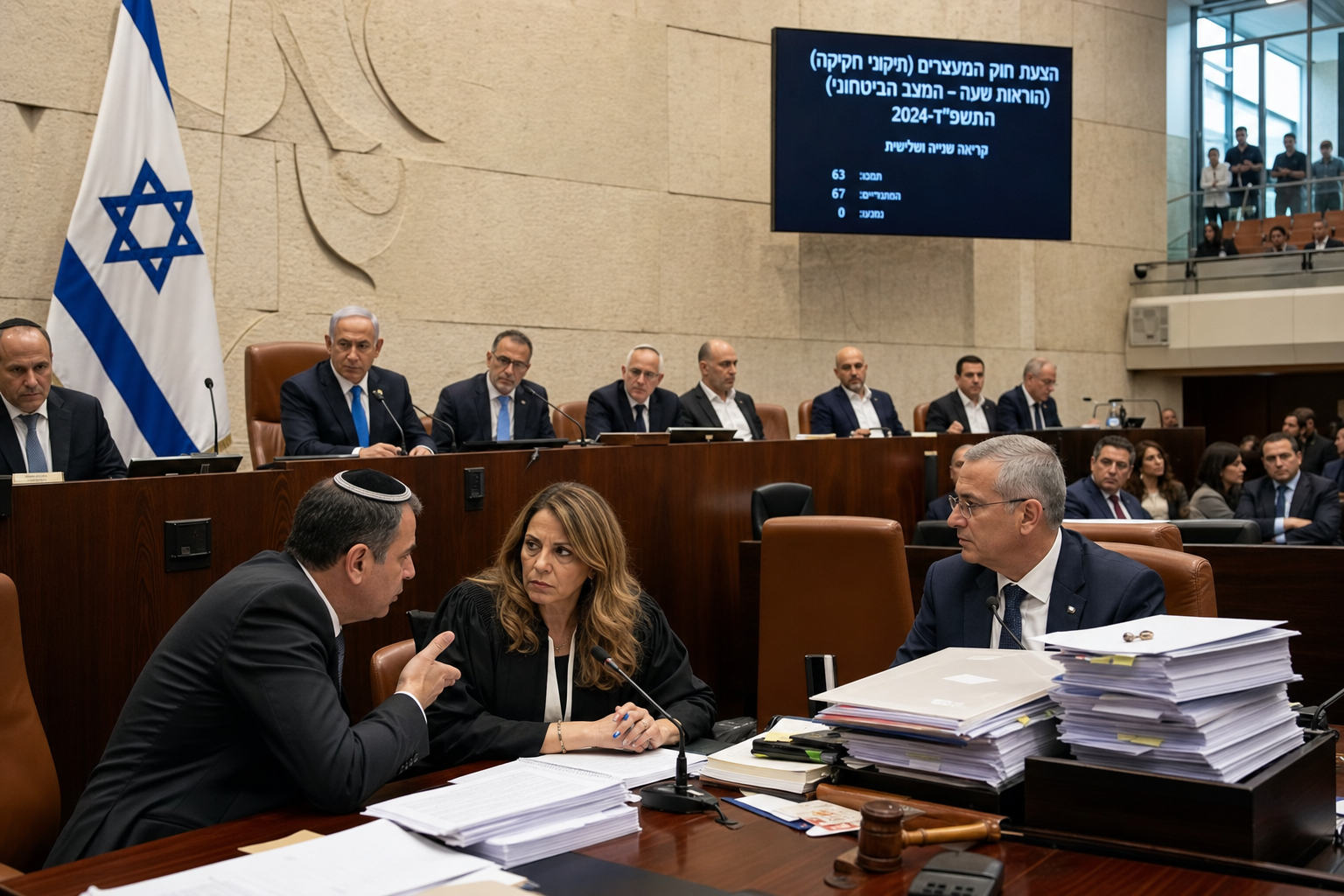
Israel’s parliament has passed new legislation enabling the death penalty and public trials for people alleged to have taken part in the Hamas-led 7 October 2023 attacks and hostage-taking. The bill, unusually backed by both government and opposition lawmakers, passed 93-0, with some members absent or abstaining. Supporters argue the law will provide a historic legal reckoning, comparable in scale and significance to the trial of Adolf Eichmann, and will allow especially serious charges such as terrorism, murder, sexual violence, and genocide to be heard before a special military court in Jerusalem. Key hearings would be filmed and broadcast on a dedicated website, and the state says it has gathered extensive video, audio, and testimonial evidence.
The article also highlights strong criticism from Israeli human rights organizations and legal advocates, who warn the new framework could become a vehicle for “show trials” and executions based on confessions allegedly obtained under torture. They argue that normal legal protections may be weakened, especially if defendants are tried in absentia or under modified evidentiary rules. The government rejects claims of widespread torture and says the process complies with international law.
Victims and bereaved families are divided but deeply involved in the debate. Some seek accountability and answers, while also insisting that sensitive information be shared with families before becoming public. On the Palestinian side, families of missing persons and detainees protested the law in Gaza, calling it cruel and urging international intervention. The article places the law in the broader context of the October 7 attacks, the Gaza war, the debate over the death penalty in Israel, and continuing demands for justice, accountability, and an independent inquiry into the attacks.
Entities: Israel, Knesset, Hamas, October 7, 2023 attacks, Gaza war • Tone: analytical • Sentiment: negative • Intent: inform
12-05-2026
Israeli lawmakers have approved legislation creating a special tribunal with the authority to impose the death penalty on Palestinians accused of participating in the Hamas-led Oct. 7, 2023 attack on Israel. The bill passed overwhelmingly, 93-0, in the 120-seat Knesset, signaling broad political support for a hard line against those implicated in the deadliest attack in Israeli history. The new tribunal would operate differently from ordinary courts: defendants could appeal, but only to a separate special appeals court, and the trial would be livestreamed from a Jerusalem courtroom. Supporters, including bill sponsor Simcha Rothman, framed the measure as a show of unity and a necessary response to the October 7 massacre. Critics, including Israeli and international rights groups, argued that the law weakens fair-trial protections, lowers the threshold for imposing death sentences, and risks turning proceedings into a public spectacle. The article also places the move in the broader context of Israel’s war in Gaza, the ongoing detention of Palestinians, and earlier legislation from March that already authorized the death penalty in certain murder cases involving Palestinians, though not retroactively. The report notes that the Gaza Health Ministry says more than 72,000 Palestinians have been killed since the war began, while hundreds of militants were also killed in combat and many suspects remain in Israeli custody awaiting trial.
Entities: Israel, Jerusalem, Knesset, Hamas, October 7, 2023 attack • Tone: analytical • Sentiment: negative • Intent: inform
12-05-2026
Israel’s parliament has approved a special military tribunal to prosecute hundreds of Palestinians accused of participating in the Oct. 7, 2023 Hamas-led attacks in southern Israel, with some defendants potentially facing execution. The plan, championed by Justice Minister Yariv Levin, is being compared by supporters to Israel’s historic Adolf Eichmann trial because it is intended to publicly document the atrocities and deliver a sense of national closure. The tribunal is expected to handle more than 400 defendants, including suspected members of Hamas’ elite Nukhba unit, and will operate in a custom-built Jerusalem court with hearings broadcast and archived — an unusual move in Israel’s legal system. Critics, including three Israeli human rights groups, warn that the process may rely on coerced confessions and become a punitive spectacle rather than a fair trial. The legislation comes amid broader legal and diplomatic scrutiny of Israel’s conduct in the war, including proceedings at the International Court of Justice and International Criminal Court, as well as European opposition to capital punishment. The article also notes political and legal tensions inside Israel, including disagreement over accountability for the Oct. 7 security failures and the fact that any death sentence would require multiple layers of review.
Entities: Israel, Knesset, Yariv Levin, Ahmad Tibi, Benjamin Netanyahu • Tone: analytical • Sentiment: negative • Intent: inform