28-05-2026
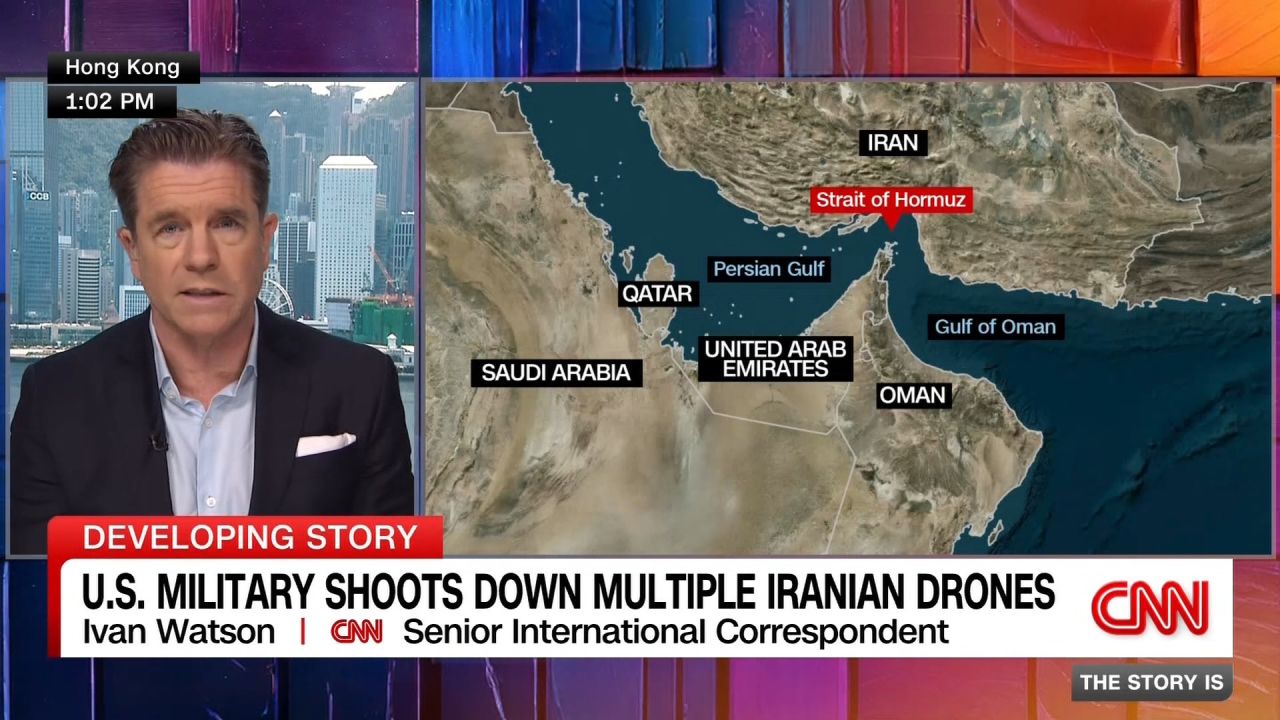
Oil prices rose sharply after the United States carried out new attacks on Iran, intensifying already fragile tensions in the Middle East and raising fresh concerns about global energy supplies. The latest strike targeted a military site in Bandar Abbas, a strategic port city in southern Iran, while the U.S. Central Command said its forces also shot down four Iranian drones that were seen as threatening the Strait of Hormuz. Following the news, Brent crude climbed 3.75% to $97.83 a barrel and U.S. crude rose 4% to $92.22.
The article explains that the conflict has disrupted shipping through the Strait of Hormuz, a critical route for about one-fifth of the world’s oil and liquefied natural gas supplies. Because the strait is so important to global energy markets, the fighting has caused sharp swings in oil prices: Brent briefly surged to around $120 a barrel earlier in the conflict before falling closer to $70 when hopes rose for a deal to reopen the waterway. Prices had recently dropped on expectations that diplomacy might ease the crisis, but the new attacks reversed that trend.
The U.S. said its strikes were carried out in self-defense and were intended to protect troops from Iranian threats, including missile activity and attempts to mine the strait. Iran condemned the attacks as a violation of the ceasefire and warned that it would respond to any further hostility. The article also notes that Kuwait reported intercepting hostile missile and drone threats, underscoring how the regional conflict continues to affect neighboring states and global markets.
Entities: Oil prices, Brent crude, US crude, United States, Iran • Tone: urgent • Sentiment: negative • Intent: inform
28-05-2026
The article reports that the US military carried out fresh strikes on Iranian targets for a second time in three days, hitting a military site in Bandar Abbas and shooting down several drones near the Strait of Hormuz. US Central Command said the attacks were defensive, aimed at protecting American forces and maintaining a fragile ceasefire amid a months-long war and tense negotiations to end it. The conflict has disrupted shipping through the Strait of Hormuz, a vital global energy artery, helping drive up fuel prices and stranding commercial tankers. Iran condemned the strikes as a serious ceasefire violation and warned that it would not leave any act of hostility unanswered.
The article also details an expanding economic and diplomatic confrontation. The US imposed sanctions on the Persian Gulf Strait Authority, which Washington says collects fees from ships passing through the strait, warning that ships paying the body could face sanctions. US officials framed the move as part of Iran’s effort to pressure global maritime trade and generate revenue. Meanwhile, Iran’s leaders and the IRGC issued competing claims about downing US aircraft and firing on intruding drones and jets.
Politically, President Donald Trump said the US was “not satisfied” with the state of talks, though he insisted Iran wanted a deal and that Washington could resume strikes if necessary. The White House dismissed Iranian state television’s report of a draft agreement as a fabrication. Overall, the story portrays a highly unstable standoff in which military actions, sanctions, and negotiations are all unfolding at once, with the ceasefire and any prospective agreement remaining fragile.
Entities: Donald Trump, Sarah Smith, Nardine Saad, US Central Command (Centcom), US Treasury Department • Tone: analytical • Sentiment: negative • Intent: inform
28-05-2026
The article reports that the U.S. military carried out another round of strikes against Iranian military assets, escalating pressure amid an already fragile ceasefire between the United States and Iran. According to a U.S. official, the strikes were defensive in nature: four Iranian drones were shot down, and a ground control station in Bandar Abbas was hit before it could launch a fifth drone. The drones reportedly posed a threat near the Strait of Hormuz, an essential global oil shipping route that has been closed since the broader conflict began. The official stressed that the actions were measured and intended to preserve the ceasefire.
The article places the strikes in the context of prior U.S. Central Command operations two days earlier, when CENTCOM carried out self-defense strikes in southern Iran targeting missile launch sites and Iranian boats suspected of trying to lay mines. Iran condemned those attacks as a serious violation of the ceasefire and promised retaliation. Meanwhile, President Trump is pressing Iran toward a longer-term agreement and has warned that a large bombing campaign could resume if Iran does not accept U.S. terms. Although Trump had recently sounded optimistic about a peace deal, his comments on Wednesday were more cautious, suggesting the U.S. is not fully satisfied.
The article also outlines a reported two-step deal under discussion: reopening the Strait of Hormuz in exchange for the U.S. lifting its blockade on Iranian ports, followed by negotiations over limits on Iran’s nuclear program. A senior Trump administration official said Iran had agreed in principle to dispose of its highly enriched uranium stockpile, though the details remain unclear.
Entities: U.S. military, Iran, U.S. official, CBS News, Strait of Hormuz • Tone: analytical • Sentiment: neutral • Intent: inform
28-05-2026
Kuwait activated its air defenses after authorities reported hostile missile and drone threats, signaling a sharp escalation in regional tensions. The move came amid a new round of U.S. military action in Iran, including reported strikes on a military site said to threaten U.S. forces and commercial shipping in the Strait of Hormuz. Iran’s Islamic Revolutionary Guard Corps said it responded by striking a U.S. air base and warned that any repeat attacks would be met with a more decisive response. At the same time, the U.S. Treasury imposed fresh sanctions on Iran’s Persian Gulf Strait Authority, which regulates transit through the strategically vital waterway. The article frames these developments as part of a broader confrontation that is raising alarm across the Gulf, especially because of the risk to maritime traffic and energy supplies. Oil markets reacted quickly, with Brent and West Texas Intermediate futures rising more than 3% on fears over security in the Strait of Hormuz. The story also notes that Secretary of State Marco Rubio said the U.S. would continue to give negotiations with Iran a chance to succeed, while President Donald Trump prefers diplomacy but retains military options if talks fail. Overall, the article highlights a tense, fast-moving confrontation involving air defenses, sanctions, military strikes, and the threat of wider disruption to global oil and shipping routes.
Entities: Kuwait, Iran, United States, Strait of Hormuz, Bandar Abbas airport • Tone: urgent • Sentiment: negative • Intent: inform
28-05-2026
Oil prices jumped on Thursday after new U.S. strikes in Iran heightened fears that commercial shipping through the Strait of Hormuz could be disrupted. Brent crude rose more than 3% to $97.29 per barrel, while West Texas Intermediate climbed 3.42% to $91.71 per barrel. The market reaction followed reports that Iran’s Revolutionary Guards had said they targeted a U.S. airbase early in the morning, though they did not specify the location. A U.S. official told MS NOW that American forces had carried out fresh strikes against a military site in Iran that was believed to threaten U.S. troops and shipping in the strait, and that several Iranian drones were intercepted and downed. The article also cites a Citi note suggesting that oil markets were stabilizing somewhat as investors reduced expectations for worst-case supply shocks, with signs of progress toward a possible agreement between Washington and Tehran. However, Citi warned that uncertainty over the timing of any deal remained a risk, especially because higher crude prices could intensify broader inflation and push some central banks toward tighter monetary policy.
Entities: Oil prices, Brent crude, West Texas Intermediate (WTI), Strait of Hormuz, U.S. strikes in Iran • Tone: analytical • Sentiment: negative • Intent: inform
28-05-2026
The article reports a rapidly evolving military and diplomatic confrontation between the United States and Iran, with both sides exchanging fresh strikes that are testing a fragile ceasefire and ongoing negotiations. According to the report, the US struck Iranian drones and launch facilities near the Strait of Hormuz, while Iran’s Islamic Revolutionary Guard Corps retaliated by targeting an American air base it said had been used in earlier US strikes. The exchanges came amid tense diplomacy, as President Donald Trump said he would not be rushed into a deal and signaled that any agreement would depend on terms favorable to the US, including possible broader regional commitments tied to the Abraham Accords. The White House also rejected Iranian claims that a draft memorandum would lift the blockade of Iranian ports and reduce US military pressure. The story further notes that Iran has moved to formalize control over shipping through the Strait of Hormuz via a newly created authority that has now been sanctioned by the US Treasury. In parallel, the article briefly covers escalating violence in Lebanon, where Israel continued strikes on Hezbollah targets in Tyre and Sidon despite an existing ceasefire, adding to a regional picture of broader instability and near-daily hostilities.
Entities: United States, Iran, Donald Trump, Islamic Revolutionary Guard Corps (IRGC), Strait of Hormuz • Tone: urgent • Sentiment: negative • Intent: inform
28-05-2026
The article reports that Iranian President Masoud Pezeshkian invoked a powerful wartime symbol from the Iran-Iraq War—the 1982 recapture of Khorramshahr—to signal Tehran’s determination amid tense U.S.-Iran negotiations. According to analysts cited by Fox News, Pezeshkian’s comments were not merely commemorative but a deliberate political signal meant to frame the current standoff with the United States and Israel as an existential struggle rather than a routine diplomatic dispute. In a post on X marking the anniversary of Khorramshahr’s liberation, Pezeshkian linked the city’s symbolism to Iran, the Persian Gulf, and the Strait of Hormuz, and emphasized themes of resistance, self-sacrifice, and repelling aggression. The article argues that this language taps into one of the Islamic Republic’s most foundational narratives: the idea that Iran is a nation under attack, morally justified in resisting pressure, and prepared for sacrifice if necessary.
The piece places Pezeshkian’s remarks in the context of ongoing negotiations with the Trump administration, noting that Trump said a deal was “largely negotiated” but also warned the U.S. would either accept a “great and meaningful” agreement or walk away. Iranian officials, meanwhile, said a final deal was not imminent. A counterterrorism expert interviewed by Fox News said the Khorramshahr reference is a strategic signal used to communicate a wartime frame: not a limited crisis, but a potentially existential confrontation. The article also suggests that the mention of the Strait of Hormuz functions as an escalation signal, implying that Iran is prepared to use regional leverage if pressured. Overall, the article portrays Iran’s leadership as using historical memory and symbolic rhetoric to bolster resolve and intimidate adversaries during sensitive diplomacy.
Entities: Masoud Pezeshkian, Donald Trump, Iran, United States, Israel • Tone: analytical • Sentiment: neutral • Intent: analyze
28-05-2026
The article is a live update on escalating conflict between the United States, Iran, Israel, Hezbollah, and regional actors in the Middle East. It opens with news that the US military carried out a second defensive strike against Iran this week after observing what officials described as aggressive Iranian military activity. The strikes follow warnings from President Donald Trump, who threatened to “finish the job” unless Tehran agreed to a deal. The liveblog then tracks a fast-moving sequence of developments: Iran’s Revolutionary Guards say they targeted a US airbase in retaliation; Israel announces new strikes on Hezbollah infrastructure around Tyre after issuing evacuation warnings in southern Lebanon; Kuwait says its military is responding to missile and drone attacks; and Iranian forces allegedly fired warning shots at four ships attempting to cross the Strait of Hormuz. The article also highlights the broader global consequences of the conflict, including a rise in oil prices, concern from the EU’s top diplomat Kaja Kallas that continued war is in nobody’s interest, and warnings from the International Energy Agency that the crisis is reshaping global energy security and supply strategies. Additional reporting notes that shipping through the Strait of Hormuz remains constrained, with some tankers traveling with transponders switched off. Overall, the piece presents a volatile, multi-front regional crisis with military escalation, retaliatory threats, disruption to shipping, and significant energy-market implications.
Entities: United States, Iran, Israel, Hezbollah, Kuwait • Tone: urgent • Sentiment: negative • Intent: inform
28-05-2026
The article reports that the US military launched new strikes in Iran on Wednesday, targeting an Iranian ground control station in Bandar Abbas and downing four one-way attack drones that US officials said posed a threat to American troops and commercial shipping in the Strait of Hormuz. The strikes were described by a US official as defensive and intended to protect forces and maintain a fragile cease-fire that has reportedly been in place since April 8. The article says the Iranian side responded with claims that its forces targeted a US airbase, while Kuwait reported its air defenses were responding to hostile missile and drone attacks; no damage or injuries were reported. It also notes that Iranian drone and naval activity has repeatedly threatened shipping in the strait, including reports of warning shots fired at vessels and earlier US “self-defense strikes” on Monday against Iranian boats allegedly laying mines, along with a surface-to-air missile site in Bandar Abbas. The fighting unfolds as US and Iranian negotiators work on a possible memorandum of understanding to reopen the waterway to international shipping and address Iran’s enriched uranium stockpiles. President Trump said on Wednesday that if no deal is reached, the US may have to “finish the job” militarily, while also suggesting Iran is under pressure and inclined to make a deal.
Entities: US military, US Central Command (CENTCOM), Iran, Strait of Hormuz, Bandar Abbas • Tone: analytical • Sentiment: negative • Intent: inform
28-05-2026
The article reports an escalating exchange of strikes between the United States and Iran in and around the Strait of Hormuz, with Iranian forces saying they retaliated against latest U.S. attacks by targeting the base from which those strikes were launched. The U.S. says it shot down four Iranian one-way attack drones over the strait and then struck a drone ground-control station in Bandar Abbas before a fifth drone could be launched. Iran’s Revolutionary Guards warned that any further U.S. attacks would bring a “more decisive” response. The fighting has increased fears that a fragile cease-fire could collapse and that the Strait of Hormuz, a vital corridor for global oil and shipping, may remain blocked longer than hoped. The article also notes that the Israeli military launched fresh strikes against Hezbollah in Tyre, Lebanon, further complicating regional diplomacy. In parallel, the Trump administration is pressing for a limited agreement over the strait while rejecting any arrangement that would leave it under Iranian control. The Treasury Department also sanctioned a newly created Iranian body, the Persian Gulf Strait Authority, calling it an extortion attempt. Market reaction has been immediate: oil prices rose sharply, stocks fell, and gas prices remained elevated as the conflict continues to threaten energy markets and regional stability.
Entities: Iran, United States, Strait of Hormuz, Tehran, Bandar Abbas • Tone: urgent • Sentiment: negative • Intent: inform
28-05-2026
Oil prices rose sharply and stock markets fell after the United States said it had shot down four Iranian attack drones and struck a drone control station, escalating tensions between the two countries for the second time in three days. The article says the drones were viewed by U.S. officials as a threat to American forces in the region and to commercial shipping through the Strait of Hormuz, a vital route for global oil and gas transport. The fresh confrontation increased uncertainty around a possible peace deal, even as President Trump and administration officials continued to insist that an agreement was near.
Financial markets reacted quickly. Brent crude, the global oil benchmark, climbed nearly 4 percent to about $96 a barrel, while West Texas Intermediate rose 4 percent to $92 a barrel. U.S. stock futures pointed lower, and Asian markets fell broadly, with especially steep declines in South Korea and smaller but notable drops in Hong Kong, Japan, and Taiwan. The article also notes that gasoline prices in the United States eased slightly, falling 3 cents to a national average of $4.46 a gallon, though prices remained 50 percent higher since the war began. Diesel also dipped modestly but stayed significantly elevated. Overall, the piece highlights how renewed conflict in the region is affecting energy markets, consumer fuel costs, and investor confidence.
Entities: Oil prices, Stocks, United States, Iran, attack drones • Tone: urgent • Sentiment: negative • Intent: inform
28-05-2026
The article reports that the US military carried out fresh defensive strikes against Iranian drone operations near the Strait of Hormuz, targeting a ground control station in Bandar Abbas and shooting down four attack drones after one was reportedly preparing for launch. The strikes came amid intensifying tensions between Washington and Tehran over control of the strategic waterway, with President Donald Trump rejecting Iranian media claims that a draft deal had been reached to restore shipping traffic and insisting no country would control the strait. The report says the US views its actions as necessary to protect its forces and commercial shipping and to preserve an existing ceasefire, while Iran frames the US strikes as violations of that ceasefire and continues to assert its own authority over the strait through the Islamic Revolutionary Guards Navy. The article also notes that the US Treasury sanctioned an Iranian body tied to managing passage through the waterway, and that oil markets reacted to the renewed strikes with prices rising after an earlier drop. Overall, the piece situates the military actions within a wider conflict that has disrupted global energy flows, killed thousands, and left the two sides far apart on the major issues of uranium enrichment, sanctions relief, nuclear dismantling, and military withdrawal from the region.
Entities: United States, Iran, Strait of Hormuz, Bandar Abbas, Donald Trump • Tone: analytical • Sentiment: negative • Intent: inform
28-05-2026
Asian markets fell on Thursday after renewed U.S. strikes in Iran intensified already elevated tensions in the Middle East and raised concerns about possible disruptions to global energy supplies. The article says a U.S. official told MS NOW that American forces carried out additional strikes targeting a military site believed to threaten U.S. troops and commercial shipping in the Strait of Hormuz, a critical chokepoint for oil transport. In response, Kuwait activated its air defenses after reporting hostile missile and drone threats, underscoring the spread of regional security fears.
The market reaction was broad across Asia-Pacific. Oil futures surged more than 3% on worries that the conflict could interrupt supply flows near Hormuz, with West Texas Intermediate and Brent both posting strong gains. At the same time, major stock benchmarks in South Korea, Japan, Australia, China, Hong Kong, and India traded lower, reflecting risk-off sentiment among investors. South Korea’s Kospi and Kosdaq suffered some of the steepest declines, while Japan’s Nikkei 225, Australia’s S&P/ASX 200, and Hong Kong’s Hang Seng also fell meaningfully. China’s CSI 300 and India’s benchmark indexes were down more modestly.
The article also notes that U.S. equity futures were slightly higher, suggesting American markets were comparatively resilient even as geopolitical risk weighed on overseas trading. It closes by reminding readers that U.S. indexes had just set fresh records the prior day, highlighting the contrast between calm domestic equity performance and the market volatility triggered by Middle East conflict news.
Entities: Asia-Pacific markets, Middle East, Iran, Kuwait, Strait of Hormuz • Tone: analytical • Sentiment: negative • Intent: inform
28-05-2026
CNBC Daily Open reports that markets were jolted by a fresh escalation in U.S.-Iran hostilities, with stock gains reversing and oil prices rising sharply as traders reacted to renewed strikes, drone interceptions, and military retaliation in the region. The article says American forces carried out additional strikes in Iran against a site believed to threaten U.S. troops and shipping in the Strait of Hormuz, while Iran’s Revolutionary Guards claimed to have targeted a U.S. airbase. Kuwait also activated air defenses in response to missile and drone threats. The geopolitical shock is presented as the dominant force shaping Asian and European trading.
The piece then turns to the inflation implications of the conflict, highlighting CNBC interviews with Federal Reserve officials Neel Kashkari and Austin Goolsbee. Kashkari emphasizes that fighting inflation remains the priority because the labor market is still in decent shape, while Goolsbee warns that energy-driven inflation from the conflict could create a stagflationary shock, especially in Asia. The newsletter also notes reports that the European Union is preparing a strategy to reduce dependence on U.S. technology by supporting European cloud, data center, and AI alternatives.
On the corporate front, the article features Mistral AI CEO Arthur Mensch describing AI as a strategic asset for Europe, Lamborghini’s CEO defending the company’s decision to cancel its own EV in the wake of Ferrari’s poor market reaction to its EV launch, and Nio’s strong share gains after unveiling its first EV in more than two years. The article ends with a separate news item about a Google employee charged with fraud for allegedly making $1.2 million through insider trading bets on Polymarket, using confidential information to predict Google’s most-searched person in 2025.
Entities: U.S.-Iran conflict, Iran, United States, Kuwait, Strait of Hormuz • Tone: analytical • Sentiment: negative • Intent: inform