28-05-2026
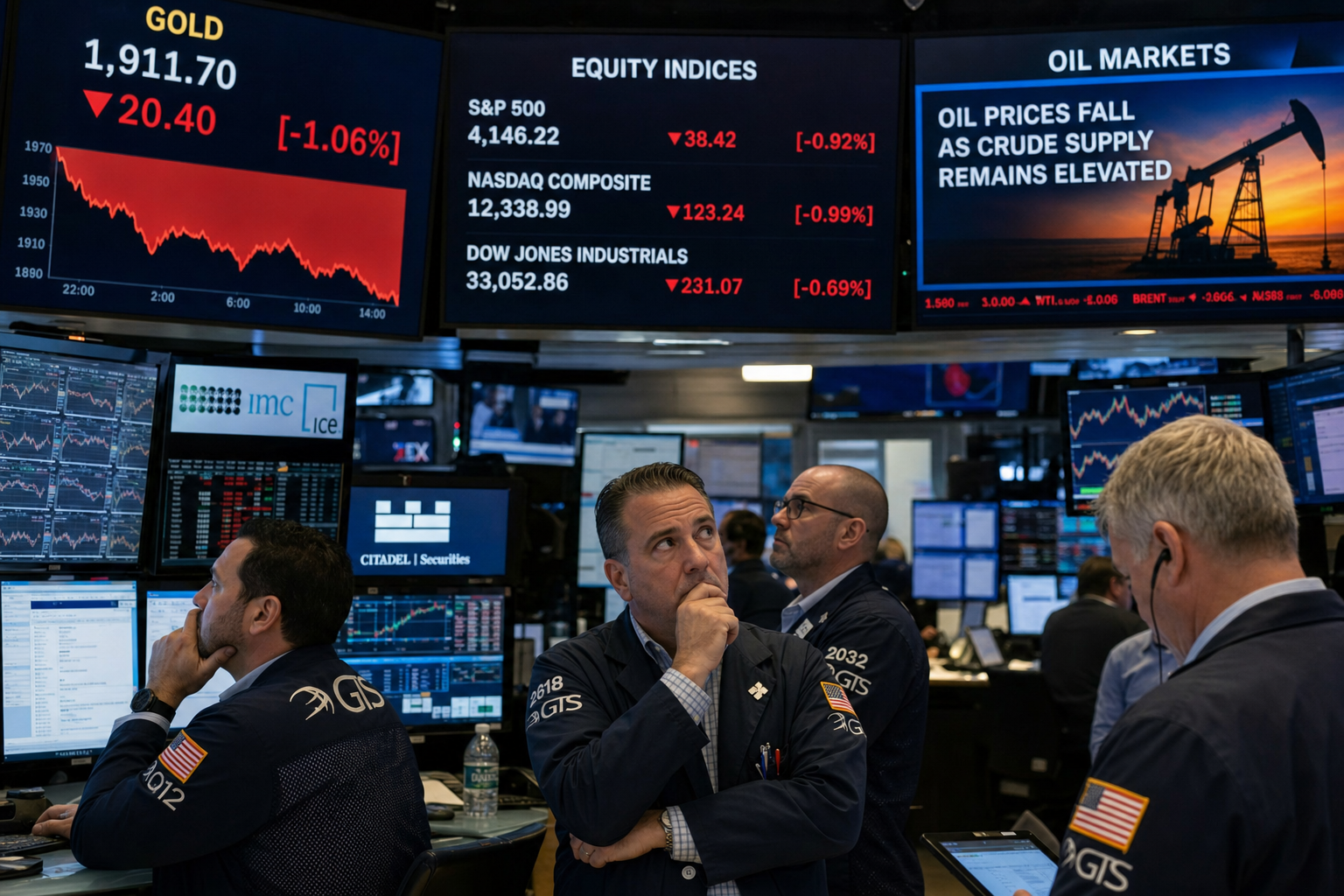
Gold continued to weaken even as hopes grew for a diplomatic resolution to the US-Israel war on Iran, because investors were more concerned about persistent inflation and the Federal Reserve’s response than about the easing of geopolitical risk. The article says gold has fallen more than 4 per cent in the current month and is now nearly 20 per cent below its January record high. The decline reflects a broader shift in market expectations: the stronger US dollar, reduced expectations for monetary easing, and the rise in oil prices have all undermined demand for gold, which does not pay interest and tends to suffer when borrowing costs rise.
The piece explains that the recent fall in oil prices below US$100 a barrel has not removed inflation pressure quickly enough to restore confidence in a near-term shift toward easier policy. According to Stephen Innes of SPI Asset Management, the economic effects of the earlier energy shock are still working through freight, shipping insurance, supply chains, industrial costs and consumer expectations. That means inflation may remain elevated for longer, keeping the Fed and other central banks cautious about cutting rates. As a result, rates traders have reduced bets on rate cuts in 2026 and are even beginning to price in the possibility of a rate increase later this year if inflation rises again. Overall, the article frames gold’s decline as a function of sticky inflation, tight monetary policy expectations, and lingering economic effects from the Middle East conflict.
Entities: Gold, inflation, Iran war, US-Israel war on Iran, Federal Reserve • Tone: analytical • Sentiment: negative • Intent: analyze
28-05-2026
European markets were poised to open lower on Thursday as investors reacted to heightened uncertainty around the Iran war and the prospects for a peace deal. Futures data pointed to declines across major regional indices, including the FTSE 100, DAX, CAC 40 and FTSE MIB, mirroring weakness in Asia-Pacific markets. The main driver was mixed and contradictory messaging around U.S.-Iran negotiations: U.S. Secretary of State Marco Rubio said the talks had made some progress and emphasized a preference for diplomacy, while President Donald Trump said he would not allow Iran to control the Strait of Hormuz as part of any deal. Meanwhile, Reuters reported—citing Iranian state media—that Tehran had committed to restoring commercial traffic through the Strait to pre-war levels within a month of an agreement, but the White House dismissed that report as a fabrication.
The geopolitical backdrop was further complicated by reports that U.S. forces had carried out fresh strikes in Iran, described by a U.S. official as measured, defensive actions meant to sustain the ceasefire. These developments pushed oil prices higher overnight, reflecting concern that the conflict could threaten critical energy shipping routes. In the United States, stock futures were little changed as investors looked ahead to the April personal consumption expenditures (PCE) inflation report, the Federal Reserve’s preferred inflation measure. Economists expected a 0.5% monthly increase and a 3.8% annual rise. The article also noted that there were no major European earnings releases that day, with attention instead on business and consumer confidence data. Overall, the piece focused on how geopolitical risk and uncertainty in the Middle East were shaping European market sentiment and broader global trading conditions.
Entities: European stocks, FTSE 100, DAX, CAC 40, FTSE MIB • Tone: analytical • Sentiment: negative • Intent: inform
28-05-2026
U.S. stock futures fell early Thursday as investors braced for a closely watched inflation report, with S&P 500 futures down 0.35%, Nasdaq 100 futures off 0.76%, and Dow futures lower by 104 points. The market backdrop was shaped by renewed geopolitical tension after Reuters reported new U.S. strikes in Iran, which pushed West Texas Intermediate crude above $90 a barrel in overnight trading. The article also notes that Snowflake surged in after-hours trading following a major AWS spending agreement and a first-quarter earnings beat, while broader markets had just logged record closes the previous day, driven in part by easing oil prices and expectations around the Iran situation.
The piece focuses heavily on the upcoming April personal consumption expenditures (PCE) price index, the Federal Reserve’s preferred inflation gauge, with economists expecting a 0.5% monthly rise and a 3.8% annual increase. It includes comments from Fed officials, especially Minneapolis Fed President Neel Kashkari and Fed Governor Lisa Cook, who both stressed that inflation remains too high and remains a priority even as the labor market is holding up. The article also highlights views from market strategist Adam Crisafulli, who argues that technology stocks appear stretched and that investors may need to broaden into other sectors.
Beyond the macro outlook, the live updates cover notable stock and market moves in Asia and the U.S. premarket/after-hours session, including Nio’s gains after launching its ES9 SUV, LG Energy Solution’s jump on a major battery-storage contract, and a slate of upcoming earnings reports and economic data. The overall article is a real-time market briefing combining inflation, Fed policy, oil, geopolitics, corporate earnings, and sector rotation themes.
Entities: S&P 500, Nasdaq 100, Dow Jones Industrial Average, West Texas Intermediate, Iran • Tone: analytical • Sentiment: neutral • Intent: inform