23-10-2026
Italian authorities are preparing extensive security measures for protests expected on Saturday, 24 October, as demonstrations against the rising cost of living are planned in cities across Italy and France. Officials and business owners are concerned about a recurrence of violence reported on 17 and 18 October, when people attacked shops and clashed with law enforcement. More than 30 protest actions—including marches, sit-ins, assemblies and strikes—have been listed across Italy, with events planned in Milan, Bologna, Genoa, Turin, Rome and Florence.
Rome plans to deploy around 1,500 officers, with security checks extending from public squares to railway stations. Police drones and Carabinieri aircraft will support monitoring, while the city’s Cybersecurity Centre and Digos will track online activity. Authorities say social media platforms including Telegram, TikTok and Instagram are circulating advice about preparing for potential clashes, including recommendations about supplies, clothing and responding to tear gas.
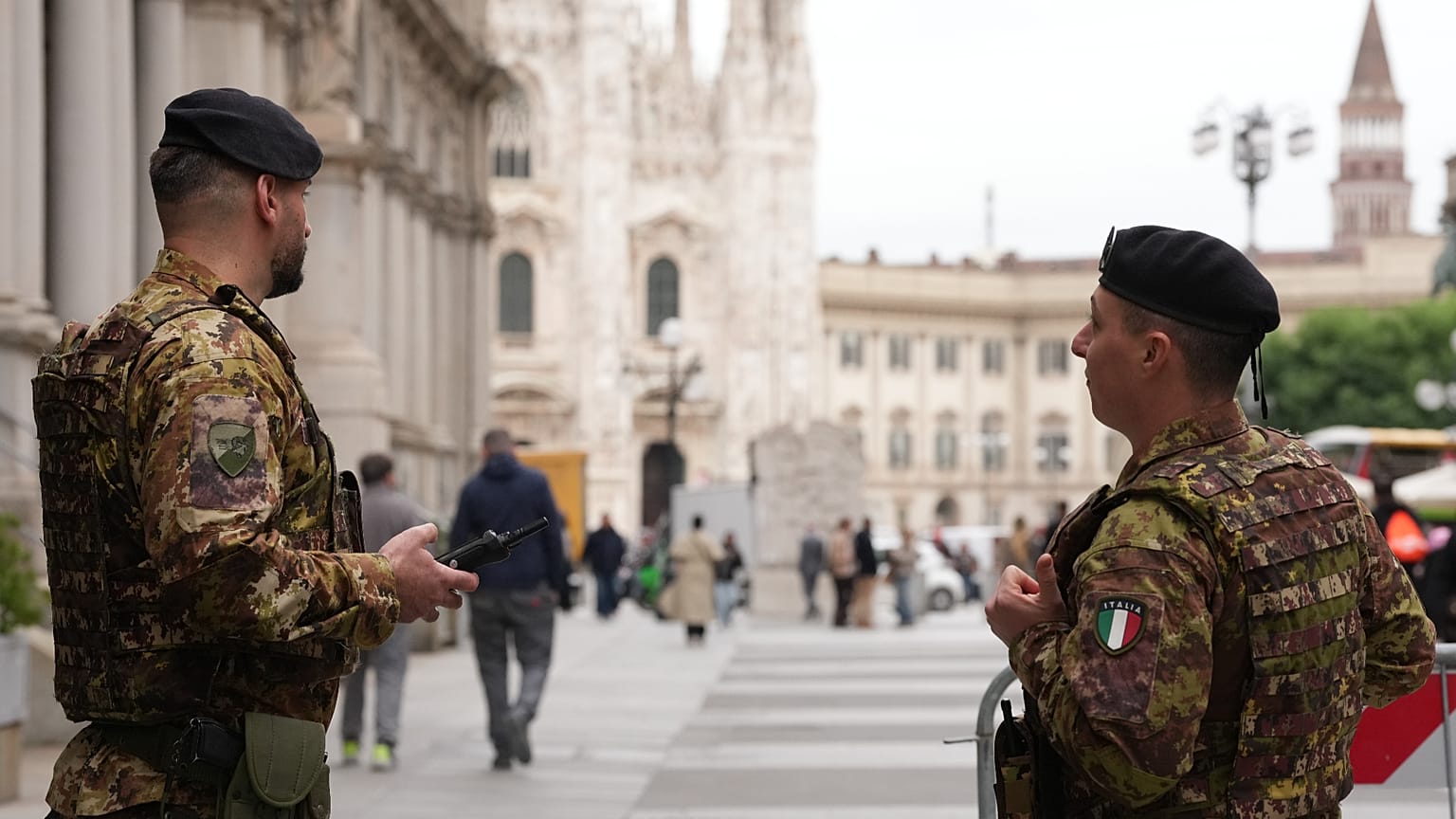
Milan’s deployment is reported as approximately 1,000 police officers and Carabinieri, 300 municipal officers and 500 soldiers, with drones also monitoring marches. Authorised demonstrations will be kept away from the Duomo, and protests are banned in the Garibaldi and Porta Venezia districts. In Turin, activists associated with the former Askatasuna social centre, the 17 October Movement and students are expected to march from Piazza Arbarello at 2 p.m.
The preparations follow searches conducted by Digos on Friday, targeting around 100 people, including 51 minors, in several cities. The article presents the demonstrations as a nationwide security challenge shaped by both street activity and online mobilisation.
Entities: Arnold Koka, Rome, Milan, Italy, France • Tone: analytical • Sentiment: negative • Intent: inform
23-10-2026
Spanish authorities have reportedly detected jihadist messages urging attacks on police officers and demonstrators during ongoing protests in several European countries, including Portugal, Spain, France and Italy. The report comes from Spanish newspaper El País, which says it obtained an Interior Ministry document detailing the calls. Portugal’s Internal Security System (SSI) told news agency Lusa that its secretary-general is closely monitoring the situation and is in contact with relevant authorities.
According to El País, the messages appeared on a website allegedly linked to the Islamic State (IS). An internal document from Spain’s Cybersecurity Coordination Office reportedly described calls for militants to exploit large demonstrations and clashes in the streets. The messages are said to have characterized the scale and organization of the protests as an unusual opportunity to attack, and police as especially vulnerable during confrontations with demonstrators. They reportedly included practical suggestions, such as suicide bombings and vehicle-ramming attacks.
The protests have continued for weeks across several countries. Demonstrations in France reportedly peaked the previous weekend amid violence, including fires that heavily damaged Limoges City Hall and the Lyon tourism office. Italy also experienced violent incidents, including arson in Milan. In Portugal and Spain, daily protests and encampments in major-city squares—including Lisbon, Porto and Madrid—have largely been driven by the cost of living and housing crisis. The article says French demonstrations alone were estimated to have drawn more than 800,000 people over the weekend. It reports the allegations and official monitoring but does not independently verify the messages or describe any attack resulting from them.
Entities: Ricardo Figueira, El País, Spanish Interior Ministry, Portugal's Internal Security System (SSI), Cybersecurity Coordination Office • Tone: neutral • Sentiment: negative • Intent: inform
23-10-2026
Father Giannicola Maria Simone, a 65-year-old priest in Milan, became the subject of a viral video after returning a middle-finger gesture from a masked rioter outside the Church of Sant’Alessandro di Zebedia. The exchange took place during violent unrest that began around Oct. 17, 2026. Simone confirmed the video was real and said he returned the gesture without violent intent or an intention to provoke further anger. He said he had been watching events unfold nearby, then hurried to close the church and admitted tourists and other passersby who were fleeing the rioters. They remained inside until the unrest passed.
Simone said he did not believe he needed to repent because he had not physically harmed anyone. He also recalled speaking with protesters, including one who said he had joined the crowd simply because others had come and he was bored. The article describes the unrest as involving mostly young people who looted shops, vandalized buildings, and attacked police in Milan and other northern Italian cities. Milan, the country’s financial capital, was initially a focal point for protests over the cost of living and public services, before violence overshadowed them.
Prime Minister Giorgia Meloni and Defense Minister Guido Crosetto attributed the violence to broader forces. Crosetto described it as “hybrid warfare” conducted through tools such as TikTok, social media, and YouTube. Meloni condemned those who exploit demonstrations to create chaos, while affirming that demonstrating is a right. Her government approved stricter security measures, including provisions allowing police to detain minors aged 14 to 17 even if they have not committed a crime, tougher penalties for rioters, and financial liability for parents whose children loot or vandalize. Italy also planned to deploy 500 military troops to Milan through the end of the year. Meloni acknowledged economic hardship but said it could not excuse violence.
Entities: Giannicola Maria Simone, Giorgia Meloni, Guido Crosetto, Milan, Italy • Tone: emotional • Sentiment: negative • Intent: inform
23-10-2026
The article describes a wave of student and youth protests spreading across at least eight European countries, including Spain, France, Greece, Italy, Portugal and Albania. Demonstrators are responding to high rents, poor conditions in schools and limited job prospects. More broadly, young people fear a future marked by low wages, rising living costs and reduced welfare support.
The protests take different forms and express a range of demands. Young people in Spain and Portugal have pitched tents in their capitals to draw attention to housing affordability, while French and Italian students have marched for better school conditions. The article says some demonstrators are calling for improved public funding and housing, as well as democratic change; others emphasize dignity and fair opportunities. Some demonstrations have been marred by looting.
Although the current protests remain smaller than earlier anti-austerity movements, they are attracting attention as concerns about young people’s economic and social prospects gather force across the continent. The article also notes that far-right politicians are seeking to use the unrest to promote messages focused on security and opposition to immigration. Overall, it presents the protests as both a response to immediate pressures—especially housing, education and work—and a sign of wider anxiety about the future.
Entities: Jason Horowitz, The Straits Times, Europe, Spain, Portugal • Tone: analytical • Sentiment: negative • Intent: inform