22-05-2026
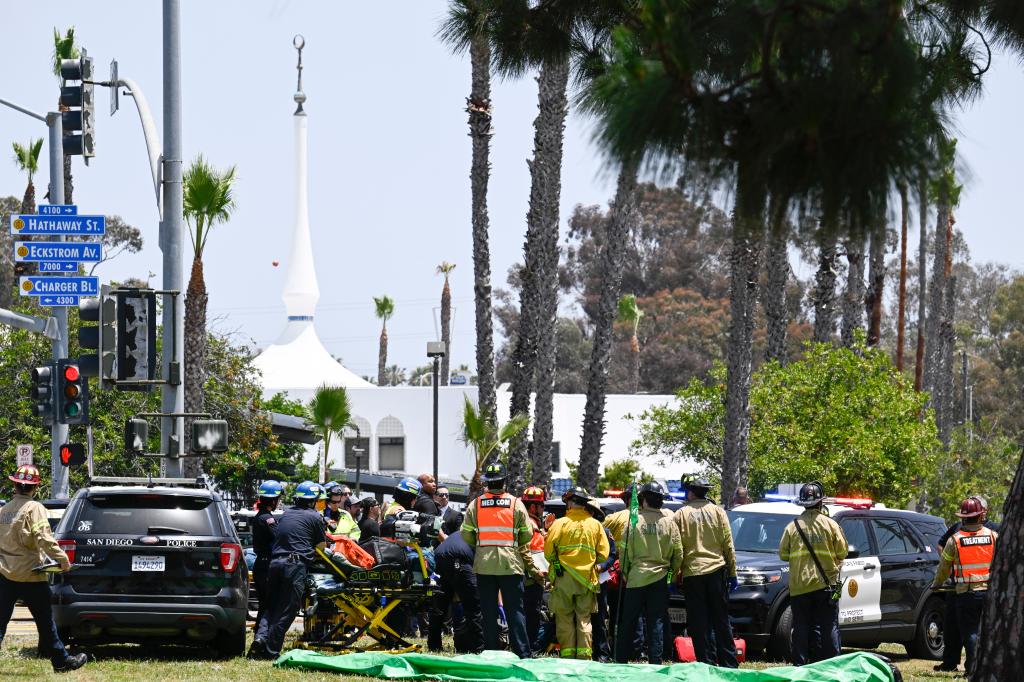
According to the article, one of the two teens accused in the San Diego mosque shooting, 18-year-old Caleb Vazquez, had walked away from a mental health treatment center the morning before the attack, while authorities had already received prior warnings about both suspects. The piece says Vazquez had been under scrutiny after a welfare check at his Chula Vista home last year, triggered by a 911 call about disturbing social media posts, and that he later had a firearms restraining order issued against him. The other suspect, 17-year-old Cain Clark, was also the subject of a 911 call on the morning of the shooting after his mother reported he had left home with guns stored in the house. Despite those warning signs, the teens drove to the Islamic Center of San Diego and killed three people before fleeing and later dying by suicide in their getaway car. The article describes the suspects as being radicalized online, motivated by racist and antisemitic hatred, and intent on provoking an “all-out race war.” It also notes that investigators recovered more than 30 guns and a crossbow connected to the case, and that security guard Amin Abdullah appears to have helped limit casualties by containing the attack to the front area of the mosque.
Entities: Caleb Vazquez, Cain Clark, San Diego mosque shooting, Islamic Center of San Diego, Park Mental Health Treatment Center • Tone: urgent • Sentiment: negative • Intent: inform
22-05-2026
The article reports on the aftermath of the deadly shooting at the Islamic Center of San Diego, focusing on a public statement from the family of Caleb Vazquez, one of the two teenage attackers. In their apology, the family says Vazquez was on the autism spectrum, struggled with his identity, and was influenced by hateful, extremist content online. They condemn the violence, express remorse to the victims and the Muslim community, and say they tried to help him through mental instability, though they fear they may not have done enough.
The shooting took place Monday, when Vazquez and 17-year-old Cain Clark stormed the mosque, opened fire, killed three people, and fled in a white BMW. The article says the teens livestreamed the attack and had released a manifesto beforehand that included racist and extremist imagery and messages promoting a race war. Vazquez was later shot in the head by Clark and died; Clark then turned the gun on himself.
The piece also recounts the victims’ identities and funeral observances. The dead were identified as Amin Abdullah, Mansour Kaziha, and Nadir Awad. The article highlights that Abdullah, a security guard and father of eight, was credited with helping prevent more deaths. Their funerals were held Thursday, with hundreds from the Muslim community mourning them at Snapdragon Stadium before burial at La Vista Memorial Park. Overall, the article combines the family’s apology, the extremist nature of the attack, and the community’s grief and mourning.
Entities: Caleb Vazquez, Cain Clark, Islamic Center of San Diego, San Diego, Amin Abdullah • Tone: urgent • Sentiment: negative • Intent: inform
22-05-2026
The article reports that police in Chula Vista, California, were so concerned about Caleb Vazquez’s behavior more than a year before the San Diego mosque attack that they obtained a court order to remove guns from his father’s home. Court records describe Vazquez as a teenager involved in suspicious behavior and “idolizing nazis and mass shooters,” and show that he had also been placed on an involuntary psychiatric hold. The piece raises questions about how authorities, despite earlier warning signs and legal intervention, were unable to prevent the deadly shooting at the Islamic Center of San Diego, in which Vazquez and his friend Cain Clark killed three people before dying by suicide.
The article explains California’s gun violence restraining order law, enacted in 2014 to allow police and others to temporarily remove firearms from people deemed dangerous. In this case, the order targeted Vazquez’s father, Marco Vazquez, whose household contained 26 guns. Marco Vazquez said he had already moved the weapons into storage because of concerns about his son, increased supervision, and placed Caleb in therapy. The article also details similar warning signs around Clark: his mother reported him missing, possibly suicidal, and noted missing guns and a missing car shortly before the attack.
After the shooting, police searched multiple homes and seized more than 30 guns from one residence. The Vazquez family later issued a statement saying Caleb was on the autism spectrum and had been influenced by hateful rhetoric, extremist content, and online propaganda. Police and the FBI said the two teens met online and shared racist and anti-religious views, and investigators found a document apparently written by both outlining their violent beliefs. The piece ends with the family expressing grief for the victims and their own son, underscoring the tragedy’s human cost and the wider failure to stop it.
Entities: Caleb Vazquez, Cain Clark, Marco Vazquez, Lilliana Vazquez, San Diego • Tone: analytical • Sentiment: negative • Intent: inform