22-05-2026
An angry crowd in eastern Democratic Republic of Congo set fire to hospital tents at Rwampara General Hospital, the epicentre of the current Ebola outbreak, after relatives and friends of a young man believed to have died from Ebola were prevented from taking his body away for burial. The incident underscores the deep mistrust, fear, and misinformation complicating the response to the outbreak in Ituri province, where authorities and aid groups are trying to enforce safe burials and treatment protocols to limit transmission.
According to witnesses and local officials, protesters threw stones and projectiles at the hospital, prompting police to fire warning shots and place medical staff under military protection. A healthcare worker was injured, and two tents used as isolation wards were burned down. Authorities stressed that Ebola corpses are highly infectious and that trained teams must conduct safe, dignified burials. Local politician Luc Malembe Malembe said many residents do not believe Ebola is real and suspect hospitals and NGOs of exploiting the outbreak for money.
The article also situates the unrest within a broader regional crisis. The World Health Organization has declared the outbreak a public health emergency of international concern, with deaths and suspected cases continuing to rise in DR Congo. Uganda has reported cases too, leading to temporary transport restrictions across the border. The outbreak is caused by the rare Bundibugyo strain of Ebola, for which there is currently no vaccine, and WHO says a vaccine could take months to develop. The story also notes concern over access to areas controlled by the M23 rebel group, which said it had confirmed a separate case in South Kivu.
Entities: Ebola outbreak, Rwampara General Hospital, Bunia, Ituri province, Democratic Republic of Congo • Tone: urgent • Sentiment: negative • Intent: inform
22-05-2026
An Air France flight from Paris to Detroit was diverted to Montreal after U.S. authorities determined that one passenger had recently been in the Democratic Republic of Congo and therefore fell under Ebola-related travel restrictions. U.S. Customs and Border Protection said the passenger had boarded the aircraft “in error” and should not have been allowed on the flight because of entry rules designed to reduce Ebola risk. Air France said there was no medical emergency on board and that the diversion occurred at the request of U.S. authorities. After landing in Montreal, the passenger was evaluated by Canadian public health officials, found to be asymptomatic, and then sent back to Paris.
The article explains the broader policy context behind the diversion: the CDC had announced restrictions affecting some travelers who had been in Congo, Uganda, or South Sudan, and the Department of Homeland Security and State Department required certain U.S.-bound flights carrying those travelers to enter through Washington-Dulles for enhanced screening. CBS News also cites medical experts noting that Ebola cannot be transmitted by someone without symptoms, and that the public should not worry about catching it from an asymptomatic passenger on a plane. The piece also includes an account from another passenger describing confusion on board when the flight was turned around, the captain’s explanation that the issue was not mechanical, and the decision by crew to hand out face masks, which the expert said could have sent the wrong message.
Overall, the article combines breaking travel disruption coverage with public health policy explanation and reassurance about Ebola transmission risk, while highlighting the confusion and anxiety experienced by passengers during the diversion.
Entities: Air France, Flight 378, Paris-Charles de Gaulle International Airport, Detroit, Montreal Trudeau International Airport • Tone: analytical • Sentiment: neutral • Intent: inform
22-05-2026
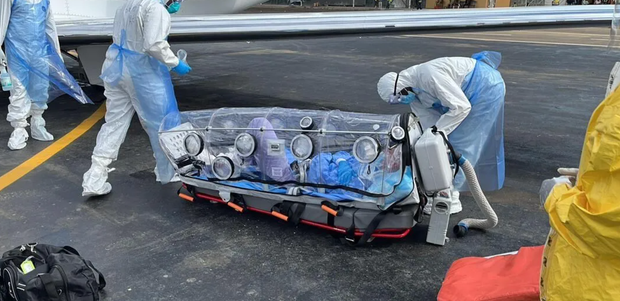
An American doctor, Dr. Peter Stafford, has been infected with Ebola while working for the missionary medical organization Serge in the Democratic Republic of Congo and has been evacuated to Berlin, Germany for treatment. In a statement shared by the group, Stafford said he had feared he would not survive before evacuation, but is now feeling “cautiously optimistic” despite being critically ill. His wife, Dr. Rebekah Stafford, and their four children were also evacuated to Germany; they are asymptomatic, isolated, and being monitored.
The article places Stafford’s case in the context of a growing Bundibugyo ebolavirus outbreak in Congo that has spread to Uganda and may be larger than officially reported. The World Health Organization estimates nearly 600 suspected cases and 139 suspected deaths, and notes that this strain has no known vaccine or specific treatment, with a fatality rate of 30% to 50%. Stafford was reportedly exposed while performing surgery at Nyankunde Hospital in Bunia, where he has worked since 2023. Serge officials said he remains critically ill but is not deteriorating, is receiving supportive care and intravenous treatments, and has shown some improvement in labs and appetite.
The article also notes that another Serge doctor, Dr. Patrick LaRochelle, is quarantined in Prague after potential exposure, and that the U.S. government has imposed travel restrictions requiring certain recent travelers from Congo, Uganda, and South Sudan to enter through Washington-Dulles International Airport.
Entities: Dr. Peter Stafford, Dr. Rebekah Stafford, Dr. Scott Myhre, Matt Allison, Dr. Patrick LaRochelle • Tone: analytical • Sentiment: negative • Intent: inform
22-05-2026
The article examines how a deadly Ebola outbreak in northeastern Democratic Republic of the Congo has exposed the consequences of recent U.S. foreign aid cuts. Aid workers, humanitarian organizations, and public health experts argue that layoffs tied to the dismantling of USAID, reduced CDC capacity, and U.S. funding withdrawals from the World Health Organization weakened disease surveillance, slowed detection, and left local health systems less prepared to respond. The World Health Organization says the outbreak has already caused more than a hundred suspected deaths and nearly 600 suspected cases, and that the virus may have been circulating for months before detection because of weak infrastructure, conflict, and testing delays in a rural and war-affected area.
The Trump administration and State Department officials dispute that the cuts impaired the response, saying WHO and local authorities were still able to act once the outbreak was identified, and that emergency funding has now been mobilized. But former USAID officials and groups such as the International Rescue Committee say the loss of experienced staff, funding, supplies, and coordination capacity made detection and response harder. The piece highlights the broader risk that if the health system collapses, more people will die not only from Ebola but also from treatable illnesses such as malaria and malnutrition. Overall, the article presents the outbreak as both a public health emergency and an example of the real-world effects of reduced international health assistance.
Entities: Ebola outbreak, Democratic Republic of the Congo, Uganda, World Health Organization (WHO), USAID • Tone: analytical • Sentiment: negative • Intent: analyze
22-05-2026
The article reports that World Health Organization Director-General Tedros Adhanom Ghebreyesus has expressed deep concern over the scale and speed of a growing Ebola outbreak in the Democratic Republic of the Congo and Uganda. The WHO has convened its Emergency Committee to assess the situation after recent data indicated more than 500 suspected cases in the DRC, 33 confirmed cases there, two confirmed cases in Uganda, and 131 total fatalities across the outbreak. The organization said the spread is especially worrying because cases have appeared in urban areas such as Kampala in Uganda and Goma in the DRC, as well as in conflict-affected Ituri province, which complicates response efforts.
The outbreak has prompted the WHO to approve $3.9 million in emergency funding to support national authorities. The article notes that the WHO declared the outbreak a public health emergency on Sunday, and the U.S. government issued an urgent travel warning for the DRC shortly afterward. Officials say the outbreak is caused by the Bundibugyo strain of Ebola, a rarer variant that may be less well covered by existing vaccines. The U.S. State Department warning stresses that Ebola is a severe and often fatal hemorrhagic fever and cautions that the government cannot provide emergency services to Americans in Ituri province.
The piece also briefly references a separate global health concern: a hantavirus outbreak tied to the MV Hondius cruise ship, which has led to illness among passengers and crew and three deaths. That mention serves as additional context for heightened public-health monitoring, but the central focus remains the Ebola outbreak in central Africa and the international response to it.
Entities: World Health Organization (WHO), Tedros Adhanom Ghebreyesus, Ebola outbreak, Democratic Republic of the Congo (DRC), Uganda • Tone: urgent • Sentiment: negative • Intent: inform