21-08-2026
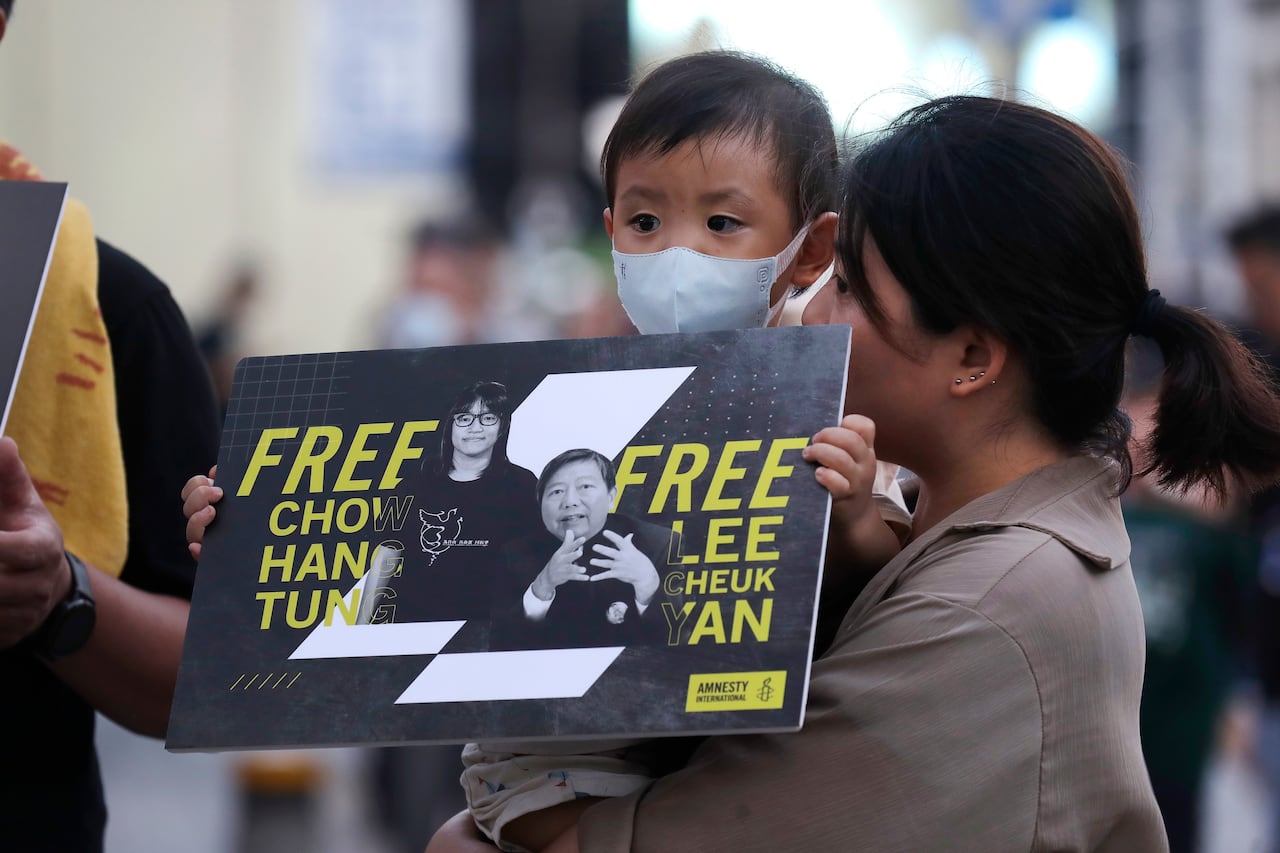
Two former organisers of Hong Kong’s annual vigil commemorating the 1989 Tiananmen Square crackdown, Lee Cheuk-yan and Chow Hang-tung, have been convicted of inciting subversion under the national security law imposed by Beijing in 2020. The Hong Kong Alliance in Support of Patriotic Democratic Movements of China, which organised the vigil, was also found guilty. Lee and Chow pleaded not guilty and face maximum sentences of 10 years in prison; sentencing will take place later, potentially alongside that of former defendant Albert Ho, who pleaded guilty at the beginning of the trial.
For three decades, the vigil was the only large-scale public commemoration of the Tiananmen crackdown held in China and regularly attracted tens of thousands of people. Authorities banned it in 2020, initially citing the COVID-19 pandemic, shortly before the national security law was introduced following Hong Kong’s major 2019 anti-government protests. The law has since led to the imprisonment of numerous activists, including former media executive Jimmy Lai, and the dissolution of many civil society organisations.
Prosecutors argued that the alliance’s call for an end to one-party rule amounted to advocating the unlawful overthrow of China’s Communist Party leadership. Lee and Chow rejected that interpretation, saying the slogan referred to democratic choice and opposition to unrestricted political power rather than violent overthrow. Chow, who represented herself, criticised the proceedings and described harsh conditions during her transport from prison to court.
The case has drawn attention from supporters and observers who say it demonstrates the erosion of freedom of expression in Hong Kong. People waiting outside court questioned how an organisation with “patriotic” in its name could be accused of inciting subversion. The Tiananmen crackdown remains politically sensitive in mainland China, where hundreds or possibly thousands were killed during the military suppression of student-led pro-democracy protests in 1989.
Entities: Lee Cheuk-yan, Chow Hang-tung, Hong Kong Alliance in Support of Patriotic Democratic Movements of China, Hong Kong, Tiananmen Square crackdown (1989) • Tone: analytical • Sentiment: negative • Intent: inform
21-08-2026
A Hong Kong court has convicted pro-democracy activists Lee Cheuk-yan and Chow Hang-tung of “incitement to subversion” under the city’s national security law. The case concerns their roles in organising annual candlelight vigils commemorating the victims of China’s 1989 Tiananmen Square crackdown. Both former leaders of the Hong Kong Alliance in Support of Patriotic Democratic Movements of China, Lee and Chow pleaded not guilty after being charged in 2021. They could receive prison sentences of up to 10 years, with sentencing to take place later.
Prosecutors argued that the activists endangered national security while claiming to defend human rights. Chow, a human rights barrister who represented herself, argued that the law itself was effectively on trial. Human rights advocates and pro-democracy supporters described the verdict as evidence of Hong Kong’s declining freedoms and the suppression of historical memory. Mark Clifford of the Committee for Freedom in Hong Kong Foundation called Lee and Chow “true Chinese patriots” who had been punished for challenging the Chinese Communist Party. Human Rights Watch also urged governments to hold Beijing accountable for eroding Hong Kong’s civil liberties.
The alliance’s Tiananmen vigil was for decades the only major public commemoration of the crackdown in Hong Kong and attracted tens of thousands of participants. Authorities banned the event in 2020, shortly before Beijing imposed a sweeping national security law following the city’s 2019 anti-government protests. The alliance’s leaders have remained imprisoned since their charges were filed.
The article also details Chow’s account of harsh detention conditions, including being shackled and led “like a dog on a lead”. Her case is presented alongside the conviction and 20-year sentence imposed earlier in the year on media tycoon and rights campaigner Jimmy Lai. The article concludes by recalling the 1989 crackdown, in which Chinese troops killed hundreds, possibly thousands, of people and injured many others, after which Beijing censored discussion of the event.
Entities: Lee Cheuk-yan, Chow Hang-tung, Hong Kong Alliance in Support of Patriotic Democratic Movements of China, Hong Kong, West Kowloon Magistrates’ Courts • Tone: analytical • Sentiment: negative • Intent: inform
21-08-2026
Two Hong Kong activists, Lee Cheuk-yan and Chow Hang-tung, have been found guilty of inciting subversion under the city’s national security law. The pair helped organise annual vigils commemorating the 1989 Tiananmen Square crackdown and face a maximum sentence of 10 years in prison. Sentencing will take place later. A third defendant, Albert Ho, pleaded guilty in January.
According to the court’s summary, Lee and Chow encouraged others to organise or participate in acts intended to subvert state power. Chow argued during the trial that the national security law itself was being judged. The activists were leaders of the now-defunct Hong Kong Alliance, which was founded in 1989 to support pro-democracy demonstrators in Beijing and later campaigned for accountability over the crackdown, the release of dissidents and democratic reform.
Hong Kong had long been one of the few places under Chinese sovereignty where public Tiananmen commemorations could take place. Authorities banned the vigils in 2020, initially citing Covid-19 restrictions, and they have not returned. That same year, Hong Kong’s national security law came into force, criminalising a broad range of activities considered secession, subversion, terrorism or collusion with foreign forces. Similar references to the 1989 crackdown are heavily restricted in mainland China.
Lee, Chow and other Alliance leaders were charged in 2021 and have remained imprisoned. Amnesty International condemned the prosecution, saying the case relies on vague and arbitrary definitions of subversion and that the defendants are prisoners of conscience. Chow had previously been convicted for encouraging people to attend the 2021 vigil, but Hong Kong’s top court overturned that conviction in 2022, ruling that police had not adequately justified the ban.
Critics say the security law has eroded Hong Kong’s autonomy and fostered fear, while authorities maintain that it is necessary for stability.
Entities: Lee Cheuk-yan, Chow Hang-tung, Albert Ho, Hong Kong, Tiananmen Square crackdown of 1989 • Tone: analytical • Sentiment: negative • Intent: inform
21-08-2026
Two former organizers of Hong Kong’s annual Tiananmen Square vigil, Lee Cheuk-yan and Chow Hang-tung, were convicted of inciting subversion under the national security law imposed by Beijing in 2020. The Hong Kong Alliance in Support of Patriotic Democratic Movements of China, which organized the vigil, was also found guilty. Lee and Chow pleaded not guilty and could receive up to 10 years in prison; sentencing will take place later, potentially alongside that of another defendant, Albert Ho, who pleaded guilty.
The case concerns the alliance’s longstanding support for “ending one-party rule” in China. Prosecutors argued that this constituted a call to overthrow the Chinese Communist Party through unlawful means. Lee and Chow maintained that the slogan referred to democratic reform and allowing citizens to choose their leaders, rather than violent overthrow. Chow, who represented herself, criticized the court’s interpretation of the group’s political demands and described the conditions under which she was transported from prison to court.
The verdict is viewed by observers as another sign of the decline of freedom of expression and organized political opposition in Hong Kong. For three decades, the alliance’s candlelight vigil was the city’s only major public commemoration of the 1989 crackdown, attracting tens of thousands of people. Authorities banned the event in 2020, shortly before the national security law was introduced following the 2019 mass protests.
The trial took less time than expected, concluding after 24 days rather than the scheduled 75. Supporters questioned the allegations and the implications of convicting the alliance. The article places the case within a broader crackdown in which activists, civil society groups and media figures—including Jimmy Lai—have been jailed, prosecuted or forced to dissolve.
Entities: Lee Cheuk-yan, Chow Hang-tung, Albert Ho, Eric Lai, Jimmy Lai • Tone: analytical • Sentiment: negative • Intent: inform
21-08-2026
A Hong Kong court has convicted pro-democracy activists Lee Cheuk-yan and Chow Hang-tung under Beijing’s national security law for “incitement to subversion.” Lee, 69, and Chow, 41, were prosecuted for organizing candlelight vigils commemorating the 1989 Tiananmen Square crackdown, in which Chinese authorities used troops and tanks to suppress demonstrations calling for political reform. Both activists pleaded not guilty after being charged in 2021.
The court found that the pair had encouraged others to organize, plan, commit or participate in acts intended to subvert state power through unlawful means, according to a press summary distributed to reporters. Prosecutors argued that the activists had endangered national security while presenting their actions as human-rights advocacy. They face a maximum sentence of 10 years in prison, although sentencing is scheduled for a later date.
Public commemorations of the Tiananmen crackdown have effectively been prohibited in Hong Kong since the territory’s national security law was imposed in 2020. The law was introduced following massive anti-government and pro-democracy protests in Hong Kong in 2019 and has been used to restrict dissent and public political activity. The case illustrates the increasingly limited space for pro-democracy activism and historical commemoration in the city.
Lee and Chow had been associated with efforts to preserve public remembrance of the Tiananmen victims through annual candlelight gatherings. Their convictions represent a significant application of the security law against activists whose activities centered on commemoration and political expression. They are expected to be sentenced at a subsequent hearing.
Entities: Hong Kong, Lee Cheuk-yan, Chow Hang-tung, Hong Kong national security law, Beijing • Tone: analytical • Sentiment: negative • Intent: inform
21-08-2026
Two prominent Hong Kong activists, Lee Cheuk-yan and Chow Hang-tung, have been found guilty of “incitement to subversion” under the national security law imposed by Beijing in 2020. The case is one of the most significant national security prosecutions in Hong Kong since the law came into force. Lee, 69, and Chow, 41, were leaders of the now-disbanded Hong Kong Alliance, which organised annual candlelight vigils commemorating those killed when Chinese troops and tanks crushed pro-democracy protests around Beijing’s Tiananmen Square on 4 June 1989.
The court ruled that the defendants had encouraged people to organise or participate in unlawful acts intended to undermine state power. Prosecutors focused on the Alliance’s slogan calling for an “end to one-party rule” and argued that it was intended to reduce confidence in the Chinese Communist party and create hostility and division. The defence maintained that the organisation was exercising freedom of speech. Amnesty International criticised the prosecution, saying it relied on vague and overly broad definitions of subversion.
Lee and Chow were charged in 2021 and have been imprisoned since then. Their trial began in January and lasted 24 days. A third defendant, former lawmaker Albert Ho, pleaded guilty in January. Lee and Chow face up to 10 years in prison, with sentencing to take place later.
The verdict effectively confirms that public commemoration of the Tiananmen crackdown, once permitted in Hong Kong and Macau, is no longer tolerated in Hong Kong. Supporters outside court said the case demonstrated Beijing’s control over the city’s civil society and its ability to reshape Hong Kong’s history. Critics argue that the national security law has dismantled political freedoms and driven opposition figures into detention or exile, while authorities maintain that the law was necessary to restore order after the large and sometimes violent pro-democracy protests of 2019.
Entities: Chow Hang-tung, Lee Cheuk-yan, Albert Ho, Hong Kong Alliance, Hong Kong • Tone: analytical • Sentiment: negative • Intent: inform