21-08-2026
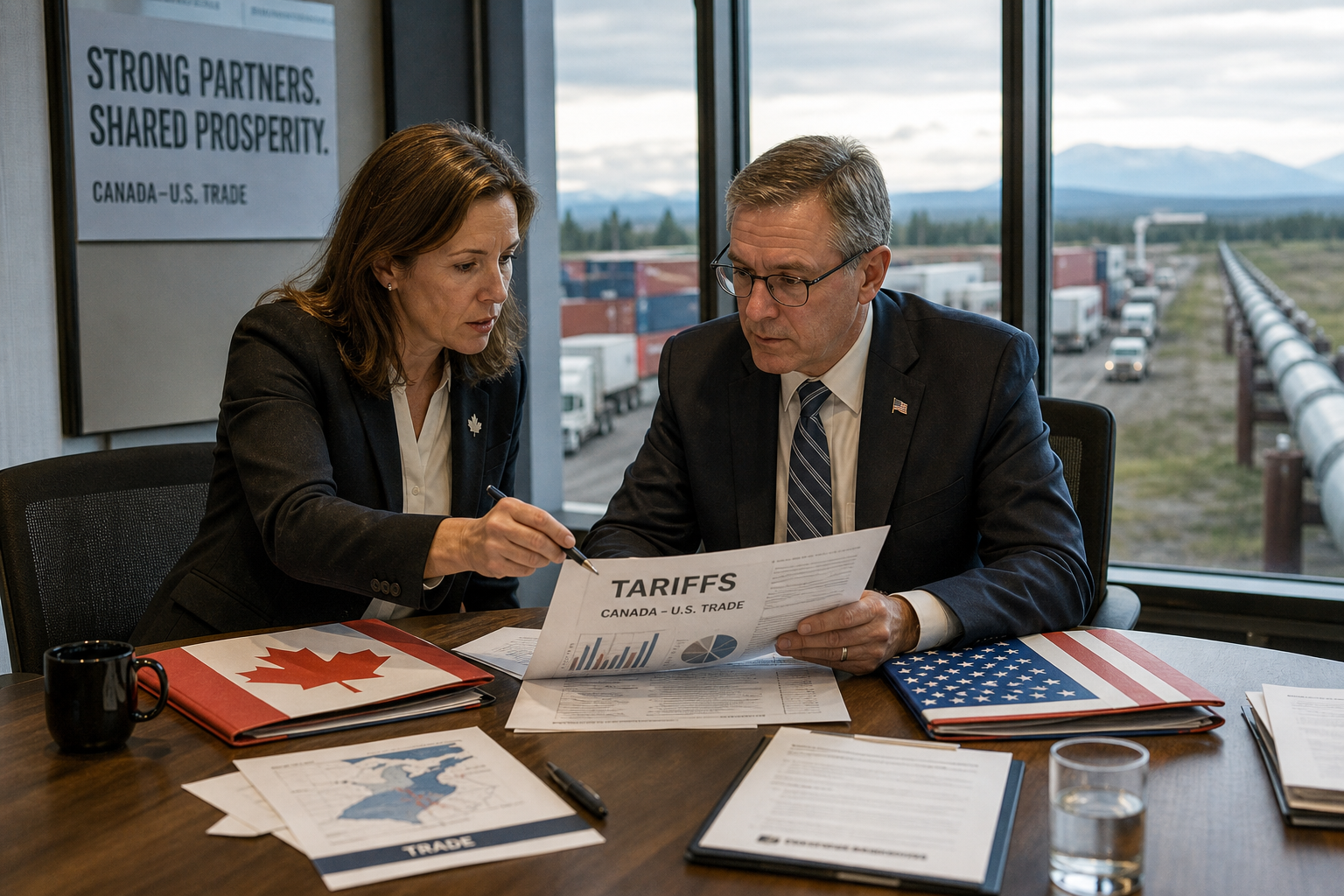
The article examines what U.S. President Donald Trump's renewed attention to the cancelled Keystone XL pipeline reveals about Canada-U.S. trade negotiations. Just before new U.S. tariffs on Canadian goods were scheduled to take effect, Trump announced a trade "deal" and a three-day pause in the levies, saying the pipeline could be "awoken from the grave." Prime Minister Mark Carney did not directly address the Keystone XL reference, although experts suggested it could strengthen his negotiating position.
Industry and trade specialists largely interpret Trump's statement as political symbolism rather than a concrete infrastructure commitment. Dennis McConaghy, a former TransCanada executive, said the reference could help Canada during difficult tariff negotiations. Other experts argued that Trump sees the project as a rejection of Democratic policies, particularly those of former president Joe Biden. They also warned that a revival would face environmental and political opposition and could be jeopardized if a Democrat wins the 2028 U.S. presidential election. Investor uncertainty would make the project difficult to finance, especially because a future administration could reverse course again.
Canada already sends approximately 85 to 90 per cent of its crude oil exports to the United States, although the 2024 expansion of the Trans Mountain pipeline has increased access to Asian and other markets. The existing Keystone system moves Canadian and U.S. crude to refineries in Illinois, Oklahoma and Texas.
The article also describes a more practical alternative. South Bow Corp., created after TC Energy spun off its oil-pipeline business, is working with Bridger Pipeline on the Prairie Connector project, which would reuse sections of Keystone XL pipe already installed in Alberta. The project could increase Canadian exports to the U.S. by more than 12 per cent and has secured long-term commitments from nine customers for 465,000 barrels per day, although South Bow has not made a final investment decision. Overall, the article portrays Trump's Keystone XL comments as a mixture of trade rhetoric, partisan messaging and limited immediate petroleum logic.
Entities: Keystone XL pipeline, Donald Trump, Mark Carney, Canada-U.S. trade negotiations, U.S. tariffs on Canadian goods • Tone: analytical • Sentiment: neutral • Intent: analyze
21-08-2026
President Donald Trump said he paused planned 50% tariffs on a range of Canadian goods for three days while the United States and Canada finalize the documents for a potential trade agreement. The tariffs, which would affect approximately $20 billion worth of Canadian products—including hockey sticks and tongue depressors—were scheduled to take effect Wednesday. Canadian Prime Minister Mark Carney confirmed that substantial progress had been made in negotiations, although important work remained. Canada said the United States had agreed to delay implementation of the tariffs under Section 338 of the U.S. Tariff Act of 1930 until the end of August 21.
Trump and Carney spoke twice by phone over two days, reflecting a last-minute effort to prevent the tariffs from taking effect. Both countries had strong incentives to reach an agreement. Canada sends nearly 72% of its goods exports to the United States, while the two countries exchanged $880 billion in goods and services last year. Canada had threatened retaliatory tariffs, which could have intensified an already contentious trade dispute. The Trump administration also faced the risk that new tariffs would raise costs for American importers and consumers ahead of the November midterm elections.
The article places the dispute within the broader context of Trump’s tariff-focused economic agenda and his strained relationship with Canada. The United States already imposes a 10% tariff on Canadian goods, although most imports remain exempt under the United States-Mexico-Canada Agreement. After the Supreme Court ruled that Trump exceeded his authority by imposing earlier tariffs, his administration turned to Section 338, a provision dating to the Great Depression that permits tariffs of up to 50% against countries accused of discriminating against U.S. businesses. The provision has never previously been used, and its historical association with the Smoot-Hawley tariffs adds economic and legal significance to the negotiations.
Entities: Donald Trump, Mark Carney, United States, Canada, Truth Social • Tone: analytical • Sentiment: neutral • Intent: inform
21-08-2026
Manitoba Premier Wab Kinew has sharply criticised US President Donald Trump as Canada and the United States negotiate a trade agreement intended to prevent threatened 50 per cent US tariffs on Canadian imports. Kinew described Trump as “erratic,” “irresponsible,” “a bad person” and “not to be trusted,” arguing that Canada should not rush to make concessions because any agreement could later be undone by the US president.
Kinew said Canada still has leverage in the negotiations, even though Manitoba is considering restoring sales of US alcoholic beverages in provincial liquor stores. Prime Minister Mark Carney has reportedly urged provinces to restore those sales as part of a broader effort to secure an agreement with Washington. Kinew said Manitoba might cooperate under a “Team Canada” strategy, but he encouraged consumers to continue buying Canadian products even if US goods return to stores.
The federal minister responsible for Canada-US trade, Dominic LeBlanc, said the two countries were close to finalising a deal after he met US Trade Representative Jamieson Greer in Washington. Canadian officials were expected to remain in the US capital to continue negotiations. Trump described the emerging agreement as “very fair” to both countries, but neither side had released the full terms.
Tariffs covering approximately US$20 billion in Canadian imports had been postponed until 12:01am on Saturday, increasing pressure to reach an agreement. While Kinew openly attacked Trump, premiers from Saskatchewan and Nova Scotia supported the general direction of Carney’s negotiations. The article highlights the tension between maintaining a united Canadian negotiating position and responding to domestic political criticism of Trump and US trade policy.
Entities: Wab Kinew, Donald Trump, Mark Carney, Dominic LeBlanc, Jamieson Greer • Tone: analytical • Sentiment: negative • Intent: inform