21-08-2026
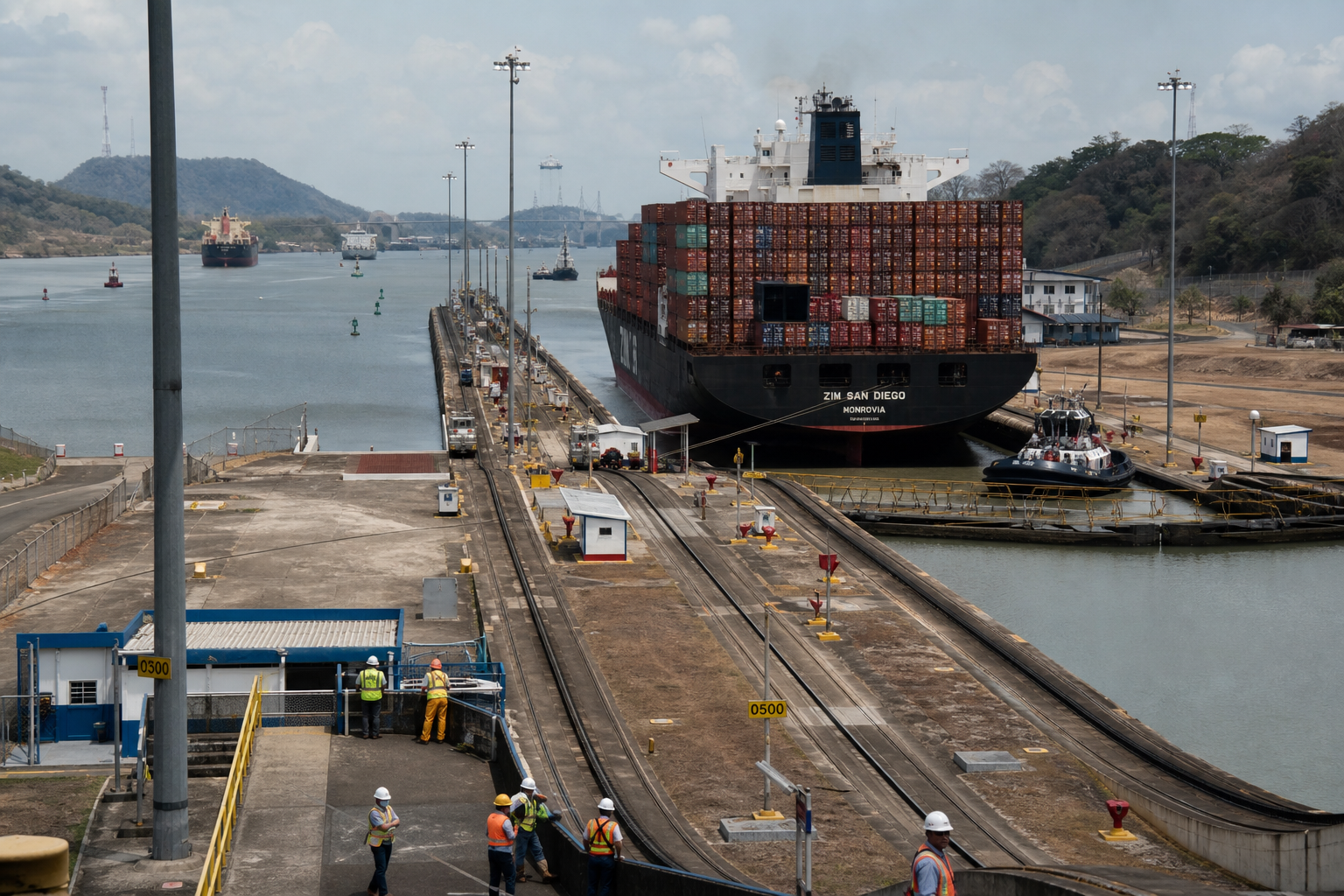
The Panama Canal Authority plans to reduce the number of vessels allowed to transit the canal as it prepares for lower water levels associated with an anticipated strong El Niño. Beginning September 4, the daily limit will be 34 ships, falling to 32 ships on September 15. The restrictions reverse an earlier position from May, when officials said they did not expect to limit crossings during the year because water-conservation measures introduced in 2023 had improved conditions.
The canal normally handles approximately 40 vessels per day and has averaged 35 daily transits since June. Because it carries about 5 percent of global maritime trade, reduced traffic could slow deliveries and raise shipping costs for industries dependent on the waterway. A severe drought in 2023 reduced canal traffic by roughly 36 percent and caused disruptions to international supply chains.
The canal depends on freshwater from lakes and reservoirs, particularly Gatun Lake, to operate its lock system. The same lake also supplies drinking water to nearby Panamanian cities, including Panama City, creating competing demands during droughts. El Niño, a naturally recurring warming of the eastern tropical Pacific Ocean, can produce extreme heat and drought in some areas and flooding in others. Scientists expect the coming El Niño to be particularly strong, potentially among the most intense on record. The article notes that the 2023 decline in water levels was linked to El Niño as well as human-driven climate change, raising concerns that future extreme weather could further affect canal operations and global supply chains.
Entities: Panama Canal, Panama Canal Authority, Panama, Gatun Lake, Panama City • Tone: analytical • Sentiment: negative • Intent: inform
21-08-2026
The Panama Canal Authority will reduce the number of ships allowed to transit the canal as a severe drought, intensified by the El Niño climate pattern, depletes the water supplies needed to operate the strategic waterway. Beginning September 3, 2026, daily traffic will fall from 36 vessels to 34, before being reduced further to 32 ships per day on September 15.
The canal connects the Atlantic and Pacific oceans and is a major route for international commerce. It handles approximately 5% of global maritime trade and about 40% of U.S. container traffic, meaning prolonged restrictions could affect shipping schedules, supply chains, and transportation costs.
The canal relies on rainwater collected in two artificial lakes. The authority said rainfall in the canal’s watershed had been lower than forecast and that additional measures were necessary to support the waterway’s long-term sustainability. Authorities have already introduced water-saving measures, including lowering the maximum draft for the largest vessels, which limits how deeply ships may sit in the water.
The drought affects much of Central America and is being driven by El Niño, a recurring weather phenomenon that warms surface waters in the central and eastern equatorial Pacific Ocean and alters winds, atmospheric pressure, and rainfall patterns worldwide. This year’s El Niño is expected to rank among the strongest on record. The worsening regional conditions were also reflected in Honduras, where the government placed 80% of the country under a drought alert.
The measures demonstrate the vulnerability of the canal’s operations to changing rainfall patterns and climate-related water shortages, while highlighting the potential global consequences of a regional drought.
Entities: Panama Canal, Panama Canal Authority, El Niño, Central American drought, Cocoli Locks • Tone: neutral • Sentiment: negative • Intent: inform
21-08-2026
The Panama Canal Authority will impose new limits on vessel traffic in response to worsening water shortages and forecasts of an unusually prolonged El Niño event. Starting September 4, 2026, the canal will permit a maximum of 34 daily transits, including nine slots through the Neopanamax locks and 25 through the older Panamax locks. From September 15, the total will fall to 32 daily crossings, with Panamax capacity reduced to 23 slots. The restrictions reverse a pledge made in May that vessel passage would not be limited during the year.
The canal handled an average of 35 daily transits through June, although its infrastructure can accommodate roughly 40 crossings per day. The authority has already implemented water-conservation measures and previously reduced the maximum draft allowed for ships. Draft limits determine how deeply vessels can sit in the water; lower limits can force ships to carry less cargo.
The authority reported that rainfall between May and August was 34% below the historical average, while inflows into the canal’s watershed were 44% below normal. It warned that the expected severity and duration of the 2026–2027 El Niño could further reduce precipitation, threatening both the canal’s long-term sustainability and local water supplies.
Some planned draft reductions have been postponed. A reduction in the maximum authorized draft for Neopanamax locks to 14.63 metres was delayed until September 2, while a further reduction to 14.48 metres was pushed back to October 1. Administrator Ricaurte Vásquez said the canal’s experience managing the 2023–2024 drought had prepared it for the new conditions, while emphasizing that the waterway would manage the situation systematically rather than improvise.
Entities: Panama Canal, Panama Canal Authority, El Niño, 2026–2027 El Niño event, Ricaurte Vasquez • Tone: analytical • Sentiment: negative • Intent: inform