19-06-2026
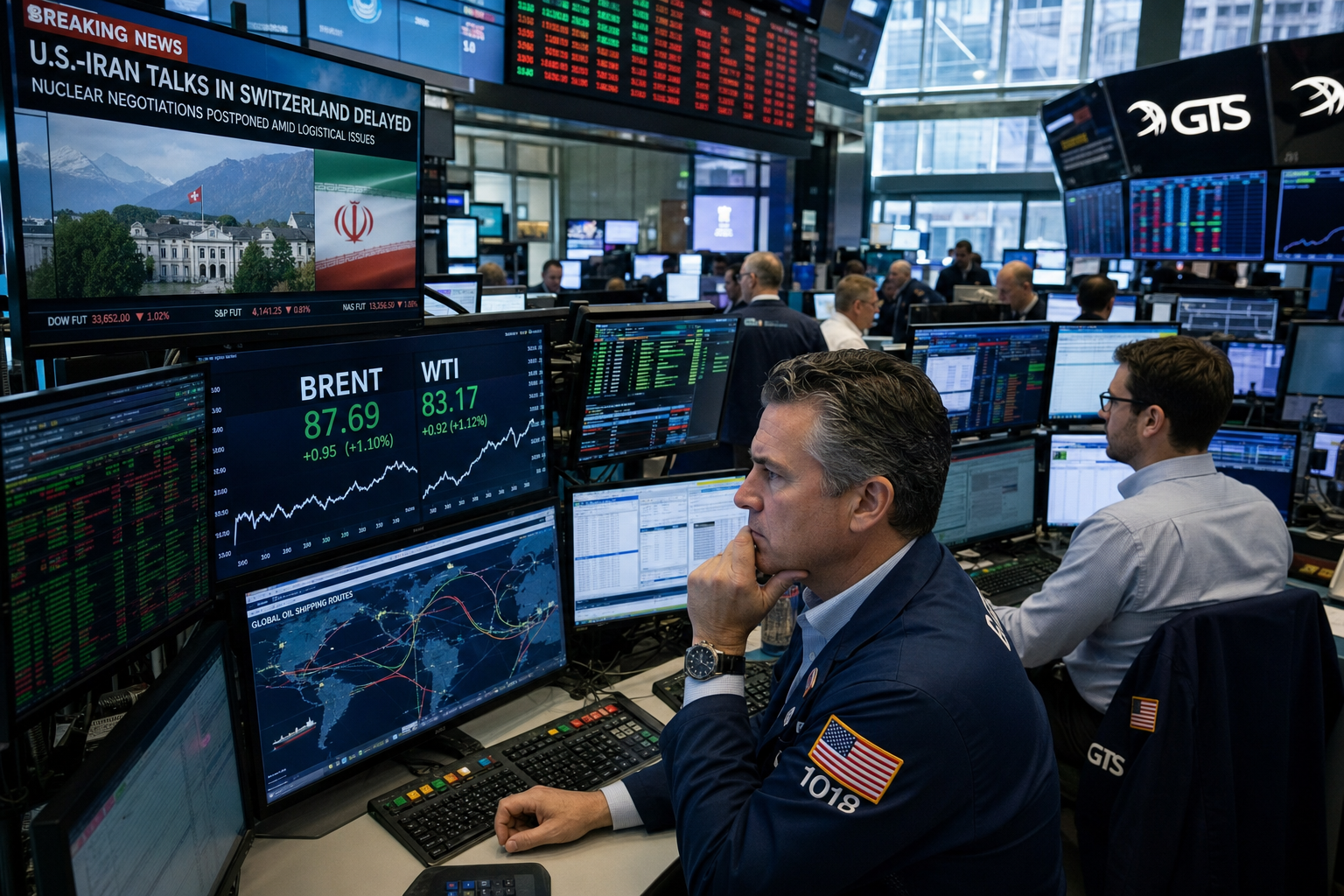
Oil prices rebounded on Friday after planned follow-up talks between the United States and Iran in Switzerland were canceled, reviving doubts about whether an interim understanding could evolve into a durable peace agreement. Brent crude for August rose 0.6% to $80.33 a barrel, while July West Texas Intermediate climbed 1.63% to $77.85, recovering from earlier losses as traders reassessed geopolitical risk tied to the Strait of Hormuz. The cancellation came after Switzerland’s foreign ministry said the talks at Bürgenstock would not go ahead as scheduled, and the White House said Vice President JD Vance would no longer travel because of logistical issues. Despite the setback, Vance said tankers had crossed the strait overnight without being attacked for a second straight night, suggesting Iran was still honoring its commitments.
The article also highlights a broader market backdrop shaped by conflicting views on future oil demand. OPEC Secretary General Haitham Al Ghais told CNBC that the organization does not believe global oil demand will peak anytime soon, directly rejecting International Energy Agency forecasts of an eventual supply glut. Market analysts quoted in the piece said oil is likely to remain range-bound in the near term, with Brent expected to trade between $75 and $82 a barrel. The article frames the oil market as cautious and uncertain, with lingering questions about whether shipping through the Strait of Hormuz will normalize quickly, especially since major shipping lines have not yet resumed transit and insurance costs remain elevated.
Entities: U.S.-Iran talks, Switzerland, Bürgenstock, Brent crude, West Texas Intermediate (WTI) • Tone: analytical • Sentiment: neutral • Intent: inform
19-06-2026
The article reports that Vice President JD Vance delayed a planned trip to Switzerland that was expected to help advance technical negotiations with Iran over a preliminary deal to end the conflict. The delay introduced fresh uncertainty into an already shifting diplomatic process, after U.S. and Iranian officials had repeatedly adjusted plans for a signing ceremony and the next stage of talks. Vance said earlier on Thursday that he intended to travel to Switzerland, though he did not know exactly when, and indicated that technical negotiations could begin sometime over the weekend. By Thursday evening, however, the White House confirmed that the trip was off for now, saying the logistics of the talks remained unsettled and that the U.S. delegation was ready to depart at the first available opportunity.
The piece places the delay in the broader context of an evolving U.S.-Iran agreement that had already seen multiple changes in ceremony plans. Iranian officials said the memorandum of understanding had been digitally signed by Iran’s president, making the planned ceremony in Switzerland unnecessary. President Trump then signed the document again in France after first signing it digitally, signaling the administration’s push to formalize the deal despite the confusion over process and timing. Vance defended the deal at a White House briefing, but the article notes that he relied on vague and misleading claims, drawing criticism that the agreement may reward Iran without securing the objectives Trump had set at the start of the war. Overall, the article depicts a high-stakes diplomatic effort still in flux, with timing, logistics, and political messaging all under strain.
Entities: JD Vance, Donald Trump, Iran, Switzerland, White House • Tone: analytical • Sentiment: negative • Intent: inform
19-06-2026
The article reports that planned US-Iran technical talks in Switzerland have been delayed, according to the White House, even as Vice-President J.D. Vance remains ready to travel. The delay comes amid uncertainty over logistics and conflicting reports about Iran’s participation. The White House said the arrangements for the talks had not yet been finalized and emphasized that the US delegation was prepared to depart at the first available opportunity, underscoring that such negotiations are often unpredictable.
Separately, a Hezbollah-affiliated outlet, Al Mayadeen, reported that Tehran had suspended its delegation’s trip in response to continued Israeli attacks on southern Lebanon. Switzerland also confirmed that the talks, which were scheduled for Friday, would not go ahead, citing a statement from its foreign ministry. The meeting had been planned for the Burgenstock resort, a neutral Swiss Alpine location intended to host discussions on implementing a recently agreed framework for a 60-day negotiation process aimed at a wider settlement.
The article places the delay in the context of broader diplomatic efforts involving the US, Iran, Switzerland as facilitator, and other mediating states such as Pakistan and Qatar. It also references Vance’s earlier comments that a US-Iran deal could fundamentally transform the Middle East, highlighting the significance of the talks despite the immediate postponement.
Entities: United States, Iran, Switzerland, J.D. Vance, White House • Tone: analytical • Sentiment: neutral • Intent: inform
19-06-2026
CNBC’s Daily Open newsletter reports that markets are ending the week with more uncertainty after a hoped-for U.S.-Iran signing in Switzerland was canceled. The Swiss Foreign Ministry confirmed that talks in Bürgenstock would not proceed after U.S. Vice President JD Vance said he would not attend. The article highlights President Donald Trump’s hardline framing of the deal, describing it as requiring “unconditional surrender” from Iran, while Vance insists the U.S. is not giving Iran any money. Despite the diplomatic setback, stock markets remain close to record highs, though the newsletter warns that markets dislike uncertainty and that a quiet trading session should not be expected with U.S. markets closed.
The piece also provides broader market context. Oil prices have steadied after sharp declines as shipping through the Strait of Hormuz shows signs of recovery, and OPEC Secretary General Haitham al-Ghais rejects forecasts of a future supply glut, arguing that OPEC’s outlook is grounded in fundamentals and real data rather than speculation. In currency markets, the Japanese yen continues to weaken toward a 40-year low, increasing expectations that Japanese authorities may intervene. Politically, the article notes that British politician Andy Burnham has won a key by-election, opening the door to a leadership challenge to Prime Minister Keir Starmer.
The article ends with a separate market note on SpaceX: after a two-day slide, the average post-IPO investor is nearly back to breakeven, as the stock’s pullback erased much of its recent gains.
Entities: U.S.-Iran talks, Bürgenstock, Swiss Foreign Ministry, JD Vance, Donald Trump • Tone: analytical • Sentiment: neutral • Intent: inform