20-06-2026
The article reports that Israel and Hezbollah have agreed to a ceasefire, according to a US official, after a fresh escalation of fighting in southern Lebanon left dozens dead. The Israeli military said the ceasefire was in effect, though it also said troops would continue to deal with immediate threats, while Hezbollah had not formally confirmed the agreement. Despite the announcement, Lebanese officials and rescue workers said Israeli strikes continued in areas such as Nabatieh, highlighting the fragility of the deal.
The piece places the ceasefire in the broader context of a US-backed memorandum of understanding involving Lebanon, Israel, the US, and Iran. It argues that the situation on the ground remains unstable, with hardliners on all sides making implementation difficult. The article cites sharp criticism from Iranian and Israeli officials, including accusations that the deal may not hold if Israel continues strikes or if Hezbollah continues attacks.
The fighting has had severe humanitarian consequences. Lebanon’s health ministry said Israeli air strikes killed 47 people, including women and children, and wounded 97 more in the latest escalation. Since the wider conflict began, more than 3,900 people have reportedly been killed in Lebanon, more than 11,600 injured, and around one million displaced. The article concludes that many Lebanese civilians remain skeptical that any ceasefire will be respected, and that US efforts to broker a lasting peace face major obstacles.
Entities: Israel, Hezbollah, Lebanon, United States, Iran • Tone: analytical • Sentiment: negative • Intent: inform
20-06-2026
The article examines how the Iran war initially united President Donald Trump and Israeli Prime Minister Benjamin Netanyahu, but later exposed sharp differences in their goals and political needs. At first, both leaders appeared aligned: Netanyahu praised Trump as Israel’s strongest ally, while Trump embraced Netanyahu and joined Israel in military action against Iran. But as the war expanded and dragged on, Trump’s priorities shifted toward ending the conflict, lowering oil prices, and reopening the Strait of Hormuz, especially with U.S. elections approaching and public support softening. Netanyahu, by contrast, remained committed to a harder line, insisting Iran must be prevented from obtaining a nuclear weapon and framing the war as one of total victory.
The article traces the deterioration in their relationship through a series of escalating disputes over strikes in Iran, Lebanon, and the broader region. Israeli military actions, especially strikes that threatened negotiations or disrupted ceasefires, increasingly angered Trump, who believed Netanyahu was acting in ways that complicated U.S. diplomacy. The article highlights several unusually harsh private and public remarks attributed to Trump, including profanity-laced complaints and accusations that Netanyahu lacked judgment. These remarks reflect a broader break in trust and strategy between the two leaders.
Beyond personalities, the piece argues that domestic politics are driving the split. Trump wants to end a costly war and present himself as a peacemaker, while Netanyahu may be constrained by election pressures, his legal troubles, and Israeli public opinion that favors continuing pressure on Hezbollah. The article presents the feud as a major foreign-policy rupture between two longtime allies whose short-term military partnership has given way to clashing political interests and visions for the war’s end.
Entities: Donald Trump, Benjamin Netanyahu, Iran war, Israel, United States • Tone: analytical • Sentiment: negative • Intent: analyze
20-06-2026
CNN’s live updates report on a volatile diplomatic and military moment centered on the Iran–Israel–Hezbollah conflict and its ripple effects on U.S.-Iran negotiations. The article says special envoy Steve Witkoff is traveling to Switzerland to help restart technical talks with Iran after a postponement, with Jared Kushner also expected to join. Those negotiations face a 60-day deadline for a final deal. The talks were delayed after renewed fighting between Israel and Hezbollah in Lebanon, where fresh Israeli strikes killed at least five people on Saturday and previous strikes on Friday killed at least 47, according to Lebanese officials. The renewed truce between Israel and Hezbollah is described as fragile and repeatedly threatened by the violence.
The article also highlights strained but still intact ties between President Donald Trump and Israeli Prime Minister Benjamin Netanyahu. Trump publicly reiterated that he has always had a good relationship with Netanyahu, while also warning him to “calm down” and use restraint. At the same time, Trump and Vice President JD Vance have criticized Israel’s offensive in Lebanon as disruptive to broader U.S.-Iran diplomacy. Vance’s comments that Trump is uniquely sympathetic to Israel drew attention in both countries and sparked debate over Washington’s stance.
The piece frames the conflict as a live geopolitical test involving multiple actors: Israel says it will keep operating in southern Lebanon unless Hezbollah stops hostilities, Hezbollah says it will reciprocate if Israel does, Lebanon is calling for a comprehensive ceasefire, and Iran temporarily pulled out of planned talks after the violence. U.S. and Swiss officials are working to get negotiations back on track, likely at Bürgenstock, while diplomatic meetings are expected in Washington next week.
Entities: Steve Witkoff, Jared Kushner, Donald Trump, Benjamin Netanyahu, JD Vance • Tone: analytical • Sentiment: negative • Intent: inform
20-06-2026
CNN reports that Israel and Hezbollah have agreed to a renewed ceasefire, according to multiple sources familiar with the situation. The piece focuses less on the ceasefire itself than on its broader diplomatic implications, with CNN’s Nic Robertson explaining that the truce could help create conditions for the United States and Iran to move toward a peace agreement. The article frames the Israel-Hezbollah pause in fighting as potentially significant beyond the immediate conflict, suggesting it may ease regional tensions and open space for diplomacy between Washington and Tehran. As a video explainer, the story is concise and centered on geopolitical analysis rather than on battlefield details or direct reporting of negotiation terms. The article implies that the ceasefire may be an important signal of de-escalation in the wider Middle East, where U.S.-Iran relations and proxy conflict dynamics remain closely linked.
Entities: Israel, Hezbollah, United States, Iran, CNN • Tone: analytical • Sentiment: neutral • Intent: analyze
20-06-2026
US envoy Steve Witkoff and Iranian Foreign Minister Abbas Araqchi were both expected to travel to Switzerland for talks, according to Axios, in a sign that diplomatic efforts between the United States and Iran may be shifting toward more technical negotiations. The reported meeting comes amid a fragile regional backdrop, as a ceasefire in Lebanon between Israel and Hezbollah reduced immediate tensions that had threatened broader US-Iran discussions. Those talks are described as critical not only to de-escalating the Iran conflict but also to reopening the Strait of Hormuz and stabilising global oil supplies. The article says the two sides had earlier signed a 14-point memorandum this week to halt fighting and create a 60-day window to resolve disputes, including Iran’s nuclear programme and other difficult issues needed for a more durable agreement. However, the situation remained fluid: US Vice-President J.D. Vance cancelled his own planned trip to Switzerland on Thursday because of rising tensions in Lebanon. With the ceasefire in place, Witkoff was said to be joining Jared Kushner already in Switzerland, while Araqchi was expected to arrive on Saturday. Overall, the piece suggests that the ceasefire may have reopened the path toward a permanent truce and broader regional deal.
Entities: Steve Witkoff, Abbas Araqchi, J.D. Vance, Jared Kushner, Switzerland • Tone: analytical • Sentiment: neutral • Intent: inform
20-06-2026
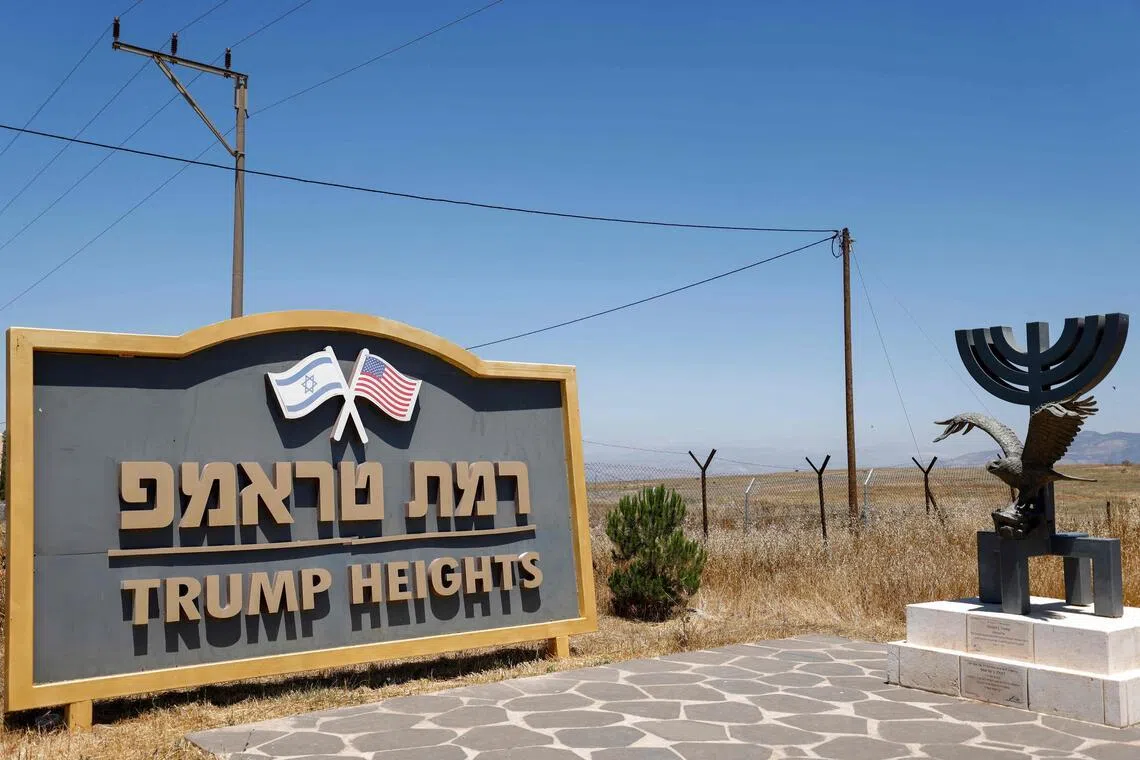
Residents of Trump Heights, a small community in the Israeli-annexed Golan Heights named after US President Donald Trump, expressed disappointment and anxiety over a newly announced US-Iran agreement meant to end the wider Middle East war and halt fighting involving Hezbollah in Lebanon. Despite their frustration, many residents said they had not turned against Trump, crediting him for past support of Israel, especially his 2019 recognition of Israeli sovereignty over the Golan Heights. The article contrasts the settlement’s loyalty to Trump with broader Israeli criticism of the deal, which many see as weakening Israel’s security and pressuring Prime Minister Benjamin Netanyahu. Interviews with residents show a mix of skepticism and pragmatic trust: some believe Trump is acting in America’s and Israel’s interests, while others strongly condemn the agreement as reckless or historically shameful. The piece also notes the continued threat of Hezbollah rockets in northern Israel, even if a ceasefire reduces missile attacks elsewhere in the country. Overall, the story portrays a community that is unhappy with the Iran deal but still reluctant to abandon their admiration for Trump.
Entities: Trump Heights, Ramat Trump, Golan Heights, Israel, Lebanon • Tone: analytical • Sentiment: neutral • Intent: inform
20-06-2026
The article reports that US intelligence agencies believe Israel is likely to continue military operations against Hezbollah in Lebanon despite a ceasefire agreement between the United States and Iran that is meant to halt fighting there. The assessment reflects US concern that Israeli Prime Minister Benjamin Netanyahu, facing domestic pressure and a hardline security environment, is unlikely to let Hezbollah’s attacks go unanswered. The article says Israel sees Hezbollah, an Iran-backed militia and political force in Lebanon, as a major threat, and that recent Israeli strikes were carried out after a Hezbollah drone attack killed four Israeli soldiers. Those Israeli strikes reportedly killed at least 47 people.
The piece places these events in the broader context of strained US-Israel relations and the unfolding US-Iran diplomacy. Talks between US and Iranian officials were postponed after the Lebanon clashes, even though they were supposed to begin in Switzerland on June 19. The new intelligence assessment also suggests skepticism inside US spy agencies that the ceasefire commitments will hold, especially because Israeli leaders are unhappy with the accord’s restrictions on Israeli military action and its failure to address Iran’s missile programme. The article notes that the relationship between Trump and Netanyahu has weakened amid the accord, with Vice-President J.D. Vance publicly criticizing members of Netanyahu’s cabinet. Israeli officials, however, maintain that their military actions in Lebanon are defensive and necessary to respond to Hezbollah attacks.
Entities: Israel, Lebanon, Hezbollah, Benjamin Netanyahu, United States • Tone: analytical • Sentiment: neutral • Intent: inform
20-06-2026
The article reports on a newly signed U.S.-Iran memorandum that is presented as a step toward ending conflict and restoring traffic through the Strait of Hormuz, but which immediately drew warnings from hardline Iranian officials. Iranian parliament speaker Mohammad Bagher Ghalibaf, a veteran of the Islamic Revolutionary Guard Corps (IRGC) and key negotiator in the deal, said Tehran would not honor its commitments if Washington fails to uphold its side. That warning was echoed by IRGC Quds Force commander Esmail Qaani, who issued threats and suggested the U.S. should fear regional flashpoints beyond Hormuz and Bab al-Mandeb.
The deal, digitally signed by President Donald Trump and Iranian President Masoud Pezeshkian, reportedly gives Iran major economic relief while postponing some of the most difficult nuclear issues for a final agreement to be negotiated over the next 60 days. Under the 14-point plan described by a senior U.S. official, the U.S. would begin lifting its naval blockade, support a large regional reconstruction and development plan for Iran, and unwind sanctions on an agreed schedule. In return, Iran pledged not to pursue nuclear weapons, with the future of its enriched uranium stockpile to be decided later under International Atomic Energy Agency supervision.
The article emphasizes that Ghalibaf is not a moderate interlocutor but a regime insider with a long record in the IRGC, internal security, and top political roles. Experts quoted in the piece frame the core risk as whether the U.S. is relying on officials capable of enforcing compliance but still deeply committed to Iran’s hardline posture toward the U.S. and Israel. The article uses Ghalibaf’s background, prior threats, and current role to question whether the memorandum can be trusted or sustained.
Entities: Mohammad Bagher Ghalibaf, Esmail Qaani, Donald Trump, Masoud Pezeshkian, Islamic Revolutionary Guard Corps (IRGC) • Tone: analytical • Sentiment: negative • Intent: inform