19-05-2026
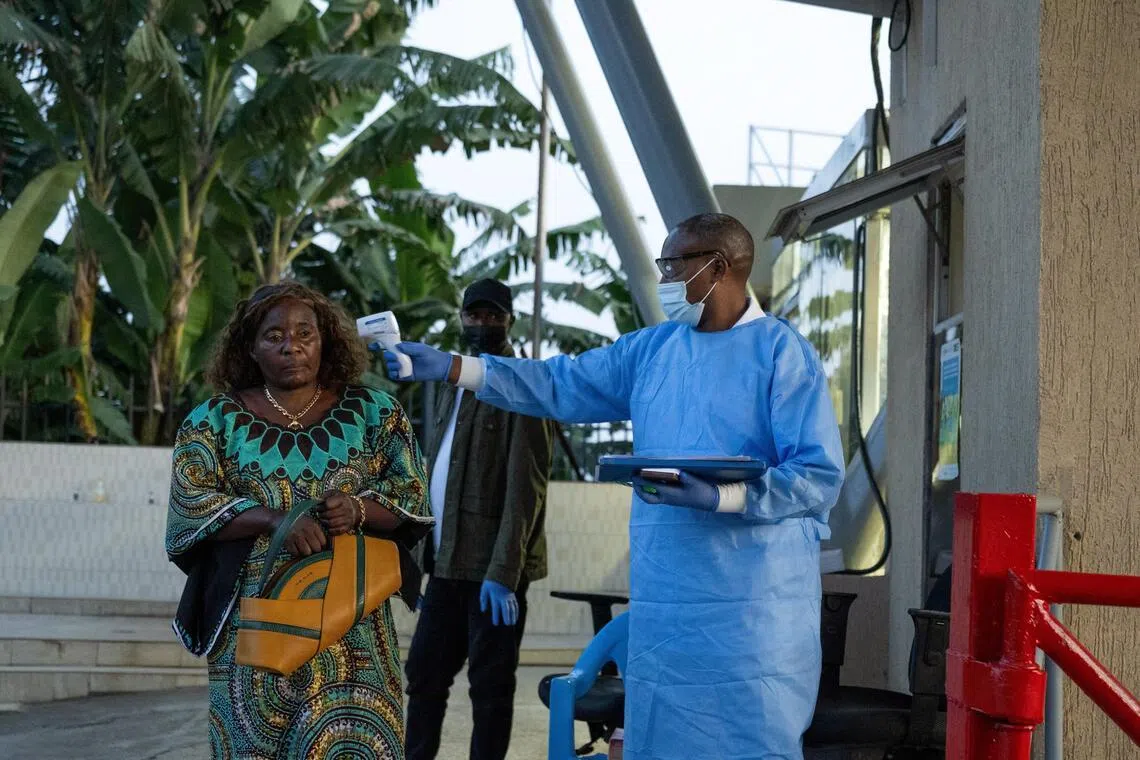
An Ebola outbreak in the Democratic Republic of Congo (DR Congo) has killed at least 131 people, with more than 513 suspected cases reported and infections spreading into new areas, according to local officials. The outbreak has also reached Uganda, where the CDC says there are two confirmed cases and one death. The strain involved is caused by the Bundibugyo virus, and the World Health Organization has declared the outbreak an international emergency. While the Congolese government says response teams are tracing and investigating suspected infections and urges calm, concern is rising as cases appear in locations including Nyakunde, Butembo, and Goma.
The article also highlights the involvement of American medical personnel in DR Congo. One US doctor working with a missionary group reportedly tested positive and is being transferred to Germany for treatment, while others exposed to the virus are under quarantine. The CDC says the risk to the US remains relatively low, but it is taking precautionary measures such as monitoring travelers, considering entry restrictions for non-US passport holders who have recently been in affected countries, and coordinating with airlines for contact tracing. The US has also issued a Level Four travel advisory against travel to DR Congo.
The WHO has warned that the outbreak could become much larger than currently detected and is urging affected and neighboring countries to strengthen screening and preparedness. Officials in the region are emphasizing safe public health practices, especially around funerals, which previously helped spread Ebola during earlier outbreaks. The article places the current crisis in historical context by referencing the devastating 2014-2016 West Africa outbreak, which infected more than 28,600 people and killed 11,325.
Entities: Ebola outbreak, Democratic Republic of Congo (DR Congo), Uganda, World Health Organization (WHO), US Centers for Disease Control and Prevention (CDC) • Tone: urgent • Sentiment: negative • Intent: inform
19-05-2026
An American doctor working for a medical missionary organization in the Democratic Republic of the Congo has tested positive for Ebola, according to the CDC and the aid group Serge. The doctor, Dr. Peter Stafford, was reportedly exposed while treating patients at Nyankunde Hospital in Bunia and is being transported to Germany for treatment. His wife, also a doctor with the group, and another physician remain asymptomatic, and the organization said all three had followed quarantine protocols after the possible exposure. The CDC said six other Americans are expected to be moved out of the region for monitoring or treatment.
The case comes amid a worsening Ebola outbreak in Congo and neighboring Uganda, where the World Health Organization says there are more than 250 suspected cases and 80 suspected deaths. WHO declared the outbreak a global health emergency on Sunday. The outbreak’s spread is concerning because it is centered in an urban area with significant population movement and is taking place amid attacks by armed groups. The strain involved is the Bundibugyo ebolavirus, only the third known outbreak of that variant. Unlike the more common Zaire strain, there is no vaccine or treatment for Bundibugyo, which was first identified in Uganda in 2007. The article also explains how Ebola spreads through bodily fluids and why health workers and caregivers are especially vulnerable.
Entities: Dr. Peter Stafford, Centers for Disease Control and Prevention (CDC), Serge, World Health Organization (WHO), Democratic Republic of the Congo • Tone: analytical • Sentiment: negative • Intent: inform
19-05-2026
Health officials are facing heightened concern over an Ebola outbreak in the Democratic Republic of the Congo and Uganda because it is caused by the less common Bundibugyo virus, a strain for which there are no approved vaccines or treatments. The World Health Organization declared a public health emergency as the outbreak surpassed 250 suspected cases and 80 suspected deaths, with numbers expected to rise due to uncertainty about the true scope and spread of infections. The article explains that an American doctor working with an aid group in Congo has tested positive and others may have been exposed, underscoring the risk to responders.
The piece places the outbreak in context by noting that Ebola disease is caused by several orthoebolaviruses, but only the Zaire strain has an approved vaccine and treatment. Because vaccines are strain-specific, existing countermeasures do not protect against Bundibugyo virus, and nothing close to ready for this strain is currently available. The article also reviews the virus’s history: the first known outbreak was in Uganda in 2007 and the second in Congo in 2012, both smaller than the current one. It describes common symptoms, how the disease spreads through direct contact with bodily fluids, and emphasizes that early supportive care, especially rehydration and treatment of symptoms, can improve survival even in the absence of a cure.
Entities: Ebola outbreak, Democratic Republic of the Congo, Uganda, World Health Organization (WHO), Bundibugyo virus • Tone: urgent • Sentiment: negative • Intent: inform
19-05-2026
The article reports that the United States is tightening precautions against Ebola after the World Health Organization declared a new outbreak in the Democratic Republic of Congo an international health emergency. The Centers for Disease Control and Prevention announced airport screening for travelers from outbreak-affected areas, entry restrictions for certain non-U.S. passport holders who recently traveled to Uganda, the DRC, or South Sudan, and a temporary pause in visa services at the U.S. Embassy in Kampala. The CDC also said it was deploying personnel to assist with containment, contact tracing, and laboratory testing, while the U.S. State Department said it had mobilized US$13 million in aid.
The report notes that one American working in the DRC has contracted Ebola and is expected to be evacuated to Germany for treatment, while six other people are being evacuated for health monitoring. CDC officials said the immediate risk to the general U.S. public remains low, but they will continue reassessing the situation as it evolves. President Donald Trump said he was concerned about the outbreak but believed it was currently confined to Africa.
The article also highlights criticism of the U.S. response. Public health experts, including Matthew Kavanagh of Georgetown University, argued that travel bans and airport screening are largely symbolic and less effective than coordinated outbreak response efforts. The piece emphasizes that Ebola has spread rapidly, with suspected deaths and hundreds of suspected cases reported, and notes concern that cuts to agencies such as USAID may have weakened the U.S. ability to respond effectively, compared with previous outbreaks that were managed through coordinated international and domestic public health efforts.
Entities: Ebola, Centers for Disease Control and Prevention (CDC), World Health Organization (WHO), Democratic Republic of Congo (DRC), Uganda • Tone: analytical • Sentiment: negative • Intent: inform
19-05-2026
The article is a short CNN video segment about the spread of a rare Ebola strain, Bundibugyo, in the Democratic Republic of the Congo and Uganda. It features Peter Piot, the co-discoverer of the Ebola virus, who emphasizes that the immediate priorities are caring for infected patients and protecting health workers. The framing suggests concern about public health preparedness and the risk posed by the outbreak, while also focusing on practical containment measures rather than speculation. The piece asks whether this strain could spread worldwide, but the substantive message centers on outbreak response, medical protection, and limiting transmission at the source. Because this is presented as a brief video news item, the article content is limited and mostly consists of the headline, a short description, and related video promotions unrelated to the Ebola story.
Entities: Ebola, Bundibugyo, Peter Piot, Yoyo Chow, CNN • Tone: urgent • Sentiment: negative • Intent: inform