18-10-2026
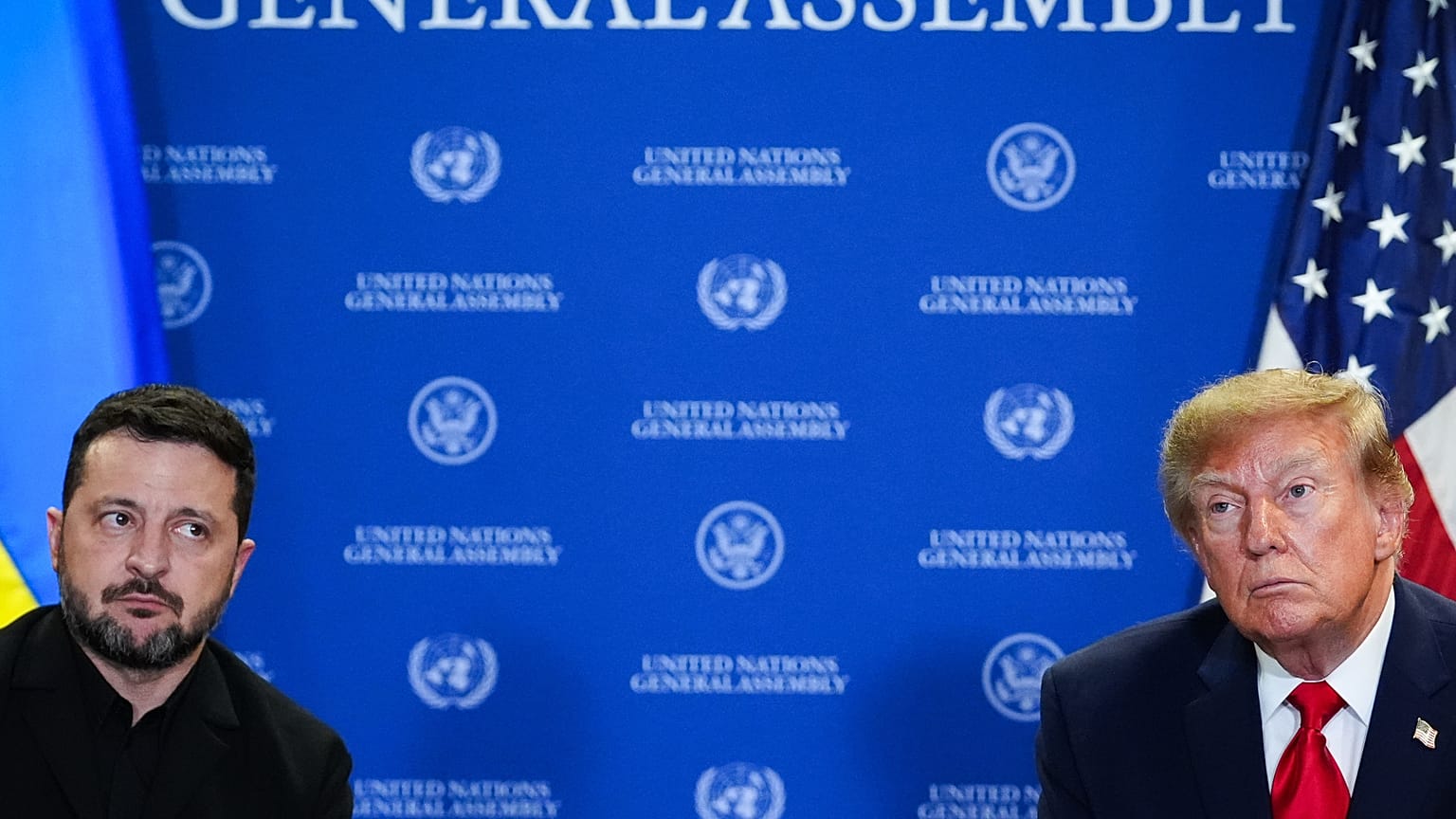
Euronews Europe editor Maria Tadeo argues that Donald Trump is blaming Ukrainian President Volodymyr Zelenskyy for economic and political problems that are more directly connected to the US-Israeli war with Iran and disruption in the Strait of Hormuz. With US fuel prices rising ahead of the midterm elections, Trump’s administration has announced a deal easing sanctions on Russian diesel, which Tadeo says gives Russia revenue without addressing the underlying energy crisis. Trump has also attacked Zelenskyy and suggested Ukraine needs a new leader, while not applying comparable pressure to Vladimir Putin. Tadeo sees this as evidence of political calculation, bias and personal animosity. She acknowledges concerns about Zelenskyy’s tactics and allegations involving senior staff, but argues that Ukraine is justified in resisting a quick settlement that would require territorial concessions. Such a deal, she says, would threaten Ukraine’s sovereignty and Europe’s security without providing clear, enforceable guarantees. The article also questions Washington’s belief that economic incentives can persuade Putin to end the war, given his denial of Ukraine’s historical legitimacy. As Zelenskyy visits Brussels, Ukraine faces another difficult winter, damaged energy infrastructure, urgent air-defence needs and major funding requirements. He estimates the war will cost €155 billion next year, including €70 billion for Europeans to finance. European support is becoming more difficult: an earlier €90 billion loan is insufficient, public fatigue is growing, and elections may weaken political backing. French politician Marine Le Pen, leading in the polls, has said France cannot afford further contributions. The supplied article ends mid-sentence while quoting her position.
Entities: Maria Tadeo, Donald Trump, Volodymyr Zelenskyy, Vladimir Putin, Maia de la Baume • Tone: analytical • Sentiment: negative • Intent: analyze
18-10-2026
Donald Trump has suspended several Russia sanctions shortly before they were due to take effect, escalating tensions with Ukrainian President Volodymyr Zelensky. The sanctions had been passed by Congress and signed into law in September. Trump said a 60-day pause was in the US national interest, giving his administration time to assess the potential effects on the US and global economy. The move prompted criticism from Democrats and some Republicans, while Russian envoy Kirill Dmitriev welcomed it as an important moment.
Zelensky said the sanctions could have helped pressure Russia to end the war and accused Washington of disregarding them. He linked his criticism to Russian attacks on Ukrainian energy infrastructure, which reportedly hit 15 facilities overnight and caused power cuts ahead of winter. Ukrainian authorities said Russian strikes since Friday had killed at least nine people and injured about 60.
The dispute comes amid worsening US-Ukraine relations over a US plan to import Russian diesel to ease rising fuel prices. Zelensky and European allies criticized the plan, arguing it could help finance Russia’s war. Trump has also criticized Ukrainian strikes on Russian energy sites, while Zelensky said Ukraine was defending its interests. The two sides have offered differing accounts of an announced energy ceasefire.
Concerns about US support have also grown after Starlink restrictions disrupted some Ukrainian drone operations. Zelensky said US officials attributed the restrictions to technical issues, but Ukraine’s own tests reportedly found the system working at higher speeds elsewhere. Trump denied deliberately slowing Starlink and denied that the US had withdrawn intelligence-sharing. The article describes a widening political and security rift as Ukraine’s European allies and US lawmakers respond to the administration’s decisions.
Entities: Donald Trump, Volodymyr Zelensky, Russia sanctions, Russia-Ukraine war, United States Congress • Tone: analytical • Sentiment: negative • Intent: inform
18-10-2026
On “Face the Nation,” Sen. Kevin Cramer discusses U.S. policy toward Russia and Ukraine, including President Trump’s decision to pause sanctions on Russia and buyers of Russian oil. Cramer says he agrees with Republican colleagues who oppose easing pressure on Russian President Vladimir Putin, whom he describes as a bully and a thug. He nevertheless acknowledges that fuel prices, particularly diesel in North Dakota, are politically important ahead of an election and hopes the pause will be temporary. He also favors imposing tariffs on China, arguing that negotiations with authoritarian leaders should not be handled like ordinary business deals.
Cramer describes a proposal he and Sen. Roger Wicker presented to Ukrainian President Volodymyr Zelenskyy. Under the proposal, Ukraine would stop attacking Russian energy facilities in exchange for expanded access to Starshield targeting capabilities to strike Russian launch sites, as well as the ability to jointly produce Patriot missile interceptors. Cramer says Zelenskyy welcomed the idea and that he supports its three elements. He characterizes Ukraine’s attacks as directed at military launchers and Russia’s war-funding energy infrastructure, while accusing Russia of attacking civilians.
Asked about ongoing diplomacy, Cramer says he has not spoken with Secretary of State Marco Rubio and is unsure who is directing negotiations, naming Steve Witkoff and Jared Kushner as involved figures. He worries that officials are treating negotiations with Russia like mutually beneficial business discussions rather than confronting an adversary. He confirms that the proposal had been discussed with White House, Defense Department, and State Department officials before the Ukraine meeting.
Cramer supports investigating the interruption of Ukraine’s Starlink access, while noting that it may have been a technical glitch and that responsibility is unclear. He says restoring and expanding Ukraine’s capabilities is more urgent. The transcript then turns to Cramer’s criticism of Trump’s tariff-free foreign beef imports, but the supplied article text cuts off during Brennan’s question.
Entities: Kevin Cramer, Margaret Brennan, Volodymyr Zelenskyy, Donald Trump, Vladimir Putin • Tone: analytical • Sentiment: neutral • Intent: inform