18-10-2026
Italian Prime Minister Giorgia Meloni condemned violence during cost-of-living protests on Saturday and expressed solidarity with police. In Milan, clashes left at least four police officers and 20 demonstrators injured. The demonstrations took place amid public frustration over high prices, stagnant real wages and a shortage of affordable housing in major cities.
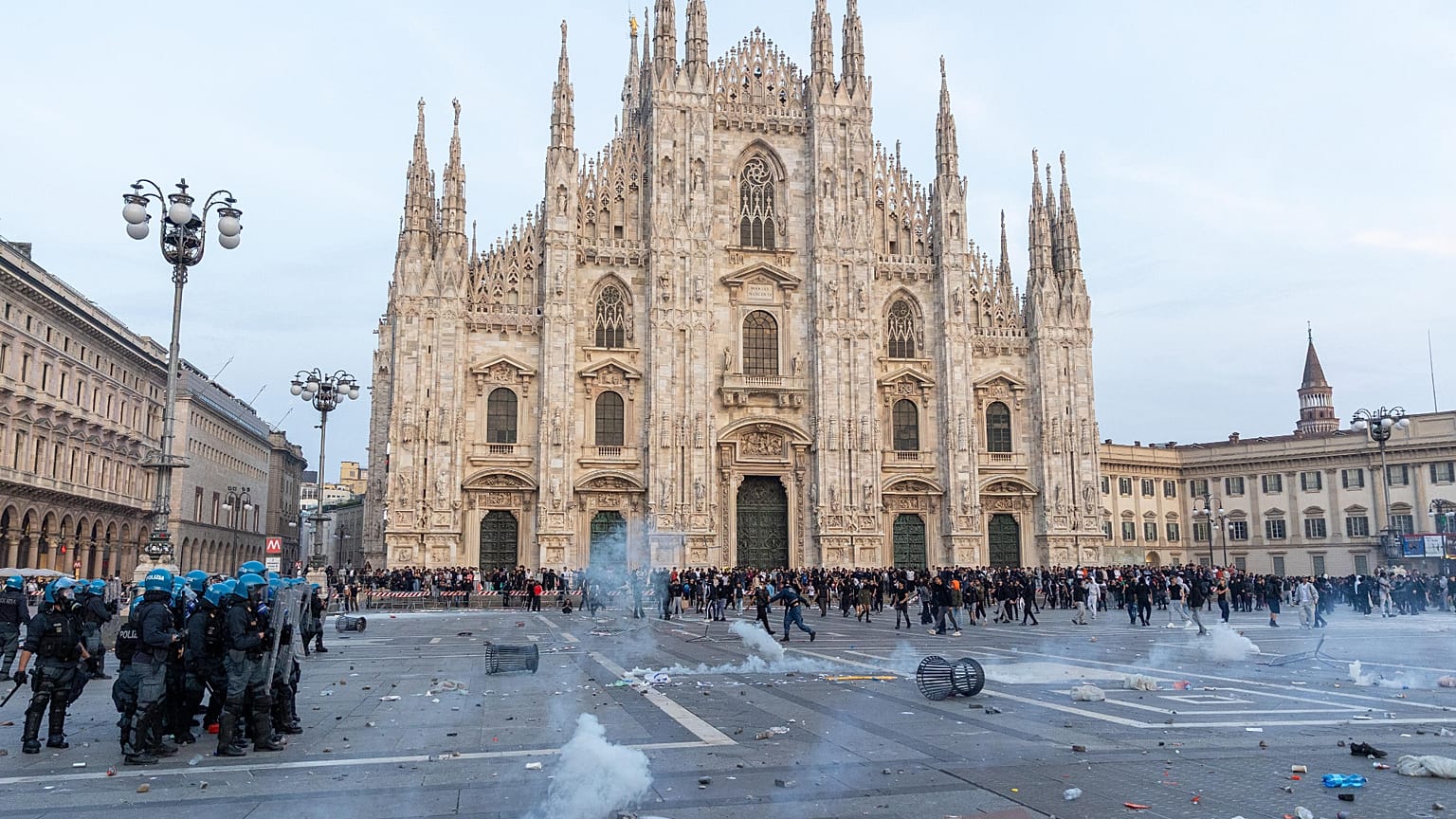
According to the Italian news agency ANSA, masked youths dressed in black threw fireworks and bottles at police and erected barricades in Milan’s central Piazza Duomo. Police withdrew temporarily to wait for reinforcements, then used tear gas to clear the square. Around 50 young people were arrested in Milan, about half of them minors. Clashes were also reported in Turin, Bologna and Bergamo. In Bologna, police used water cannon, arrested four people—all minors—and reported seven people to prosecutors.
Meloni said criminals had exploited the demonstrations to provoke confrontations and “sow chaos.” She emphasized that protest is a right but said setting cities on fire is not. Milan Mayor Giuseppe Sala also denounced the violence and damage, while saying the underlying reasons for the protests were understandable.
Demonstrators were protesting the cost of living and low wages, with households struggling with expensive fuel and access to affordable housing. In Rome, thousands attended a rally organized by the Italian General Confederation of Labour (CGIL). The union’s leader, Maurizio Landini, announced a general strike for November 20. The article also notes that similar demonstrations in France had escalated into rioting, arson and looting, resulting in more than 1,800 arrests nationwide.
Entities: Giorgia Meloni, Milan, Piazza Duomo, Turin, Bologna • Tone: neutral • Sentiment: negative • Intent: inform
18-10-2026
Protests over the rising cost of living and economic crisis turned violent in several Italian cities, following demonstrations in France. Milan saw the most serious unrest. Clashes began on Via Broletto and spread to the city centre, including Piazza Duomo. Police used tear gas and water cannon to disperse demonstrators, who threw objects, set off fireworks and firecrackers, and used fire extinguishers. Shops were vandalised, a portable toilet was set on fire, and street furniture was damaged. Twenty-five people were injured, including ten police officers; none required emergency red-code transport. By the end of the protest, 50 people had been detained, half of them minors. The disruption also led to the closure of the M1 and M3 underground stations.
In Turin, unrest involving hooded young protesters lasted about an hour. Bins and outdoor furniture were used as barricades, and objects including bottles, sticks and stones were thrown at police. Officers stopped 12 people, ten of them minors, and found items including petrol bombs, firecrackers, cobblestones and emergency window hammers. Investigators are assessing some of those stopped in connection with damage. In Bologna, clashes near the railway station and Piazza Medaglie d’Oro involved stones, smoke bombs, bottles and barriers. Police used tear gas and water cannon; seven people were detained.
Italy’s political leaders responded with sharply differing emphasis. Prime Minister Giorgia Meloni condemned the violence and urged opposition parties not to remain ambiguous. Deputy Prime Ministers Antonio Tajani and Matteo Salvini also criticised political opponents and the protesters. Milan Mayor Giuseppe Sala said the grievances behind the protests were understandable but that violence and damage were unjustifiable. Democratic Party regional group leader Pierfrancesco Majorino likewise condemned the violence, while warning against using it to discredit students peacefully raising issues such as housing, education and their future.
Entities: Milan, Turin, Bologna, Italy, France • Tone: analytical • Sentiment: negative • Intent: inform
18-10-2026
Italian Prime Minister Giorgia Meloni condemned violence during demonstrations held across Italy on Saturday and expressed support for law enforcement officers. The protests, organized by the Confederazione Generale Italiana del Lavoro (CGIL), addressed rising living costs, low wages, high rents and shortcomings in public services, with demonstrators calling for better living and working conditions. Meloni said peaceful protest is a democratic right but argued that organized groups had used demonstrations to provoke confrontations and cause destruction. In Milan, clashes outside the historic Piazza del Duomo required police to use water cannons. The Associated Press, citing LaPresse, reported that 50 demonstrators—including minors—were detained and at least two officers were injured. Rioters also looted shops and smashed windows in the Galleria Vittorio Emanuele II. Meloni cited other disruptions: stones were thrown at officers in Milan, people in Turin were stopped carrying cobblestones and window-breaking hammers, and unrest in Bologna prompted the precautionary closure of the railway station. She urged opposition politicians to condemn violence unequivocally and said silence or hesitation could be interpreted as justification. Francesco Filini, a lawmaker from Meloni’s Fratelli d’Italia party, characterized the violence as organized destruction by left-wing extremists. Meloni also said she respected the thousands who protested peacefully, emphasizing that participation is fundamental to democracy. Milan’s center-left mayor, Giuseppe Sala, said the reasons for the protests were understandable, but the article cuts off as he begins to comment on violence against law enforcement.
Entities: Giorgia Meloni, Giuseppe Sala, Francesco Filini, Milan, Piazza del Duomo • Tone: analytical • Sentiment: negative • Intent: inform
18-10-2026
Protests over the rising cost of living turned violent in Milan and Bologna on Saturday, prompting clashes with police, arrests and emergency measures. In Milan, demonstrators threw stones at officers in Piazza Duomo, and riot police moved against hooded protesters near the cathedral and the Galleria Vittorio Emanuele II. Shops closed their shutters, tourists left the area and the Duomo metro station was temporarily shut. Italian media reported injuries and arrests; Rai News said around 12 people were hospitalised and approximately 50 were detained for processing. The unrest reportedly included smashed shop windows, a fire at a nearby construction site and fireworks directed at police along Via Broletto.
In Bologna, police used tear gas and water cannons after a breakaway group of hooded youths threw objects at officers, overturned rental bicycles and targeted the central railway station. At least seven people were arrested, according to ANSA, and the station was precautionarily closed. Prime Minister Giorgia Meloni condemned the violence while defending the right to peaceful protest. She cited injuries to officers, property damage and reports of people carrying potential weapons, and called on opposition parties to unequivocally reject violence. She said demonstrations are a democratic right but that setting cities ablaze is not.
The demonstrations, organised under the “Italy in the Square” banner, drew more than 5,000 people in Milan, Rai News reported. Student-led protests raised concerns about inflation, low wages, underfunded public healthcare and worsening conditions in public schools, as well as broader opposition to government policies. The article also notes unrest in neighbouring France, where demonstrations over living costs and public services turned violent in Paris and other cities. France 24, citing Interior Minister Laurent Nunez, reported about 550,000 participants nationwide and approximately 400 arrests.
Entities: Giorgia Meloni, Milan, Bologna, Turin, Italy in the Square • Tone: neutral • Sentiment: negative • Intent: inform