18-10-2026
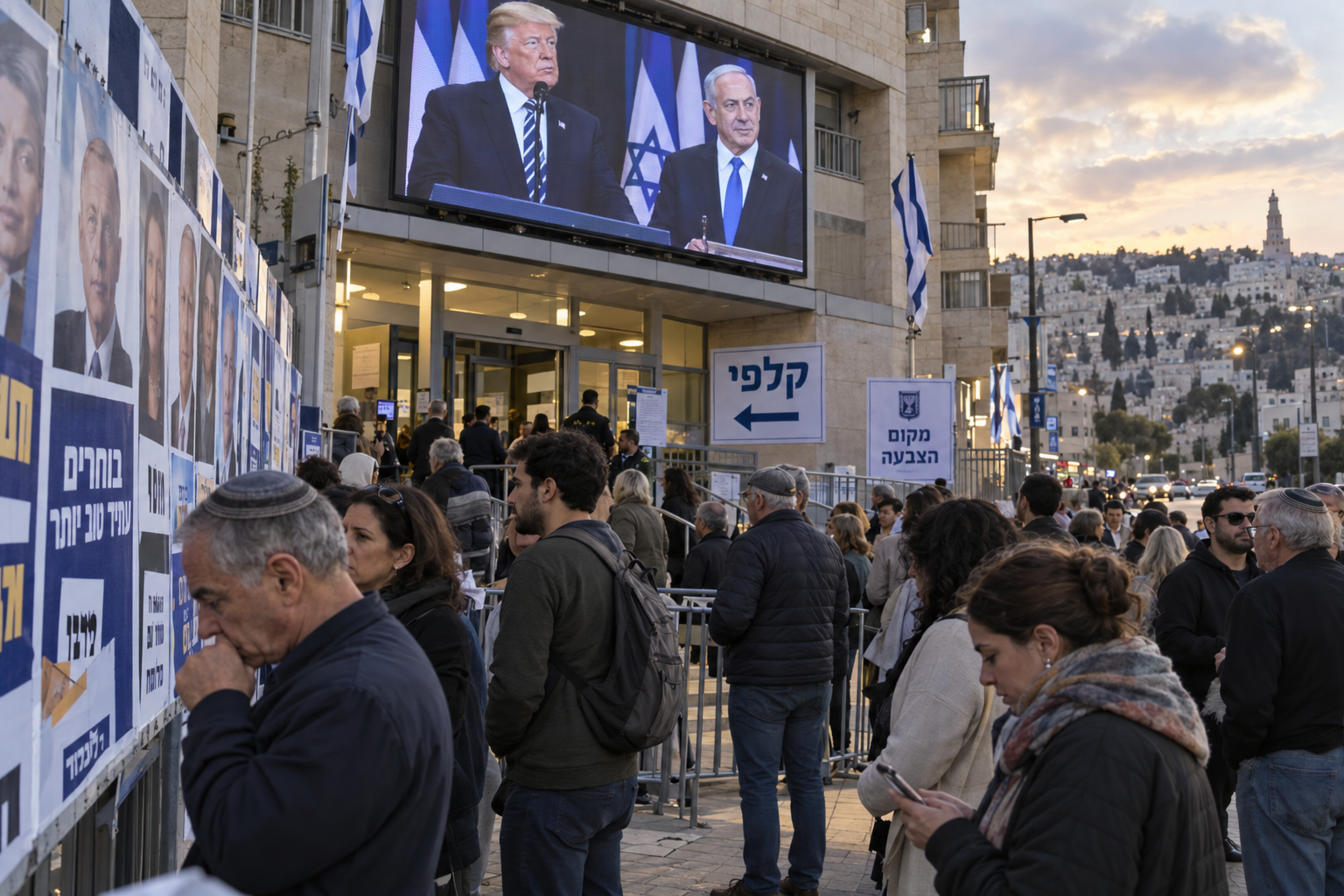
President Donald Trump endorsed Israeli Prime Minister Benjamin Netanyahu for reelection, praising him as a strong leader and partner in confronting Iran. The endorsement could benefit Netanyahu because Trump remains popular in Israel, though Trump had withheld such support for months as the two leaders’ Middle East strategies diverged. Netanyahu’s government faces criticism at home over security failures and abroad over its treatment of Palestinians in the West Bank and Gaza.
Netanyahu thanked Trump for his support and described their relationship as joint work. His Likud Party circulated a video of the leaders together, while Netanyahu posted a separate message calling Trump a great friend of Israel. Netanyahu also addressed Americans about Iran’s nuclear ambitions, linking the prospect of Iran acquiring nuclear weapons to gas prices and saying that he and Trump would prevent it.
The article says it is unclear how much the endorsement will affect an expected tight election. Some Israelis have expressed disappointment with the inconclusive outcome of the Iran war and with Trump’s ceasefire proposal, which reportedly did not meet many of the countries’ goals when they began the war in February. Trump renewed his threat to finish the conflict with Iran unless it changed course, and said that if Netanyahu lost, the United States would have to act without him—a prospect Trump said he was not inclined to pursue.
The two leaders have been close allies and appeared more aligned after joint U.S.-Israeli strikes on Iranian nuclear facilities in 2025, but they disagreed during the nearly eight-month war with Iran this year. Israeli voters are scheduled to go to the polls on October 27, in the first national election since the 2023 Hamas attack on Israel.
Entities: Donald Trump, Benjamin Netanyahu, Israel, United States, Iran • Tone: analytical • Sentiment: neutral • Intent: inform
18-10-2026
US President Donald Trump has issued what he called his “Complete and Total Endorsement” of Israeli Prime Minister Benjamin Netanyahu ahead of Israel’s October 27 parliamentary elections. Opinion polls suggest neither Netanyahu nor the opposition is likely to win the 61 seats required to form a governing coalition. Trump praised Netanyahu as a “Great Warrior Prime Minister,” citing his role in the war against Iran, and argued that without Netanyahu’s re-election the United States would have to handle the conflict alone. Netanyahu thanked Trump and said the two countries would “complete the mission,” referring to their campaign against Iran.
Gadi Eisenkot, Netanyahu’s main challenger, said Israel’s voters—not foreign leaders—would decide who governs. He acknowledged Trump’s contribution to Israeli security but stressed that Israel is a democracy and that the US would work with whichever government the public chooses.
The article places the endorsement in the context of Netanyahu’s campaign history and the domestic disputes shaping the election. His Likud party has previously used images of him with Trump and Russian President Vladimir Putin to promote his international stature. At home, many Israelis blame Netanyahu’s far-right coalition for failing to anticipate and prevent the Hamas-led October 7 attack, in which about 1,200 Israelis were killed. Netanyahu has resisted a state inquiry with broad access to records and authority to summon officials, instead backing a commission with fewer powers.
The war in Gaza that followed the attack has also become a point of contention. Around 74,000 Palestinians have been killed, and opposition supporters argue Netanyahu’s promise of “total victory” has not been fulfilled because Hamas remains in control of parts of Gaza. Other election issues include proposals for the “wilful migration” of Gaza residents, Israel’s expanding hold over West Bank territories, military conscription for ultraorthodox men, the cost of living, and Israel’s international standing. The article also notes that the Israel-US war with Iran began in February and disrupted some global oil supplies after Tehran blocked traffic through the Strait of Hormuz.
Entities: Donald Trump, Benjamin Netanyahu, Gadi Eisenkot, Israel, United States • Tone: analytical • Sentiment: neutral • Intent: inform
18-10-2026
US President Donald Trump endorsed Israeli Prime Minister Benjamin Netanyahu ahead of Israel’s October 27 parliamentary election, offering public support as Netanyahu faces a close race and criticism over his government’s record. The election is the first since the October 7, 2023 Hamas-led attack, for which opposition politicians say Netanyahu bears personal responsibility. Netanyahu used the endorsement to highlight his relationship with Trump and said re-election would let them continue addressing what he called the Iranian threat. Trump praised Netanyahu as “Strong, Brave, and Brilliant” and warned that electing someone else could leave the United States to handle the work itself.
The endorsement’s effect on voters is uncertain. Many Israelis have reportedly been disappointed with Trump over the outcome of the Iran war and his ceasefire proposal. Trump and Netanyahu cooperated during Israel’s multi-front conflicts, including a US-Israeli attack on Iran in late February. Trump later agreed to a ceasefire in April amid widespread US public opposition and soaring oil prices. The two leaders have also differed over whether a diplomatic agreement with Iran is possible. Iranian Foreign Minister Abbas Araghchi criticized Netanyahu, accusing him of pushing the United States toward another war.
Netanyahu is also contending with international isolation, controversy over violence by Israeli settlers in the occupied West Bank, and corruption charges connected to a judicial process. US Secretary of State Marco Rubio expressed concern after an American journalist was injured in a settler attack, which Netanyahu’s office said it was investigating. Netanyahu, Israel’s longest-serving prime minister, is challenged by former military chief Gadi Eisenkot, who leads the centre-right Yashar party and says Israelis alone should choose their leaders. Polls suggest neither Netanyahu’s bloc nor Eisenkot’s can currently secure the 61 seats needed for a parliamentary majority. Roughly seven million Israelis are eligible to vote.
Entities: Donald Trump, Benjamin Netanyahu, Gadi Eisenkot, Abbas Araghchi, Marco Rubio • Tone: analytical • Sentiment: neutral • Intent: inform
18-10-2026
President Donald Trump publicly endorsed Israeli Prime Minister Benjamin Netanyahu ahead of Israel’s Oct. 27 elections, urging voters to support him. In a post on Truth Social, Trump described Netanyahu as a strong and effective partner for the United States, particularly in confronting Iran. He invoked hostile slogans attributed to Iran and argued that the country’s military and financial capabilities had been systematically weakened. Trump warned that if Israel elected someone other than Netanyahu, the United States might have to take on the effort against Iran itself, adding that he was not inclined to do so. He praised Netanyahu for withstanding pressure and opposition, and concluded with an emphatic endorsement of his bid for re-election.
The election will determine the membership of Israel’s 120-seat parliament and, ultimately, who becomes prime minister. Netanyahu’s Likud Party is trailing the Yashar Party, led by former Israel Defense Forces chief of staff Gadi Eisenkot, in four major Israeli polls cited by the article: those from Maariv, Channels 12 and 13, and Kan News. The article attributes Netanyahu’s declining popularity to the wars and conflicts in Gaza, Lebanon and Iran, his ongoing corruption trial, and public backlash over the government’s handling of the Oct. 7, 2023, terrorist attack.
Neither Likud nor Yashar is expected to win the 61 seats required for a parliamentary majority. As a result, smaller factions in the Knesset may play a decisive role in determining the election’s outcome and the next government. The article reports Trump’s endorsement and the state of the race without independently assessing his claims about Iran or Netanyahu.
Entities: Donald Trump, Benjamin Netanyahu, Gadi Eisenkot, United States, Israel • Tone: neutral • Sentiment: neutral • Intent: inform
18-10-2026
Israel’s Oct. 27 election will test whether the country’s hard-right political shift becomes entrenched, three years after the Hamas-led Oct. 7, 2023, attacks. The trauma of the attack, which killed more than 1,200 people, remains visible in daily life. Prime Minister Benjamin Netanyahu is seeking another mandate after leading a regional war that devastated Gaza, saw Israel occupy part of Lebanon and included strikes on Iran with U.S. support. The campaign has damaged Israel’s standing in many Western countries, while Netanyahu faces an International Criminal Court arrest warrant. At home, his government’s policies and far-right allies have intensified divisions, including through settlement expansion, attacks by settlers on Palestinians, and attempts to curb the judiciary.
Entities: Benjamin Netanyahu, Gadi Eisenkot, Gideon Rahat, Itamar Ben Gvir, Naftali Bennett • Tone: analytical • Sentiment: negative • Intent: analyze