15-08-2026
Jahir Rodríguez, a retired urban planner from Pereira, Colombia, is drawing on his experience responding to the devastating 1999 earthquake in Armenia as he helps survivors of a new 7.4-magnitude earthquake that struck the country’s coffee region. The recent quake killed at least 281 people, trapped hundreds under debris and caused buildings to collapse across several states. Rodríguez describes the emotional powerlessness of watching homes disintegrate and says many residents are reluctant to leave damaged buildings because they fear looting, a problem that worsened after the 1999 disaster.
Based on lessons from Japanese responders and his work after earthquakes in Chile, Rodríguez warns that displacement will last far longer than many people expect. He argues that authorities must quickly count survivors, organize temporary placements and begin reconstruction planning, while also recognizing that encampments in parks cannot serve as a permanent solution. Many residents are already cooking and sleeping beside destroyed homes, facing months or years in shelters and uncertainty about housing, employment and finances.
Everardo Murillo, who designed Colombia’s long-term recovery framework after the 1999 earthquake, says disaster response must begin with food, shelter, emergency financial assistance and temporary schooling. Longer-term measures should include government aid, loans and direct employment for affected residents in reconstruction work. He emphasizes that local leadership and solidarity often emerge from within disaster-stricken communities.
The article also contrasts Colombia’s established disaster-response systems with the difficulties Murillo observed in Haiti, where survivors sometimes lacked identification and property documentation needed to access assistance. Although modern building standards limited the scale of destruction compared with earlier disasters, survivors whose homes remain standing may still lose businesses, income and community infrastructure. Rodríguez’s sister, Liliana, lost her apartment, and he says her hopelessness reflects the broader uncertainty facing people who are still grieving and have not yet begun to consider the long-term consequences.
Entities: Jahir Rodríguez, Everardo Murillo, Liliana Rodríguez, Pereira, Colombia, Armenia, Colombia • Tone: analytical • Sentiment: negative • Intent: analyze
15-08-2026
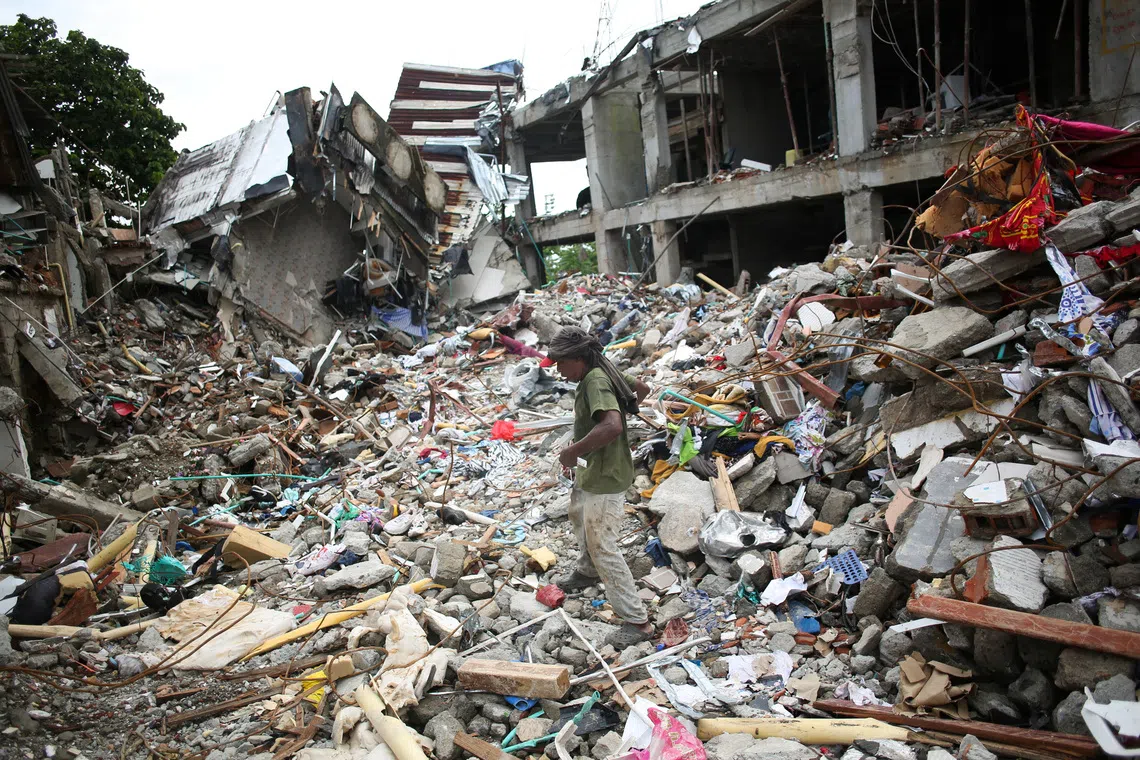
A powerful 7.4-magnitude earthquake that struck western Colombia on Monday has killed at least 281 people, injured more than 3,900 and left 379 others reported missing, according to government figures released Thursday. The quake damaged or destroyed apartment buildings, homes, schools and hospitals, with especially severe impacts in Cali, Colombia’s third-largest city, and Pereira in the coffee-growing region.
As the critical first 72 hours passed, rescuers in Cali began shifting from search-and-rescue operations to debris removal at several sites, reflecting fading hopes of finding survivors. Officials said they would continue searching, while families waited for information about missing relatives. More than 150 aftershocks have complicated rescue efforts, and the government estimates that over 10,500 homes were destroyed.
The article describes the personal cost of the disaster through the experience of Enrique Marin, whose mother was rescued alive from the rubble of her home in Pereira but died while being taken to hospital. In Cali, volunteers formed bucket brigades, rescue crews worked carefully around unstable debris and local chefs prepared approximately 1,000 meals daily for rescuers, medical workers and volunteers.
Response efforts outside major cities have been more limited. In Buenaventura, some communities reportedly received no assistance until Wednesday night, forcing residents to search through rubble by hand. Access has also been restricted by armed groups, some of which seized food donations. Residents in affected neighborhoods continued to lack water, gas and electricity.
The earthquake is emerging as the first major test for President Abelardo De La Espriella’s newly installed conservative government. The president said he would declare an economic emergency and establish a reconstruction fund to support rebuilding hospitals, schools, homes and infrastructure. The supplied article ends abruptly while discussing the government’s response and the president’s campaign promises.
Entities: 7.4-magnitude Colombia earthquake, Cali, Pereira, Buenaventura, Roldanillo Cemetery • Tone: urgent • Sentiment: negative • Intent: inform
15-08-2026
Four days after a 7.4-magnitude earthquake struck western Colombia, rescuers continued searching collapsed buildings for survivors while authorities began assessing the disaster’s longer-term consequences. In Cali, rescue workers detected sounds beneath a collapsed residential block, raising hopes that people might still be alive. Volunteers, including 67-year-old Julio Cesar Pineda, joined professional teams despite dangerous conditions and repeated aftershocks.
Rescue efforts also focused on a collapsed hotel in Pereira, where workers had hoped to find 24-year-old Juan Felipe Giraldo, who was due to marry that weekend. His body was recovered on Friday. Across Pereira, volunteers searched rubble for personal belongings such as photographs, letters and jewelry, while aid workers called for diapers, pet food and medicine. Authorities reported 287 deaths, nearly 4,000 injuries and almost 400 people still missing. Tens of thousands of homes were damaged or destroyed, and schools, hospitals and other buildings were affected across cities including Cali, Pereira and Buenaventura.
The earthquake has compounded existing humanitarian pressures in Colombia, including conflict, migration and internal displacement. The United Nations High Commissioner for Refugees warned that displaced people and refugees could face further displacement. The Norwegian Refugee Council said more than 9 million Colombians already depended on humanitarian assistance and stressed that recovery would require rebuilding homes, reopening schools and supporting affected families.
Aftershocks continued to endanger rescuers and residents. Construction officials suggested that some collapsed buildings may have been old and built before modern seismic standards were introduced. Preliminary reconstruction costs were estimated at about 20 trillion Colombian pesos, or US$6 billion—roughly 1% of Colombia’s gross domestic product.
The earthquake is also the first major test for President Abelardo De La Espriella, who took office shortly before the disaster. After criticism over the initial response, including reluctance to accept some foreign rescue offers, his government later accepted teams from countries including the United States and Israel. Visiting Choco, he promised reconstruction regardless of political affiliation and pledged greater investment in neglected communities.
Entities: 7.4-magnitude Colombia earthquake, Colombia, Cali, Pereira, Quibdo • Tone: urgent • Sentiment: negative • Intent: inform