14-08-2026
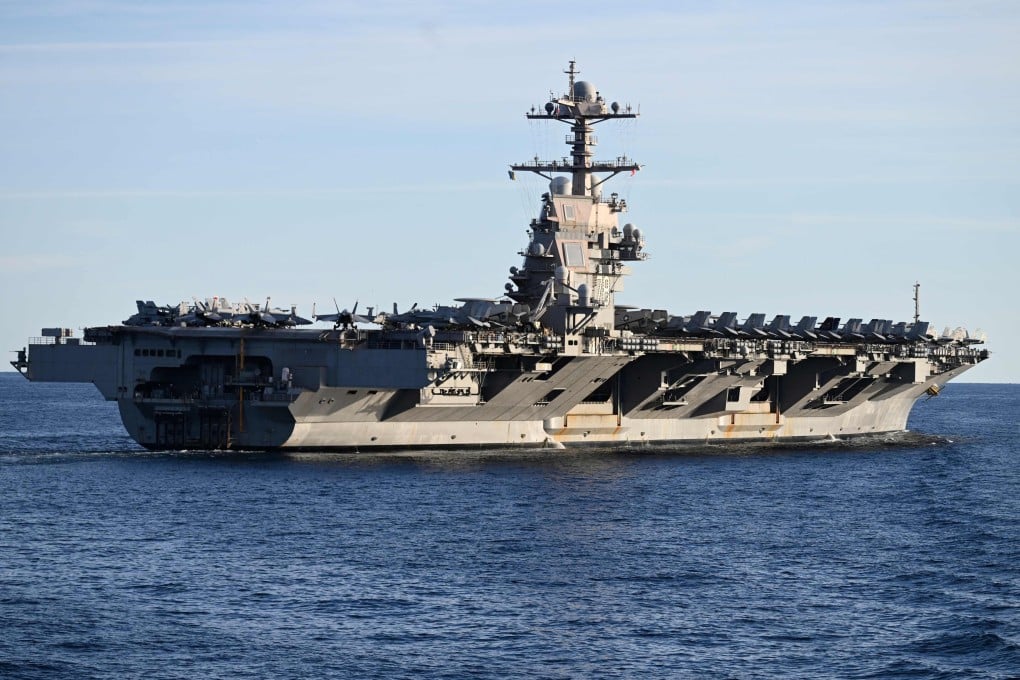
Reports of deteriorating conditions aboard the USS Abraham Lincoln, a US aircraft carrier that has been deployed for more than 250 days, have prompted lawmakers to demand answers from the Pentagon and question whether the Navy can sustain its current operational tempo. Sailors and their families have reportedly described food and hygiene shortages, broken plumbing, contaminated water concerns, disrupted mail, exhaustion, constant noise, and declining mental health. Some families told military news outlets that service members had considered or attempted to jump overboard. One sailor’s relative told the BBC that the sailor had lost 65lb during the deployment and described being “dead tired” amid a lack of port visits and opportunities for rest or decompression.
The carrier left California in November for the South China Sea before being redirected to the Middle East ahead of US attacks on Iran in February. Its deployment, initially scheduled to end in May, has been repeatedly extended. Reports suggest the USS George Washington may replace it as part of a planned rotation, although no return date has been announced.
Senators Richard Blumenthal and Ruben Gallego and Congressman Mike Levin have called for investigations and congressional access to the ship. Blumenthal cited shortages of basic supplies, plumbing problems, water concerns, safety issues, mental-health deterioration, and lost care packages. The Navy disputes some of the reporting, saying it has not identified an increase in suicidal ideation or attempts and that the ship has clean water, functioning air conditioning, and healthy meals. It said combat-related disruptions had affected supply hubs and that mission-critical deliveries were being prioritized.
Defence Secretary Pete Hegseth said reports had been misrepresented while expressing respect for sailors serving in difficult conditions. The article also cites research showing that Navy personnel experience high levels of serious psychological distress, with poor living conditions, noise, demanding schedules, and inadequate rest identified as major stressors.
Entities: USS Abraham Lincoln, US Navy, USS George Washington, Pentagon, Pete Hegseth • Tone: urgent • Sentiment: negative • Intent: inform
14-08-2026
Democratic senators are seeking an explanation from the Defense Department and Navy about alleged deteriorating conditions aboard the USS Abraham Lincoln, which has been deployed for more than 250 days and has remained at sea for over 200 consecutive days. Sen. Richard Blumenthal said sailors and Marines have faced shortages of basic supplies, possible water contamination, plumbing problems, declining mental health, and deck-safety concerns.
The concerns were reinforced by reports from family members, who described food shortages and difficult living conditions during meetings with Navy leadership. Some families also reported severe mental health problems and attempted suicides aboard the carrier, which has approximately 5,000 sailors and Marines assigned to it. Sen. Ruben Gallego cited reports that sailors had attempted, or been stopped from attempting, to jump overboard and called for a bipartisan congressional delegation to inspect the ship.
The Navy disputed some of the allegations. An official said the Lincoln is operating in a highly contested environment in which combat disrupted traditional Middle East supply hubs. Commanders prioritized food, hygiene supplies, and mail, while the Navy said the ship has continuous access to clean water, functioning air conditioning, and healthy meals. The service also said it had not identified an increase in suicidal ideation or suicide attempts and described a broad network of counselors, chaplains, medical professionals, and family-support services.
The Navy confirmed that an air-wing sailor went overboard on Aug. 3 but was quickly rescued, treated, and transferred for additional care. The circumstances remain under investigation. U.S. Central Command said no service members had died during the deployment. Defense Secretary Pete Hegseth characterized reports about the ship as “completely misrepresented” and praised the crew’s service under austere conditions.
Entities: USS Abraham Lincoln, Richard Blumenthal, Pete Hegseth, Hung Cao, Ruben Gallego • Tone: analytical • Sentiment: negative • Intent: inform
14-08-2026
President Donald Trump has ordered the US Navy to examine a return to steam-powered aircraft catapults for launching planes from aircraft carriers, despite opposition from naval officers and the likely cost of hundreds of millions of dollars. The directive was issued in a presidential memorandum instructing Defence Secretary Pete Hegseth to produce, within 60 days, a plan outlining what would be required to install hydraulic—or steam—catapults on the next Gerald R. Ford-class nuclear-powered carrier.
The memorandum concerns the planned USS Doris Miller, identified in the article as the fourth ship in the six-vessel Gerald R. Ford class. The Navy’s newest carriers use an electromagnetic aircraft launch system, but the technology has experienced problems aboard the first ship of the class, USS Gerald R. Ford. Those difficulties have drawn Trump’s attention for several years and have become a recurring subject of his criticism.
Trump renewed his criticism last month while recounting an exchange with a servicemember who allegedly told him that the older steam system was better. He quoted the servicemember as saying that the system could be repaired with “a hammer and a blowtorch.”
The article presents the decision as a response to longstanding concerns about the reliability of the electromagnetic launch system, while noting that many naval officers oppose returning to older technology. A return to steam catapults would require a major redesign of future carriers and could impose substantial costs. The Navy’s existing Gerald R. Ford-class vessels were designed around electromagnetic launch technology, making the proposal a significant change in the US carrier modernization program.
Entities: Donald Trump, Pete Hegseth, US Navy, US Defence Department, Gerald R. Ford-class aircraft carriers • Tone: analytical • Sentiment: neutral • Intent: inform
14-08-2026
The article reports worsening conditions aboard the Abraham Lincoln aircraft carrier, which has been deployed for nine months during the Iran war. Sailors are said to be facing serious physical and psychological strain, including reported suicide attempts in which some allegedly tried to throw themselves into the sea. The ship has also experienced shortages of basic supplies and deteriorating sanitation, adding to the hardships of extended deployment.
The carrier is expected to be replaced in the Middle East by the George Washington, a move likely to provide relief to the Lincoln’s crew and their families. The prolonged deployment has nevertheless attracted congressional scrutiny. Lawmakers have asked Pentagon chief Pete Hegseth to explain the reported conditions, while Hegseth has rejected the claims that conditions are as bad as described, arguing that the situation has been “misrepresented”.
Jonathan Schroden, chief research officer at the Centre for Naval Analyses, offers broader context about the pressures facing sailors on the ship. He says that even during peacetime, aircraft carriers have cramped quarters, long workdays, poor food and limited opportunities for fresh air, exercise and adequate sleep. Combat operations intensify those difficulties because the crew must also cope with the constant threat to the vessel and the stress of war.
The article presents the Lincoln’s problems as a consequence of the unusually long time at sea and the demands of combat deployment. It combines reports of specific onboard difficulties with expert commentary and the Pentagon’s response, highlighting concerns about crew welfare while noting that the severity of the situation remains disputed.
Entities: Abraham Lincoln aircraft carrier, George Washington aircraft carrier, United States Navy sailors, Iran war, Middle East • Tone: analytical • Sentiment: negative • Intent: inform
14-08-2026
US President Donald Trump has ordered the US Navy to abandon the Electromagnetic Aircraft Launch System (EMALS) on the fourth Gerald R. Ford-class aircraft carrier, the Doris Miller, and revert to traditional steam catapults. The White House said the change was included in a national security memorandum signed on Aug 13. The Doris Miller’s keel is expected to be laid by the end of 2026, with delivery planned for early 2034.
Trump has repeatedly criticised EMALS, arguing that it is too expensive, too complex and less effective than steam catapults. However, the Navy selected the electromagnetic system in 2009 because it expected lower lifetime costs, reduced maintenance requirements and less stress on carrier aircraft. Although EMALS experienced problems during its early development, the USS Gerald R. Ford had completed 36,863 launches by March. General Atomics, the system’s manufacturer, warned that changing the design when nearly half of production is complete could create major cost, scheduling and integration risks. The change is expected to cost taxpayers hundreds of millions of dollars.
The memorandum also temporarily permits certain foreign shipbuilders to construct up to two Navy ships in their home-country shipyards. The provision applies to foreign companies that have made substantial and lasting investments in US shipyards, and is intended to accelerate production and address capacity gaps while supplementing vessels built domestically.
In addition, Trump directed the defence secretary to establish a fifth Navy shipyard to expand repair capacity for submarines and aircraft carriers. The policy comes as foreign defence firms seek a larger role in the US market. Australian shipbuilder Austal recently said South Korea’s Hanwha Group had offered up to US$1.2 billion for its US operations.
Entities: Donald Trump, US Navy, Electromagnetic Aircraft Launch System (EMALS), steam catapults, Gerald R. Ford-class aircraft carriers • Tone: analytical • Sentiment: neutral • Intent: inform