14-08-2026
The United Arab Emirates has accused Iran of attacking two vessels affiliated with the Abu Dhabi National Oil Company (ADNOC) while they were transiting the Strait of Hormuz. ADNOC confirmed that the ships were attacked on Thursday evening and said the situation was brought under control. The UAE Ministry of Foreign Affairs condemned what it called a hostile Iranian attack and said no injuries had been reported. Iran had not immediately responded to the allegations.
The incident follows a similar attack on an ADNOC tanker reported by the UAE several days earlier. That earlier attack also caused no injuries, and the UAE blamed Iran’s Islamic Revolutionary Guard Corps (IRGC), drawing condemnation from regional and Arab governments. ADNOC says 15 of its vessels have been attacked while passing through the strait since the start of the US-Israel war on Iran in February.
The latest incident comes amid a wider confrontation over control of the Strait of Hormuz, a crucial route for global energy shipments. According to the article, Iran is maintaining an effective blockade and seeking to charge vessels for passage, while the United States opposes the plan and has imposed its own blockade on Iranian shipping. Iran is also discussing the future management of the waterway with Oman.
The UAE Foreign Ministry said Iran’s efforts to use the strait as a means of economic coercion amounted to “piracy” and posed a direct threat to regional stability, local populations, and global energy supplies. The article also notes that the IRGC has previously threatened vessels linked to Iran’s adversaries or those that do not follow Iranian directives. The reported attacks increase concern over maritime security and the potential impact of escalating tensions on international oil transportation.
Entities: United Arab Emirates, Iran, Abu Dhabi National Oil Company (ADNOC), Strait of Hormuz, Islamic Revolutionary Guard Corps (IRGC) • Tone: urgent • Sentiment: negative • Intent: inform
14-08-2026
Two vessels operated by Abu Dhabi National Oil Company (Adnoc) were attacked while transiting the Strait of Hormuz, the company announced early on Friday. The incident occurred on Thursday night, and no injuries were reported. Adnoc said the situation was under control and emphasized the need to protect seafarers, preserve freedom of navigation and maintain maritime security.
The UAE Foreign Ministry strongly condemned the attack, stating that it violated UN Security Council Resolution 2817, which guarantees freedom of navigation and rejects aggression against commercial shipping. The ministry accused Iran’s Islamic Revolutionary Guard Corps of using the Strait of Hormuz as a means of economic pressure and described the attack as an act of piracy. It warned that targeting commercial vessels threatens regional stability, the people of the region and global energy security.
The UAE called on Iran to end what it described as aggressive attacks, comply fully with a halt to hostile actions and reopen the Strait of Hormuz completely and unconditionally. Iran had not accepted responsibility for the incident at the time of publication.
Bahrain also condemned the attack, describing it as a violation of international law. Manama expressed full solidarity with the UAE and support for measures taken by Abu Dhabi to safeguard its security and stability. The incident follows another attack for which Iran was blamed involving an Adnoc tanker the previous Saturday.
The Strait of Hormuz has been effectively closed since the beginning of the US-Iran war in February, adding to concerns about maritime access, regional security and the potential impact on global energy supplies and trade.
Entities: United Arab Emirates (UAE), Abu Dhabi National Oil Company (Adnoc), Strait of Hormuz, Iran, Bahrain • Tone: urgent • Sentiment: negative • Intent: inform
14-08-2026
The article previews an episode of The National’s “Beyond the Headlines” podcast examining why the Iran-backed Houthi movement has escalated its military activity at this particular moment. Although the Houthis had largely remained outside the Iran war, they have recently expanded attacks across several fronts. Their operations include strikes on commercial shipping in the Red Sea, Saudi-linked targets in Yemen and across the border, and forces aligned with Yemen’s government in Marib, Hadhramaut and Hodeidah. They have also attacked the port city of Mokha and Saudi oil facilities.
The escalation has already caused significant casualties. On Tuesday, a double-tap attack on a cargo ship in the Bab Al Mandeb strait killed four crew members and two rescue workers. The attacks come as the Strait of Hormuz is mostly closed, creating an opportunity for the Houthis to exert additional pressure on international shipping and increase their strategic relevance.
According to analysts cited in the article, the timing of the intervention is deliberate rather than coincidental. The Houthis may be seeking to strengthen their regional role, pressure Saudi Arabia, and influence the broader relationship between Saudi Arabia and the United States, particularly in the context of US-Iran negotiations. The podcast’s host, Nada AlTaher, explores these motives in interviews with Nadwa Al-Dawsari of the Middle East Institute and Abdulghani Al-Iryani of the Sanaa Centre. The article frames the escalation as both a regional military development and a calculated attempt by the Houthis to gain leverage amid wider tensions involving Iran, Saudi Arabia, the United States and international maritime trade.
Entities: Houthis, Iran, Iran war, Red Sea shipping attacks, Yemen • Tone: analytical • Sentiment: negative • Intent: analyze
14-08-2026
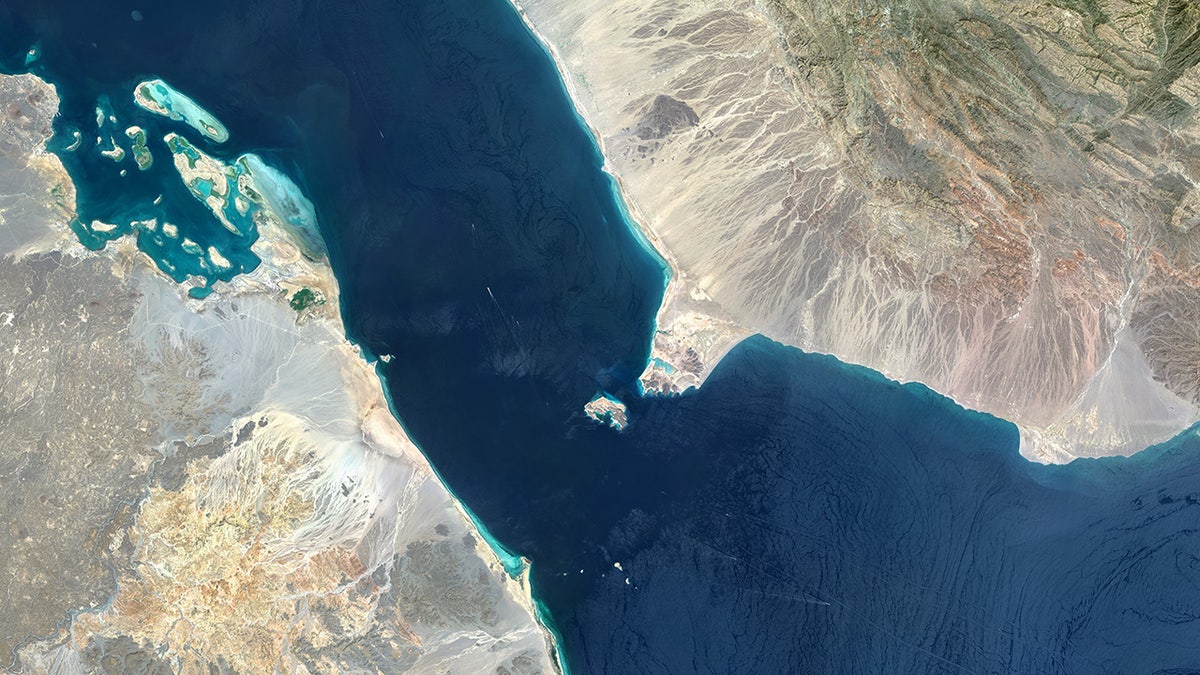
The article examines how escalating attacks by Iran-backed Houthi militants on Red Sea shipping could prompt the United States to reconsider its military posture in the Horn of Africa. Analysts argue that the Houthis’ threats against the Bab-el-Mandeb Strait, a crucial maritime chokepoint linking the Indian Ocean with the Mediterranean through the Suez Canal, are placing additional pressure on U.S. forces and regional partners. The Houthis have reportedly attacked Saudi-flagged vessels, sunk an Indian cargo ship and struck an Egyptian cargo ship, killing at least four crew members.
The article focuses on Somaliland, a self-declared independent territory that broke away from Somalia in 1991. Somaliland is presented as a potentially more reliable U.S. partner because it offers access to a long runway, an air base and a deep-sea port on the Red Sea. Analysts say the United States’ existing base in Djibouti is becoming less attractive as China expands its military and commercial presence there, while broader frustrations with Somalia may further encourage Washington to seek alternatives.
Retired Major General Ken Ekman argues that Houthi attacks could force a shift in U.S. strategy from primarily counterterrorism operations in Africa toward protecting freedom of navigation and countering threats to maritime commerce. He suggests the crisis could even increase pressure on Washington to recognize Somaliland as an independent state. The article also describes the Houthis as opening a second front that stretches American military resources and tests U.S. capabilities. However, the excerpt does not report an official U.S. decision to recognize Somaliland or establish a new base; it presents those possibilities as strategic options raised by analysts.
Entities: Houthi movement, Iran, Somaliland, Somalia, Red Sea shipping • Tone: analytical • Sentiment: negative • Intent: analyze