12-09-2026
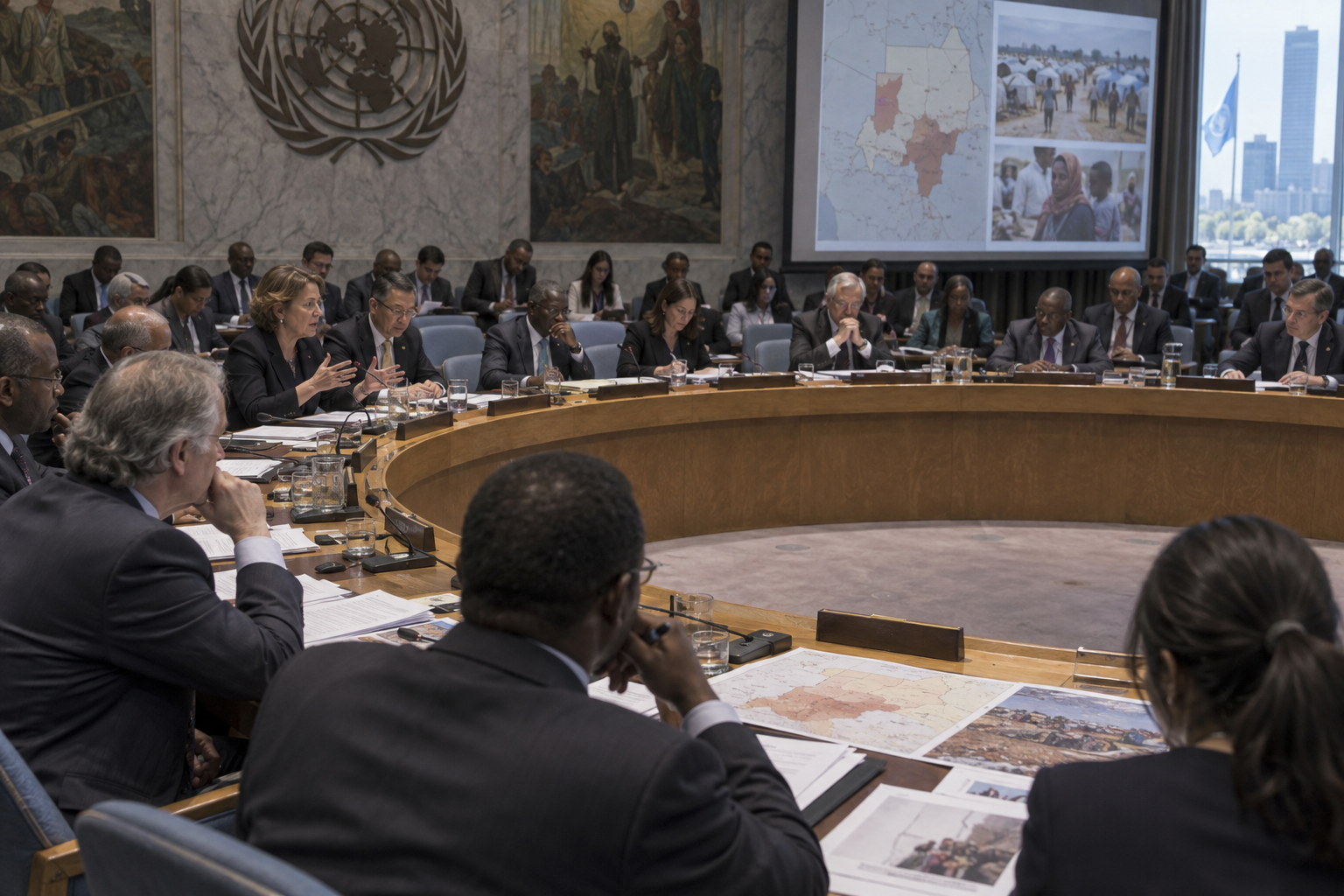
The UN Security Council has unanimously extended the existing, limited arms embargo on Sudan’s western Darfur region for one month, giving members additional time to negotiate a US proposal for a nationwide ban. The current sanctions regime remains unchanged during the extension. The United States argues that the more than 20-year-old embargo is inadequate for Sudan’s present conflict and wants it expanded across the country. Washington also proposes adding sanctions for conflict-related sexual violence, kidnapping for ransom, and attacks on humanitarian workers, while strengthening the panel of experts that monitors violations.
US Ambassador Jeff Bartos said the broader measures would increase pressure on Sudan’s warring parties—the Sudanese army and the paramilitary Rapid Support Forces (RSF)—to negotiate an end to fighting that began in April 2023. The conflict has killed at least 59,000 people, displaced approximately 13 million, and contributed to famine in parts of Sudan, producing one of the world’s most severe humanitarian crises.
Russia, which has veto power on the council and supports the Sudanese government, opposes expanding the embargo. Deputy UN Ambassador Anna Evstigneeva said Moscow had established clear “red lines” and would not permit any broadening of restrictions. She questioned why the United States was pursuing the proposal now, arguing that government forces currently hold a battlefield advantage. Sudan’s UN ambassador, Al-Harith Mohamed, also rejected a nationwide embargo, saying it would conflict with the UN Charter’s recognition of states’ rights to self-defence and to acquire weapons to protect their sovereignty.
The article places the current dispute in historical context, recalling that the Darfur embargo was imposed after violence began in 2003. That conflict caused up to 300,000 deaths and forced 2.7 million people from their homes.
Entities: United Nations Security Council, Sudan, Darfur, Rapid Support Forces (RSF), Sudanese army • Tone: analytical • Sentiment: negative • Intent: inform
12-09-2026
Sudanese politicians have warned that the country is moving towards total state collapse as the war between the Sudanese Armed Forces (SAF), led by Gen Abdel Fattah Al Burhan, and the paramilitary Rapid Support Forces (RSF) continues without a political resolution. The conflict has devastated Sudan’s economy, killed tens of thousands, displaced millions and created one of the world’s largest humanitarian crises. Former mining minister Adel Ibrahim said the collapse of the state had already begun, pointing to the Sudanese pound’s dramatic loss of value. He argued that the country’s institutions and economy were deteriorating daily.
The article also highlights mounting allegations that the SAF has used chemical weapons and built a secret stockpile during the war. Reports by The New York Times and The Washington Post described alleged tests of chemical bombs in Sudan’s desert and efforts to conceal the programme. Former cabinet affairs minister Khalid Omar Youssef said the allegations had moved beyond media speculation and were now being considered by the UN and other international organisations. He called for an independent fact-finding mission to enter Sudan, arguing that blocking inspectors further implicates the SAF and denies civilians the right to know the truth.
The chemical-weapons allegations come as the US presses for a ceasefire and seeks to expand the UN arms embargo, currently focused on Darfur, to cover all of Sudan. A UN report said the SAF had used foreign-supplied drones in operations that harmed civilians, while also acknowledging outside support for the RSF. The UN Security Council has allowed one month for negotiations on the proposed embargo expansion. Mohamed Abdel Hakam of the civilian-led Sumoud Alliance urged Washington to negotiate with countries threatening to veto the measure, arguing that Sudan’s current war requires stronger international action to protect civilians.
Entities: Sudan, Sudanese Armed Forces (SAF), Rapid Support Forces (RSF), Gen Abdel Fattah Al Burhan, Adel Ibrahim • Tone: urgent • Sentiment: negative • Intent: inform
12-09-2026
The United Arab Emirates has urged the UN Security Council to expand its arms embargo on Sudan from Darfur to the entire country and apply it to all parties involved in the conflict. The appeal followed the council’s unanimous adoption of a US-drafted resolution extending Sudan’s existing sanctions regime for only one month, until October 9, rather than renewing it for a full year.
The United States supported the short-term extension as a way to create time for negotiations over a broader embargo. US senior adviser Massad Boulos said Washington would not accept another long-term technical rollover that simply preserved the status quo. He warned that countries opposing an expansion risked enabling those responsible for Sudan’s destruction and prolonging civilian suffering.
Russia opposed broadening the sanctions. Its UN ambassador, Vasily Nebenzya, said Moscow would support only a technical renewal and would not allow the council to expand restrictions. He argued that Sudan’s government and armed forces were gaining an advantage and were important to maintaining the country’s institutions and unity.
The diplomatic dispute comes as fighting intensifies in Darfur, Kordofan and Blue Nile. The conflict is increasingly marked by drone attacks, advanced weapons, foreign military assistance, and the movement of weapons and fighters into Sudan. Although the current embargo is focused on Darfur, some Security Council members and civil society organizations want it extended nationwide because arms are continuing to reach the rival sides and violence is spreading.
The UAE said a broader embargo could reduce weapons flows, protect civilians and support humanitarian access. It called for urgent action to end hostilities and said it would work with international and regional partners toward a political settlement. The UAE also stressed that Sudan’s conflict has no military solution and that lasting peace requires an independent, civilian-led transition free from the influence of the warring parties and extremist groups.
Entities: United Arab Emirates, UN Security Council, Sudan, Darfur, Kordofan • Tone: analytical • Sentiment: negative • Intent: inform
12-09-2026
The UN Security Council has granted the United States one month to negotiate a possible expansion of the Sudan arms embargo from Darfur to the entire country. Washington opposed a routine one-year renewal of the existing sanctions regime and instead sought a short-term extension, arguing that the additional time was needed to negotiate substantive changes. US representative Jeffrey Bartos said a technical rollover was not acceptable because some council members strongly supported a nationwide embargo, while others favored maintaining the current restrictions.
The United Kingdom supported efforts to strengthen the sanctions regime, but Russia firmly rejected extending the embargo beyond Darfur. The disagreement reflects broader divisions over how the council should respond to Sudan’s civil war and the foreign military support sustaining the conflict. The United States argues that cutting off weapons and external assistance to the Sudanese Armed Forces and the Rapid Support Forces is essential to ending the war.
The conflict has killed tens of thousands, displaced millions and left about 20 million people facing hunger. Sudanese Armed Forces leader Gen Abdel Fattah Al Burhan has rejected repeated ceasefire efforts and vowed to continue fighting until the Rapid Support Forces are defeated. Both sides have been accused of serious abuses.
US officials Michael Waltz and Massad Boulos have argued that the council should curb weapons flows. Their position followed a UN fact-finding mission’s warning that foreign arms, military technology, fighters and logistical networks were enabling increasingly sophisticated attacks on civilians. The mission cited foreign-supplied combat drones and loitering munitions used by the Sudanese Armed Forces. Reports by The New York Times and The Washington Post also alleged that the force used chemical weapons and secretly developed a stockpile before attempting to conceal it.
Entities: UN Security Council, United States, Sudan, Darfur, Sudanese Armed Forces • Tone: analytical • Sentiment: negative • Intent: inform