10-08-2026
Typhoon Dolphin, a powerful tropical cyclone that traveled an unusually long distance across the Pacific, struck China’s southeastern coast near Yuhuan in Zhejiang Province on Sunday evening, triggering large-scale emergency measures. Chinese authorities evacuated more than a million people along the eastern coast and canceled more than 1,000 flights in Shanghai as heavy rain and strong winds intensified. Before reaching China, the storm had already hit Okinawa, Japan, where it injured six people and left thousands without power. The article also describes disruptive weather effects in the Philippines, where the typhoon worsened monsoon rains, caused flooding, and prompted warnings of further heavy rainfall and possible landslides. The piece places Dolphin within a broader pattern of active storms in the northwest Pacific, noting that it is one of three tropical systems currently tracked there. Overall, the article focuses on the storm’s path, the scale of the disruptions it caused, and the public safety response across multiple countries.
Entities: Typhoon Dolphin, China, Zhejiang Province, Yuhuan, Shanghai • Tone: urgent • Sentiment: negative • Intent: inform
10-08-2026
Hong Kong is set to remain in the grip of extreme heat for several more days before weather conditions begin to ease later in the week. According to the Hong Kong Observatory, subsiding airflow linked to Tropical Storm Dolphin is driving exceptionally hot conditions across Guangdong and Hong Kong, with the heat expected to last until Wednesday or Thursday. During this period, temperatures in some parts of the city may climb to at least 37 degrees Celsius. The observatory said the likelihood of thundery showers will increase as temperatures rise, and upper-air disturbances later in the week should bring more unsettled weather and more frequent showers, offering some relief from the persistent heat. On Monday morning, temperatures had already exceeded 32 degrees across much of Hong Kong, with several areas recording readings above 34 degrees. Wong Tai Sin was the hottest location at 35.1 degrees by 10am, followed closely by Happy Valley at 35 degrees. In response to the dangerous conditions, the very hot weather warning remains in force, and the Labour Department has issued an amber heat stress at work warning.
Entities: Hong Kong, Hong Kong Observatory, Tropical Storm Dolphin, Guangdong province, Wong Tai Sin • Tone: analytical • Sentiment: neutral • Intent: inform
10-08-2026
Hong Kong has recorded its highest official temperature ever, with the city’s weather observatory reporting 36.9C on Sunday, surpassing the previous record of 36.6C set in 2017. The extreme heat was linked to Typhoon Dolphin, which was pulling warm air across the region as it moved toward China’s eastern coast and later made landfall in Zhejiang province. The heatwave affected not only Hong Kong but also areas along China’s east coast, where the storm caused flight cancellations and evacuations before landfall. In Hong Kong, temperatures at some locations were even higher than the official observatory reading, with Sheung Shui reaching 39.8C, the hottest reading logged in the city since automatic stations were introduced in the 1980s. The Hong Kong Observatory issued a very hot weather warning, advising residents to stay hydrated and avoid strenuous outdoor activity. The article also notes that scientists say human-driven climate change is increasing the frequency and intensity of extreme heat events worldwide, placing the Hong Kong record in a broader climate context.
Entities: Hong Kong, Typhoon Dolphin, Hong Kong Observatory, Sheung Shui, Zhejiang province • Tone: analytical • Sentiment: neutral • Intent: inform
10-08-2026
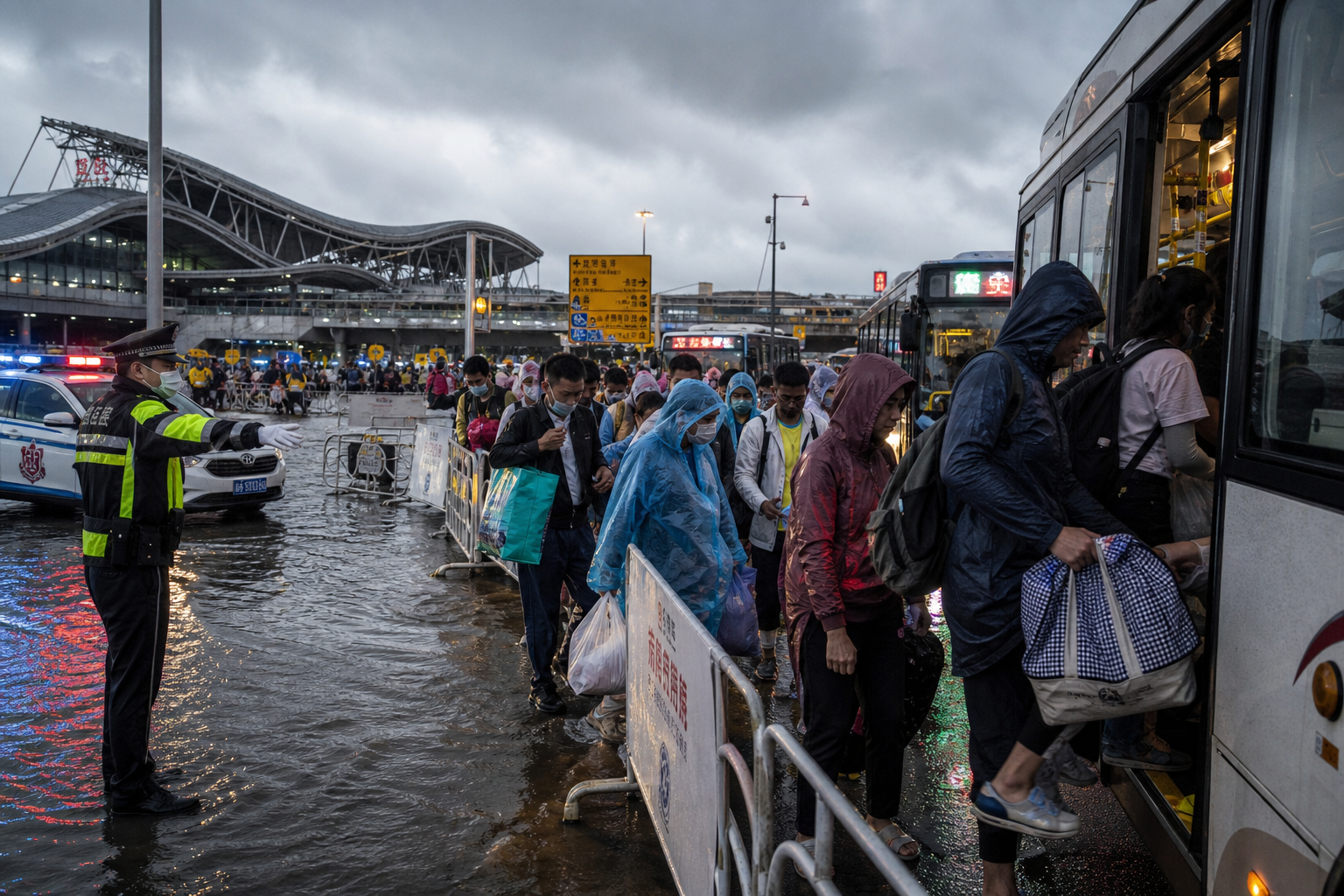
Typhoon Dolphin triggered large-scale evacuations and severe disruption across China and nearby parts of Asia as it made landfall and moved inland. More than a million people were relocated to safety in eastern China, with especially large evacuations in Wenzhou, Fujian, and Shanghai as authorities warned of dangerous flooding and landslides from days of heavy rain. Shanghai experienced record-breaking rainfall, including nearly 313mm in 24 hours at one central weather station, the highest in over 150 years of records, while another station recorded nearly 400mm. Flooding spread through the city, prompting viral posts on Chinese social media and forcing the suspension of transport, including more than 1,300 flight cancellations and train disruptions.
Although Dolphin weakened into a tropical storm by Monday, officials said the risk remained high because the system was pushing further north and inland, with heavy rain forecast across a broad swath of eastern and central China. The article notes that authorities kept an orange alert in place and warned of continued flooding and landslides through Wednesday. The storm also affected neighboring regions: Hong Kong recorded its hottest day ever, Taiwan cancelled flights and suspended ferry services, Okinawa saw injuries and power outages, and the Philippines experienced worsened monsoon flooding. The article closes by linking these extreme conditions to climate change, citing scientists who say global warming is making powerful typhoons and other extreme weather more likely.
Entities: Typhoon Dolphin, China, Shanghai, Zhejiang province, Wenzhou • Tone: urgent • Sentiment: negative • Intent: inform
10-08-2026
Shanghai’s airports, rail services, and metro network were heavily disrupted on Monday as Typhoon Dolphin continued moving north after making landfall in eastern China the previous evening. Authorities said nearly 40% of all flights in the city were cancelled, with 642 cancellations at Pudong airport and 301 at Hongqiao. Passengers were advised to contact airlines for updates as travel conditions remained unstable.
The storm brought continued heavy rain, prompting wider transport slowdowns and flood-related precautions across the city. Some train services, including routes to Hangzhou, began to recover, but four metro lines were fully suspended because of the weather. Shanghai’s flood control headquarters warned that some areas could see up to 30 cm of standing water, and local officials issued orange and yellow rainstorm alerts, indicating significant but not the most extreme levels of danger.
The article also describes the flooding’s impact on streets and commercial areas, where many roads were underwater on Sunday afternoon. Local media reported residents’ accounts of severe flooding, including a shop owner who said he had never seen anything like it and a city worker who said the sewage system had become overwhelmed. Overall, the piece highlights the broad disruption caused by a long-lived typhoon and the city’s ongoing efforts to manage flooding and transport outages.
Entities: Shanghai, Typhoon Dolphin, Pudong airport, Hongqiao airport, Shanghai government • Tone: analytical • Sentiment: negative • Intent: inform
10-08-2026
The article reports on the impact of Typhoon Dolphin in eastern China, focusing on a distressing incident in Zhejiang province where a 9-year-old boy went missing after being swept into the sea. The storm triggered widespread disruption, including mass evacuations, flight cancellations, and heavy rainfall. The article is presented as a CNN video segment, with Mike Valerio providing coverage of the unfolding situation. Although brief, the piece emphasizes the severity of the typhoon and the danger it posed to coastal communities, especially as authorities and residents responded to the storm’s destructive conditions. The central human element is the missing child, which underscores the seriousness and emotional weight of the disaster response. Overall, the article functions as a breaking-news update about a weather-related emergency and its immediate consequences.
Entities: Typhoon Dolphin, Eastern China, Zhejiang, 9-year-old boy, Mike Valerio • Tone: urgent • Sentiment: negative • Intent: inform